As cities worldwide grapple with congestion, sustainability goals, and the demand for efficient public transportation, automatic passenger counting (APC) systems have emerged as an indispensable tool in the smart transit revolution. These systems are transforming how transit authorities monitor ridership, plan services, and improve operational efficiency—fueling rapid growth in the global APC market.
Rising Importance of Real-Time Passenger Data
The core function of an APC system is to automatically count the number of passengers entering and exiting a transit vehicle. This seemingly simple task is now foundational for modern transit management. APC systems collect real-time data using technologies like infrared sensors, stereoscopic cameras, and AI-based video analytics. This allows transport operators to gain accurate, non-intrusive insight into passenger flow across routes and times of day.
This real-time data is used to optimize everything from route planning and vehicle scheduling to staff deployment and maintenance cycles. With transportation authorities under pressure to deliver reliable service while keeping costs under control, APC systems have become an essential tool in operational decision-making.
Smart Transit and the Global Push for Urban Efficiency
One of the primary forces behind the acceleration of the APC market is the global shift toward smart cities and intelligent transportation systems. Governments are investing in digital infrastructure to improve urban mobility, reduce carbon emissions, and enhance the commuter experience. As part of these broader initiatives, APC systems are being integrated into smart transit platforms that link fare collection, vehicle tracking, and real-time passenger information.
In cities like Singapore, London, and Seoul, public transportation networks are adopting APC systems to support data-driven planning and meet growing demand for reliable transit options. Similarly, in North America, funding tied to post-pandemic recovery and green mobility targets is pushing transit agencies to adopt advanced technologies like APC to justify public spending and improve service quality.
Download PDF Brochure @ https://www.marketsandmarkets.com/pdfdownloadNew.asp?id=17856390
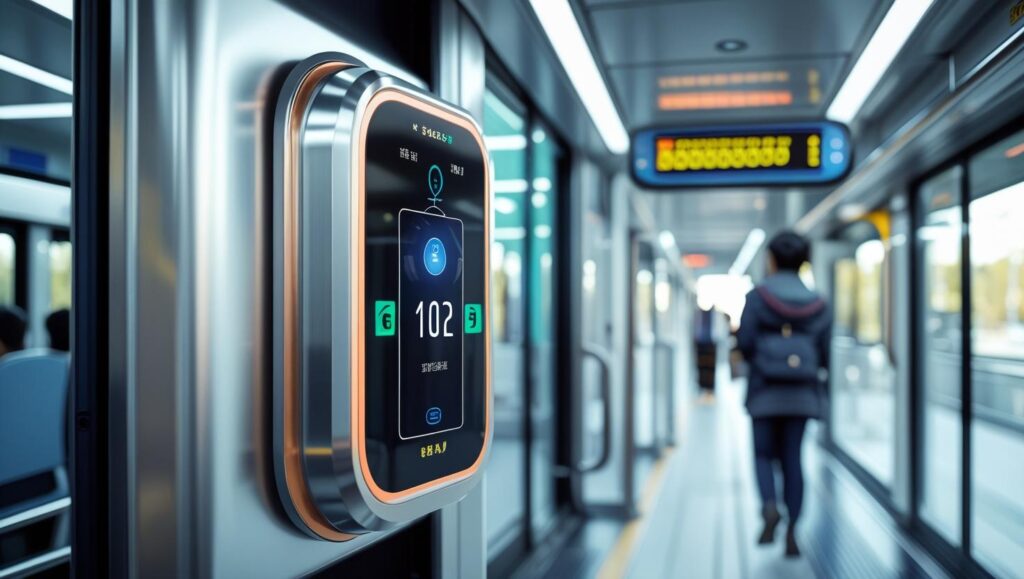
Post-Pandemic Demand for Analytics and Adaptability
The COVID-19 pandemic brought a new urgency to the role of data in public transport. Social distancing mandates and fluctuating ridership patterns forced agencies to rethink traditional scheduling models. Automatic passenger counting systems proved valuable in helping transit authorities measure vehicle occupancy in real time and adjust services accordingly.
In the post-pandemic era, the ability to monitor crowding, manage peak-time loads, and forecast demand has become even more critical. Transit agencies are now expected to provide dynamic, responsive services rather than rely on static timetables. APC systems are at the center of this transformation, enabling the kind of granular operational insight needed in a rapidly changing environment.
Technology Advancements Elevating APC Performance
Technological innovation is a major driver of growth in the APC market. Today’s systems are far more advanced than their predecessors, offering multi-modal detection, edge computing for real-time processing, and AI-enhanced accuracy even in crowded or low-light conditions. The integration of APC data into cloud-based platforms allows transit operators to access dashboards that track ridership trends, occupancy rates, and system performance across entire fleets.
Moreover, APC systems are increasingly being integrated with other components of the intelligent transit ecosystem. They now work alongside automatic vehicle location (AVL) systems, fare validators, and video surveillance networks, creating a unified platform for operational visibility. These integrated systems enable not just counting, but also behavior analysis, travel pattern detection, and more advanced forecasting.
Regional Growth and Strategic Deployment
Geographically, the Asia-Pacific region is showing the most dynamic growth, driven by rapid urbanization, infrastructure development, and significant investment in public transportation. Countries like China and India are modernizing bus and rail systems at scale, and APC solutions are a key part of those projects. In Europe, APC systems are widely deployed, especially in countries pushing for low-emission mobility and public transit subsidies that require accurate ridership data. North America is also seeing strong adoption, particularly in light of infrastructure funding tied to modernization and environmental performance.
Private sector players, such as ride-share operators, shuttle providers, and mobility-as-a-service (MaaS) platforms, are also entering the APC market. They seek to gain operational insights similar to those traditionally held by public transit agencies, further expanding the market footprint.
Challenges and Future Outlook
Despite the growth trajectory, the PC market does face certain challenges. Privacy concerns around video-based counting systems must be carefully managed, especially in regions with strict data protection regulations. The upfront cost of system deployment—both hardware and integration—can be a barrier for smaller transit systems. In addition, maintaining high accuracy in crowded environments or under unusual lighting conditions remains a technical challenge, although advances in AI are helping to bridge those gaps.
Nevertheless, the long-term outlook for the APC market remains highly positive. As transportation networks become smarter and more interconnected, the demand for real-time, high-quality data will only increase. APC systems are a foundational component of that shift, offering clear operational value and scalability.
Conclusion: A Market Built for the Future of Mobility
The global automatic passenger counting system market is not just growing—it is evolving in complexity, capability, and strategic relevance. As cities pursue smarter, greener, and more responsive transit systems, APC technology is becoming a critical enabler of that vision. With rising investment, expanding use cases, and continuous innovation, the APC market stands at the intersection of transportation, data, and digital transformation—making it a key sector to watch in the future of urban mobility.
Automatic Passenger Counting System Market – FAQ
What is an Automatic Passenger Counting (APC) system?
An APC system is a technology solution used in public and private transit vehicles to automatically count the number of passengers entering and exiting. It typically uses infrared sensors, stereoscopic cameras, or AI-enhanced video analytics to collect accurate real-time ridership data without manual intervention.
Why is the APC system market growing rapidly?
The market is expanding due to rising global demand for smart mobility, public transportation optimization, and post-pandemic operational resilience. Cities and transit agencies need accurate, real-time data to improve scheduling, reduce overcrowding, enhance service delivery, and meet sustainability goals—all of which APC systems support.
How are APC systems used in transit networks?
APC systems are deployed on buses, trains, trams, and ferries. The data they collect is used for:
- Real-time occupancy monitoring
- Schedule optimization
- Route planning
- Performance reporting for funding or compliance
- Crowd management during peak hours or emergencies
Which technologies are driving innovation in APC systems?
Key advancements include AI-powered video analytics, edge computing for onboard processing, cloud-based dashboards, and integration with intelligent transportation systems (ITS). These technologies improve accuracy, reduce latency, and enable predictive analytics and smarter fleet management.
Which regions are seeing the most growth in the APC market?
Asia-Pacific is currently the fastest-growing region, driven by large-scale transit expansion in urban centers. Europe has widespread adoption due to sustainability and policy requirements. North America is seeing renewed investment through infrastructure funding and smart city initiatives.
About MarketsandMarkets™
MarketsandMarkets™ is a blue ocean alternative in growth consulting and program management, leveraging a man-machine offering to drive supernormal growth for progressive organizations in the B2B space. We have the widest lens on emerging technologies, making us proficient in co-creating supernormal growth for clients.
The B2B economy is witnessing the emergence of $25 trillion of new revenue streams that are substituting existing revenue streams in this decade alone. We work with clients on growth programs, helping them monetize this $25 trillion opportunity through our service lines – TAM Expansion, Go-to-Market (GTM) Strategy to Execution, Market Share Gain, Account Enablement, and Thought Leadership Marketing.
Built on the ’GIVE Growth’ principle, we work with several Forbes Global 2000 B2B companies – helping them stay relevant in a disruptive ecosystem. Our insights and strategies are molded by our industry experts, cutting-edge AI-powered Market Intelligence Cloud, and years of research. The KnowledgeStore™ (our Market Intelligence Cloud) integrates our research, facilitates an analysis of interconnections through a set of applications, helping clients look at the entire ecosystem and understand the revenue shifts happening in their industry.
To find out more, visit www.MarketsandMarkets™.com or follow us on Twitter, LinkedIn and Facebook.
Contact:
Mr. Rohan Salgarkar
MarketsandMarkets™ INC.
630 Dundee Road
Suite 430
Northbrook, IL 60062
USA : 1-888-600-6441
