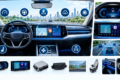
The Liquid Cooled EV Charging Cable Market is gaining momentum as electric vehicle charging infrastructure shifts toward higher power capacities and faster charging technologies. Conventional air-cooled cables face thermal limitations when handling high current levels, particularly in ultrafast DC charging applications. Liquid-cooled charging cables address these challenges through integrated cooling systems that improve heat dissipation and enable sustained high-power charging.
The growing deployment of 350 kW and above DC fast chargers, along with megawatt charging systems (MCS), is encouraging charging equipment manufacturers to adopt advanced cable technologies. These cables use circulating cooling fluids to manage heat generated during high-current power transmission, allowing manufacturers to develop smaller, lighter, and more flexible charging solutions.
The transition toward 800V electric vehicle architectures, larger battery packs, and heavy-duty electric commercial vehicles is further increasing demand for liquid-cooled charging cables. As charging network operators prioritize station uptime, charging efficiency, and operational reliability, advanced thermal management solutions are becoming essential for next-generation EV charging infrastructure.
Liquid Cooled EV Charging Cable Market Size and Forecast
The global Liquid Cooled EV Charging Cable Market is projected to grow from USD 0.51 billion in 2025 to USD 1.28 billion by 2032, registering a CAGR of 14.0% during the forecast period. The market was valued at USD 0.32 billion in 2024.
Market growth is supported by the increasing deployment of ultrafast DC charging infrastructure, rising demand for high-power charging systems, and the need to reduce charging times for electric vehicles. Liquid-cooled cables enable efficient heat dissipation and support higher current capacities without compromising cable flexibility and operational safety.
The expansion of public charging networks, highway charging corridors, and commercial EV fleets is creating additional opportunities for manufacturers. Furthermore, advancements in cooling fluids, insulation materials, and cable designs are supporting the development of charging solutions capable of handling increasingly demanding power requirements.
Key Factors Driving the Liquid Cooled EV Charging Cable Market
Rising Demand for Ultrafast and Megawatt Charging
The growing deployment of ultrafast charging systems is one of the major factors driving the Liquid Cooled EV Charging Cable Market. Charging stations with power capacities ranging from 350 kW to 600 kW and megawatt-level charging systems require cables capable of managing high electrical currents and associated heat generation.
Conventional air-cooled cables can become bulky and difficult to handle when designed for higher power transmission. Liquid-cooled cables address these limitations through integrated cooling channels that maintain thermal stability during continuous high-power charging.
The expansion of highway charging corridors, public fast-charging stations, and commercial vehicle charging networks is increasing demand for these advanced cable assemblies.
Growing Shift Toward 800V Electric Vehicle Architectures
Electric vehicle manufacturers are increasingly adopting high-voltage architectures to improve charging performance and reduce charging times. The transition toward 800V platforms is creating demand for charging infrastructure capable of supporting higher power delivery.
Liquid-cooled charging cables help manage thermal loads associated with high-current charging while maintaining flexibility and manageable cable dimensions. These solutions are particularly important for next-generation electric vehicles that support higher charging capacities.
As more automakers introduce high-voltage EV platforms, charging equipment manufacturers are focusing on compatible cable and connector technologies.
Increasing Need for Advanced Thermal Management
Heat generation is a critical challenge in high-power EV charging systems. Higher current transmission increases thermal stress on cable conductors, insulation, and connectors, potentially affecting charging efficiency and equipment durability.
Liquid-cooled charging cables use circulating cooling fluids to remove heat and maintain stable operating temperatures. This enables charging systems to deliver higher power levels while reducing the risk of thermal derating.
Improvements in cooling channel designs, conductor materials, and insulation technologies are supporting the development of more efficient and reliable charging cable solutions.
Download PDF Brochure @ https://www.marketsandmarkets.com/pdfdownloadNew.asp?id=263790047
Emerging Technology Trends in the Liquid Cooled EV Charging Cable Market
Adoption of Megawatt Charging Systems
Megawatt charging systems are emerging as an important development in high-power EV charging infrastructure, particularly for electric trucks, buses, and commercial vehicle fleets.
These systems require charging cables capable of transmitting extremely high electrical currents while maintaining thermal stability. Liquid-cooled cable technology supports sustained high-power delivery and addresses the thermal challenges associated with megawatt charging.
The increasing electrification of heavy-duty vehicles and the development of dedicated commercial charging corridors are expected to create new opportunities for cable manufacturers.
Advancements in Dielectric Coolants and Cooling Fluids
Cooling fluid technology is becoming increasingly important in the development of next-generation liquid-cooled charging cables. Manufacturers are exploring advanced dielectric fluids and improved thermal management materials to enhance cooling performance and electrical safety.
These materials can support efficient heat removal while minimizing electrical risks associated with coolant leakage or conductivity. Innovations in silicone-based fluids, engineered dielectric coolants, and advanced insulation materials are also supporting higher current capacities.
Such developments are expected to improve cable durability, thermal performance, and reliability in demanding charging environments.
Development of Lightweight and Flexible Charging Cables
Cable weight and flexibility are important considerations for charging station operators and EV users. Conventional high-power cables can become difficult to handle because of their larger conductors and insulation requirements.
Liquid-cooled designs enable manufacturers to manage heat more efficiently, supporting smaller cable diameters and improved handling characteristics. Advanced jacket materials, particularly thermoplastic elastomers, are also helping improve flexibility, durability, and resistance to environmental conditions.
These developments are encouraging the adoption of liquid-cooled cables across public charging stations and commercial charging installations.
Integration of High-Power Charging Connectors and Cable Assemblies
The development of integrated cable and connector assemblies is supporting the expansion of ultrafast EV charging infrastructure. Manufacturers are focusing on solutions that combine high-current conductors, cooling systems, connectors, and protective insulation.
These integrated systems simplify installation and improve compatibility with high-power charging equipment. They also help charging equipment manufacturers develop standardized solutions for different EV platforms and charging applications.
Liquid Cooled EV Charging Cable Market Segmentation
The Liquid Cooled EV Charging Cable Market is segmented by cable power capacity, application, cable length, cable diameter, jacket material, cooling fluid, and region.
By Cable Power Capacity
The market is segmented into 300–499 kW, 500–900 kW, and above 900 kW.
The 500–900 kW segment is expected to dominate the market during the forecast period. This segment is projected to grow from USD 430.9 million in 2025 to USD 1,095.5 million by 2032.
Cables within this power range support the requirements of ultrafast DC charging systems used for passenger vehicles, buses, and light commercial vehicles. Increasing deployment of high-power charging stations, adoption of high-voltage EV platforms, and expansion of fleet charging infrastructure are supporting segment growth.
By Application
The market covers ultrafast charging and megawatt charging applications.
The ultrafast charging segment is expected to dominate the Liquid Cooled EV Charging Cable Market. It is projected to grow from USD 509.2 million in 2025 to USD 1,257.4 million by 2032, registering a CAGR of 13.8%.
Increasing installation of 350 kW and above DC fast chargers across public charging stations, highways, and urban corridors is driving demand. The growing adoption of 800V passenger EV platforms is also encouraging the integration of liquid-cooled cable technologies.
Megawatt charging represents another important application area, particularly for heavy-duty electric trucks and commercial vehicle fleets.
By Cable Length
The market is segmented into below 5 meters, 5–8 meters, and above 8 meters.
The above 8 meters segment is projected to be the fastest-growing segment during the forecast period. Increasing demand for flexible charging infrastructure layouts and specialized charging installations is supporting its growth.
Meanwhile, the 5–8 meters segment is expected to lead the market. This cable length offers a balance between electrical efficiency, thermal performance, handling convenience, and installation costs.
By Cable Diameter
The market includes below 30 mm, 30–50 mm, and above 50 mm cable diameter categories.
The 30–50 mm segment is expected to dominate the market during the forecast period. This segment is projected to increase from 76 thousand units in 2025 to 224 thousand units by 2032, registering a CAGR of 16.6%.
These cables offer a balance between power-handling capacity, thermal performance, flexibility, and ease of installation. Their design supports high-current transmission in ultrafast and megawatt-class DC charging systems.
By Jacket Material
The market includes rubber, thermoplastic elastomer, and polyvinyl chloride materials.
The thermoplastic elastomer segment is expected to be the largest and fastest-growing segment during the forecast period. It is projected to increase from 81 thousand units in 2025 to 269 thousand units by 2032, registering a CAGR of 18.7%.
Thermoplastic elastomers offer flexibility, durability, and resistance to high temperatures and chemicals. These characteristics make them suitable for charging cables exposed to continuous thermal and mechanical stress in public and commercial charging environments.
By Cooling Fluid
The market is segmented into water glycol and other cooling fluids.
The water glycol segment is expected to dominate the market during the forecast period. It is projected to grow from 94 thousand units in 2025 to 291 thousand units by 2032, registering a CAGR of 17.6%.
Water glycol provides effective heat dissipation while supporting cost efficiency and operational safety. Its established application in automotive thermal management, freeze protection, and corrosion resistance makes it suitable for large-scale EV charging infrastructure.
Regional Outlook of the Liquid Cooled EV Charging Cable Market
Asia Pacific is projected to be the largest and fastest-growing regional market for liquid-cooled EV charging cables during the forecast period. The regional market is expected to grow from USD 416.7 million to USD 1,074.2 million, registering a CAGR of 14.5%.
China, South Korea, Japan, and India are important markets supporting regional growth through expanding EV production, increasing public charging infrastructure, and investments in high-power charging technologies.
China is a major contributor due to its extensive EV ecosystem and growing deployment of ultrafast charging networks. South Korea is also promoting high-power public and highway charging infrastructure compatible with next-generation electric vehicle platforms.
The region’s strong manufacturing ecosystem, supported by companies such as Phoenix Contact, HUBER+SUHNER, TE Connectivity, LEONI, and SINBON Electronics, is further strengthening its position in the global market.
The increasing development of megawatt charging systems and high-power charging corridors is expected to create additional opportunities for liquid-cooled cable manufacturers across Asia Pacific.
Key Companies in the Liquid Cooled EV Charging Cable Market
The competitive landscape includes cable manufacturers, connector suppliers, and EV charging technology providers developing advanced liquid-cooled charging solutions for ultrafast and megawatt charging applications.
Key companies operating in the Liquid Cooled EV Charging Cable Market include:
- Phoenix Contact
- HUBER+SUHNER
- BRUGG Group
- LEONI
- SINBON Electronics
- OMG EV Cable
- Kempower
- Fiver EVSE
- Shanghai Mida EV Power
- Coroflex
- TE Connectivity
- Zhejiang Yonggui Electric Equipment
These companies are focusing on advanced thermal management, high-current cable assemblies, connector technologies, and improved insulation materials. Product innovation, manufacturing expansion, and strategic collaborations are becoming important competitive strategies as charging infrastructure requirements evolve toward higher power capacities.
Future Outlook of the Liquid Cooled EV Charging Cable Market
The future of the Liquid Cooled EV Charging Cable Market will be shaped by the expansion of ultrafast charging networks, megawatt charging systems, and high-voltage electric vehicle architectures. As EV manufacturers introduce vehicles with larger battery packs and higher charging acceptance rates, the demand for charging infrastructure capable of delivering sustained high power will increase.
Advancements in dielectric coolants, thermoplastic elastomer materials, and integrated cable assemblies will improve thermal performance, durability, and handling convenience. These innovations will support the development of lightweight charging cables capable of operating under demanding conditions.
The electrification of heavy-duty trucks and commercial vehicle fleets will create additional opportunities for megawatt charging technologies. Meanwhile, charging network operators will increasingly prioritize reliability, reduced thermal derating, and improved station utilization.
Asia Pacific is expected to remain a major growth center as China, South Korea, Japan, and India continue expanding EV charging infrastructure and high-power charging capabilities.
Request Sample Report @ https://www.marketsandmarkets.com/requestsampleNew.asp?id=263790047