The global agricultural sector is undergoing a digital revolution, and one of the most significant transformations is being witnessed in livestock management. The rising adoption of smart livestock monitoring systems worldwide is reshaping traditional animal husbandry practices, offering real-time insights, improved animal welfare, and greater operational efficiency. These systems leverage technologies such as the Internet of Things (IoT), artificial intelligence (AI), cloud computing, GPS, and big data analytics to track, analyze, and optimize various aspects of livestock health, behavior, and productivity.
Download PDF Brochure @ https://www.marketsandmarkets.com/pdfdownloadNew.asp?id=72634532
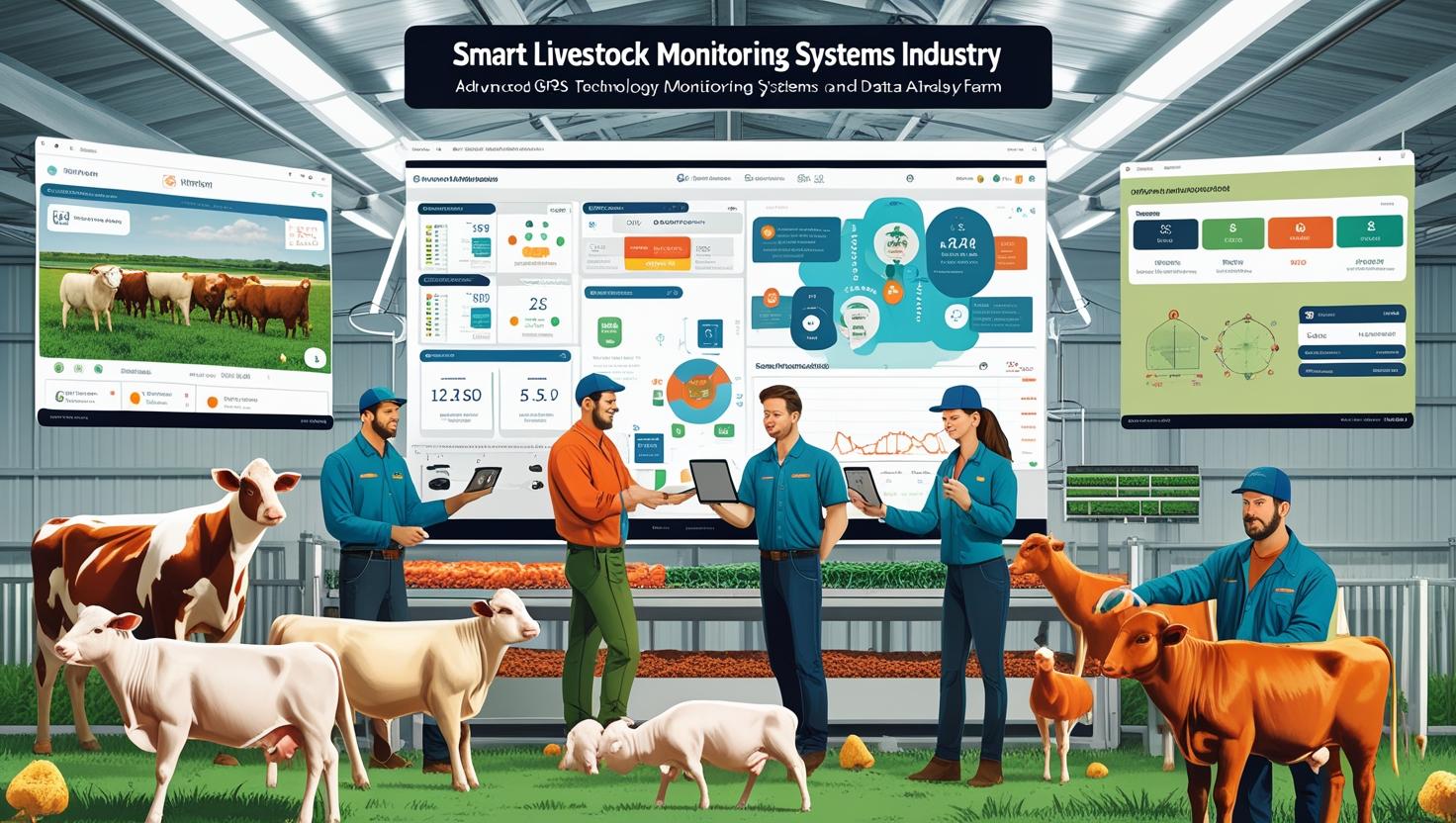
Technological Advancements Driving the Shift
Advancements in sensor technologies and wireless connectivity have played a crucial role in accelerating the adoption of smart livestock monitoring systems. Wearable sensors, smart tags, and implantable devices now allow farmers to continuously monitor parameters such as body temperature, heart rate, movement patterns, rumination, and reproductive cycles. These sensors transmit data to cloud-based platforms or local dashboards, where advanced analytics tools process the information to provide actionable insights. With such data-driven decision-making capabilities, farmers can detect illnesses early, optimize feeding routines, improve breeding efficiency, and ensure overall herd well-being.
Enhanced Animal Health and Welfare
One of the primary benefits of smart livestock monitoring is the ability to enhance animal health and welfare. Early detection of diseases through behavior and biometric monitoring significantly reduces mortality rates and minimizes the spread of infections within herds. For example, changes in a cow’s movement or a sudden drop in activity can indicate lameness or fever, prompting timely intervention. Similarly, estrus detection systems help identify the optimal breeding window, thereby improving conception rates and reducing the need for hormonal treatments. By maintaining consistent health surveillance, smart systems promote ethical farming practices and boost animal productivity.
Operational Efficiency and Cost Savings
Smart livestock monitoring systems also bring substantial cost and labor savings to modern farms. Traditional manual monitoring is labor-intensive, time-consuming, and prone to human error. In contrast, automated monitoring enables 24/7 surveillance of large herds with minimal human intervention. Real-time alerts and predictive analytics help farm managers streamline tasks, allocate resources efficiently, and reduce unnecessary veterinary visits. These efficiencies lead to better feed conversion ratios, reduced medicine usage, and increased yield per animal — contributing to the economic sustainability of livestock operations.
Global Growth and Regional Adoption Trends
The adoption of smart livestock monitoring systems is growing across developed and developing regions alike. In North America and Europe, large-scale commercial farms have been early adopters of precision livestock technologies, driven by the need to optimize production and comply with stringent animal welfare regulations. These regions also benefit from strong digital infrastructure and access to advanced agri-tech solutions. Meanwhile, countries in Asia-Pacific and Latin America are rapidly catching up, spurred by the rising demand for meat and dairy products, growing awareness of animal health management, and increased government support for smart agriculture initiatives.
Addressing Challenges in Livestock Production
Global livestock producers face multiple challenges, including climate change, disease outbreaks, labor shortages, and increasing consumer demand for sustainable and traceable food sources. Smart monitoring systems offer a strategic solution to many of these issues. For example, heat stress caused by rising temperatures can significantly affect animal productivity, but smart systems can monitor temperature fluctuations and automate cooling mechanisms. Similarly, tracking systems enable traceability from farm to fork, ensuring transparency and compliance with food safety standards. By digitizing livestock operations, farmers can adapt to emerging risks and meet evolving market expectations.
Integration with Broader Farm Management Platforms
The true potential of smart livestock monitoring is unlocked when integrated with broader farm management platforms. By combining data from livestock monitoring with crop production, environmental sensors, weather forecasts, and financial systems, farmers gain a holistic view of their operations. This integration allows for better planning, risk management, and resource allocation across the entire farming ecosystem. Modern farm management software solutions are increasingly including modules for livestock health, genetics, nutrition, and productivity, enabling seamless data flow and strategic decision-making at all levels.
The Role of AI and Machine Learning
Artificial intelligence and machine learning are enhancing the capabilities of livestock monitoring systems. These technologies analyze vast amounts of data collected from individual animals to identify patterns, forecast health events, and recommend interventions. AI-driven platforms can even predict calving events, detect subclinical mastitis, or identify social behavior anomalies, all without human observation. Machine learning algorithms continuously improve their accuracy as more data is collected, making smart systems more reliable and efficient over time.
Sustainability and Environmental Benefits
Sustainability is a growing concern in livestock farming, and smart monitoring solutions are helping reduce the environmental footprint of animal agriculture. By optimizing feeding practices, minimizing waste, and improving productivity per animal, farmers can lower greenhouse gas emissions and reduce the use of water, antibiotics, and feed inputs. Precision farming also supports better land use and biodiversity conservation. As the world pushes for more sustainable food systems, technology-led livestock management will play a vital role in achieving these goals.
Future Outlook and Market Opportunities
The future of smart livestock monitoring is promising, with continued innovation expected in sensors, connectivity, automation, and data analytics. The development of 5G networks, edge computing, and blockchain technology will further enhance system performance, data integrity, and scalability. As smart agriculture becomes a global priority, both established companies and agri-tech startups are investing heavily in this space, offering tailored solutions for different livestock species, including cattle, poultry, swine, and sheep. The availability of affordable and user-friendly technologies is also making smart livestock systems more accessible to small and medium-scale farmers.
Explore In-Depth Semiconductor & Electronics Market Research – https://www.marketsandmarkets.com/semiconductorand-electonics-market-research-87.html
See Related Semiconductor Reports:
Precision Livestock Farming Market Size, Share & Industry Growth Analysis Report by System Type (Milking Robotic Systems, Precision Feeding Systems, Livestock Monitoring Systems), Application, Offering, Farm Type (Dairy, Swine, Poultry), Farm Size and Geography – Global Forecast to 2028
Milking Robots Market Size, Share & Industry Growth Analysis Report by System Type (Single-stall Unit, Multi-stall Unit, Automated Milking Rotary). Herd Size (Below 100, Between 100 and 1,000, Above 1,000), Offering (Hardware, Software, Services), Species, Actuators and Region – Forecast to 2029
