The automotive industry is in the midst of a seismic shift, a dual revolution powered by electricity and intelligence. Electric Vehicles (EVs) have moved from niche to mainstream, championing a cleaner, more sustainable future. But the true transformation lies beneath the silent hum of the electric motor—it is the integration of sophisticated Artificial Intelligence (AI). The convergence of these two technologies is not just an upgrade; it is a complete reimagining of the automobile. This deep dive explores the multifaceted role of Automotive AI in Electric Vehicles, detailing how it is enhancing performance, safety, efficiency, and the overall driving experience, ultimately steering us toward an autonomous future.
The Confluence of Two Revolutions: Electrification and Intelligence
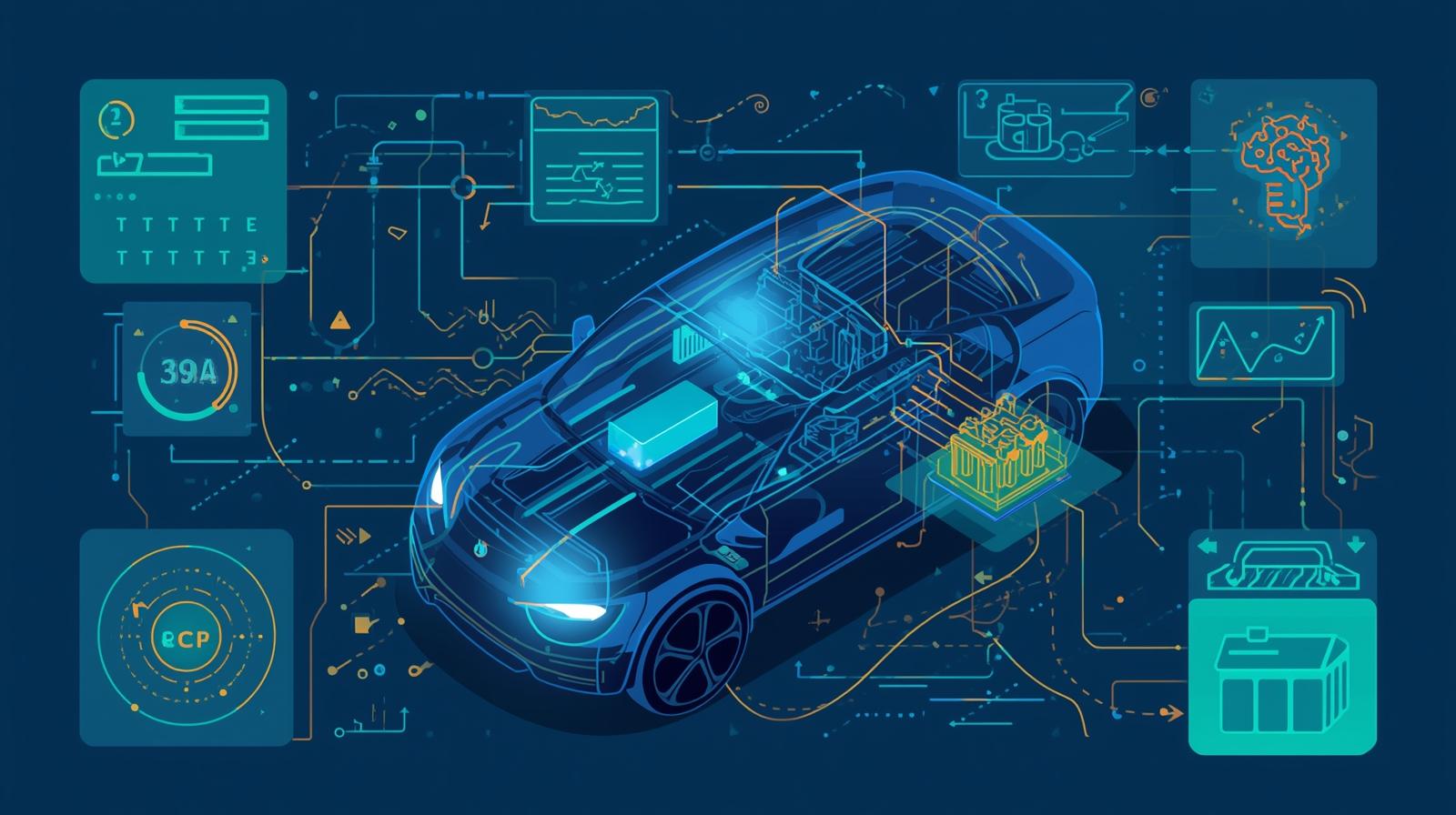
The journey towards modern mobility began with electrification, addressing the urgent need to reduce carbon emissions. However, an EV’s complex systems, particularly its battery and powertrain, generate immense amounts of data. This is where Automotive AI in Electric Vehicles finds its perfect application. Traditional software struggles to process and learn from this data in real-time. AI, specifically machine learning and deep learning algorithms, thrives on it. These algorithms can identify patterns, predict outcomes, and make instantaneous decisions that optimize every aspect of the vehicle’s operation. The EV provides the platform, and the AI provides the brain, creating a symbiotic relationship that defines the next generation of transportation.
Optimizing the Heart: AI-Powered Battery Management Systems (BMS)
The battery is the most critical and expensive component of any electric vehicle. Its health and efficiency directly dictate the vehicle’s range, performance, and longevity. Traditional BMS are rule-based, but AI-driven BMS are predictive and adaptive.
- State of Health (SOH) and State of Charge (SOC) Estimation: AI algorithms analyze historical charging data, temperature fluctuations, and voltage patterns to provide hyper-accurate estimates of the battery’s remaining capacity and overall health, far surpassing static models.
- Predictive Thermal Management: AI predicts thermal load based on driving style, terrain, and external weather. It proactively cools or heats the battery pack to maintain it in its ideal temperature window, preventing degradation and maximizing lifespan.
- Smart Charging Recommendations: By learning a driver’s habits and connecting to grid data, AI can suggest optimal charging times and locations to reduce battery stress, lower electricity costs, and support grid stability.
The implementation of Automotive AI in Electric Vehicles for battery management directly translates to reduced range anxiety, longer battery life, and lower total cost of ownership for the consumer.
The Path to Autonomy: AI for Self-Driving Electric Cars
The quest for fully autonomous vehicles is intrinsically linked to the evolution of Automotive AI in Electric Vehicles. EVs, with their by-wire systems and advanced electrical architectures, are the ideal platform for deploying autonomous driving technology. AI is the core of this capability, processing data from a suite of sensors—cameras, LiDAR, radar, and ultrasonic sensors.
Perception and Scene Understanding
AI algorithms, particularly convolutional neural networks (CNNs), act as the car’s eyes and brain. They analyze pixel-level data from cameras to identify objects like pedestrians, cyclists, road signs, and other vehicles. Sensor fusion AI combines this visual data with radar and LiDAR point clouds to create a precise, 360-degree, 3D model of the vehicle’s environment in real-time, distinguishing between a plastic bag drifting across the road and a small animal running onto it.
Prediction and Path Planning
Once the environment is mapped, the AI must predict what happens next. It anticipates the potential paths of other objects and plans the vehicle’s trajectory accordingly. This involves millions of calculations per second to ensure a path that is not only efficient but, more importantly, safe and smooth, avoiding sudden maneuvers.
Decision Making and Control
The planned path is executed by the vehicle’s control systems—steering, acceleration, and braking. AI ensures these actions are performed with a nuance that mimics, and often surpasses, human driving, adjusting for factors like road conditions and passenger comfort.
Enhancing Vehicle Dynamics and Performance
Beyond autonomy, Automotive AI in Electric Vehicles fine-tunes driving dynamics to create a more responsive and enjoyable experience. AI can continuously adjust the torque distribution to each wheel in real-time all-wheel-drive systems, improving traction, stability, and handling on any road surface. It can also adapt regenerative braking levels based on traffic flow, topography, and driver behavior, seamlessly recapturing energy and reducing wear on the physical brakes. This intelligent management ensures that the vehicle’s immense electric power is delivered efficiently and controllably.
Revolutionizing the Human-Machine Interface (HMI)
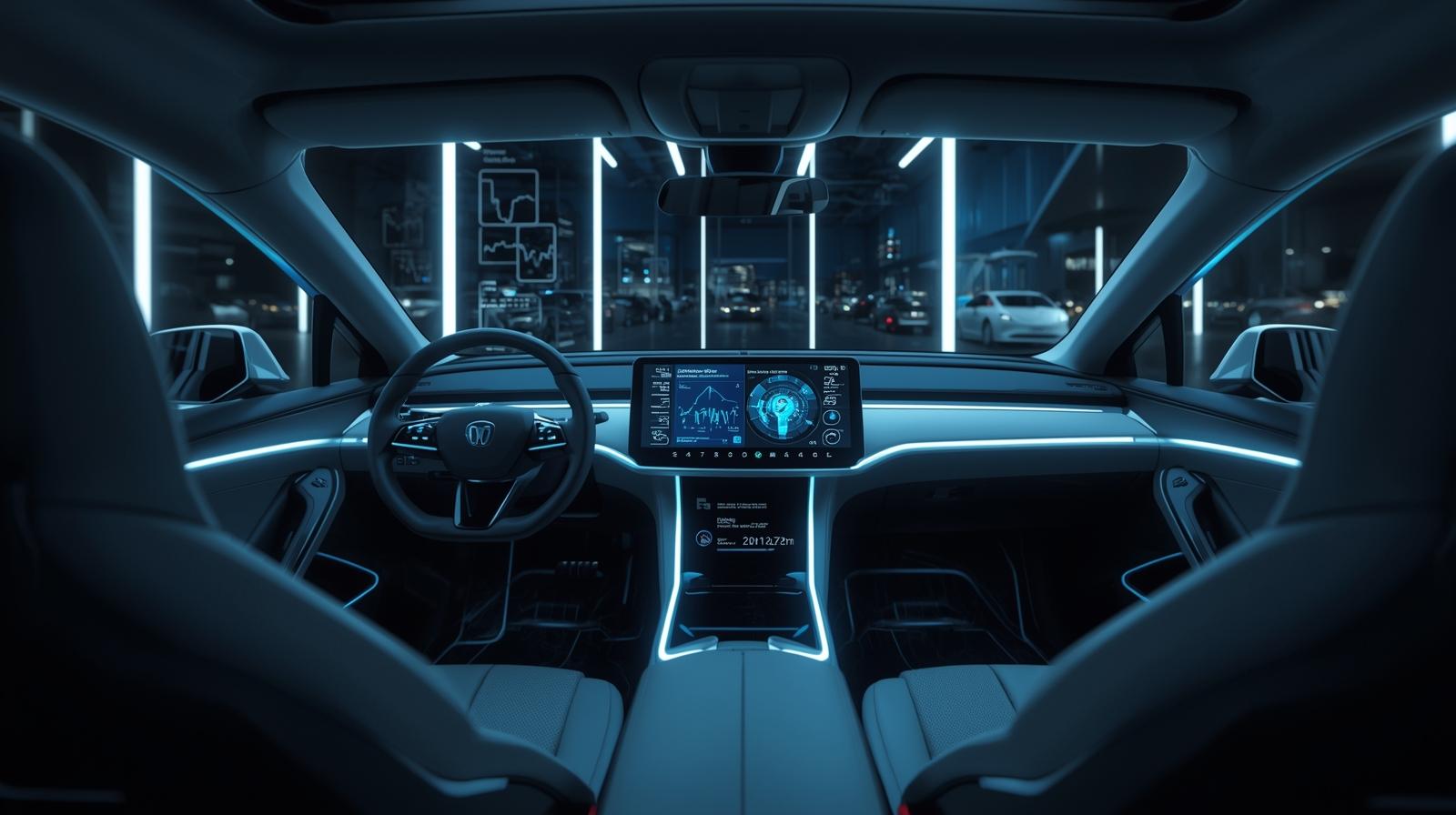
The interior of the modern EV is becoming a digital cockpit, and AI is its intuitive conductor. Natural Language Processing (NLP), a subset of AI, powers advanced voice assistants that can understand context and complex commands, allowing drivers to control navigation, climate, and entertainment without taking their hands off the wheel. Furthermore, AI-powered driver monitoring systems use interior cameras to detect signs of drowsiness or distraction, issuing alerts to prevent accidents. These systems can also personalize the cabin environment automatically, adjusting seats, mirrors, music, and temperature based on recognized driver preferences.
Predictive Maintenance and Over-the-Air (OTA) Updates
Gone are the days of routine service schedules based purely on mileage. Automotive AI in Electric Vehicles enables predictive maintenance. By constantly monitoring the health of thousands of components, from the battery and motor to suspension and electronics, AI can identify anomalies and predict potential failures before they occur. This allows owners to schedule service precisely when needed, avoiding unnecessary costs and preventing breakdowns. Coupled with this is the power of AI-driven OTA updates. Manufacturers can not only fix bugs but also deploy new AI models to the vehicle, continuously improving its performance, efficiency, and features long after it has left the dealership.
Download PDF Brochure @
https://www.marketsandmarkets.com/pdfdownloadNew.asp?id=248804391
The Challenges and Ethical Considerations
The integration of Automotive AI in Electric Vehicles is not without its challenges. The immense computational power required demands specialized, energy-efficient hardware that can withstand automotive conditions. The “black box” nature of some deep learning algorithms raises questions about accountability and decision-making transparency in the event of an accident. Data privacy and cybersecurity are also paramount concerns, as a connected AI-powered vehicle is a potential target for hacking. Furthermore, the ethical programming of AI for unavoidable accident scenarios remains a complex societal debate that the industry must address collectively.
The Future Roadmap: What’s Next for AI and EVs?
The evolution of Automotive AI in Electric Vehicles is accelerating. We are moving towards vehicles that are not just connected to the cloud but to everything around them—other vehicles (V2V), infrastructure (V2I), and the grid (V2G). AI will act as the orchestrator of this Vehicular Edge Internet, enabling platooning to reduce energy consumption and optimizing traffic flow to eliminate congestion. AI will also be crucial in developing ultra-fast charging technologies by managing battery chemistry and temperature during the charge cycle. Ultimately, the car will transition from a product we own to an autonomous, AI-driven service that seamlessly integrates into our daily lives.
An Intelligent and Electric Future
The synergy between artificial intelligence and electric vehicles is creating a paradigm shift that transcends transportation. Automotive AI in Electric Vehicles is the key that unlocks unprecedented levels of efficiency, safety, sustainability, and convenience. It transforms the car from a mere mode of conveyance into a intelligent partner, capable of learning, adapting, and protecting. As AI algorithms become more sophisticated and computational hardware more powerful, the potential is limitless. This fusion of electrons and algorithms is not just defining the future of the automobile; it is paving the way for a smarter, cleaner, and safer world for all.
Explore In-Depth Semiconductor & Electronics Market Research
https://www.marketsandmarkets.com/semiconductorand-electonics-market-research-87.html
FAQs
1. How does AI specifically improve EV battery life?
AI improves EV battery life by using machine learning to precisely manage charging and discharging cycles, predict and control thermal conditions, and prevent states of charge that cause stress and degradation. It keeps the battery operating in its healthiest range, significantly slowing down the rate of capacity loss over time.
2. Is AI the same as the software in my current car?
No, they are fundamentally different. Traditional car software operates on pre-programmed, static rules (e.g., “if this, then that”). AI software uses models that can learn from data, identify patterns, and make predictions or decisions without being explicitly programmed for every scenario, allowing for adaptive and intelligent behavior.
3. Are AI-powered electric vehicles safe from hacking?
The industry is prioritizing cybersecurity. While any connected system has potential vulnerabilities, manufacturers implement robust security protocols, encryption, and regular OTA security patches to protect against hacking. The constant evolution of AI itself can also be used to detect and neutralize novel cyber threats in real-time.
4. Will AI in electric vehicles make human drivers obsolete?
For the foreseeable future, AI will primarily serve to assist human drivers, making driving safer and less stressful through advanced driver-assistance systems (ADAS). While fully autonomous vehicles that require no human intervention are the long-term goal for many companies, their widespread adoption depends on technological maturity, regulatory approval, and societal acceptance.
5. Does AI increase the cost of an electric vehicle?
Initially, the advanced sensors and computing hardware required for AI do add to the vehicle’s cost. However, as the technology scales and becomes more mainstream, these costs are decreasing. Furthermore, the long-term benefits—such as reduced energy costs, lower maintenance through predictive care, and enhanced safety—can provide significant financial offset over the vehicle’s lifespan.
See The Latest Semiconductor Reports:
Oil Condition Monitoring Market Size, Share & Trends : https://www.marketsandmarkets.com/Market-Reports/oil-condition-monitoring-market-62105661.html
Agriculture IoT Market Size, Share & Trends : https://www.marketsandmarkets.com/Market-Reports/iot-in-agriculture-market-199564903.html
Real-time Location Systems (RTLS) Market Size, Share & Trends : https://www.marketsandmarkets.com/Market-Reports/real-time-location-systems-market-1322.html
LiDAR Market Size, Share & Trends: https://www.marketsandmarkets.com/Market-Reports/lidar-market-1261.html
HVDC Transmission Market Size, Share & Trends: https://www.marketsandmarkets.com/Market-Reports/hvdc-grid-market-1225.html
