In recent years, the commercial security industry has undergone a profound transformation driven by rapid advancements in artificial intelligence (AI) and biometric technologies. These innovations are reshaping traditional security paradigms, enabling businesses to achieve higher levels of protection, efficiency, and operational intelligence. By integrating AI and biometrics with core security components such as fire protection, video surveillance, access control, and building management systems, commercial security solutions have become smarter, more adaptive, and better suited to meet today’s complex threats. The global commercial security system market is estimated to be valued at USD 222.86 billion in 2025 and is projected to reach USD 381.66 billion by 2030; it is expected to grow at a CAGR of 11.4% from 2025 to 2030.
The Convergence of AI and Biometrics in Security
At the heart of this revolution is the fusion of AI-powered analytics with biometric identification technologies. Biometrics—including fingerprint, facial, iris, and voice recognition—offer robust and highly accurate ways to verify identities. Unlike conventional passwords or cards, biometric identifiers are unique to each individual, making unauthorized access significantly more difficult.
Artificial intelligence enhances this by enabling real-time pattern recognition and anomaly detection. AI algorithms analyze biometric data swiftly, reducing false positives and improving authentication accuracy. This combination is rapidly replacing traditional access control methods, leading to seamless and secure entry management in commercial facilities.
Enhancing Fire Protection Systems with Smart Technologies
Fire protection remains a critical aspect of commercial security, encompassing detection systems and sprinkler mechanisms. AI integration in fire detection has improved early warning capabilities by analyzing sensor data to distinguish between real threats and false alarms. This reduces unnecessary disruptions and ensures quicker responses.
Sprinkler systems now benefit from intelligent control modules that adjust water flow based on real-time data and building occupancy, optimizing safety while minimizing damage. When linked with AI-powered building management systems, fire protection becomes part of a cohesive, automated safety ecosystem that protects lives and property more effectively.
Download PDF Brochure @ https://www.marketsandmarkets.com/pdfdownloadNew.asp?id=234307144
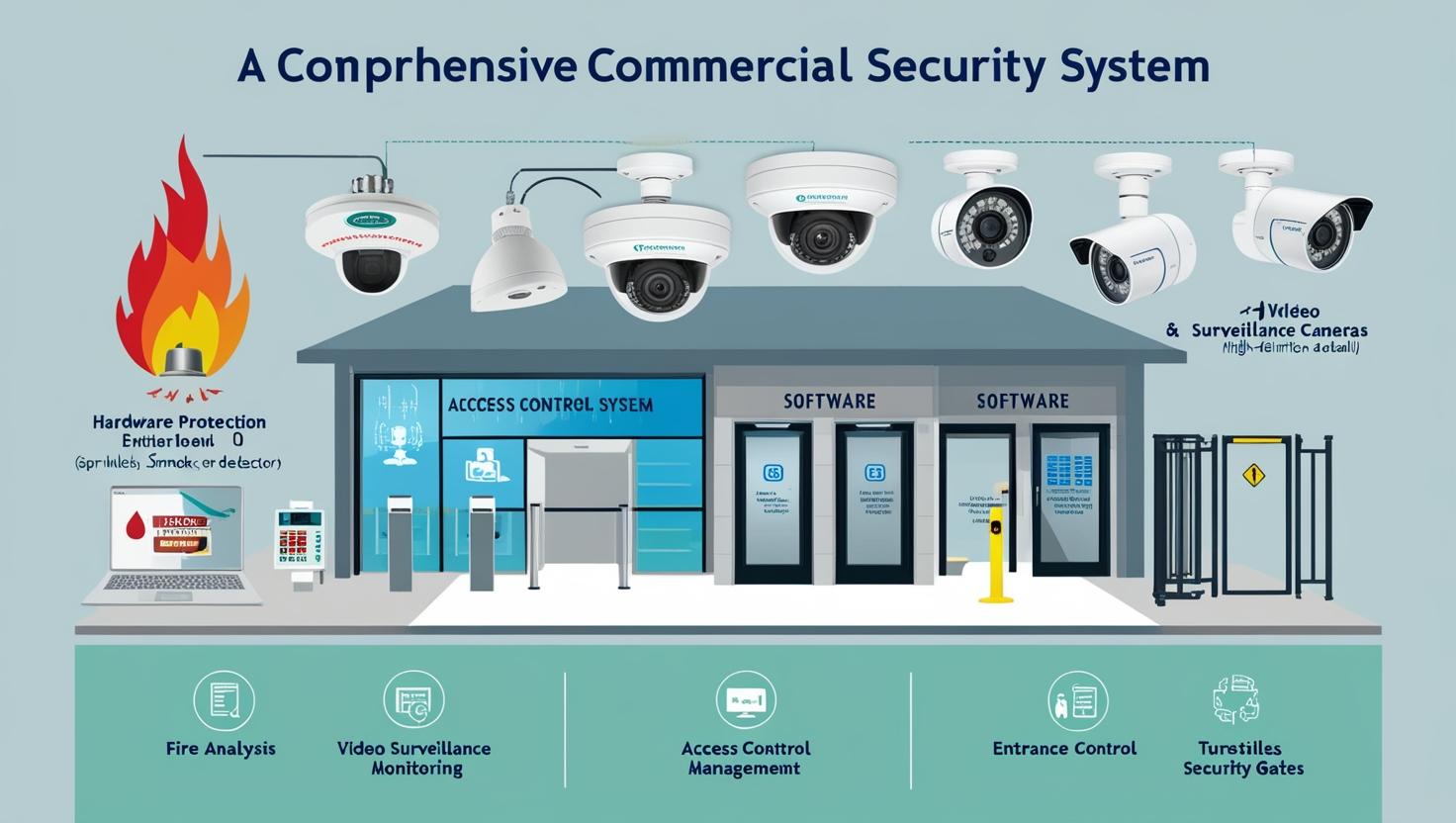
Video Surveillance: From Cameras to Cloud Intelligence
Ai in Video surveillance systems have also evolved significantly. Modern commercial setups deploy high-resolution cameras equipped with AI-driven video analytics. These systems can automatically detect suspicious behavior, track individuals, and even identify known threats based on facial recognition databases.
Storage and data management have moved toward cloud-based solutions, known as Video Surveillance as a Service (VSaaS). VSaaS allows businesses to securely store massive amounts of footage without investing heavily in physical infrastructure. Coupled with AI, VSaaS platforms provide real-time alerts and detailed incident analysis, enhancing situational awareness and enabling proactive security management.
Access Control Revolutionized by Biometrics and RFID
Traditional access control methods like key cards and PINs are increasingly augmented or replaced by biometric systems. Fingerprint scanners, facial recognition cameras, iris scanners, and even voice recognition terminals offer frictionless authentication that is harder to compromise.
Radio Frequency Identification (RFID) technology complements biometrics by enabling contactless and fast access, often integrated into ID badges or mobile devices. The combination of RFID with biometric verification creates multi-factor authentication systems that drastically reduce security risks.
Access Control as a Service (ACaaS) platforms have emerged, allowing remote management of access permissions and monitoring through cloud-based dashboards. This is especially valuable for organizations with multiple sites, as security administrators can instantly update access rights and audit entry logs from anywhere.
Building Management Integration: A Holistic Approach to Security
Security no longer exists in isolation. The integration of security systems with Building Management Systems (BMS) is enabling facilities to optimize safety, energy use, and operational efficiency simultaneously.
For example, an AI-enabled BMS can adjust lighting, HVAC, and access control settings based on occupancy detected by biometric scanners or video surveillance analytics. In emergency scenarios, BMS can coordinate fire alarms, unlock emergency exits, and guide occupants via digital signage to safe zones.
This holistic approach enhances not only security but also the overall user experience and sustainability of commercial buildings.
The Future of Commercial Security: Smarter, Safer, and More Connected
As AI and biometric technologies mature, the commercial security landscape will continue to advance toward more predictive and autonomous systems. Future solutions will leverage AI-driven insights not only to respond to threats but to anticipate and prevent them. Biometrics will expand beyond identification to support personalized experiences and seamless interactions within secure environments.
Cloud-based models like VSaaS and ACaaS will grow in popularity, offering scalable, cost-effective security management for businesses of all sizes. Integration with IoT and smart building technologies will further enhance system interoperability and data-driven decision-making.
AI and biometrics are revolutionizing commercial security by delivering smarter, more precise, and highly integrated solutions. From fire protection and video surveillance to access control and building management, these technologies empower organizations to safeguard assets, protect people, and streamline operations more effectively than ever before. Businesses embracing these innovations are positioning themselves to meet today’s security challenges and future-proof their defenses in an increasingly complex world.
FAQ
1. What advantages do AI and biometric technologies offer over traditional security methods?
AI and biometrics provide higher accuracy and reliability in identifying individuals and detecting threats. Unlike passwords or physical keys, biometric identifiers are unique and difficult to forge. AI enhances this by enabling real-time analysis, predictive threat detection, and automation, reducing human error and response times.
2. How are AI and biometrics integrated into fire protection systems?
AI analyzes sensor data to quickly detect genuine fire incidents and minimize false alarms. It can also optimize sprinkler system activation based on occupancy and environmental conditions, enhancing safety while reducing potential damage.
3. What is the role of VSaaS and ACaaS in modern commercial security?
Video Surveillance as a Service (VSaaS) and Access Control as a Service (ACaaS) offer cloud-based platforms for managing security remotely. They enable real-time monitoring, flexible access management, scalable storage, and faster deployment without heavy upfront infrastructure costs.
4. How does biometric access control improve security in commercial buildings?
Biometric access control uses fingerprint, facial, iris, or voice recognition to verify identities with high precision. This reduces risks from lost or stolen access cards and eliminates password vulnerabilities, ensuring only authorized individuals gain entry.
5. Can RFID be combined with biometrics for better security?
Yes, combining RFID with biometrics creates multi-factor authentication systems. RFID enables quick, contactless access while biometrics confirm identity, enhancing overall security without compromising convenience.