The global solar energy industry is undergoing a significant transformation, and at the center of this evolution is the emergence of perovskite solar cells. As the push toward cleaner, more sustainable energy sources intensifies, these next-generation solar cells are quickly gaining attention for their unique advantages over traditional silicon-based technologies. The perovskite solar cell market is expected to experience a substantial surge in growth, largely driven by the increasing demand for lightweight, flexible, and cost-effective solar solutions that can be deployed across a variety of industries and environments.
Perovskite solar cells are made using a special class of materials known as perovskites, which have a distinctive crystal structure that makes them highly efficient at absorbing sunlight and converting it into electricity. Unlike conventional silicon solar panels, which are rigid, heavy, and require energy-intensive manufacturing processes, perovskite solar cells can be produced using simpler, low-cost methods such as solution printing. This allows the cells to be applied to a wide range of surfaces, including flexible plastics, fabrics, and even glass, which opens up new possibilities for solar integration in areas where traditional panels are not viable.
One of the most compelling features of perovskite technology is its lightweight and flexible nature. This flexibility makes it possible to install solar cells in unconventional places, such as on curved surfaces, portable devices, electric vehicles, and even clothing. For sectors like transportation, aerospace, and consumer electronics, this innovation creates opportunities to design energy systems that are not only efficient but also adaptable to form and function. In urban infrastructure, perovskite solar cells can be integrated into building facades and windows, contributing to the growing trend of building-integrated photovoltaics, or BIPV. These applications are becoming increasingly attractive to architects and urban planners looking to maximize clean energy use without compromising design.
Download PDF Brochure @ https://www.marketsandmarkets.com/pdfdownloadNew.asp?id=253842189
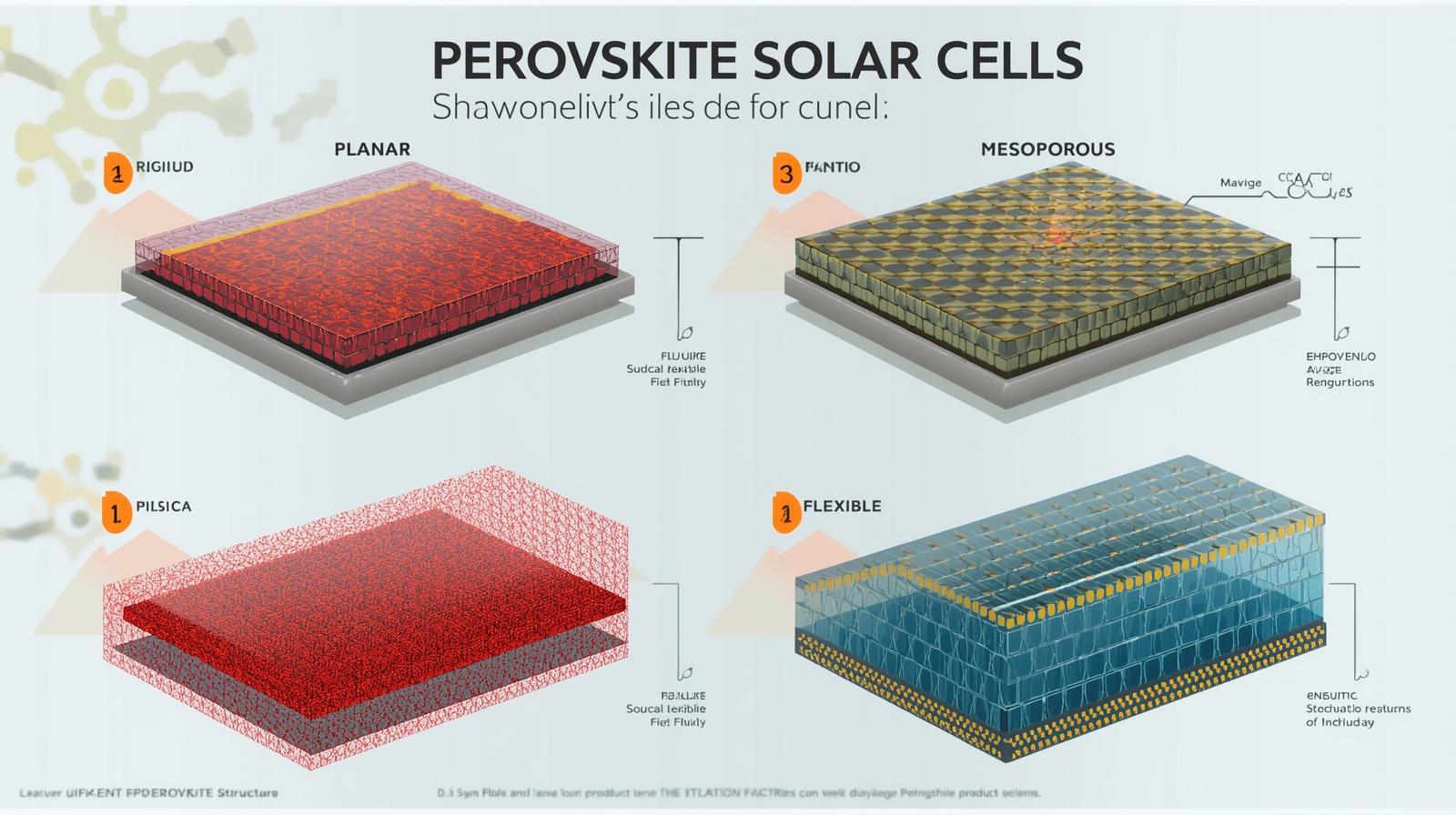
The rise of perovskite solar cells is also closely tied to advancements in performance. Laboratory results have already shown power conversion efficiencies of over x%, placing them on par with traditional silicon cells. Researchers are also developing tandem solar cells, where a perovskite layer is stacked on top of a silicon base, achieving efficiencies higher than either material alone can deliver. These tandem designs not only promise greater energy output but also offer a path forward for existing silicon manufacturers to upgrade their technologies without starting from scratch.
Commercial interest in perovskite solar technology is growing rapidly. Numerous startups and established solar companies are investing in scaling up perovskite production and improving the long-term stability of the material. A major challenge for perovskite adoption has been its sensitivity to moisture, oxygen, and heat, which can degrade performance over time. However, significant progress has been made in overcoming these barriers through innovations in encapsulation and materials engineering. With continued advancements, perovskite cells are becoming more durable and reliable for real-world use.
The market’s growth is also supported by broader trends in global energy policy. Governments around the world are encouraging the adoption of renewable energy through subsidies, research funding, and climate targets aimed at reducing dependence on fossil fuels. Perovskite solar cells, with their potential to deliver clean energy in more versatile and affordable ways, are well-positioned to benefit from these incentives. Moreover, as distributed energy systems and off-grid solutions gain popularity—especially in developing regions—perovskite cells offer a portable and scalable solution to power generation without requiring major infrastructure investments.
Despite their potential, perovskite solar cells are not without challenges. Many high-efficiency designs currently rely on lead-based compounds, raising concerns about environmental and health impacts. Researchers are actively working on lead-free alternatives, which could make the technology even more sustainable. Additionally, large-scale manufacturing and supply chain development are still in early stages, meaning it will take time before perovskite solar panels become widely available in the consumer market.
In conclusion, the perovskite solar cell market is on the verge of a major breakthrough. With the increasing demand for solar technologies that are lighter, more flexible, and more efficient, perovskite cells offer a compelling solution that meets the evolving needs of modern energy systems. As technical challenges are addressed and commercial production ramps up, this technology is expected to become a cornerstone of the global shift toward renewable energy—powering not just buildings and homes, but also vehicles, electronics, and infrastructure in ways previously unimaginable. The future of solar is not only bright; it’s flexible, scalable, and increasingly perovskite-driven.
Frequently Asked Questions (FAQs) about Perovskite Solar Cells and Market Growth
What are perovskite solar cells?
Perovskite solar cells are a type of photovoltaic technology that uses materials with a unique crystal structure called perovskites. These materials have excellent light-absorbing properties and can convert sunlight into electricity efficiently. Unlike traditional silicon solar panels, perovskite cells are thin, lightweight, and can be manufactured on flexible substrates.
Why is the perovskite solar cell market expected to grow rapidly?
The market is growing due to the increasing demand for lightweight, flexible, and cost-effective solar solutions. Perovskite cells can be integrated into various surfaces like windows, curved structures, wearable devices, and portable electronics, creating new applications where traditional solar panels are unsuitable. Advances in efficiency and durability are also accelerating commercial adoption.
How efficient are perovskite solar cells compared to traditional silicon panels?
Perovskite solar cells have achieved efficiencies exceeding x% in laboratory settings, which is comparable to, and sometimes better than, conventional silicon solar panels. Additionally, tandem solar cells that combine perovskite and silicon layers have shown even higher efficiencies.
What makes perovskite solar cells flexible and lightweight?
Perovskite cells can be produced using solution-based printing techniques on thin, flexible substrates such as plastic or metal foil. This results in solar cells that are much lighter and bendable compared to rigid silicon panels, enabling their use in innovative applications like wearable technology and curved surfaces.
Are there any environmental concerns related to perovskite solar cells?
Yes, many perovskite solar cells currently use lead, which poses potential environmental and health risks if not properly managed. Research is ongoing to develop lead-free perovskite materials to make the technology safer and more sustainable.
About MarketsandMarkets™
MarketsandMarkets™ is a blue ocean alternative in growth consulting and program management, leveraging a man-machine offering to drive supernormal growth for progressive organizations in the B2B space. We have the widest lens on emerging technologies, making us proficient in co-creating supernormal growth for clients.
The B2B economy is witnessing the emergence of $25 trillion of new revenue streams that are substituting existing revenue streams in this decade alone. We work with clients on growth programs, helping them monetize this $25 trillion opportunity through our service lines – TAM Expansion, Go-to-Market (GTM) Strategy to Execution, Market Share Gain, Account Enablement, and Thought Leadership Marketing.
Built on the ’GIVE Growth’ principle, we work with several Forbes Global 2000 B2B companies – helping them stay relevant in a disruptive ecosystem. Our insights and strategies are molded by our industry experts, cutting-edge AI-powered Market Intelligence Cloud, and years of research. The KnowledgeStore™ (our Market Intelligence Cloud) integrates our research, facilitates an analysis of interconnections through a set of applications, helping clients look at the entire ecosystem and understand the revenue shifts happening in their industry.
To find out more, visit www.MarketsandMarkets™.com or follow us on Twitter, LinkedIn and Facebook.
Contact:
Mr. Rohan Salgarkar
MarketsandMarkets™ INC.
1615 South Congress Ave.
Suite 103
Delray Beach, FL 33445
USA : 1-888-600-6441
