As centralized energy grids strain under rising global demand, climate threats, and infrastructure limitations, the shift toward decentralized energy has become more than a trend — it’s a necessity. One technology rapidly gaining attention in this landscape is the solar container: a self-contained, mobile power unit equipped with solar panels, batteries, inverters, and often hybrid support systems. Originally designed for remote or emergency applications, solar containers are now becoming strategic assets in agriculture, industry, electrification, and national infrastructure.
With energy investors increasingly looking for solutions that are scalable, clean, and flexible, solar containers are being recognized as a high-growth opportunity. The solar container market is projected to reach USD 0.83 billion by 2030 from USD 0.29 billion in 2025, registering a CAGR of 23.8% during the forecast period. Here’s a deeper look at the technology, segmentation, and its growing investment appeal.
On-Grid vs Off-Grid Deployment: Core to the Value Proposition
The solar container market is largely defined by its application in off-grid settings — areas where centralized electricity is unavailable, unreliable, or prohibitively expensive. These containers are deployed in regions with limited grid penetration, such as rural Sub-Saharan Africa, Southeast Asia, and parts of Latin America. In these contexts, they provide essential power for schools, clinics, farms, and telecom infrastructure, effectively replacing or supplementing diesel generators. Off-grid solar containers are not just a clean energy solution; they are a development catalyst.
Conversely, on-grid containers are gaining traction in urban and peri-urban areas. These units often function as backup or supplementary power systems, particularly in regions facing rolling blackouts, poor grid quality, or peak-time energy costs. For governments and utilities, solar containers serve as rapid-deployment tools to stabilize the grid, power microgrids, or bridge gaps in service. Investors are closely watching both segments, though off-grid applications currently dominate the market in both volume and strategic value.
Download PDF Brochure @ https://www.marketsandmarkets.com/pdfdownloadNew.asp?id=234680839
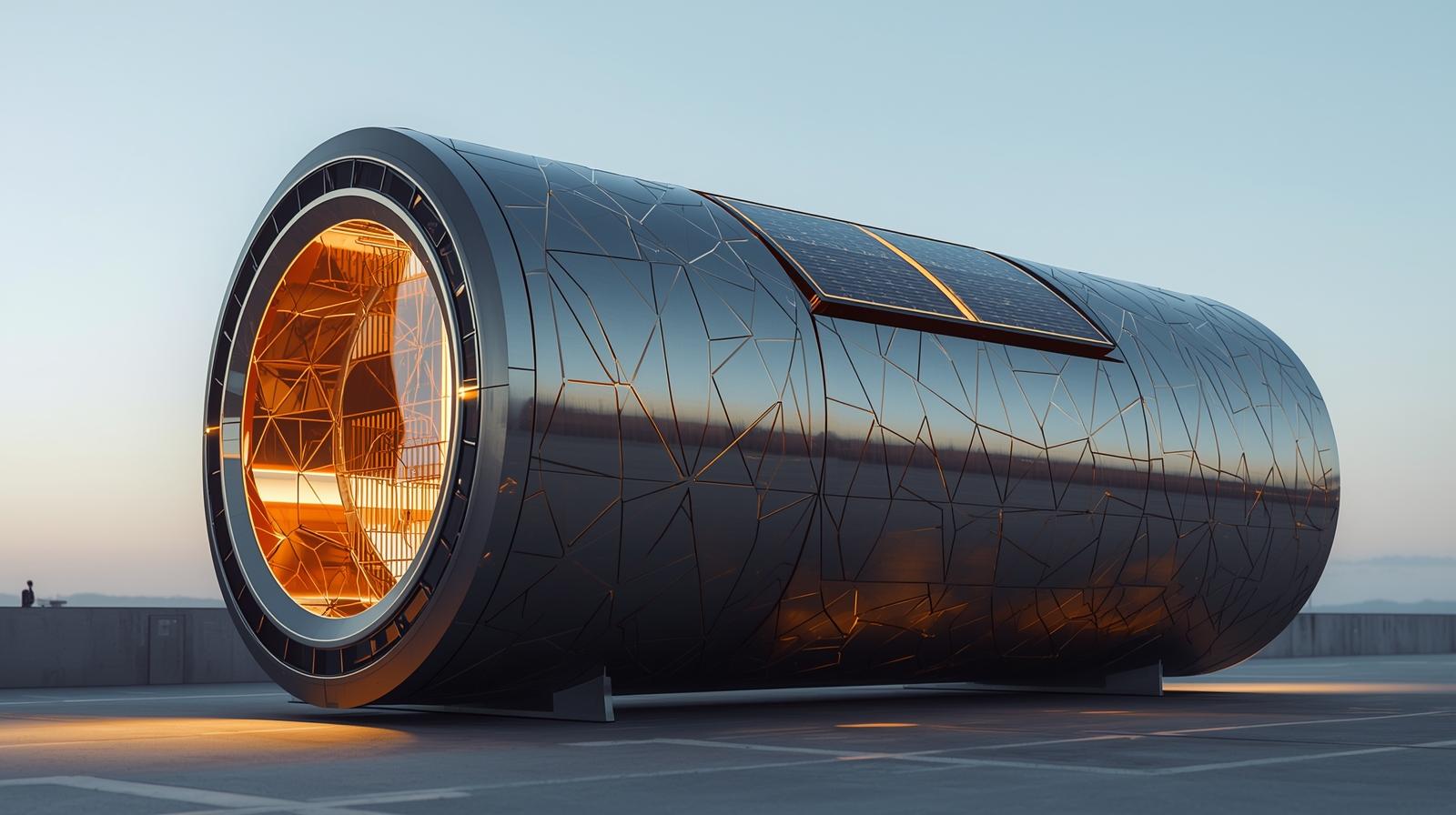
Portable vs Fixed Units: Flexibility Meets Functionality
One of the key selling points of solar containers is their mobility. Portable units can be deployed rapidly and redeployed as needed — a major advantage in disaster response, military logistics, or mining operations. These units often serve temporary or rotating locations, where energy is needed for a limited period or the operational footprint is shifting. In post-conflict or climate-displaced regions, they can be installed in less than 48 hours, offering immediate relief and energy access.
In contrast, fixed containers are used for semi-permanent installations — in villages, remote schools, health outposts, or agricultural operations. These units are designed for longevity and integrated use, often becoming part of a local microgrid or hybrid power system. Fixed containers appeal to development banks, NGOs, and energy companies that are deploying long-term infrastructure in emerging markets. While portable units offer higher versatility, fixed systems tend to yield stronger long-term returns on investment.
Power Capacity Segmentation: Scaling to Demand
Solar containers are built across a range of power capacities, from small-scale units under 10 kilowatts to industrial-grade systems above 50 kilowatts. At the lower end, units under 10 kW are commonly used for basic electrification — powering lighting, small appliances, or single water pumps. They are relatively low-cost, high-volume products often sold in developing countries through microfinance or pay-as-you-go (PAYG) models.
Mid-range units, between 10 and 50 kW, form the heart of the commercial and institutional market. These containers are well-suited for powering rural clinics, schools, telecom towers, or farm operations. Their modularity and ability to scale are particularly attractive for investors seeking diverse deployment scenarios with repeatable revenue models.
High-capacity systems, delivering more than 50 kW, are used in energy-intensive sectors such as mining, military bases, construction camps, and industrial projects in off-grid zones. These large containers can support complex operations and hybrid systems, often integrating diesel generators or grid-tie functionality. Though fewer in number, they command higher contract values and present lucrative opportunities for long-term energy-as-a-service (EaaS) models.
Key Components: Solar Panels, Batteries, and Inverters
The technological backbone of a solar container consists of three primary components: solar panels, battery storage, and power inverters. Each of these plays a critical role in determining system performance, longevity, and cost-efficiency.
Solar panels, typically mounted on the roof of the container, harvest energy during daylight hours. High-efficiency monocrystalline panels are becoming the industry standard, offering better energy yields in limited surface areas. Investors are increasingly favoring companies that adopt innovative materials, such as lightweight PV modules, to optimize logistics and installation.
Battery systems, usually lithium-ion or lithium iron phosphate (LFP), store excess energy for use at night or during cloudy periods. Batteries are one of the most expensive components in the system and also the most critical in ensuring uninterrupted power delivery. Companies with battery partnerships or proprietary energy management software are well-positioned to deliver higher margins and performance.
Inverters convert direct current (DC) from the panels into alternating current (AC) used by most appliances and machinery. Advanced systems use hybrid inverters that can intelligently switch between solar, battery, grid, and even diesel inputs. As grid-interactive solar grows, smart inverters will be a key differentiator in performance and cost savings.
End-Use Markets: Agriculture, EV Charging, Mining, and More
The versatility of solar containers opens doors to multiple high-value sectors. In agriculture and irrigation, solar containers power water pumps, refrigeration, and processing equipment, increasing yields and reducing post-harvest losses. In many rural areas, farmers are transitioning from diesel to solar-powered irrigation — a shift that creates stable, seasonal demand for containerized solutions.
Remote EV charging stations represent a rapidly emerging use case, particularly in regions where electric vehicles are outpacing grid upgrades. In safari zones, desert highways, and island communities, solar containers provide standalone EV charging points. As e-mobility expands into frontier markets, these applications are likely to attract significant investment.
The mining and military sectors are long-time users of mobile power systems, and solar containers are beginning to replace noisy, fuel-intensive generators in field operations. The appeal lies not only in cost savings and noise reduction but also in supply chain simplification — reducing the need for fuel deliveries in dangerous or remote areas.
Finally, energy companies and utilities are beginning to integrate solar containers into their service models. From rural electrification to pilot programs for grid expansion, these firms are entering into public-private partnerships to deploy containerized systems at scale. This trend is unlocking B2B investment opportunities, especially for firms providing end-to-end solar infrastructure.
Conclusion: A Decentralized Energy Future is Containerized
Solar containers represent a rare alignment of innovation, sustainability, and economic opportunity. As the global energy transition accelerates and demand for off-grid, resilient power grows, these modular units are finding relevance across sectors, geographies, and income levels. From humanitarian relief to high-tech mining operations, the market potential is vast and largely untapped.
For investors, solar containers offer diverse entry points — from early-stage startups innovating in battery tech to infrastructure funds financing large-scale deployments. What unites all these opportunities is the central thesis: the future of energy is modular, clean, and decentralized. And solar containers are leading that charge — quietly, efficiently, and powerfully.
Solar Container Industry – Frequently Asked Questions (FAQ)
1. What is a solar container?
A solar container is a self-contained, transportable energy unit typically housed in a repurposed shipping container. It includes solar panels, battery storage, inverters, and sometimes additional equipment like water purification systems or communication modules. These units are designed to provide reliable, off-grid or supplementary power in remote, temporary, or underserved locations.
2. How are solar containers different from traditional solar systems?
While traditional solar systems are usually fixed in place and integrated into buildings or infrastructure, solar containers are modular, portable, and plug-and-play. They can be deployed quickly, moved as needed, and do not require permanent foundations or long installation processes. This makes them ideal for disaster zones, rural areas, mobile operations, and temporary sites.
3. What industries or sectors use solar containers?
Solar containers serve a wide range of sectors, including:
- Agriculture & Irrigation: Powering pumps, refrigeration, and processing equipment in rural farming.
- Remote EV Charging Stations: Supporting electric vehicle infrastructure in off-grid or low-grid areas.
- Mining & Military: Providing reliable, mobile power for remote operations.
- Energy Companies & Utilities: Extending power access and supporting microgrids.
- Telecommunications: Powering cell towers and communication equipment in off-grid areas.
- NGOs & Humanitarian Aid: Delivering emergency power in disaster and conflict zones.
About MarketsandMarkets™
MarketsandMarkets™ has been recognized as one of America’s Best Management Consulting Firms by Forbes, as per their recent report.
MarketsandMarkets™ is a blue ocean alternative in growth consulting and program management, leveraging a man-machine offering to drive supernormal growth for progressive organizations in the B2B space. With the widest lens on emerging technologies, we are proficient in co-creating supernormal growth for clients across the globe.
Today, 80% of Fortune 2000 companies rely on MarketsandMarkets, and 90 of the top 100 companies in each sector trust us to accelerate their revenue growth. With a global clientele of over 13,000 organizations, we help businesses thrive in a disruptive ecosystem.
The B2B economy is witnessing the emergence of $25 trillion in new revenue streams that are replacing existing ones within this decade. We work with clients on growth programs, helping them monetize this $25 trillion opportunity through our service lines – TAM Expansion, Go-to-Market (GTM) Strategy to Execution, Market Share Gain, Account Enablement, and Thought Leadership Marketing.
Built on the ‘GIVE Growth’ principle, we collaborate with several Forbes Global 2000 B2B companies to keep them future-ready. Our insights and strategies are powered by industry experts, cutting-edge AI, and our Market Intelligence Cloud, KnowledgeStore™, which integrates research and provides ecosystem-wide visibility into revenue shifts.
To find out more, visit www.MarketsandMarkets™.com or follow us on Twitter , LinkedIn and Facebook .
Contact:
Mr. Rohan Salgarkar
MarketsandMarkets™ INC.
1615 South Congress Ave.
Suite 103, Delray Beach, FL 33445
USA: +1-888-600-6441
