The advent of exoskeleton technology represents a significant leap in human-machine interaction, blending robotics with wearable systems designed to enhance or restore physical abilities. Initially developed to aid individuals with mobility impairments, exoskeletons have transcended their original purpose and are now transforming multiple sectors, especially healthcare and manufacturing. These wearable robotic suits are fundamentally changing how we approach rehabilitation, worker safety, and productivity.
Understanding Exoskeleton Technology
Exoskeletons are wearable frameworks equipped with motors, sensors, and control systems that either augment or support human movement. Unlike traditional prosthetics, exoskeletons actively assist users by amplifying their strength, endurance, and precision. Depending on the application, these devices may support full-body mobility or focus on specific parts like the lower limbs or arms. Their design combines biomechanical engineering with sophisticated electronics, enabling real-time adjustments and interactions with the user’s movements.
Revolutionizing Healthcare and Rehabilitation
In the healthcare sector, exoskeletons have opened up new frontiers in physical therapy and patient mobility. For individuals recovering from neurological injuries such as strokes or spinal cord trauma, traditional rehabilitation can be slow, arduous, and limited by human fatigue. Exoskeletons provide consistent, repetitive motion therapy by guiding patients through controlled movements that stimulate muscle recovery and neuroplasticity. This results in improved motor function and faster recovery timelines.
Moreover, exoskeletons empower patients with permanent mobility impairments by assisting in walking and standing, thereby improving their independence and quality of life. The psychological benefits of regaining mobility cannot be overstated, as increased autonomy often correlates with better mental health outcomes. Additionally, these devices reduce the physical strain on caregivers and medical personnel, who would otherwise need to assist with patient movement manually.
Cutting-edge exoskeletons now incorporate AI and sensor-based feedback loops, allowing for customized therapy regimens tailored to each patient’s progress and limitations. This personalized approach not only enhances therapeutic outcomes but also facilitates remote monitoring, enabling healthcare professionals to adjust treatment plans in real time.
Download PDF Brochure @ https://www.marketsandmarkets.com/pdfdownloadNew.asp?id=40697797
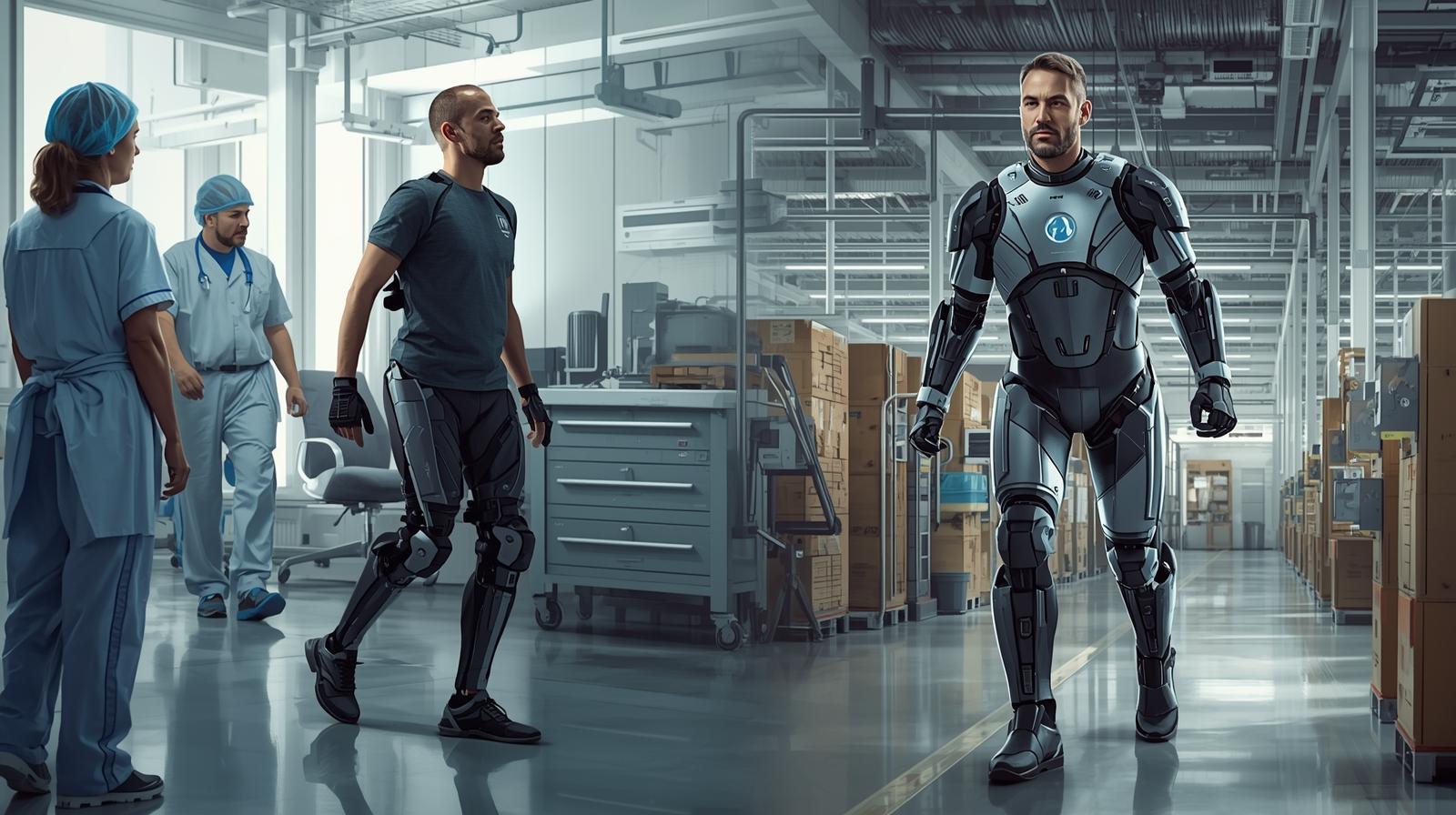
Enhancing Worker Safety and Productivity in Manufacturing
Manufacturing and industrial environments are known for their physically demanding tasks that often involve repetitive movements, heavy lifting, and awkward postures. These factors contribute to high rates of musculoskeletal injuries among workers, leading to absenteeism, increased healthcare costs, and reduced productivity. Exoskeleton technology addresses these challenges by providing physical support and strength augmentation to workers during strenuous activities.
By redistributing loads and stabilizing posture, exoskeletons reduce fatigue and minimize the risk of injury. Workers equipped with these devices can perform demanding tasks for longer durations without compromising their health or efficiency. This directly translates into improved productivity and lower operational disruptions.
Beyond injury prevention, exoskeletons improve ergonomic compliance in the workplace. Many industries are under pressure to adhere to strict occupational health and safety standards, and exoskeletons offer a tangible solution for meeting these requirements. As a result, manufacturers are increasingly adopting this technology to foster safer and more sustainable work environments.
Furthermore, the adaptability of exoskeletons allows them to be utilized across a range of industrial applications—from assembly lines and logistics to maintenance and construction. This versatility broadens the scope of their impact, making exoskeletons a valuable investment for many sectors.
Overcoming Challenges and Driving Innovation
Despite the promising benefits, the adoption of exoskeletons is not without its challenges. One of the primary barriers is the high cost of development and deployment, which can be prohibitive for small and medium-sized enterprises or healthcare facilities with limited budgets. Additionally, the comfort and ergonomics of these devices remain an area of ongoing improvement, as users need to wear them for extended periods.
Customization also plays a critical role, as a one-size-fits-all approach does not work for the diverse physical profiles and specific task requirements in healthcare and industry. This necessitates collaboration among engineers, medical professionals, and end-users to create tailored solutions that maximize effectiveness and user acceptance.
Regulatory frameworks and standards are evolving alongside the technology but can sometimes slow down widespread adoption due to the need for rigorous safety and efficacy validations. Workforce training is equally important to ensure that users operate exoskeletons correctly and safely.
Innovations in materials science, such as lightweight composites and flexible actuators, coupled with advances in battery technology, are helping to address weight and power concerns. The integration of AI and machine learning is making exoskeletons smarter and more intuitive, capable of adapting dynamically to the wearer’s needs and environment.
The Future of Exoskeletons in Healthcare and Manufacturing
Looking ahead, exoskeletons are poised to become a cornerstone technology in both healthcare and manufacturing. In healthcare, they will increasingly support home-based rehabilitation and long-term mobility solutions, driven by aging populations and the rising prevalence of chronic conditions. Remote and tele-rehabilitation powered by connected exoskeleton systems could revolutionize patient care beyond clinical settings.
In manufacturing, the continuous push for automation and worker safety will see exoskeletons integrated into comprehensive industrial ecosystems that include robotics, AI, and IoT. These wearable devices will not only protect workers but also optimize human-machine collaboration, enabling new levels of efficiency and productivity.
Ultimately, exoskeleton technology represents a paradigm shift—augmenting human capabilities rather than replacing them. As the technology matures, its widespread adoption promises to enhance quality of life, promote workplace safety, and drive operational excellence across diverse industries.
FAQ:
Q1: Why should investors pay attention to the exoskeleton technology market?
Exoskeletons are at the intersection of healthcare innovation, industrial automation, and wearable robotics—three high-growth verticals. As aging populations drive demand for rehabilitation technologies and industries focus more on workplace safety and productivity, exoskeleton adoption is poised to expand rapidly. The market is transitioning from R&D to commercial scale, presenting significant opportunities for early investors.
Q2: What is the current market size and growth forecast for exoskeleton technology?
Exoskeleton Industry worth $2.03 billion by 2030. This growth is fueled by rising demand in both medical rehabilitation and industrial safety sectors, as well as increasing military and defense applications.
Q3: Which sectors are driving the most demand for exoskeletons?
The healthcare sector leads in adoption due to strong demand for physical rehabilitation and mobility solutions. However, industrial applications—especially in automotive, manufacturing, construction, and logistics—are quickly catching up as companies seek to reduce workplace injuries and improve productivity. Defense and public safety are also emerging as high-value segments.
Q4: What are the key revenue models in the exoskeleton industry?
- Revenue streams include:
- Device Sales to hospitals, rehabilitation centers, and industrial clients
- Leasing Models for industries looking to reduce CapEx
- Service & Maintenance Contracts
- Software & Data Platforms for performance analytics and remote monitoring
- Clinical Licensing & Partnerships with healthcare providers
- Recurring revenue from software and maintenance services is expected to grow significantly as more units are deployed in the field.
About MarketsandMarkets™
MarketsandMarkets™ has been recognized as one of America’s Best Management Consulting Firms by Forbes, as per their recent report.
MarketsandMarkets™ is a blue ocean alternative in growth consulting and program management, leveraging a man-machine offering to drive supernormal growth for progressive organizations in the B2B space. With the widest lens on emerging technologies, we are proficient in co-creating supernormal growth for clients across the globe.
Today, 80% of Fortune 2000 companies rely on MarketsandMarkets, and 90 of the top 100 companies in each sector trust us to accelerate their revenue growth. With a global clientele of over 13,000 organizations, we help businesses thrive in a disruptive ecosystem.
The B2B economy is witnessing the emergence of $25 trillion in new revenue streams that are replacing existing ones within this decade. We work with clients on growth programs, helping them monetize this $25 trillion opportunity through our service lines – TAM Expansion, Go-to-Market (GTM) Strategy to Execution, Market Share Gain, Account Enablement, and Thought Leadership Marketing.
Built on the ‘GIVE Growth’ principle, we collaborate with several Forbes Global 2000 B2B companies to keep them future-ready. Our insights and strategies are powered by industry experts, cutting-edge AI, and our Market Intelligence Cloud, KnowledgeStore™, which integrates research and provides ecosystem-wide visibility into revenue shifts.
To find out more, visit www.MarketsandMarkets™.com or follow us on Twitter , LinkedIn and Facebook .
Contact:
Mr. Rohan Salgarkar
MarketsandMarkets™ INC.
1615 South Congress Ave.
Suite 103, Delray Beach, FL 33445
USA: +1-888-600-6441
