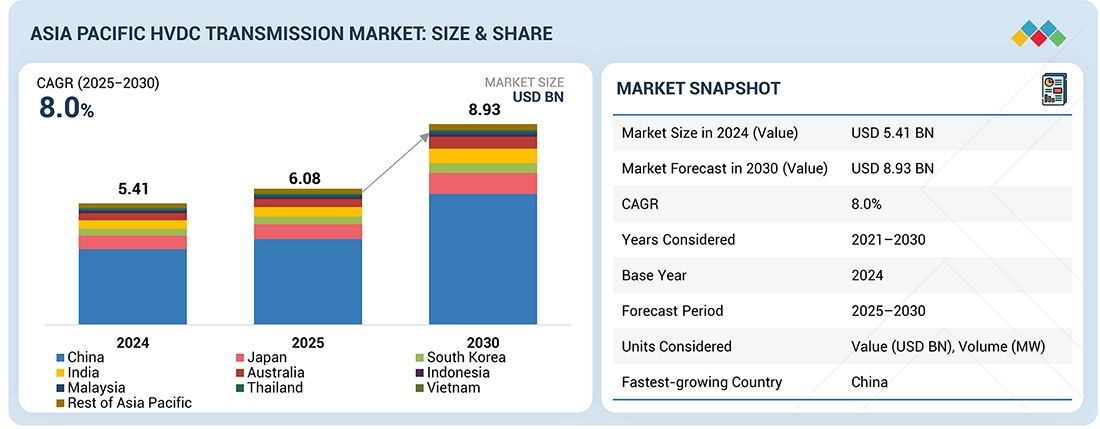
The Asia Pacific HVDC Transmission Market is poised for strong expansion through 2030, driven by rapid growth in renewable energy capacity, rising electricity demand, and large-scale investments in power grid modernization. HVDC technology enables highly efficient long-distance power transmission with minimal losses, making it critical for connecting remote solar, hydro, and wind generation sites to major demand centers across Asia Pacific. The market is projected to grow from around USD 6.08 billion in 2025 to approximately USD 8.93 billion by 2030, at a CAGR of ~8.0%.
Download PDF Brochure:
https://www.marketsandmarkets.com/pdfdownloadNew.asp?id=143381591
Asia Pacific HVDC Transmission Market Trends
Shift to Advanced HVDC Technologies
The transition from traditional Line Commutated Converter (LCC) systems to modern Voltage Source Converter (VSC) architectures is a significant trend. VSC-based systems offer superior controllability, better integration with renewable energy sources (especially offshore wind), and improved grid flexibility, making them increasingly preferred.
Integration of Smart and Digital Systems
Utilities are incorporating digital solutions such as IoT, predictive analytics, and remote monitoring into HVDC control systems. These technologies improve reliability, enable predictive maintenance, and optimize overall transmission performance.
Rise of Multi-Terminal and Flexible HVDC Networks
Multi-terminal HVDC systems are gaining traction as they enable dynamic power routing between multiple nodes, facilitating cross-border interconnections and supporting flexible power trading across domestic and regional grids.
Growth of Large-Scale Renewable Transmission Projects
Asia Pacific’s aggressive renewable energy targets are driving demand for HVDC projects capable of carrying power from remote wind, solar, and hydro resources to urban consumption hubs. HVDC’s low transmission losses make it a preferred choice for long distances.
Key Drivers of Market Growth
Rapid Expansion of Renewable Energy Infrastructure
Large-scale renewable installations, especially offshore wind and remote solar farms, require efficient transmission solutions like HVDC to deliver power without excessive losses—boosting regional demand.
Need for Efficient Long-Distance Power Transfer
As electricity demand grows, power generation facilities are increasingly located far from load centers. HVDC enables reliable long-distance transmission with reduced losses compared to traditional AC systems.
Grid Modernization and Decarbonization Policies
Governments across China, India, Japan, and Southeast Asia are investing in grid upgrades and decarbonization, prioritizing advanced transmission infrastructure including ultra-HVDC corridors.
Cross-Border Power Interconnections
Regional power trading and cross-border grid linkages are increasingly facilitated by HVDC technology, enabling more resilient and integrated power markets.
Request Free Customization in this Report:
https://www.marketsandmarkets.com/requestCustomizationNew.asp?id=143381591
Competitive Landscape
The Asia Pacific HVDC transmission market is competitive, with global and regional players focusing on technological advancement, strategic collaborations, and expanded service portfolios. Key competitive dynamics include:
- Innovation in Converter and Cable Technologies: Companies are developing compact, high-performance converter stations and advanced HVDC cable solutions to support diverse project needs.
- Partnerships with Utilities and EPC Firms: Strategic alliances between technology providers and engineering, procurement, and construction (EPC) companies are strengthening market penetration.
- Regional Expansion: Market leaders are scaling operations in high-growth countries such as China and India to capitalize on major infrastructure projects.
Prominent players in the market include:
- Hitachi Ltd.
- Siemens Energy
- Mitsubishi Electric Corporation
- GE Vernova
- Prysmian Group
- Toshiba Corporation
- NKT A/S
- LS ELECTRIC Co., Ltd.
- NR Electric Co., Ltd.
Future Outlook
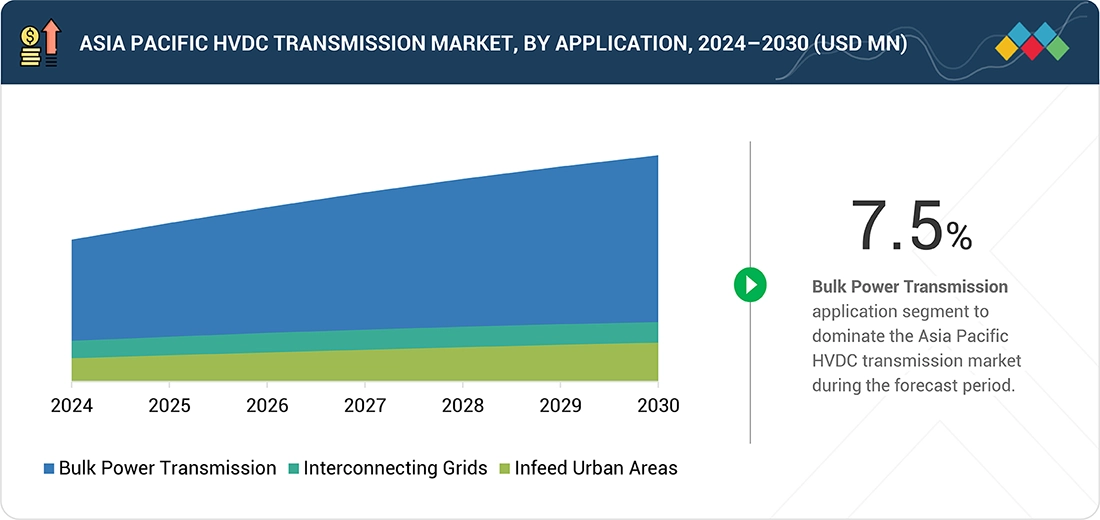
The Asia Pacific HVDC transmission market is expected to maintain a robust growth trajectory through 2032. Continued investment in ultra-high voltage transmission corridors, widespread renewable energy integration, and the rollout of digitally enabled HVDC systems will drive long-term expansion. Rapid urbanization and growing electricity consumption will also support broader adoption of HVDC solutions for both bulk power transfer and grid interconnections.
Emerging opportunities include offshore wind grid links, smart grid synergies, and deployment in emerging economies across Southeast Asia. However, high initial project costs and the need for greater standardization across borders remain implementation challenges.
Make an Inquiry:
https://www.marketsandmarkets.com/Enquiry_Before_BuyingNew.asp?id=143381591
Asia Pacific HVDC Transmission Market: Investor-Focused FAQs
Q.1 What is driving the Asia Pacific HVDC transmission market growth?
Market expansion is driven by rising electricity demand, integration of large-scale renewable energy sources, grid modernization initiatives, and the need for cost-efficient long-distance power transmission.
Q.2 Which technology segments are gaining traction?
VSC-based HVDC solutions are growing faster than legacy LCC systems due to enhanced flexibility, improved integration with renewables, and better control over power flows.
Q.3 Which components dominate the market?
Converter stations remain the largest component category, essential for AC-to-DC and DC-to-AC conversion in transmission systems.
Q.4 Which countries in Asia Pacific show the highest growth potential?
China leads the regional market with the largest share, followed by India, Japan, and Southeast Asian countries where massive grid upgrades and renewable integration projects are underway.
