The Smart Home Market is experiencing rapid expansion as advanced technologies such as artificial intelligence (AI) and the Internet of Things (IoT) transform traditional homes into intelligent, connected ecosystems. With consumers seeking greater convenience, security, energy efficiency, and comfort, the Smart Home Market has become one of the fastest-growing segments within the global consumer electronics and home automation industry.
Modern smart homes integrate multiple connected devices—from lighting and appliances to security systems and voice assistants—creating seamless automation and real-time control. As AI-powered platforms and IoT-enabled devices continue to evolve, the Smart Home Market is expected to grow significantly in the coming years. The global smart home market is projected to reach USD 95.83 billion in 2026 and USD 139.24 billion by 2032, exhibiting a CAGR of 6.4%.
Understanding the Smart Home Ecosystem
The Smart Home Market consists of interconnected devices that communicate with each other through wireless networks and centralized platforms. These systems allow homeowners to monitor and control household devices remotely through smartphones, tablets, or voice assistants.
AI algorithms enable smart systems to learn user preferences, automate daily routines, and optimize energy consumption. As a result, the Smart Home Market is increasingly attracting consumers who want efficient, convenient, and intelligent living environments.
Top 10 Key Takeaways
- The Smart Home Market is expanding rapidly due to increasing adoption of AI and IoT technologies.
- Smart lighting, speakers, and appliances are key products driving the Smart Home Market.
- Voice-controlled automation is becoming a central feature in modern smart homes.
- Security and access control systems are major contributors to the Smart Home Market.
- Smart HVAC systems help improve energy efficiency and comfort in connected homes.
- The integration of healthcare technologies is creating new opportunities within the Smart Home Market.
- AI and IoT enable automation, predictive analytics, and personalized home experiences.
- Asia-Pacific is expected to witness significant expansion in the Smart Home Market.
- Increasing demand for energy-efficient homes is supporting market growth.
- Continuous technological innovation will sustain long-term growth in the Smart Home Market.
Download PDF Brochure @ https://www.marketsandmarkets.com/pdfdownloadNew.asp?id=121
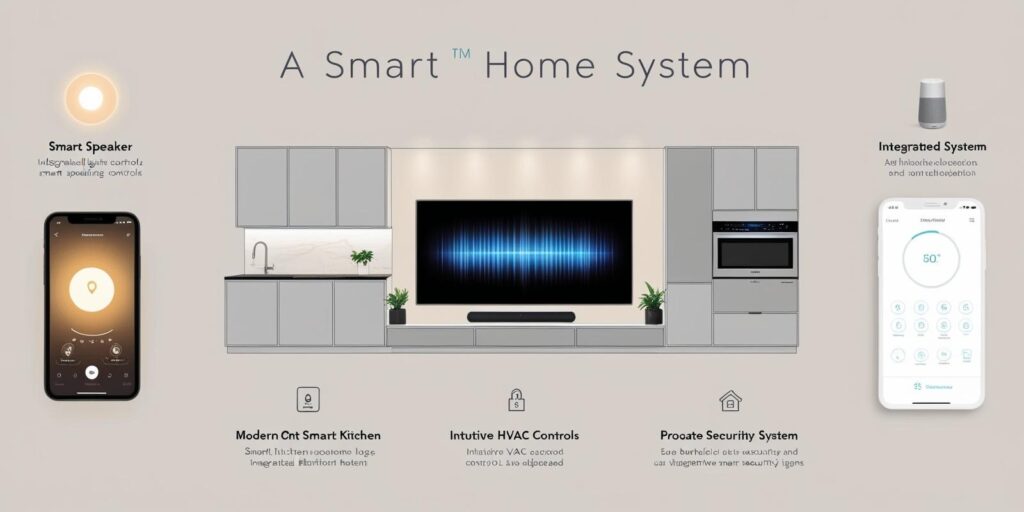
Key Products Driving the Smart Home Market
Lighting Control Systems
Smart lighting solutions allow users to adjust brightness, color, and scheduling through mobile apps or voice commands. These systems also help reduce energy consumption and improve home ambiance, contributing to the steady growth of the Smart Home Market.
Smart Speakers
Smart speakers act as central hubs for voice-controlled automation. These devices integrate with multiple smart home products, allowing users to manage lighting, entertainment systems, and appliances. The popularity of voice assistants has significantly boosted the Smart Home Market worldwide.
Entertainment and Other Controls
Connected entertainment systems provide integrated control of televisions, streaming devices, and audio systems. As digital media consumption grows, entertainment automation continues to drive demand within the Smart Home Market.
Smart Kitchen Solutions
Smart kitchen technologies, including connected refrigerators, ovens, and cooking devices, are transforming food preparation and household management. These solutions offer automated cooking features, remote monitoring, and improved energy efficiency, further supporting the expansion of the Smart Home industry .
HVAC Control Systems
Smart HVAC systems optimize heating, ventilation, and air conditioning through intelligent temperature control and predictive analytics. By improving comfort and reducing energy costs, these systems are playing a major role in the growth of the Smart Home Market.
Security and Access Control
Smart locks, surveillance cameras, motion sensors, and alarm systems provide enhanced home security. As concerns about safety increase, these technologies are becoming essential components of the Smart Home Market.
Home Healthcare Solutions
Home healthcare technologies enable remote monitoring of health conditions, medication reminders, and emergency alerts. The integration of health-focused technologies is creating new opportunities within the Smart Home Market.
Smart Home Appliances
Connected appliances such as washing machines, dishwashers, and robotic vacuum cleaners are improving household efficiency. These appliances can be controlled remotely and often include AI-powered features that adapt to user behavior, further driving the Smart Home Market.
Impact of AI and IoT on the Smart Home Market
Artificial intelligence and IoT are transforming the capabilities of smart homes. IoT devices collect real-time data from sensors and connected systems, while AI processes this information to automate tasks and improve decision-making.
For example, AI-enabled smart thermostats can learn household patterns and adjust temperatures automatically. Similarly, AI-powered security systems can detect unusual activity and send instant alerts to homeowners. These technological advancements are strengthening the value proposition of the Smart Home Market.
Market Growth Drivers
Several factors are accelerating the growth of the Smart Home Market:
- Increasing adoption of connected devices and IoT ecosystems
- Growing consumer demand for energy-efficient homes
- Rising awareness of home security and surveillance systems
- Expanding use of voice assistants and AI-driven automation
- Technological advancements in wireless connectivity and cloud computing
As these factors continue to evolve, the Smart Home Market is expected to expand across both developed and emerging economies.
Regional Market Outlook
North America currently holds a significant share of the Smart Home Market, supported by high consumer adoption, strong technology infrastructure, and the presence of leading smart home solution providers.
Asia-Pacific is emerging as one of the fastest-growing regions in the Smart Home Market, driven by rapid urbanization, rising disposable income, and increasing demand for connected home technologies.
Europe is also witnessing steady growth in the Smart Home Market, supported by energy efficiency regulations, smart city initiatives, and rising consumer awareness of automation technologies.
Future Trends in the Smart Home Market
Looking ahead, several emerging trends are expected to shape the future of the Smart Home Market:
- Greater integration of AI-powered automation platforms
- Increased adoption of energy management systems
- Expansion of smart home ecosystems with interoperable devices
- Growing use of edge computing for faster data processing
- Development of advanced home healthcare monitoring solutions
As these innovations continue to emerge, the Smart Home Market will play a crucial role in creating smarter, safer, and more efficient living environments.
Frequently Asked Questions (FAQs)
1. What is the Smart Home Market?
The Smart Home Market refers to the industry focused on connected home devices and automation technologies that allow homeowners to control lighting, security, appliances, and other systems remotely.
2. What technologies are driving the Smart Home Market?
Key technologies driving the Smart Home Market include artificial intelligence, the Internet of Things (IoT), cloud computing, wireless connectivity, and voice recognition systems.
3. What are the main products in the Smart Home Market?
Major products in the Smart Home Market include smart lighting systems, smart speakers, home security systems, smart appliances, HVAC controls, and home healthcare devices.
4. Which regions are leading the Smart Home Market?
North America currently leads the Smart Home Market, while Asia-Pacific is expected to experience the fastest growth due to rising technology adoption.
5. What is the future outlook for the Smart Home Market?
The future of the Smart Home Market is promising, with continued growth driven by AI integration, IoT expansion, smart appliances, and increasing demand for connected living solutions.
About MarketsandMarkets™
MarketsandMarkets™ has been recognized as one of America’s Best Management Consulting Firms by Forbes, as per their recent report.
MarketsandMarkets™ is a blue ocean alternative in growth consulting and program management, leveraging a man-machine offering to drive supernormal growth for progressive organizations in the B2B space. With the widest lens on emerging technologies, we are proficient in co-creating supernormal growth for clients across the globe.
Today, 80% of Fortune 2000 companies rely on MarketsandMarkets, and 90 of the top 100 companies in each sector trust us to accelerate their revenue growth. With a global clientele of over 13,000 organizations, we help businesses thrive in a disruptive ecosystem.
The B2B economy is witnessing the emergence of $25 trillion in new revenue streams that are replacing existing ones within this decade. We work with clients on growth programs, helping them monetize this $25 trillion opportunity through our service lines – TAM Expansion, Go-to-Market (GTM) Strategy to Execution, Market Share Gain, Account Enablement, and Thought Leadership Marketing.
Built on the ‘GIVE Growth’ principle, we collaborate with several Forbes Global 2000 B2B companies to keep them future-ready. Our insights and strategies are powered by industry experts, cutting-edge AI, and our Market Intelligence Cloud, KnowledgeStore™, which integrates research and provides ecosystem-wide visibility into revenue shifts.
To find out more, visit www.MarketsandMarkets™.com or follow us on Twitter , LinkedIn and Facebook .
Contact:
Mr. Rohan Salgarkar
MarketsandMarkets™ INC.
1615 South Congress Ave.
Suite 103, Delray Beach, FL 33445
USA: +1-888-600-6441
