The semiconductor industry is undergoing a fundamental transformation, and at the center of this shift are chiplets—small, modular pieces of silicon that can be combined to create powerful, customized processors. As demand for high-performance computing (HPC) continues to surge, chiplets are emerging as a critical enabler of scalability, efficiency, and innovation. Increasingly, Chiplet Market trends indicate that this modular approach is not just a technological evolution but a strategic necessity for the future of computing. The chiplet market is expected to grow from USD 51.94 billion in 2025 to USD 157.23 billion by 2030, at a CAGR of 24.8% during the forecast period. The chiplet market is mainly driven by the rising demand for heterogeneous integration, which allows the combination of multiple specialized dies in a single package to improve performance and design flexibility. Furthermore, chiplets provide notable cost and time savings compared to traditional monolithic SoCs, making them ideal for speeding up innovation. The growing use of high-performance computing, AI, and data center applications further boosts market growth by requiring scalable and energy-efficient solutions.
The Shift from Monolithic Chips to Chiplet Architectures
For decades, semiconductor design relied on monolithic chips, where all components were integrated into a single die. However, as process nodes shrink and manufacturing complexity rises, this approach has become costly and less efficient. Chiplets offer a compelling alternative by allowing different functional blocks—such as CPUs, GPUs, memory, and I/O—to be designed and manufactured separately, then integrated into a single package.
This modularity is a defining factor shaping Chiplet Market trends, as it enables faster innovation cycles and reduces production risks. Companies can mix and match chiplets built on different process nodes, optimizing both performance and cost.
Driving High-Performance Computing to New Heights
High-performance computing workloads—ranging from artificial intelligence and machine learning to scientific simulations and data analytics—require immense processing power. Chiplets make it possible to scale computing resources more efficiently by combining multiple high-performance dies into a single system.
Recent Chiplet Market trends show that chiplet-based processors are delivering significant improvements in performance-per-watt, a key metric in modern data centers. By optimizing interconnects and reducing latency between chiplets, manufacturers are achieving near-monolithic performance while maintaining the benefits of modular design.
Download PDF Brochure @ https://www.marketsandmarkets.com/pdfdownloadNew.asp?id=131809383
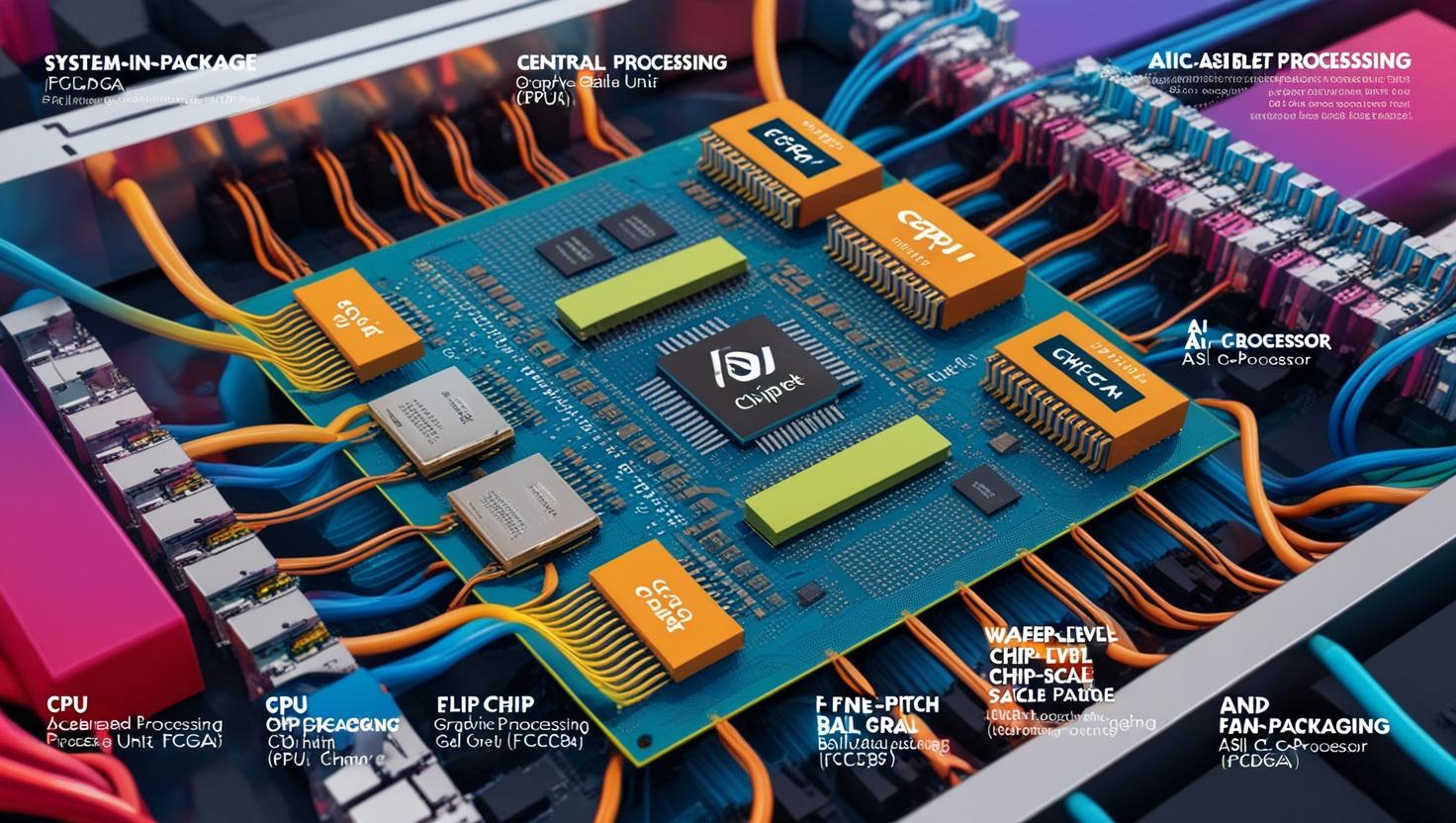
Enabling Customization and Flexibility
One of the most powerful advantages of chiplets is their flexibility. Organizations can design tailored solutions by integrating specific chiplets for targeted workloads. For example, AI accelerators, memory modules, and compute cores can be combined in unique configurations to meet specific performance requirements.
This growing demand for customization is strongly reflected in Chiplet Market trends, particularly among hyperscalers and enterprises that require specialized hardware for AI, cloud computing, and edge applications.
Cost Efficiency and Improved Yields
Manufacturing large monolithic chips often leads to lower yields, as a defect in any part of the chip can render the entire die unusable. Chiplets mitigate this issue by breaking designs into smaller components, improving yields and reducing overall production costs.
As highlighted in current Chiplet Market trends, this cost advantage is a major driver of adoption, especially as advanced process nodes become increasingly expensive. By leveraging mature nodes for certain chiplets and cutting-edge nodes for others, companies can achieve an optimal balance between cost and performance.
Advanced Packaging and Interconnect Innovations
The success of chiplets relies heavily on advanced packaging technologies, such as 2.5D and 3D integration. These techniques enable high-speed communication between chiplets, ensuring seamless performance.
Innovations in interconnect standards, such as Universal Chiplet Interconnect Express (UCIe), are further accelerating adoption. These developments are central to evolving Chiplet Market trends, as they promote interoperability and create a broader ecosystem of chiplet-based solutions.
Impact on Data Centers and AI Workloads
Data centers are among the biggest beneficiaries of chiplet technology. As AI and big data workloads continue to grow, the need for scalable and energy-efficient computing solutions becomes more critical. Chiplets enable data centers to deploy high-density, high-performance processors without significantly increasing power consumption.
Emerging Chiplet Market trends suggest that chiplets will play a pivotal role in supporting next-generation AI models, enabling faster training and inference while optimizing resource utilization.
Challenges and Industry Outlook
Despite their advantages, chiplets also present challenges, including design complexity, thermal management, and the need for standardization. However, ongoing industry collaboration is addressing these issues, paving the way for broader adoption.
Looking ahead, Chiplet Market trends indicate strong growth, driven by increasing demand for HPC, AI, and advanced computing applications. As the ecosystem matures and standards become more widely adopted, chiplets are expected to become the foundation of future semiconductor design.
Chiplets are redefining how processors are built, offering a modular, scalable, and cost-effective approach to meeting the demands of high-performance computing. With continuous innovation in packaging, interconnects, and design methodologies, chiplets are poised to power the next wave of technological advancement.
As reflected in ongoing Chiplet Market trends, the shift toward chiplet-based architectures is accelerating, signaling a new era in semiconductor innovation—one where flexibility, efficiency, and performance converge to shape the future of computing
Frequently Asked Questions (FAQs): Chiplets and High-Performance Computing
1. What is a chiplet?
A chiplet is a small, modular semiconductor component designed to perform a specific function (such as processing, memory, or I/O). Multiple chiplets are combined within a single package to create a complete processor, enabling flexibility and scalability in design.
2. How do chiplets differ from traditional monolithic chips?
Traditional monolithic chips integrate all components into a single die, whereas chiplet-based designs split functions into smaller units. This modular approach improves manufacturing yields, reduces costs, and allows for more design flexibility—key drivers seen in current Chiplet Market trends.
3. Why are chiplets important for high-performance computing (HPC)?
Chiplets enable higher performance by allowing multiple high-performance dies to work together efficiently. They also improve performance-per-watt, making them ideal for HPC workloads such as AI, scientific simulations, and big data analytics—an important factor shaping Chiplet Market trends.
About MarketsandMarkets™
MarketsandMarkets™ has been recognized as one of America’s Best Management Consulting Firms by Forbes, as per their recent report.
MarketsandMarkets™ is a blue ocean alternative in growth consulting and program management, leveraging a man-machine offering to drive supernormal growth for progressive organizations in the B2B space. With the widest lens on emerging technologies, we are proficient in co-creating supernormal growth for clients across the globe.
Today, 80% of Fortune 2000 companies rely on MarketsandMarkets, and 90 of the top 100 companies in each sector trust us to accelerate their revenue growth. With a global clientele of over 13,000 organizations, we help businesses thrive in a disruptive ecosystem.
The B2B economy is witnessing the emergence of $25 trillion in new revenue streams that are replacing existing ones within this decade. We work with clients on growth programs, helping them monetize this $25 trillion opportunity through our service lines – TAM Expansion, Go-to-Market (GTM) Strategy to Execution, Market Share Gain, Account Enablement, and Thought Leadership Marketing.
Built on the ‘GIVE Growth’ principle, we collaborate with several Forbes Global 2000 B2B companies to keep them future-ready. Our insights and strategies are powered by industry experts, cutting-edge AI, and our Market Intelligence Cloud, KnowledgeStore™, which integrates research and provides ecosystem-wide visibility into revenue shifts.
To find out more, visit www.MarketsandMarkets™.com or follow us on Twitter , LinkedIn and Facebook .
Contact:
Mr. Rohan Salgarkar
MarketsandMarkets™ INC.
1615 South Congress Ave.
Suite 103, Delray Beach, FL 33445
USA: +1-888-600-6441
