Free-Space Optical Communication Market
The global Free-Space Optical (FSO) Communication and Visible Light Communication (VLC) / Li-Fi Market is witnessing rapid expansion as enterprises and governments seek high-speed, secure, and interference-free wireless communication solutions. Driven by exponential growth in data consumption, rising demand for bandwidth-intensive applications, and increasing limitations of traditional RF-based networks, optical wireless communication technologies are emerging as a critical part of next-generation connectivity infrastructure.
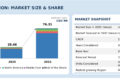
According to MarketsandMarkets, the FSO and VLC / Li-Fi market is projected to grow from USD 2.78 billion in 2024 to USD 7.39 billion by 2029, at a CAGR of 21.6% during the forecast period.
This growth reflects increasing adoption across enterprise connectivity, defense communication, healthcare systems, smart cities, and satellite-based networks.
Within this evolving ecosystem, fSONA Networks Corp. is strengthening its position as a key innovator in free-space optical communication systems, enabling ultra-fast and secure enterprise-grade connectivity.
Growing Importance of Free-Space Optical Communication
Free-Space Optical (FSO) communication is a line-of-sight wireless technology that uses light propagation through air or space to transmit data at extremely high speeds. Unlike traditional radio-frequency systems, FSO offers significant advantages in terms of bandwidth, security, and deployment flexibility.
As organizations struggle with RF spectrum congestion and increasing demand for high-capacity networks, FSO has emerged as a powerful alternative for both short-range and long-range communication applications.
Key advantages of FSO technology include:
- Ultra-high data transmission speeds
- License-free spectrum usage
- High security due to narrow beam transmission
- Low latency communication
- Rapid deployment without fiber infrastructure
- Immunity to electromagnetic interference
These benefits make FSO particularly suitable for enterprise connectivity, disaster recovery networks, defense applications, and last-mile broadband solutions
Market Growth Drivers in Optical Wireless Communication
Several macroeconomic and technological factors are accelerating the growth of the FSO and VLC / Li-Fi market:
1. Rising Data Traffic and Bandwidth Demand
The exponential growth of cloud computing, video streaming, IoT devices, and AI workloads is pushing existing network infrastructure to its limits.
2. Spectrum Congestion in RF Networks
Traditional wireless communication systems are facing severe spectrum limitations, leading to increased interest in optical alternatives.
3. Need for Secure Communication Systems
FSO systems provide highly secure point-to-point communication, making interception extremely difficult due to narrow light beams.
4. Expansion of Smart Infrastructure
Smart cities, smart campuses, and industrial automation systems are increasingly adopting optical wireless communication technologies.
5. Demand for Rapid Network Deployment
FSO systems can be deployed quickly without the need for expensive fiber installation, making them ideal for temporary or remote connectivity needs.
Download PDF Brochure @ https://www.marketsandmarkets.com/pdfdownloadNew.asp?id=946

fSONA Networks Corp. and Its Role in FSO Innovation
fSONA Networks Corp. is a key player in the global optical wireless communication ecosystem, specializing in high-capacity free-space optical systems designed for secure and high-speed enterprise connectivity.
The company focuses on delivering advanced FSO solutions that address critical communication challenges in modern enterprise networks, including bandwidth limitations, network redundancy, and secure data transmission.
By leveraging laser-based communication technologies, fSONA Networks enables organizations to establish high-performance wireless links that can complement or replace traditional fiber-optic infrastructure.
Advancements in Free-Space Optical Communication Systems
FSO technology has evolved significantly in recent years, driven by improvements in laser technology, optical components, and atmospheric compensation techniques.
Modern FSO systems now support:
- Multi-gigabit data transmission rates
- Long-distance point-to-point communication links
- Adaptive beam alignment systems
- Enhanced atmospheric compensation techniques
- Integration with hybrid RF-FSO networks
These advancements are helping overcome traditional limitations such as weather interference, beam misalignment, and signal attenuation.
Enterprise Connectivity and Use Cases
FSO communication systems are increasingly being deployed across enterprise and mission-critical environments where high-speed, secure communication is essential.
Enterprise Networks
FSO is used to connect buildings, campuses, and data centers where fiber installation is costly or impractical.
Defense and Security
Military and defense organizations use FSO systems for secure communication links that are resistant to interception and jamming.
Telecom Backhaul
Telecommunication providers deploy FSO as a backup or supplementary solution for fiber networks, especially in urban environments.
Disaster Recovery
FSO systems provide rapid deployment communication links in emergency scenarios where infrastructure is damaged.
Satellite and Aerospace
FSO technology is also being explored for inter-satellite and ground-to-space communication applications.
Integration with Hybrid Optical Networks
One of the emerging trends in the market is the integration of FSO with RF and fiber-optic systems to create hybrid communication networks.
Hybrid systems combine the strengths of multiple technologies:
- FSO provides high-speed, secure links
- RF ensures reliability under adverse weather conditions
- Fiber delivers stable backbone connectivity
This hybrid approach enhances network resilience and ensures continuous connectivity even in challenging environmental conditions.
Technological Challenges in FSO Deployment
Despite its advantages, FSO technology faces several technical challenges that continue to drive innovation:
- Atmospheric interference such as fog, rain, and dust
- Line-of-sight limitations
- Beam alignment sensitivity
- Weather-dependent performance fluctuations
- Infrastructure integration complexity
Ongoing advancements in adaptive optics, beam steering, and AI-based alignment systems are helping mitigate these challenges and improve system reliability.
Market Trends Shaping the FSO Industry
The Free-Space Optical Communication market is evolving rapidly due to several key trends:
- Increasing adoption of high-capacity optical wireless links
- Growth of 5G and future 6G backhaul networks
- Expansion of satellite-based laser communication systems
- Rising demand for secure enterprise communication
- Integration of AI and machine learning for network optimization
According to MarketsandMarkets, IT and telecommunications remain the dominant application areas for FSO systems, driven by their need for high-speed and low-latency communication solutions
Competitive Landscape
The global FSO market includes several established players such as fSONA Networks Corp., Cailabs, Mynaric AG, and L3Harris Technologies, among others.
These companies are focusing on innovations in optical transceivers, beam steering technologies, and long-distance laser communication systems to strengthen their market position.
fSONA Networks Corp. continues to differentiate itself through its focus on enterprise-grade optical wireless solutions designed for high reliability and secure data transmission
Future Outlook
The future of the Free-Space Optical Communication Market is highly promising, driven by increasing demand for high-speed connectivity and secure data transmission systems.
Key future developments include:
- Expansion of inter-satellite laser communication networks
- Widespread adoption in 6G infrastructure
- Integration with AI-driven network optimization systems
- Growth of hybrid optical-wireless communication networks
- Increased commercialization of long-distance FSO systems
As digital transformation accelerates across industries, FSO technology is expected to become a core component of next-generation communication infrastructure.
The Free-Space Optical Communication Market is entering a phase of rapid growth and technological innovation, driven by increasing demand for high-speed, secure, and scalable communication systems.
fSONA Networks Corp. is playing a key role in this transformation by advancing FSO systems that enable ultra-fast and secure enterprise connectivity.
As highlighted by MarketsandMarkets, the strong growth trajectory of the FSO and VLC / Li-Fi market underscores the increasing importance of optical wireless communication in shaping the future of global connectivity.
The transition toward laser-based communication systems marks a major shift in the telecommunications landscape, paving the way for faster, more secure, and more efficient data transmission networks worldwide.