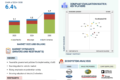
The global Smart Home Market is entering a new phase of growth as connected technologies become an integral part of modern living. Consumers are increasingly adopting intelligent home solutions that offer convenience, security, energy efficiency, and seamless connectivity. Powered by advancements in the Internet of Things (IoT), artificial intelligence (AI), cloud computing, and high-speed wireless networks, smart home ecosystems are transforming how people interact with their living spaces.
From voice-controlled lighting and intelligent thermostats to AI-powered security cameras and connected appliances, smart home technologies are evolving beyond basic automation. Today’s systems leverage machine learning, predictive analytics, and remote monitoring to create personalised experiences while helping homeowners optimise energy usage and enhance safety.
With growing urbanisation, rising disposable incomes, expanding broadband access, and increasing awareness of energy conservation, the Smart Home Market is expected to witness sustained growth over the coming years.
What Is a Smart Home?
A smart home integrates connected devices, sensors, software, and communication technologies to automate and remotely control household functions. These devices communicate through wireless protocols such as Wi-Fi, Bluetooth, Zigbee, Z-Wave, and Thread, allowing homeowners to monitor and manage their homes using smartphones, tablets, or voice assistants.
Smart home systems typically include intelligent lighting, smart thermostats, connected security cameras, video doorbells, smart locks, home entertainment systems, smart speakers, appliances, and energy management solutions. The integration of these devices creates a connected ecosystem that improves convenience, efficiency, and overall quality of life.
Top 10 Key Takeaways
- Smart home adoption is accelerating due to AI, IoT, and connected technologies.
- AI enables personalised automation and intelligent home management.
- Smart security systems remain one of the fastest-growing product segments.
- Energy efficiency is driving demand for smart thermostats and connected lighting.
- IoT is expanding interoperability between household devices.
- Smart appliances are improving convenience through automation and remote control.
- 5G connectivity is enhancing real-time communication between smart devices.
- Asia-Pacific is expected to be one of the fastest-growing regional markets.
- Cybersecurity and data privacy remain important industry challenges.
- Future innovation will focus on AI, sustainability, predictive automation, and integrated smart living ecosystems.
Rising Adoption of Artificial Intelligence
Artificial intelligence has become one of the primary drivers of innovation in the smart home industry. AI-powered systems can analyse user behaviour, learn preferences, and automate daily routines without requiring constant manual input.
Voice assistants have become central to many smart homes, enabling users to control lighting, climate, entertainment systems, and security devices using natural language commands. AI algorithms also enhance security systems by recognising familiar faces, detecting unusual activities, and sending real-time alerts when suspicious events occur.
Machine learning further improves smart home functionality by predicting user habits, adjusting heating and cooling schedules, and optimising energy consumption based on occupancy patterns.
Download PDF Brochure @ https://www.marketsandmarkets.com/pdfdownloadNew.asp?id=121
Internet of Things Expanding Connected Living
The rapid growth of the Internet of Things continues to strengthen the smart home ecosystem. Billions of connected devices are enabling seamless communication between appliances, sensors, lighting systems, HVAC equipment, and security solutions.
IoT technology allows homeowners to monitor their homes remotely, receive instant notifications, and automate routine tasks. For example, smart irrigation systems can adjust watering schedules based on weather conditions, while connected refrigerators can monitor inventory and notify users when supplies are running low.
As interoperability standards improve, smart home devices from different manufacturers are becoming easier to integrate into unified platforms.
Growing Demand for Home Security Solutions
Security remains one of the strongest drivers of smart home adoption. Homeowners increasingly seek intelligent surveillance systems that provide real-time monitoring and remote access.
Modern security solutions include AI-enabled cameras, smart video doorbells, motion detectors, facial recognition, smart locks, and alarm systems. These technologies offer enhanced protection by delivering instant alerts, cloud-based video storage, and automated emergency responses.
Insurance providers in several markets are also encouraging the adoption of connected security systems by offering incentives for homes equipped with advanced monitoring technologies.
Energy Efficiency and Sustainability
Energy conservation has become a major priority for homeowners and governments alike. Smart home technologies help reduce energy consumption through intelligent monitoring and automation.
Smart thermostats automatically adjust temperatures based on occupancy and weather forecasts, while connected lighting systems switch off when rooms are unoccupied. Smart plugs and energy monitoring systems provide detailed insights into electricity usage, allowing homeowners to identify opportunities for improved efficiency.
As sustainability initiatives continue expanding, demand for energy-efficient smart home solutions is expected to grow significantly.
Smart Appliances Transforming Daily Life
Connected appliances are making household tasks more efficient and convenient. Smart refrigerators, washing machines, ovens, air purifiers, robotic vacuum cleaners, and coffee makers can all be monitored and controlled remotely through mobile applications.
Many appliances now incorporate AI capabilities that optimise performance, schedule maintenance, and provide predictive diagnostics. These innovations reduce downtime while improving user convenience and extending product lifespan.
Role of 5G and High-Speed Connectivity
The rollout of 5G networks is expected to accelerate smart home innovation by enabling faster data transmission, lower latency, and improved connectivity for a growing number of connected devices.
Enhanced wireless performance supports real-time video streaming, cloud-based analytics, AI processing, and simultaneous communication between multiple smart devices. Combined with edge computing, 5G enables more responsive and reliable smart home experiences.
Market Segmentation
The Smart Home Market encompasses a wide range of products and services serving residential users worldwide.
By product category, the market includes smart lighting, home security systems, smart thermostats, HVAC controls, smart speakers, entertainment systems, connected appliances, energy management solutions, smart kitchen devices, healthcare monitoring equipment, and home automation hubs.
Based on technology, the market incorporates artificial intelligence, Internet of Things, cloud computing, wireless communication technologies, voice recognition, edge computing, and machine learning.
Applications include home security, energy management, entertainment, healthcare monitoring, appliance automation, lighting control, climate management, and remote home monitoring.
Regional Market Outlook
North America remains one of the largest smart home markets due to high consumer awareness, widespread broadband connectivity, and strong adoption of connected technologies. The presence of leading technology companies and increasing investments in AI-driven home automation continue supporting market expansion.
Europe is witnessing steady growth as governments promote energy-efficient housing and sustainable living. Smart heating systems, intelligent lighting, and connected energy management solutions are gaining widespread adoption across residential buildings.
Asia-Pacific is expected to register the fastest growth during the forecast period. Rapid urbanisation, rising disposable incomes, expanding middle-class populations, and increasing smartphone penetration are driving demand for smart home technologies in countries such as China, India, Japan, South Korea, and Southeast Asian nations.
Latin America and the Middle East & Africa are also emerging as promising markets as digital infrastructure improves and consumers increasingly embrace connected lifestyles.
Challenges Facing the Smart Home Market
Despite rapid growth, several challenges remain. Data privacy and cybersecurity concerns continue to influence consumer purchasing decisions, as connected devices collect significant amounts of personal information.
Interoperability between products from different manufacturers has historically presented challenges, although new industry standards are improving compatibility. High installation costs and limited technical awareness in certain regions may also slow adoption among some consumer groups.
Manufacturers continue investing in secure communication protocols, simplified installation processes, and user-friendly platforms to overcome these barriers.
Future Outlook
The Smart Home Market is expected to continue expanding as technological innovation accelerates and connected living becomes increasingly mainstream. Artificial intelligence, generative AI, edge computing, digital twins, and advanced sensors will further improve automation, personalisation, and predictive capabilities.
Growing integration with renewable energy systems, electric vehicle charging infrastructure, and smart grids will create new opportunities for intelligent home energy management. Meanwhile, healthcare-focused smart home solutions supporting remote patient monitoring and assisted living are likely to gain importance as ageing populations increase globally.
As ecosystems become more interoperable and affordable, smart homes will evolve from collections of connected devices into fully integrated, intelligent living environments capable of anticipating user needs while improving comfort, safety, and sustainability.
Frequently Asked Questions (FAQs)
1. What is a smart home?
A smart home uses connected devices, sensors, and automation technologies to remotely monitor and control household functions such as lighting, security, climate, and appliances.
2. What technologies are driving the Smart Home Market?
Key technologies include artificial intelligence (AI), the Internet of Things (IoT), cloud computing, machine learning, voice recognition, edge computing, and 5G connectivity.
3. What are the benefits of smart home systems?
Smart home solutions improve convenience, enhance security, optimise energy consumption, enable remote monitoring, and support personalised automation.
4. Which products are commonly included in a smart home?
Common products include smart lighting, smart thermostats, connected security cameras, video doorbells, smart locks, smart speakers, home automation hubs, and intelligent household appliances.
5. What is the future of the Smart Home Market?
The market is expected to grow as AI-powered automation, energy-efficient technologies, interoperable ecosystems, and connected healthcare solutions become increasingly integrated into modern homes.
About MarketsandMarkets™
MarketsandMarkets™ has been recognized as one of America’s Best Management Consulting Firms by Forbes, as per their recent report.
MarketsandMarkets™ is a blue ocean alternative in growth consulting and program management, leveraging a man-machine offering to drive supernormal growth for progressive organizations in the B2B space. With the widest lens on emerging technologies, we are proficient in co-creating supernormal growth for clients across the globe.
Today, 80% of Fortune 2000 companies rely on MarketsandMarkets, and 90 of the top 100 companies in each sector trust us to accelerate their revenue growth. With a global clientele of over 13,000 organizations, we help businesses thrive in a disruptive ecosystem.
The B2B economy is witnessing the emergence of $25 trillion in new revenue streams that are replacing existing ones within this decade. We work with clients on growth programs, helping them monetize this $25 trillion opportunity through our service lines – TAM Expansion, Go-to-Market (GTM) Strategy to Execution, Market Share Gain, Account Enablement, and Thought Leadership Marketing.
Built on the ‘GIVE Growth’ principle, we collaborate with several Forbes Global 2000 B2B companies to keep them future-ready. Our insights and strategies are powered by industry experts, cutting-edge AI, and our Market Intelligence Cloud, KnowledgeStore™, which integrates research and provides ecosystem-wide visibility into revenue shifts.
To find out more, visit www.MarketsandMarkets™.com or follow us on Twitter , LinkedIn and Facebook .
Contact:
Mr. Rohan Salgarkar
MarketsandMarkets™ INC.
1615 South Congress Ave.
Suite 103, Delray Beach, FL 33445
USA: +1-888-600-6441