The global 3D metrology market is entering a period of sustained expansion as manufacturers increasingly adopt artificial intelligence (AI), automation, robotics, and Industry 4.0 technologies to improve precision, productivity, and quality control. Modern manufacturing environments are moving away from isolated, post-production inspection toward connected measurement systems capable of generating real-time data and supporting faster, more intelligent decision-making.
The global 3D metrology market was estimated to be valued at USD 11.13 billion in 2024 and is projected to reach USD 15.01 billion by 2029; it is expected to register a CAGR of 6.2% during the forecast period.
Precision has become a defining requirement of modern manufacturing. As products become more complex, production cycles become faster, and industries adopt increasingly sophisticated materials and designs, manufacturers are placing greater emphasis on accurate measurement and inspection. This shift is creating strong opportunities for the global 3D metrology market, which is evolving from a traditional quality-control technology into an important component of connected and automated manufacturing.
The global 3D metrology market was estimated to be valued at USD 11.13 billion in 2024 and is projected to reach USD 15.01 billion by 2029; it is expected to register a CAGR of 6.2% during the forecast period.
Precision Inspection Moves to the Center of Manufacturing
Manufacturers across automotive, aerospace, electronics, medical devices, semiconductors, and other industries increasingly need to verify component dimensions, surface characteristics, and geometric accuracy. Traditional manual inspection methods can struggle to keep pace with complex designs and high-volume production, increasing the appeal of advanced three-dimensional measurement technologies.
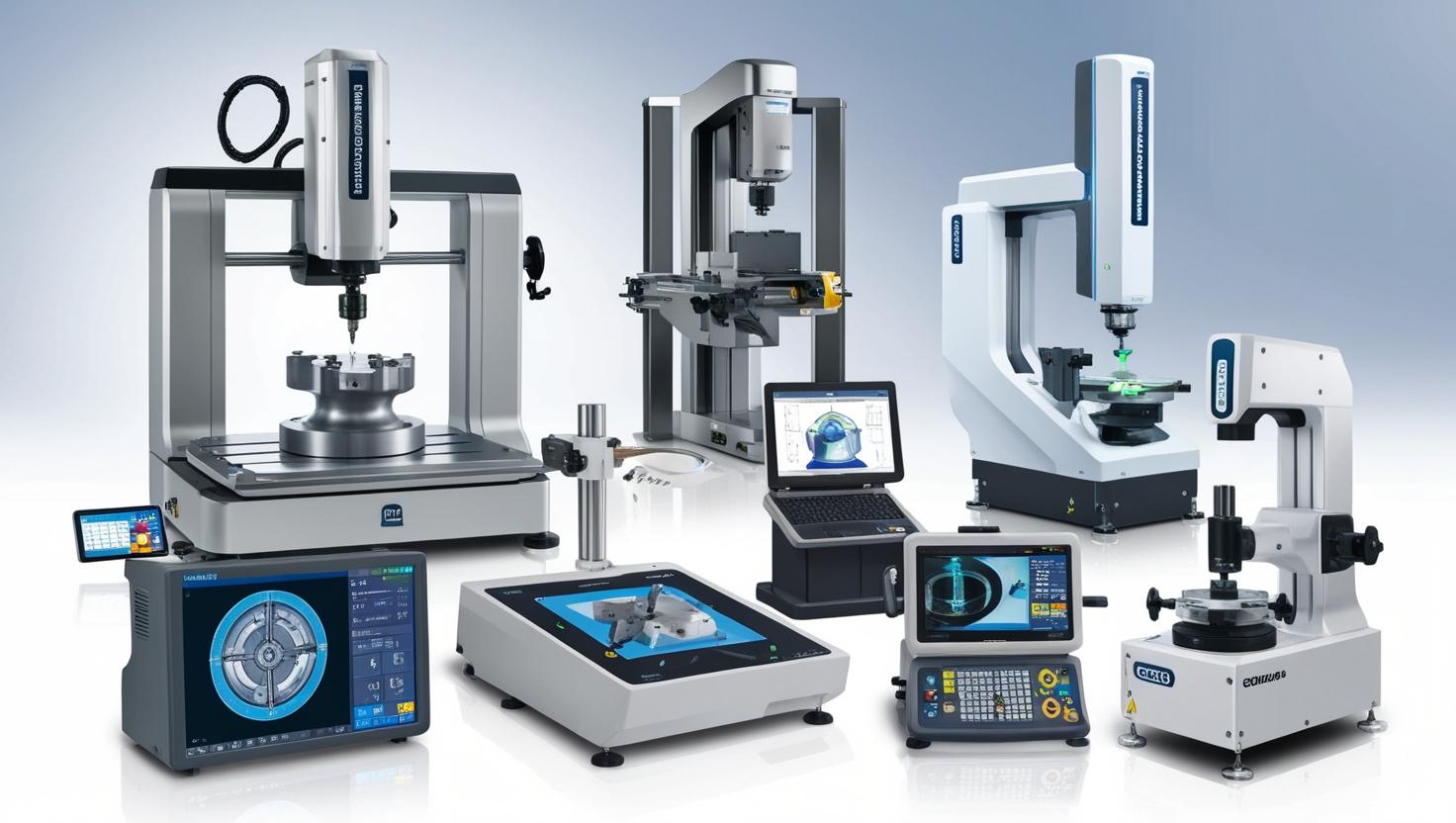
3D metrology captures an object’s geometric information across the X, Y, and Z axes. Technologies such as coordinate measuring machines (CMMs), optical digitizers and scanners, form measurement equipment, X-ray and computed tomography systems, video measuring machines, and 3D automated optical inspection systems provide manufacturers with detailed dimensional information for quality assurance and process improvement.
The growing importance of precision inspection is particularly evident in industries where even small dimensional deviations can affect product performance, safety, or reliability. As manufacturing tolerances become tighter, accurate measurement is becoming an integral part of production rather than simply a final-stage quality check.
Download PDF Brochure @ https://www.marketsandmarkets.com/pdfdownloadNew.asp?id=203080758
Automotive Transformation Strengthens Demand
The transformation of the automotive industry is an important growth catalyst for 3D metrology. The increasing production of electric vehicles (EVs) and autonomous vehicles (AVs) requires manufacturers to maintain high levels of accuracy across increasingly complex components and assemblies.
EV production introduces new requirements associated with batteries, electric drivetrains, lightweight structures, and other advanced components. At the same time, autonomous vehicles rely on sophisticated electronics and sensing technologies that require precise manufacturing and inspection.
MarketsandMarkets identifies the growing adoption of EVs and AVs as a major driver for the 3D metrology market, noting that these vehicles require accurate components, tight tolerances, high-throughput inspection, and complex surface measurements.
AI Makes Metrology More Intelligent
Artificial intelligence is changing the capabilities of modern inspection systems. AI-powered metrology can assist with defect detection, data interpretation, anomaly identification, and automated quality-control decisions.
Instead of simply collecting dimensional measurements, intelligent systems can analyze large datasets to identify patterns and irregularities. This can help manufacturers detect potential production problems earlier and support more informed decisions regarding maintenance and process optimization.
AI and generative AI can also contribute to simulation, virtual testing, rapid prototyping, and design optimization. MarketsandMarkets highlights AI integration as a significant opportunity for the industry because it can improve inspection efficiency while supporting more sophisticated analysis of measurement data.
Industry 4.0 Connects Measurement With Production
The emergence of Industry 4.0 is further expanding the role of 3D metrology. Connected factories increasingly combine sensors, industrial IoT, cloud computing, big-data analytics, robotics, and automated manufacturing equipment.
Within these environments, measurement data can become part of a broader digital production ecosystem. Rather than performing inspection independently from manufacturing, metrology systems can provide information that helps production teams identify deviations and improve processes.
MarketsandMarkets points to Industry 4.0 adoption, 5G and IoT-enabled manufacturing, cloud computing, and big-data analytics as important forces supporting market expansion. The increasing demand for 3D metrology services also represents an opportunity as manufacturers seek more flexible approaches to advanced inspection.
CMMs Continue to Hold a Strong Position
Coordinate measuring machines remain an important technology within the 3D metrology landscape. Their ability to provide accurate dimensional measurements makes them particularly valuable for applications involving medium- and large-sized components.
MarketsandMarkets expects the CMM segment to maintain a leading position, with bridge CMMs accounting for a significant share because of their precision, rigidity, reliability, and suitability for demanding quality-control applications.
At the same time, manufacturers are increasingly adopting optical and non-contact technologies where speed, flexibility, and the inspection of complex geometries are priorities.
3D Automated Optical Inspection Gains Momentum
The 3D automated optical inspection (AOI) segment is expected to record the highest growth among product types during the forecast period, according to MarketsandMarkets. 3D AOI systems can provide information about component height, co-planarity, solder joints, lead tips, ball grid arrays, and other dimensional characteristics.
The technology is particularly relevant to electronics manufacturing, where increasingly compact components and sophisticated circuit-board designs require detailed and efficient inspection. Automotive electronics are another area supporting demand for 3D AOI systems.
The move toward automated optical inspection also reflects a broader manufacturing trend: companies are seeking to reduce reliance on labor-intensive inspection while improving consistency and throughput.
Medical Applications Present New Opportunities
The growth is supported by increasing research and development activity and the industry’s strong focus on product quality. Medical components often require highly accurate dimensions and stringent manufacturing controls, creating demand for advanced measurement systems capable of analyzing complex geometries.
Additive manufacturing is another area where metrology can play a critical role. As 3D-printed components move into more demanding applications, manufacturers need reliable methods to verify the dimensional accuracy and quality of finished parts.
Asia-Pacific Emerges as a Major Growth Engine
Asia-Pacific is expected to record the fastest growth in the global 3D metrology market, with MarketsandMarkets projecting an 8.0% CAGR during the forecast period.
The region benefits from strong automotive, semiconductor, electronics, and precision-manufacturing industries. Japan, China, and South Korea are major manufacturing hubs, while investments in automation and digital manufacturing are increasing demand for advanced inspection technologies.
Government initiatives supporting manufacturing digitization are also contributing to the region’s potential. As manufacturers expand automated production capacity, the need for accurate and efficient measurement is expected to increase alongside it.
Hardware Remains the Foundation of the Market
Hardware is expected to dominate the 3D metrology market during the forecast period. Demand for high-precision equipment in automotive and aerospace applications is a key contributor to this position.
At the same time, the industry is becoming increasingly software-driven. Modern metrology solutions combine measurement hardware with sophisticated software for automated analysis, visualization, defect identification, and data management. This convergence is creating opportunities for suppliers to deliver integrated hardware-and-software platforms rather than standalone measurement equipment.
Market Challenges Remain
Despite favorable growth prospects, the industry faces challenges. One of the major restraints identified by MarketsandMarkets is the lack of standardization across metrology systems. Differences between measurement technologies and data interfaces can make it difficult for manufacturers to integrate new equipment into existing production environments.
Advanced software can also introduce complexity. Sophisticated systems require trained personnel who understand measurement processes, data analysis, and software functionality. As a result, manufacturers may need to invest in employee training and technical support alongside new metrology equipment.
Competitive Landscape
The global 3D metrology market includes major technology providers such as Hexagon AB, ZEISS Group, FARO, Mitutoyo Corporation, KEYENCE Corporation, KLA Corporation, Renishaw, and Nikon Corporation, among others. Competition is increasingly centered on product innovation, automation, AI integration, portability, and the ability to connect measurement systems with manufacturing workflows.
Recent developments illustrate this direction. Companies have introduced portable 3D scanners, new coordinate measuring machines, advanced X-ray microscopy solutions, and wireless in-process inspection technologies. These developments indicate a broader shift toward flexible, connected, and production-oriented metrology.
The Road Ahead
The role of 3D metrology is expanding as manufacturers pursue greater accuracy, efficiency, and traceability. The technology is no longer limited to verifying finished components; it is increasingly becoming part of a continuous digital quality-management process.
AI-powered inspection, Industry 4.0, automated optical inspection, IoT connectivity, cloud computing, and advanced scanning technologies are expected to reshape the market over the coming years. At the same time, demand from EV manufacturing, aerospace, electronics, medical devices, semiconductors, and additive manufacturing will create additional applications.
With the market projected to grow from USD 11.13 billion in 2024 to USD 15.01 billion by 2029, the expansion of 3D metrology reflects a fundamental change in manufacturing priorities. Precision is becoming inseparable from productivity, and manufacturers that can measure, analyze, and respond to production variations quickly will have a stronger foundation for maintaining quality in increasingly complex industrial environments.
The global 3D metrology market is expanding because precision inspection has become a strategic requirement for modern manufacturing. As products become more sophisticated and production systems become more automated, manufacturers need measurement technologies that deliver accurate data quickly and integrate seamlessly with digital workflows.
The convergence of 3D measurement, AI, automation, Industry 4.0, and advanced analytics is likely to define the next stage of market development. With Asia-Pacific emerging as a high-growth region and industries such as automotive, electronics, aerospace, and medical devices increasing their quality requirements, 3D metrology is positioned to remain a critical technology for the factory of the future.
About MarketsandMarkets™
MarketsandMarkets™ has been recognized as one of America’s Best Management Consulting Firms by Forbes, as per their recent report.
MarketsandMarkets™ is a blue ocean alternative in growth consulting and program management, leveraging a man-machine offering to drive supernormal growth for progressive organizations in the B2B space. With the widest lens on emerging technologies, we are proficient in co-creating supernormal growth for clients across the globe.
Today, 80% of Fortune 2000 companies rely on MarketsandMarkets, and 90 of the top 100 companies in each sector trust us to accelerate their revenue growth. With a global clientele of over 13,000 organizations, we help businesses thrive in a disruptive ecosystem.
The B2B economy is witnessing the emergence of $25 trillion in new revenue streams that are replacing existing ones within this decade. We work with clients on growth programs, helping them monetize this $25 trillion opportunity through our service lines – TAM Expansion, Go-to-Market (GTM) Strategy to Execution, Market Share Gain, Account Enablement, and Thought Leadership Marketing.
Built on the ‘GIVE Growth’ principle, we collaborate with several Forbes Global 2000 B2B companies to keep them future-ready. Our insights and strategies are powered by industry experts, cutting-edge AI, and our Market Intelligence Cloud, KnowledgeStore™, which integrates research and provides ecosystem-wide visibility into revenue shifts.
To find out more, visit www.MarketsandMarkets™.com or follow us on Twitter , LinkedIn and Facebook .
Contact:
Mr. Rohan Salgarkar
MarketsandMarkets™ INC.
1615 South Congress Ave.
Suite 103, Delray Beach, FL 33445
USA: +1-888-600-6441
