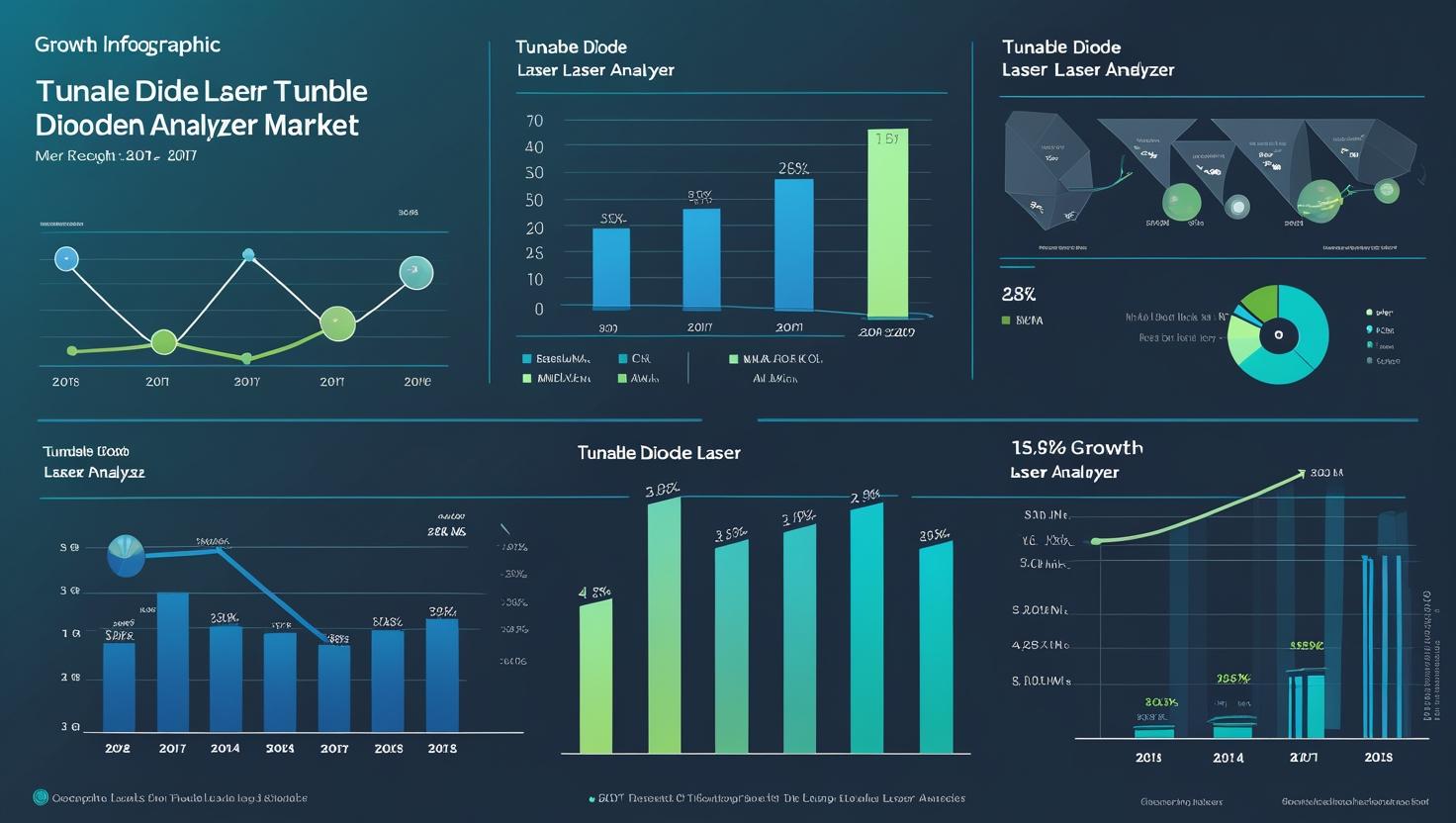
The need for accurate, continuous, and real-time gas measurement is becoming increasingly important across energy, power generation, oil & gas, chemicals, pharmaceuticals, pulp & paper, and other process industries. As companies face stricter environmental regulations while simultaneously seeking higher operational efficiency, advanced gas-analysis technologies are gaining importance. The global tunable diode laser analyzer (TDLA) market is expected to be valued at USD 546.2 million in 2024 and is projected to reach USD 884.4 million by 2031; it is expected to grow at a CAGR of 7.1% from 2024 to 2031
Among these technologies, Tunable Diode Laser Analyzers (TDLAs) are emerging as an effective solution for precise, fast, and non-contact gas measurement. The technology uses laser spectroscopy to identify specific gases based on their absorption characteristics, enabling industries to monitor gas concentrations directly within processes.
According to MarketsandMarkets, the global Tunable Diode Laser Analyzer (TDLA) Market is projected to grow from USD 546.2 million in 2024 to USD 884.4 million by 2031, at a CAGR of 7.1% during the forecast period. Rising demand for real-time gas monitoring, industrial automation, emissions control, and process optimization is supporting this growth.
What Is a Tunable Diode Laser Analyzer?
A Tunable Diode Laser Analyzer is a gas-analysis instrument that uses a tunable infrared laser to detect specific gas molecules. As the laser passes through a gas sample, targeted molecules absorb particular wavelengths of light. The resulting absorption pattern can then be analyzed to determine gas concentration.
Unlike some conventional gas-analysis methods, TDLA systems can provide rapid measurements and, particularly with in situ configurations, can analyze gases directly within process streams without extensive sample extraction and conditioning.
This capability makes TDLA technology valuable in applications where continuous measurement, fast response, and process reliability are essential.
Rising Demand for Real-Time Gas Monitoring
One of the most significant factors supporting Tunable Diode Laser Analyzer Market Growth is the increasing demand for real-time gas monitoring.
Industrial facilities need continuous information about gas concentrations to optimize combustion, maintain product quality, improve safety, and comply with environmental regulations. TDLAs can provide measurements of gases such as oxygen, carbon monoxide, carbon dioxide, methane, hydrogen sulfide, ammonia, and moisture, depending on the analyzer configuration.
MarketsandMarkets identifies the rising need for accurate, real-time gas analysis and emissions monitoring as a major market driver.
Real-time measurement also enables operators to respond more quickly to changes in industrial processes. This can help reduce inefficiencies, identify abnormal operating conditions, and support better process control.
Industrialization and New Power Plants Fuel Market Expansion
Rapid industrialization is creating new opportunities for TDLA systems.
Industries such as oil & gas, power generation, cement, chemicals, pulp & paper, and pharmaceuticals require gas measurement at multiple points throughout their operations. At the same time, the development of new power plants and modernization of existing facilities is creating demand for advanced monitoring technologies.
According to MarketsandMarkets, rising industrialization and the development of new power plants are important drivers of the market. Governments and industries are increasingly focused on controlling harmful emissions such as nitrogen oxides and sulfur dioxide while improving energy efficiency.
The replacement of older analyzers with advanced laser-based systems can further contribute to Tunable Diode Laser Analyzer Market Growth.
Download PDF Brochure @ https://www.marketsandmarkets.com/pdfdownloadNew.asp?id=120588467
In Situ TDLA Technology Gains Momentum
The in situ methodology is expected to register the highest CAGR during the forecast period, according to MarketsandMarkets.
In situ TDLA systems measure gas concentrations directly in process lines, stacks, or other industrial environments. This eliminates the need for complex sample extraction and conditioning systems in suitable applications.
The benefits can include:
- Faster measurements
- Reduced maintenance requirements
- Fewer potential points of failure
- Real-time process information
- Improved measurement reliability
- Lower sample-handling complexity
These characteristics make in situ analyzers particularly attractive for power generation, petrochemical processing, and environmental monitoring.
Oil & Gas Remains a Key Application
The oil & gas industry accounted for the largest share of the TDLA market in 2023, according to MarketsandMarkets.
Oil & gas facilities require continuous monitoring of gases such as methane, carbon dioxide, hydrogen sulfide, and oxygen across refineries, petrochemical plants, and natural gas processing facilities.
TDLAs can support several critical applications, including:
- Process optimization
- Combustion monitoring
- Emissions control
- Hazardous gas detection
- Leak monitoring
- Environmental compliance
- Safety management
The industry’s increasing focus on decarbonization and emissions reduction is creating additional demand for technologies capable of providing reliable gas measurements.
Environmental Regulations Accelerate Adoption
Environmental regulations are playing an increasingly important role in Tunable Diode Laser Analyzer Market Growth.
Governments worldwide are strengthening emissions standards and increasing requirements for monitoring industrial pollutants. Companies therefore need reliable measurement systems to demonstrate compliance and manage emissions.
TDLA systems can support continuous monitoring of gases in industrial exhaust streams and process environments. Their ability to provide rapid measurements can help operators identify changes in emissions and take corrective action.
The combination of regulatory pressure and corporate sustainability objectives is expected to maintain demand for advanced gas-analysis technologies.
AI Is Transforming TDLA Performance
Artificial intelligence is becoming another important trend in the TDLA industry.
According to MarketsandMarkets, AI can improve TDLA functionality through advanced signal processing, noise reduction, adaptive calibration, predictive analytics, and anomaly detection. AI-based approaches can help identify patterns in gas measurements and support more accurate and reliable analysis in complex industrial environments.
AI can also contribute to predictive maintenance by identifying changes in analyzer performance before they result in significant downtime.
Digital twins are another emerging opportunity. AI-based digital twins can simulate TDLA performance under different operating conditions, supporting product development and helping manufacturers improve reliability and calibration.
TDLA and Industry 4.0
The expansion of Industry 4.0 is creating a broader role for Tunable Diode Laser Analyzers.
Modern factories increasingly connect sensors, analyzers, control systems, and enterprise platforms to create integrated production environments. TDLA systems can provide real-time gas data that can be incorporated into automated process-control systems.
This creates opportunities for:
- Automated process optimization
- Predictive maintenance
- Real-time emissions monitoring
- Data-driven decision-making
- Remote equipment monitoring
- Digital process control
As industries transition toward smart manufacturing, gas analyzers are increasingly becoming part of connected industrial ecosystems rather than standalone instruments.
Chemical and Pharmaceutical Industries Offer Opportunities
The chemical and pharmaceutical sectors are also important markets for TDLA technology.
Gas monitoring is required across numerous processes, including chemical production, sterilization, pharmaceutical manufacturing, and medical gas monitoring.
MarketsandMarkets expects the chemicals & pharmaceuticals end-use industry to hold the second-highest market share during the forecast period.
The demand for improved process control, quality assurance, and regulatory compliance is encouraging manufacturers to invest in more sophisticated analytical systems.
TDLAs can provide rapid measurements without necessarily requiring complex sample conditioning, which can be beneficial in applications where process conditions change quickly.
Oxygen Analyzers Represent a High-Growth Segment
The oxygen analyzer segment is expected to register the highest CAGR among gas analyzer types during the forecast period, according to MarketsandMarkets.
Oxygen measurement is critical in numerous industrial processes because oxygen concentration can influence combustion efficiency, product quality, safety, and emissions.
Accurate oxygen monitoring is particularly important in:
- Power generation
- Combustion systems
- Metals processing
- Chemical production
- Pulp & paper
- Waste treatment
The growing emphasis on energy efficiency and emissions reduction is likely to support continued demand for oxygen-based TDLA solutions.
Modernization Creates New Opportunities
Industrial modernization is creating another pathway for Tunable Diode Laser Analyzer Market Growth.
Many process industries continue to operate legacy gas-analysis equipment. Replacing these systems with modern laser-based analyzers can improve measurement capabilities and integrate gas analysis into modern automation architectures.
MarketsandMarkets identifies modernization and migration services as an important opportunity for TDLA adoption. Industrial facilities are upgrading instruments, control systems, and communication networks to meet modern operational and environmental requirements.
This creates opportunities not only for new installations but also for replacement and retrofit projects.
Asia Pacific Leads Regional Growth
Asia Pacific accounted for 40.4% of the TDLA market in 2023, making it a significant regional market. Rapid industrialization, infrastructure development, environmental regulations, and increasing investment in power, chemicals, and oil & gas are supporting demand.
China is expected to register the highest CAGR in the Asia Pacific TDLA market, supported by industrial expansion, environmental initiatives, and increasing adoption of advanced gas-monitoring technologies.
India is also emerging as an important market. MarketsandMarkets estimates that India’s TDLA market will grow from USD 32.3 million in 2024 to USD 53.8 million by 2029, representing a CAGR of 7.6%.
The growth of manufacturing, power generation, chemicals, and environmental monitoring in the region provides a strong foundation for future adoption.
Challenges Limiting TDLA Adoption
Despite promising growth prospects, the Tunable Diode Laser Analyzer Market faces several challenges.
High Initial Cost
TDLAs can be more expensive than alternative gas-analysis technologies. Lower-cost technologies such as electrochemical and infrared analyzers may remain attractive for routine or non-critical monitoring applications.
Harsh Industrial Conditions
Oil & gas, petrochemical, and power-generation facilities can expose analyzers to high temperatures, dust, corrosive gases, particulate matter, and strong vibrations.
These conditions can affect optical components, calibration, alignment, and overall reliability. Protective enclosures, cooling systems, and vibration-resistant mounting may therefore be required, increasing installation and maintenance costs.
Competition From Alternative Technologies
TDLAs compete with gas chromatographs, electrochemical analyzers, paramagnetic analyzers, thermal conductivity analyzers, and other gas-measurement technologies.
End users often evaluate technologies based on accuracy, reliability, application requirements, and total cost of ownership.
Competitive Landscape
The TDLA market includes established automation, instrumentation, and analytical technology companies.
Key players identified by MarketsandMarkets include Yokogawa Electric Corporation, Emerson Electric, Spectris, AMETEK, METTLER TOLEDO, Endress+Hauser, ABB, SICK, Siemens, SENSIT Technologies, Pergam-Suisse, Tokyo Gas Engineering Solutions, Heath Consultants, Hanwei Electronics, and Baker Hughes.
Competition is centered on improving analyzer accuracy, durability, integration, maintenance requirements, and suitability for demanding industrial environments.
Recent industry activity also demonstrates continued investment in analytical and emissions-monitoring capabilities. For example, ABB announced an agreement to acquire Födisch Group in August 2024 to strengthen its measurement and analytical solutions portfolio for energy and industrial applications.
The Future of Tunable Diode Laser Analyzer Technology
The future of Tunable Diode Laser Analyzer Market Growth will be closely connected to advances in automation, artificial intelligence, spectroscopy, environmental monitoring, and industrial digitalization.
Several trends are expected to influence the market:
AI-enabled analysis: AI can improve signal processing, calibration, anomaly detection, and predictive maintenance.
Advanced in situ systems: Direct process measurement can reduce sample-handling requirements and improve response time.
Emission monitoring: Increasing environmental regulations will encourage industries to invest in continuous gas monitoring.
Industrial IoT: Connected TDLA systems can deliver real-time data to industrial control and analytics platforms.
Carbon management: Carbon capture and decarbonization initiatives are creating additional requirements for accurate gas measurement.
Ruggedized designs: Improvements in analyzer durability can expand adoption in harsh industrial environments.
The future of gas analysis is moving toward real-time, automated, connected, and increasingly intelligent measurement. Tunable Diode Laser Analyzers are well positioned to benefit from this transition because they can provide precise gas measurements for critical industrial processes and environmental applications.
According to MarketsandMarkets, the global Tunable Diode Laser Analyzer Market is expected to grow from USD 546.2 million in 2024 to USD 884.4 million by 2031, at a CAGR of 7.1%.
The combination of stricter emissions regulations, industrial modernization, new power-generation capacity, process automation, and demand for real-time monitoring will continue to create opportunities.
At the same time, technological advances in AI, adaptive calibration, digital twins, in situ measurement, and ruggedized analyzer designs could help overcome existing adoption barriers.
Ultimately, the evolution of TDLA technology represents more than an improvement in gas measurement—it is part of the broader transformation toward smarter, safer, more efficient, and more sustainable industrial operations.
Tunable Diode Laser Analyzer (TDLA) Market
1. What is driving the growth of the Tunable Diode Laser Analyzer Market?
The Tunable Diode Laser Analyzer Market is being driven by increasing demand for real-time gas monitoring, process automation, emissions control, and environmental compliance. Industrial modernization and the development of new power plants are also supporting adoption.
2. What are the major applications of TDLA technology?
TDLAs are widely used in oil & gas, energy & power, chemicals & pharmaceuticals, metals & mining, pulp & paper, waste & water treatment, and semiconductor industries. Key applications include process control, emissions monitoring, combustion optimization, and environmental monitoring.
3. Why is in situ TDLA methodology gaining popularity?
In situ TDLA enables gas measurements directly within process streams without requiring complex sample extraction and conditioning systems. This can reduce maintenance, minimize potential points of failure, and provide rapid measurements, making it particularly useful in power generation, petrochemical processing, and environmental monitoring.
4. How is AI impacting the TDLA Market?
AI is enhancing TDLA systems through advanced signal processing, noise reduction, adaptive calibration, predictive maintenance, anomaly detection, and real-time data analysis. AI can also support emission trend prediction and process optimization, strengthening the role of TDLAs in Industry 4.0 environments.
About MarketsandMarkets™
MarketsandMarkets™ has been recognized as one of America’s Best Management Consulting Firms by Forbes, as per their recent report.
MarketsandMarkets™ is a blue ocean alternative in growth consulting and program management, leveraging a man-machine offering to drive supernormal growth for progressive organizations in the B2B space. With the widest lens on emerging technologies, we are proficient in co-creating supernormal growth for clients across the globe.
Today, 80% of Fortune 2000 companies rely on MarketsandMarkets, and 90 of the top 100 companies in each sector trust us to accelerate their revenue growth. With a global clientele of over 13,000 organizations, we help businesses thrive in a disruptive ecosystem.
The B2B economy is witnessing the emergence of $25 trillion in new revenue streams that are replacing existing ones within this decade. We work with clients on growth programs, helping them monetize this $25 trillion opportunity through our service lines – TAM Expansion, Go-to-Market (GTM) Strategy to Execution, Market Share Gain, Account Enablement, and Thought Leadership Marketing.
Built on the ‘GIVE Growth’ principle, we collaborate with several Forbes Global 2000 B2B companies to keep them future-ready. Our insights and strategies are powered by industry experts, cutting-edge AI, and our Market Intelligence Cloud, KnowledgeStore™, which integrates research and provides ecosystem-wide visibility into revenue shifts.
To find out more, visit www.MarketsandMarkets™.com or follow us on Twitter , LinkedIn and Facebook .
Contact:
Mr. Rohan Salgarkar
MarketsandMarkets™ INC.
1615 South Congress Ave.
Suite 103, Delray Beach, FL 33445
USA: +1-888-600-6441
