The microgrid market is emerging as a critical component of the global transition toward decentralized, resilient, and intelligent energy systems. Microgrids integrate distributed energy resources such as solar photovoltaic (PV), wind, energy storage systems, generators, and controllable loads to provide localized power management. Their ability to operate either in coordination with the main grid or independently is increasing their relevance across commercial, industrial, utility, military, healthcare, and remote applications.
According to MarketsandMarkets, the global microgrid market size is projected to reach USD 95.16 billion by 2030, increasing from USD 43.47 billion in 2025, at a CAGR of 17.0% from 2025 to 2030. Growing investments in renewable energy, grid modernization, energy resilience, distributed generation, and electrification are supporting the rapid expansion of microgrid deployments worldwide.
Download PDF Brochure @ https://www.marketsandmarkets.com/pdfdownloadNew.asp?id=917
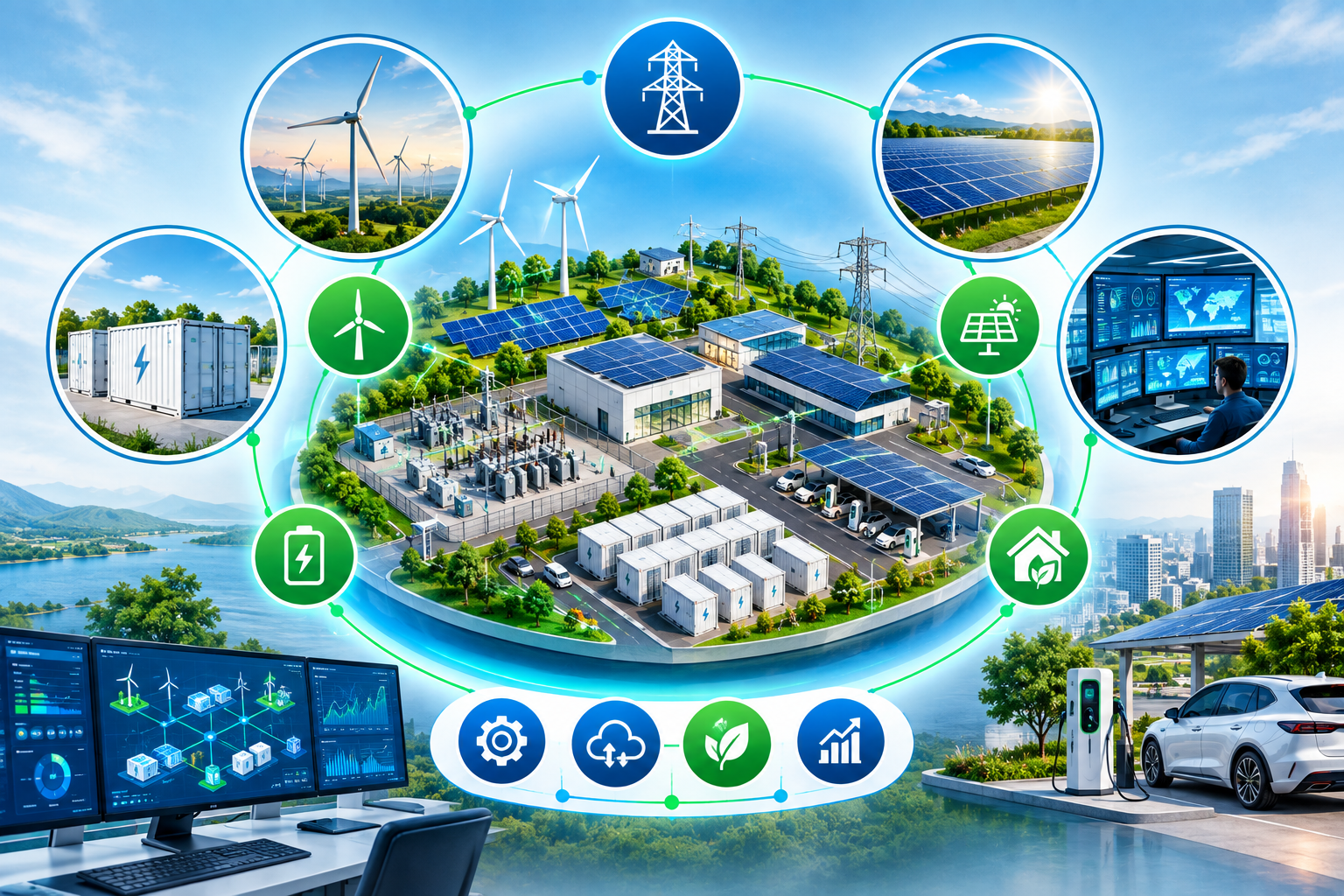
Microgrid Market Growth Driven by Grid Resilience and Decentralized Energy
The increasing frequency of power disruptions and the growing need for reliable electricity are major factors driving the microgrid market. Critical facilities such as hospitals, military installations, data centers, universities, airports, and industrial plants require continuous power to maintain essential operations.
Microgrids can improve energy resilience by combining multiple distributed resources with intelligent controls. During normal grid conditions, a microgrid can operate as part of the broader electricity network. During a grid outage, it can disconnect and operate independently, depending on system design and available generation and storage resources.
The expansion of renewable energy is further strengthening the business case for microgrids. Solar and wind resources are variable, while battery energy storage can help balance generation and demand. Microgrid energy management systems coordinate these resources to improve reliability, optimize energy consumption, and support grid flexibility.
Leading Microgrid Companies Expand Integrated Energy Solutions
The competitive landscape of the microgrid market includes global power equipment manufacturers, automation companies, energy technology providers, system integrators, and specialized microgrid developers. Major participants include Schneider Electric, Siemens, ABB, Eaton, General Electric, Hitachi Energy, Honeywell, and S&C Electric, among other industry participants.
Leading companies are increasingly focusing on integrated microgrid platforms that combine distributed generation, energy storage, power electronics, automation, monitoring, and energy management software. This integrated approach allows customers to manage multiple energy resources through centralized digital platforms.
Schneider Electric and Siemens, for example, have developed solutions combining energy management, automation, and distributed energy resources. ABB and Eaton are also active across power distribution, electrification, automation, and energy management technologies that support microgrid applications.
Competition is increasingly shifting from individual hardware products toward complete energy ecosystems. Vendors capable of integrating hardware, software, controls, analytics, and services can provide greater value to customers seeking end-to-end microgrid solutions.
Mergers and Acquisitions Reshape the Microgrid Competitive Landscape
Mergers and acquisitions (M&A) remain important strategies as energy technology companies seek to strengthen their positions in distributed energy and digital power management. Acquisitions can provide access to specialized microgrid controls, energy management software, battery technologies, renewable energy integration capabilities, and established customer relationships.
The convergence of power generation, storage, automation, and software is creating opportunities for companies to expand beyond their traditional product categories. Power equipment manufacturers can strengthen their digital capabilities through acquisitions, while software and energy management companies can gain access to physical infrastructure and global distribution networks.
Strategic acquisitions can also help companies expand into regional markets where microgrid deployment is accelerating. Local expertise in regulations, utility structures, engineering, and project development can be particularly valuable when entering new countries.
As the market becomes more technologically sophisticated, M&A activity is expected to remain a mechanism for accelerating innovation and building comprehensive microgrid portfolios.
Renewable Energy and Energy Storage Accelerate Microgrid Adoption
The rapid deployment of renewable energy is one of the strongest growth opportunities for the microgrid market. Microgrids can combine renewable generation with battery storage and intelligent controls to provide more flexible and reliable electricity.
Solar PV is particularly suited to microgrid applications because it can be deployed at different scales, from commercial rooftops to large industrial facilities. Energy storage can complement solar generation by storing electricity when production is high and supplying power when generation declines.
The declining costs and increasing deployment of battery energy storage systems are therefore supporting the development of renewable-powered microgrids. Advanced control systems can determine when energy should be generated, stored, consumed, or exchanged with the main grid.
This flexibility is increasingly valuable as electricity systems incorporate higher shares of intermittent renewable generation.
Digitalization Transforms Microgrid Energy Management
Digital transformation is becoming a key differentiator among microgrid companies. Modern microgrids increasingly rely on software platforms that collect data from distributed energy resources, loads, meters, sensors, and grid infrastructure.
Artificial intelligence (AI), machine learning, predictive analytics, and cloud-based monitoring can help optimize energy generation and consumption. These technologies can analyze electricity demand, renewable generation patterns, weather information, and energy prices to support more efficient microgrid operation.
Advanced energy management systems can also enable demand response and load optimization. For commercial and industrial customers, these capabilities can help reduce peak electricity demand and improve energy cost management.
The integration of IoT technologies is further increasing visibility into microgrid assets. Connected equipment can provide real-time information regarding system performance, equipment condition, and energy flows, supporting predictive maintenance and improved operational reliability.
Microgrids Support Data Centers and Critical Infrastructure
The expansion of data centers is creating a particularly attractive opportunity for microgrid providers. Cloud computing, artificial intelligence, and digital services are increasing electricity demand while making uninterrupted power increasingly important.
Microgrids can support data center resilience by combining onsite generation, renewable energy, battery storage, backup generation, and intelligent energy management. They can also help operators manage electricity costs and improve sustainability performance.
Other critical infrastructure sectors—including healthcare, emergency services, military facilities, airports, and telecommunications—are similarly adopting resilient energy solutions. The ability to maintain critical operations during grid disruptions makes microgrids increasingly relevant for these applications.
Industrial and Commercial Applications Create New Opportunities
Industrial facilities are another important application area for the microgrid market. Manufacturing plants often require reliable and high-quality electricity, while interruptions can result in production losses and equipment damage.
Microgrids can provide industrial users with greater control over electricity generation and consumption. They can also support renewable energy integration and energy storage while helping organizations pursue sustainability targets.
Commercial buildings, campuses, universities, and retail facilities are also potential microgrid users. These customers can combine onsite renewable generation, storage, and energy management to improve energy efficiency and resilience.
Regional Outlook for the Microgrid Market
North America represents a significant market for microgrid technologies due to investments in grid modernization, resilience, distributed energy resources, and critical infrastructure. Utilities, government organizations, commercial facilities, and industrial users are increasingly exploring microgrid deployments to address reliability and energy security requirements.
Europe is also focusing on decentralized energy systems as countries increase renewable energy penetration and pursue decarbonization goals. Microgrids can support local energy balancing and the integration of distributed renewable generation.
Asia Pacific is expected to provide substantial growth opportunities due to rapid urbanization, industrialization, electrification, and infrastructure development. Microgrids can play an important role in improving electricity reliability in remote areas while supporting renewable energy integration in rapidly developing economies.
Future Outlook for the Microgrid Market
The microgrid market is positioned for strong growth as governments, utilities, businesses, and communities invest in resilient and decentralized energy infrastructure. The market is projected to increase from USD 43.47 billion in 2025 to USD 95.16 billion by 2030, representing a 17.0% CAGR.
Future competition is expected to focus on integrated energy management platforms, renewable energy integration, battery storage, advanced controls, AI-enabled optimization, and grid-interactive capabilities. Mergers and acquisitions will continue to help companies expand their technology portfolios and strengthen their positions across the distributed energy ecosystem.
The evolution of microgrids from localized backup systems toward intelligent, renewable-powered energy platforms is expected to create significant opportunities. Companies capable of combining power equipment, energy storage, software, automation, and lifecycle services will be well positioned to benefit from the market’s rapid development.
As electricity systems become more decentralized and digital, microgrids are expected to play an increasingly important role in improving energy resilience, reliability, sustainability, and grid flexibility worldwide.
Find More Information on Microgrid Market Innovation @ https://www.marketsandmarkets.com/Market-Reports/micro-grid-electronics-market-917.html
