The US Silicon Photonics Market is entering a high-growth phase as artificial intelligence (AI), hyperscale data centers, cloud computing, high-performance computing (HPC), and 5G networks increase demand for faster and more energy-efficient data transmission. According to MarketsandMarkets, the US silicon photonics market was valued at USD 989.7 million in 2025 and is projected to reach USD 3,842.8 million by 2030, registering a 31.2% CAGR during the forecast period.
This rapid expansion reflects a fundamental shift in data-center architecture. Conventional electrical interconnects face increasing limitations in bandwidth, power consumption, latency, and scalability as AI workloads require massive volumes of data to move between GPUs, CPUs, memory, and networking equipment. Silicon photonics addresses these constraints by using optical signals and semiconductor-compatible manufacturing approaches to enable high-speed connectivity.
Companies such as Cisco Systems, Intel, Broadcom, and Marvell Technology are positioned to benefit as optical connectivity becomes increasingly important to AI infrastructure. The broader industry is also seeing growing interest in co-packaged optics (CPO), optical I/O, advanced transceivers, and integrated photonic circuits.
Download PDF Brochure @ https://www.marketsandmarkets.com/cutoutform.asp?page=PDF_Download&id=116&childreportID=723&segment=country
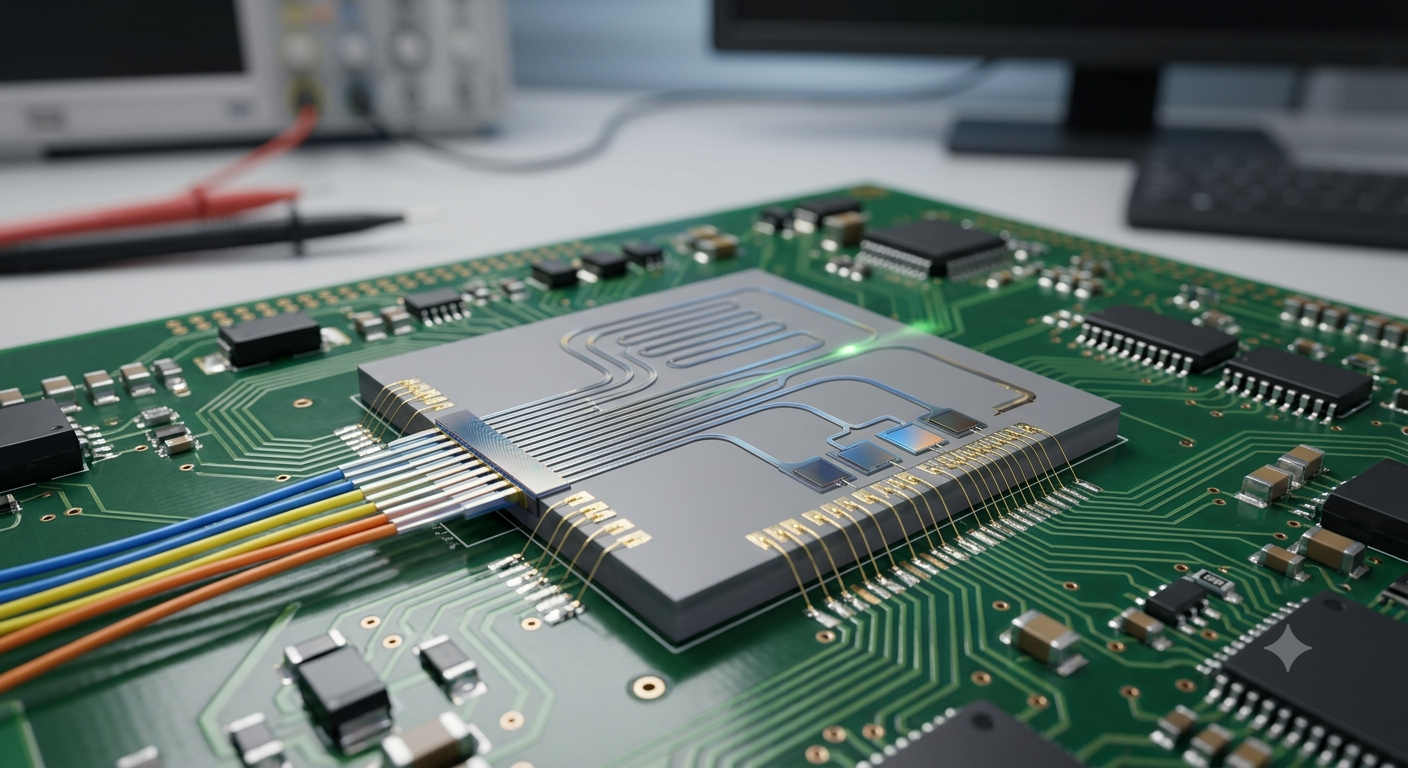
US Silicon Photonics Market Growth Driven by AI and Data Centers
The expansion of AI infrastructure is one of the most important growth catalysts for the US Silicon Photonics Market. AI training and inference systems require extremely high bandwidth between accelerators and networking infrastructure. As data-center operators deploy larger clusters of GPUs and specialized AI processors, the volume of information moving across these systems continues to rise.
MarketsandMarkets identifies data centers and HPC as the largest US end-user segment, with revenue projected to increase from USD 612.9 million in 2025 to USD 2,533.2 million by 2030, representing a 32.8% CAGR.
Silicon photonics provides a pathway toward higher-speed optical interconnects while addressing energy-efficiency requirements. This makes photonic connectivity strategically important for hyperscalers and cloud-service providers seeking to expand AI computing capacity without proportionally increasing networking power consumption.
Cisco and Intel Strengthen the Silicon Photonics Competitive Landscape
The competitive landscape is being shaped by technology companies with established capabilities across networking, semiconductor manufacturing, optical components, and data-center infrastructure. MarketsandMarkets identifies Cisco and Intel as leading players in the North American silicon photonics market, supported by their strong product portfolios and presence in high-speed optical connectivity.
Cisco’s silicon photonics capabilities have been strengthened through its integration of Luxtera technology, enabling optical connectivity for networking equipment and data-center applications. Intel, meanwhile, has developed silicon-photonics technologies designed to integrate optical functions with semiconductor manufacturing processes.
The competitive environment is expanding beyond traditional optical component suppliers. Broadcom is increasingly relevant because of its combination of AI networking, switching, connectivity, and optical technologies. Marvell is also positioned around high-speed connectivity and optical solutions as AI infrastructure increases the number and speed of connections required within data centers.
Co-Packaged Optics and Optical I/O Create New Growth Opportunities
One of the most important technology trends influencing the US Silicon Photonics Market is the movement toward co-packaged optics and optical I/O. Instead of relying exclusively on conventional pluggable optical modules located farther from switching or computing chips, CPO architectures seek to place optical components closer to high-performance processors and switches.
This approach can reduce electrical transmission distances and potentially improve bandwidth density and power efficiency. As AI clusters become larger, these advantages could become increasingly important.
IBM, for example, introduced a process for co-packaged optics that combines optical waveguides with silicon photonics to improve data-center connectivity. Such developments demonstrate the industry’s broader transition toward integrating photonics more closely with computing and networking architectures.
The opportunity extends beyond traditional transceivers. Future silicon photonics platforms are expected to support optical interconnects, modulators, photodetectors, waveguides, lasers, switches, and increasingly integrated photonic circuits.
5G and Telecommunications Expand the Addressable Market
While AI and data centers are the primary growth engines, telecommunications remains an important application area for the US Silicon Photonics Market. The deployment and evolution of 5G infrastructure are increasing bandwidth requirements throughout network backbones and access networks.
MarketsandMarkets projects the US telecommunications segment to grow from USD 245.2 million in 2025 to USD 890.3 million by 2030, corresponding to a 29.4% CAGR.
High-speed optical connectivity enables telecom operators to handle growing data traffic while supporting lower-latency communication. As networks become more distributed through edge computing and advanced mobile infrastructure, optical technologies are expected to play a larger role in connecting data centers, telecom facilities, and network aggregation points.
Government Support and Domestic Semiconductor Manufacturing
Another structural driver is the US focus on semiconductor supply-chain resilience and advanced domestic manufacturing. Silicon photonics benefits from its relationship with semiconductor fabrication technologies, particularly where photonic components can leverage established CMOS-compatible processes.
Government initiatives supporting semiconductor manufacturing and technology development can encourage investment in fabrication capacity, research, packaging, and photonic integration. MarketsandMarkets notes that the US focus on semiconductor self-sufficiency and advanced manufacturing is contributing to the country’s position as an important hub for silicon photonics innovation and commercialization.
This creates opportunities for semiconductor foundries, photonic integrated circuit developers, packaging companies, equipment suppliers, and design-automation providers.
Key Challenges Facing the US Silicon Photonics Market
Despite its strong growth outlook, the industry faces several challenges. Silicon photonics requires sophisticated manufacturing, optical packaging, testing, and integration capabilities. The alignment of optical and electronic components at high production volumes can increase manufacturing complexity.
Another challenge is ecosystem standardization. Data-center operators require interoperable solutions capable of meeting demanding performance, reliability, and cost requirements. Companies therefore need to balance innovation with compatibility across networking platforms and optical standards.
The industry must also address supply-chain considerations involving lasers, specialty materials, photonic packaging, and semiconductor manufacturing capacity. Continued investment in domestic production and diversified sourcing will be important as demand accelerates.
Business Implications for Industry Stakeholders
For silicon photonics manufacturers, the rapid market expansion creates opportunities to scale production of transceivers, optical interconnects, modulators, photodetectors, and integrated photonic circuits. Companies capable of delivering high-volume, energy-efficient products for AI data centers could gain a competitive advantage.
For technology providers, partnerships across semiconductor, networking, cloud, and optical ecosystems will become increasingly important. The MarketsandMarkets analysis highlights strategic partnerships among semiconductor manufacturers, data-center operators, and telecommunications providers as an important mechanism for expanding silicon photonics applications.
For investors, the market’s 31.2% CAGR indicates substantial potential across established semiconductor companies as well as specialized photonics startups. Investment opportunities may extend beyond component manufacturers into optical packaging, photonic design automation, testing, and advanced semiconductor fabrication.
For data-center and telecom operators, silicon photonics can become a strategic technology for managing bandwidth growth and improving infrastructure efficiency. Early adoption may help operators prepare for next-generation AI and cloud workloads.
Future Outlook for the US Silicon Photonics Market
The future of the US Silicon Photonics Market will increasingly be shaped by the convergence of AI computing, cloud infrastructure, advanced networking, and semiconductor manufacturing. With the market projected to expand from USD 989.7 million in 2025 to USD 3.84 billion by 2030, silicon photonics is moving from a specialized optical technology toward a critical component of next-generation digital infrastructure.
The strongest opportunities are expected in AI-focused data centers, HPC, high-speed transceivers, optical I/O, co-packaged optics, and advanced telecommunications infrastructure. As bandwidth requirements continue to rise, the ability to move data efficiently will become as strategically important as computing capacity itself.
With Cisco, Intel, Broadcom, Marvell, IBM, and other technology companies advancing optical connectivity solutions, the US is positioned to remain a major center for silicon photonics innovation. The combination of AI-driven infrastructure investment, cloud expansion, 5G deployment, semiconductor policy support, and continuing photonic integration is expected to sustain strong market momentum through 2030.
For more info: https://www.marketsandmarkets.com/Market-Reports/geography/silicon-photonics/us