The Piezoelectric Sensor Market is gaining momentum as industries increasingly adopt high-precision sensing technologies for real-time monitoring, automation, predictive maintenance, and smart connected systems. Piezoelectric sensors convert mechanical parameters such as force, pressure, vibration, acceleration, and acoustic signals into electrical signals, making them valuable across automotive, aerospace and defense, healthcare, industrial manufacturing, consumer electronics, and other applications.
The growing integration of artificial intelligence (AI), the Industrial Internet of Things (IIoT), wireless connectivity, and advanced analytics is expanding the role of piezoelectric sensors beyond conventional measurement applications. As factories, vehicles, medical systems, and electronic devices become more intelligent, demand for compact, responsive, and reliable sensing technologies is increasing.
According to MarketsandMarkets, The global piezoelectric devices market is expected to grow from USD 35.59 billion in 2024 to USD 55.49 billion by 2030 at a CAGR of 7.7% during the estimated period 2024-2030. The broader market includes piezoelectric sensors, actuators, motors, transducers, generators, and other devices.
Piezoelectric Sensor Market Growth Driven by Smart Sensing
The increasing adoption of automation and connected equipment is a major factor supporting the Piezoelectric Sensor Market. Modern industrial systems require sensors that can capture dynamic physical conditions with high sensitivity and rapid response. Piezoelectric sensors are particularly useful for measuring vibration, pressure, force, and acceleration in environments where real-time monitoring is essential.
MarketsandMarkets identifies the expansion of smart devices and industrial automation as important drivers for piezoelectric sensing and actuation solutions. The growing adoption of these technologies across automotive, aerospace and defense, industrial and manufacturing, healthcare, and consumer electronics is creating new opportunities for sensor manufacturers.
Piezoelectric sensors can be integrated into machines and equipment to continuously monitor operating conditions. This capability supports condition monitoring and enables organizations to identify abnormal vibration, pressure fluctuations, or mechanical stress before they result in significant equipment problems.
As industrial operations become increasingly automated, sensing technologies that can provide rapid and accurate measurements are becoming an important part of smart manufacturing architectures.
Download PDF Brochure @ https://www.marketsandmarkets.com/pdfdownloadNew.asp?id=256019882
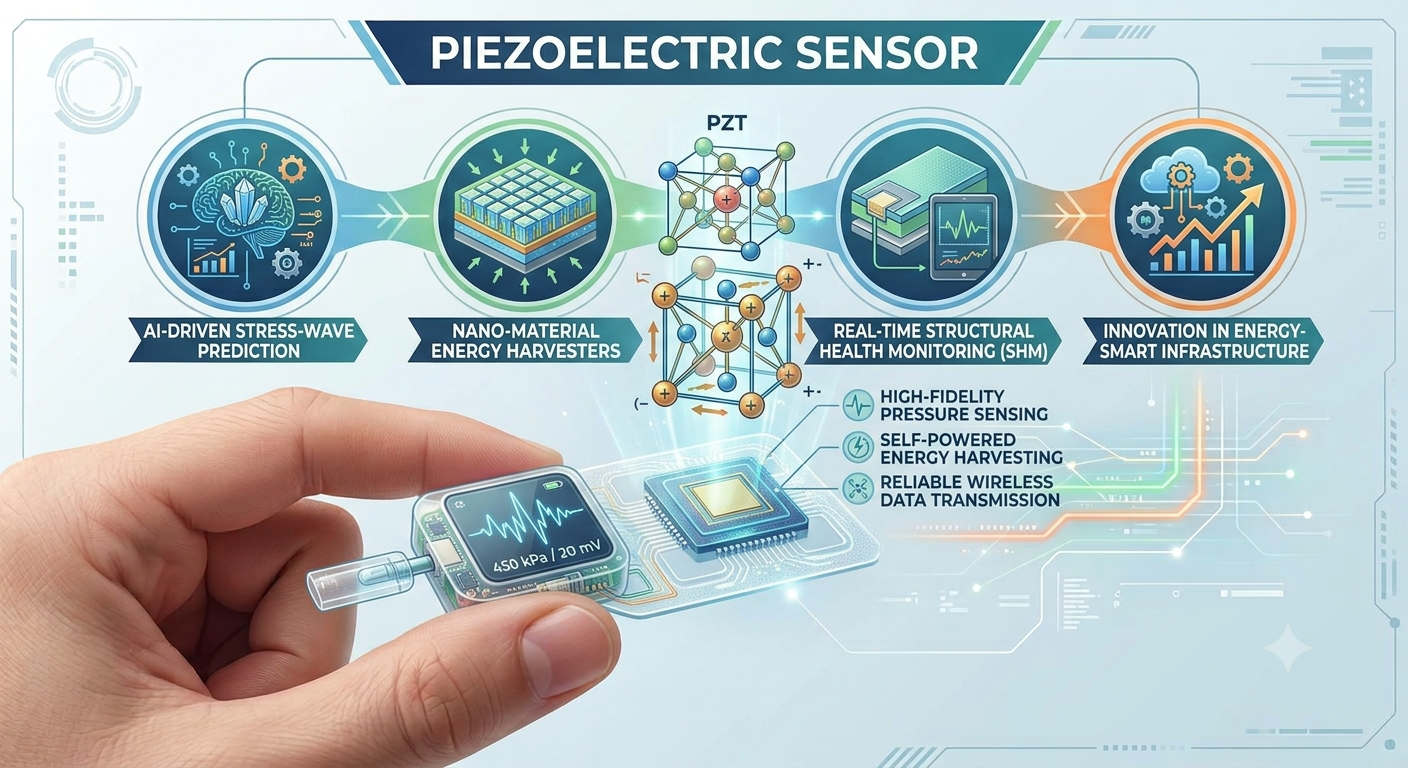
AI Integration Transforming the Piezoelectric Sensor Market
Artificial intelligence is becoming an important technology enabler for the Piezoelectric Sensor Market. While piezoelectric sensors generate physical measurements, AI and machine learning can analyze the resulting data to identify patterns, anomalies, and changes in equipment behavior.
MarketsandMarkets identifies increasing adoption of machine learning and deep learning algorithms as a driver for the piezoelectric devices industry. The integration of AI with piezoelectric sensing can support applications such as predictive maintenance, defect detection, structural monitoring, and intelligent process control.
In industrial environments, AI algorithms can process vibration and acoustic signals collected from machinery. Changes in these signals can potentially indicate bearing wear, imbalance, misalignment, structural stress, or other equipment conditions.
This creates a transition from conventional sensor-based measurement toward intelligent sensing systems. Instead of simply collecting data, AI-enabled platforms can interpret sensor outputs and provide insights that support maintenance planning and operational optimization.
IoT and Connected Monitoring Expand Market Opportunities
The Industrial Internet of Things is another major trend influencing the Piezoelectric Sensor Market. IIoT connects sensors, machines, edge devices, cloud platforms, and enterprise systems to create continuous flows of operational data.
MarketsandMarkets notes that the technological development of IIoT is creating opportunities for piezoelectric devices to power smart devices, sensors, and transducers within connected networks.
Piezoelectric sensors can serve as data-generation points within these connected environments. Sensors installed on industrial machines can collect vibration, pressure, or force measurements, while connected systems transmit the information to local controllers, edge computing platforms, or cloud-based analytics systems.
This architecture supports real-time equipment monitoring and enables organizations to build more responsive industrial operations. The combination of piezoelectric sensing, IoT connectivity, edge computing, and AI analytics is therefore expected to create additional applications for smart sensing technologies.
Predictive Maintenance Accelerating Piezoelectric Sensor Adoption
Predictive maintenance is an important application area for the Piezoelectric Sensor Market. Manufacturers are increasingly seeking ways to reduce unplanned downtime, extend equipment life, and optimize maintenance schedules.
Piezoelectric sensors are well suited to dynamic measurements because they can detect mechanical changes associated with vibration and force. When integrated with data analytics and machine learning platforms, these measurements can support predictive maintenance strategies.
For example, industrial equipment can be equipped with piezoelectric vibration sensors to continuously monitor machine behavior. Analytics platforms can then compare current measurements with historical patterns to identify potential anomalies.
This approach allows maintenance teams to move from scheduled maintenance toward condition-based strategies. As industrial facilities adopt Industry 4.0 technologies, the demand for high-performance sensors capable of supporting predictive maintenance is expected to increase.
Automotive Applications Strengthening the Piezoelectric Sensor Market
The automotive sector represents an important application area for the Piezoelectric Sensor Market. Piezoelectric sensors and actuators are used in systems associated with vehicle safety, performance, monitoring, and connectivity.
MarketsandMarkets notes that piezoelectric sensors and actuators are used in automotive applications such as tire pressure monitoring, fuel injection, and engine management. The technology can help enhance efficiency and reliability, including in electric and hybrid vehicles.
The transition toward electric vehicles is also creating new requirements for advanced sensing and monitoring systems. Sensors can be incorporated into vehicle systems to monitor mechanical and structural conditions and provide data to electronic control systems.
At the same time, automotive manufacturers are increasingly integrating connected and intelligent technologies. This trend is creating opportunities for piezoelectric sensors that can operate as part of broader vehicle sensing architectures.
Aerospace and Defense Applications Create High-Precision Demand
Aerospace and defense applications are another important growth area for the Piezoelectric Sensor Market. Aircraft and aerospace systems require technologies capable of operating reliably under demanding mechanical and environmental conditions.
MarketsandMarkets identifies the increasing adoption of piezoelectric materials to enhance aircraft structural efficiency as a significant market driver. Piezoelectric actuators can be used for active vibration damping, helping monitor mechanical structures and components while reducing undesirable vibrations and noise.
Piezoelectric sensing technologies can also support structural health monitoring by detecting changes in vibration, pressure, or mechanical stress. These capabilities are relevant to aircraft, spacecraft, and other advanced systems where early identification of structural or mechanical changes can be valuable.
The increasing emphasis on aircraft efficiency, lightweight structures, vibration management, and advanced monitoring technologies is therefore supporting opportunities across the aerospace-related piezoelectric ecosystem.
Healthcare and Medical Imaging Fuel Piezoelectric Sensor Market Innovation
Healthcare is emerging as another important application area for piezoelectric technologies. Piezoelectric devices are used in ultrasound equipment, imaging systems, surgical instruments, and other precision medical applications.
According to MarketsandMarkets, healthcare is expected to be the fastest-growing application segment in the broader piezoelectric devices market during the forecast period.
Piezoelectric transducers play an important role in ultrasound systems because they can convert electrical energy into mechanical acoustic waves and receive returning signals. This enables imaging and diagnostic applications that require precise acoustic transmission and reception.
The growing demand for advanced medical imaging and minimally invasive procedures is creating opportunities for smaller and more precise piezoelectric components. Developments in piezoelectric polymers and other advanced materials can further expand their potential use in biomedical and surgical applications.
Wearables and Flexible Electronics Open New Opportunities
The emergence of smart wearables and flexible electronics is creating new opportunities for the Piezoelectric Sensor Market. MarketsandMarkets identifies smart wearables and flexible electronics as emerging technologies contributing to growth in the broader piezoelectric devices industry.
Flexible piezoelectric materials can potentially be integrated into wearable devices and electronic systems where conventional rigid sensors may have limitations. These technologies can support the measurement of movement, pressure, vibration, and other physical signals.
Wearable applications are particularly relevant to healthcare, sports monitoring, human-machine interfaces, and consumer electronics. As wearable devices become thinner, lighter, and more connected, demand for compact sensing components is expected to expand.
This trend also increases the importance of piezoelectric polymers and composite materials, which can provide flexibility and enable new form factors.
Piezoelectric Energy Harvesting and IoT Applications
Energy harvesting represents an emerging opportunity for the Piezoelectric Sensor Market and the broader piezoelectric devices industry. Piezoelectric materials can convert mechanical energy, including vibration and movement, into electrical energy.
MarketsandMarkets identifies the development of piezoelectric energy harvesting solutions as an opportunity for powering low-energy devices and IoT systems.
In connected environments, energy harvesting can potentially complement or reduce reliance on conventional batteries for selected low-power sensing applications. This is particularly relevant to remote sensors, industrial monitoring systems, smart infrastructure, and other applications where replacing batteries can be difficult or expensive.
The combination of energy harvesting, low-power electronics, wireless connectivity, and IoT creates an emerging technology pathway for self-powered sensing systems.
Advanced Materials Supporting Piezoelectric Sensor Market Development
Material innovation is playing an increasingly important role in the Piezoelectric Sensor Market. The broader piezoelectric devices market is segmented into piezoelectric crystals, ceramics, polymers, and composites.
MarketsandMarkets projects piezoelectric polymers to grow at the fastest rate from 2024 to 2030.
Piezoelectric polymers can provide characteristics such as flexibility and lightweight construction, making them attractive for applications involving wearable electronics, biomedical systems, flexible sensors, and advanced electronic devices.
At the same time, ceramics remain important because of their established piezoelectric performance across numerous industrial and commercial applications. Research into composites and alternative materials is also expanding the range of characteristics available to sensor manufacturers.
Material development will remain important as companies seek to improve sensitivity, durability, flexibility, environmental performance, and manufacturing scalability.
Miniaturization Driving Next-Generation Smart Sensors
Miniaturization is becoming increasingly important for the Piezoelectric Sensor Market. Modern electronic and industrial systems require sensing components that can deliver high performance while occupying less space.
Smaller sensors can be integrated into compact automotive systems, medical devices, wearable electronics, robotics, industrial machinery, and consumer products. Miniaturized piezoelectric components can also enable sensor placement in locations where larger conventional devices cannot be easily installed.
The combination of miniaturization with wireless communication and AI analytics is creating a new generation of smart sensors. These devices can collect data locally, transmit information through connected networks, and support automated analysis.
Asia Pacific Leads the Piezoelectric Devices Market
Asia Pacific represents a major regional market for piezoelectric technologies. According to MarketsandMarkets, Asia Pacific accounted for 43.4% of the global piezoelectric devices market in 2024.
Strong electronics manufacturing, industrial automation, automotive production, and technology development are supporting regional demand. The presence of large manufacturing ecosystems also creates opportunities for piezoelectric sensors in industrial equipment, consumer electronics, vehicles, and connected devices.
The continued expansion of smart manufacturing and electronics production across countries in the region is expected to support the adoption of piezoelectric sensing and actuation technologies.
Key Challenges in the Piezoelectric Sensor Market
Despite expanding applications, the Piezoelectric Sensor Market faces several technology and manufacturing challenges. One major issue is the continued reliance on lead-based piezoelectric materials such as lead zirconate titanate (PZT).
MarketsandMarkets identifies stringent government policies restricting the use of lead-based piezoelectric materials as a restraint and highlights the challenge of developing alternatives to PZT ceramics with comparable properties.
The development of environmentally friendly alternatives requires manufacturers to balance performance, cost, reliability, manufacturability, and regulatory requirements. High costs associated with certain advanced ceramic manufacturing processes can also affect adoption.
Continued investment in lead-free ceramics, polymers, composites, and nanomaterials will therefore be important for the long-term development of the industry.
Competitive Landscape of the Piezoelectric Sensor Market
The competitive landscape includes established piezoelectric technology companies, sensor manufacturers, component suppliers, and specialized technology providers. MarketsandMarkets identifies CeramTec GmbH, CTS Corporation, Kistler Group, Huawei Technologies, Physik Instrumente, Piezosystem jena, KEMET Corporation, Piezo Technologies, APC International, and Mad City Labs among the companies covered in the broader piezoelectric devices market.
Companies are focusing on product development, advanced materials, miniaturization, precision measurement, energy harvesting, and specialized industrial applications. Partnerships between sensor manufacturers, automation providers, AI companies, and system integrators can further accelerate the development of connected sensing solutions.
Innovation is increasingly shifting toward integrated solutions that combine sensors with signal conditioning, connectivity, analytics, and control systems.
Future Outlook for the Piezoelectric Sensor Market
The future of the Piezoelectric Sensor Market will be shaped by the convergence of AI, IoT, industrial automation, advanced materials, and intelligent electronics. The broader piezoelectric devices market is projected to grow from USD 35.59 billion in 2024 to USD 55.49 billion by 2030, at a CAGR of 7.7%.
Within this expanding ecosystem, piezoelectric sensors are positioned to benefit from rising requirements for real-time measurement and condition monitoring. AI-powered analytics can transform sensor-generated signals into actionable insights, while IIoT connectivity can enable continuous monitoring across distributed industrial assets.
Future development is also likely to focus on flexible sensors, lead-free materials, energy harvesting, wearable electronics, advanced medical devices, automotive systems, and high-precision industrial applications.
As industries move toward intelligent and connected operations, the Piezoelectric Sensor Market is evolving from conventional sensing toward smart, connected, and data-driven measurement systems. The combination of AI, IoT, advanced materials, predictive maintenance, and smart manufacturing is expected to remain central to the next phase of piezoelectric sensor innovation
Frequently Asked Questions
1. What is a piezoelectric sensor?
A piezoelectric sensor is a sensing device that uses the piezoelectric effect to convert mechanical changes such as pressure, force, vibration, or acceleration into an electrical signal. These sensors are widely used in industrial monitoring, automotive systems, aerospace, healthcare, robotics, and consumer electronics.
2. What are the major applications of the Piezoelectric Sensor Market?
Major applications include industrial condition monitoring, automotive systems, aerospace and defense, medical imaging, consumer electronics, robotics, energy harvesting, and smart manufacturing. Growing demand for real-time monitoring and automation is expanding the application scope of the Piezoelectric Sensor Market.
3. How is IoT influencing the Piezoelectric Sensor Market?
IoT enables piezoelectric sensors to connect with machines, edge devices, cloud platforms, and analytics systems. This allows continuous collection of vibration, pressure, force, and other physical data. IoT connectivity is supporting applications such as predictive maintenance, remote monitoring, smart factories, and connected infrastructure.
4. What role does AI play in the Piezoelectric Sensor Market?
AI and machine learning can analyze large volumes of data generated by piezoelectric sensors to identify patterns and anomalies. AI-powered analysis can support predictive maintenance, equipment fault detection, process optimization, and automated decision-making, increasing the value of piezoelectric sensors in intelligent industrial environments.
5. Which region represents a major market for piezoelectric technologies?
Asia Pacific represents a major regional market for piezoelectric technologies. According to MarketsandMarkets, Asia Pacific accounted for 43.4% of the global piezoelectric devices market in 2024, supported by strong electronics manufacturing, industrial automation, automotive production, and technological development.
About MarketsandMarkets™
MarketsandMarkets™ is a blue ocean alternative in growth consulting and program management, leveraging a man-machine offering to drive supernormal growth for progressive organizations in the B2B space. We have the widest lens on emerging technologies, making us proficient in co-creating supernormal growth for clients.
The B2B economy is witnessing the emergence of $25 trillion of new revenue streams that are substituting existing revenue streams in this decade alone. We work with clients on growth programs, helping them monetize this $25 trillion opportunity through our service lines – TAM Expansion, Go-to-Market (GTM) Strategy to Execution, Market Share Gain, Account Enablement, and Thought Leadership Marketing.
Built on the ’GIVE Growth’ principle, we work with several Forbes Global 2000 B2B companies – helping them stay relevant in a disruptive ecosystem. Our insights and strategies are molded by our industry experts, cutting-edge AI-powered Market Intelligence Cloud, and years of research. The KnowledgeStore™ (our Market Intelligence Cloud) integrates our research, facilitates an analysis of interconnections through a set of applications, helping clients look at the entire ecosystem and understand the revenue shifts happening in their industry.
To find out more, visit www.MarketsandMarkets™.com or follow us on Twitter, LinkedIn and Facebook.
Contact:
Mr. Rohan Salgarkar
MarketsandMarkets™ INC.
630 Dundee Road
Suite 430
Northbrook, IL 60062
USA : 1-888-600-6441