Biosensors are becoming an important technology for rapid detection, continuous monitoring, and real-time analysis across healthcare, biotechnology, food safety, environmental monitoring, and research. Different Types of Biosensors are designed to detect specific biological substances and convert biological interactions into measurable signals. Advances in miniaturization, nanotechnology, microfluidics, wireless connectivity, and artificial intelligence are expanding the capabilities of biosensing technologies and creating new applications across industries.
The global biosensors market was valued at approximately USD 34.5 billion in 2025 and is projected to reach USD 54.37 billion by 2030, registering a CAGR of 9.5% during 2025–2030. The market covers sensor patches and embedded devices, wearable and non-wearable biosensors, and technologies including electrochemical, optical, piezoelectric, thermal, and nanomechanical biosensors.
Understanding the Different Types of Biosensors
Biosensors generally combine a biological recognition element, or bioreceptor, with a physicochemical transducer. The bioreceptor selectively interacts with a target analyte, while the transducer converts that interaction into a measurable signal. Depending on the transduction mechanism, Types of Biosensors can be classified into electrochemical, optical, piezoelectric, thermal, and nanomechanical technologies.
The choice of biosensor depends on factors such as sensitivity, selectivity, response time, portability, cost, sample requirements, and application environment. Healthcare applications typically prioritize accuracy, rapid results, miniaturization, and ease of use, while industrial and environmental applications may emphasize durability, scalability, and field deployment.
Electrochemical Biosensors
Electrochemical biosensors are among the most widely used Types of Biosensors because they can provide sensitive detection in compact and relatively cost-effective formats. These sensors measure electrical characteristics associated with biochemical reactions, including changes in current, voltage, impedance, or conductivity.
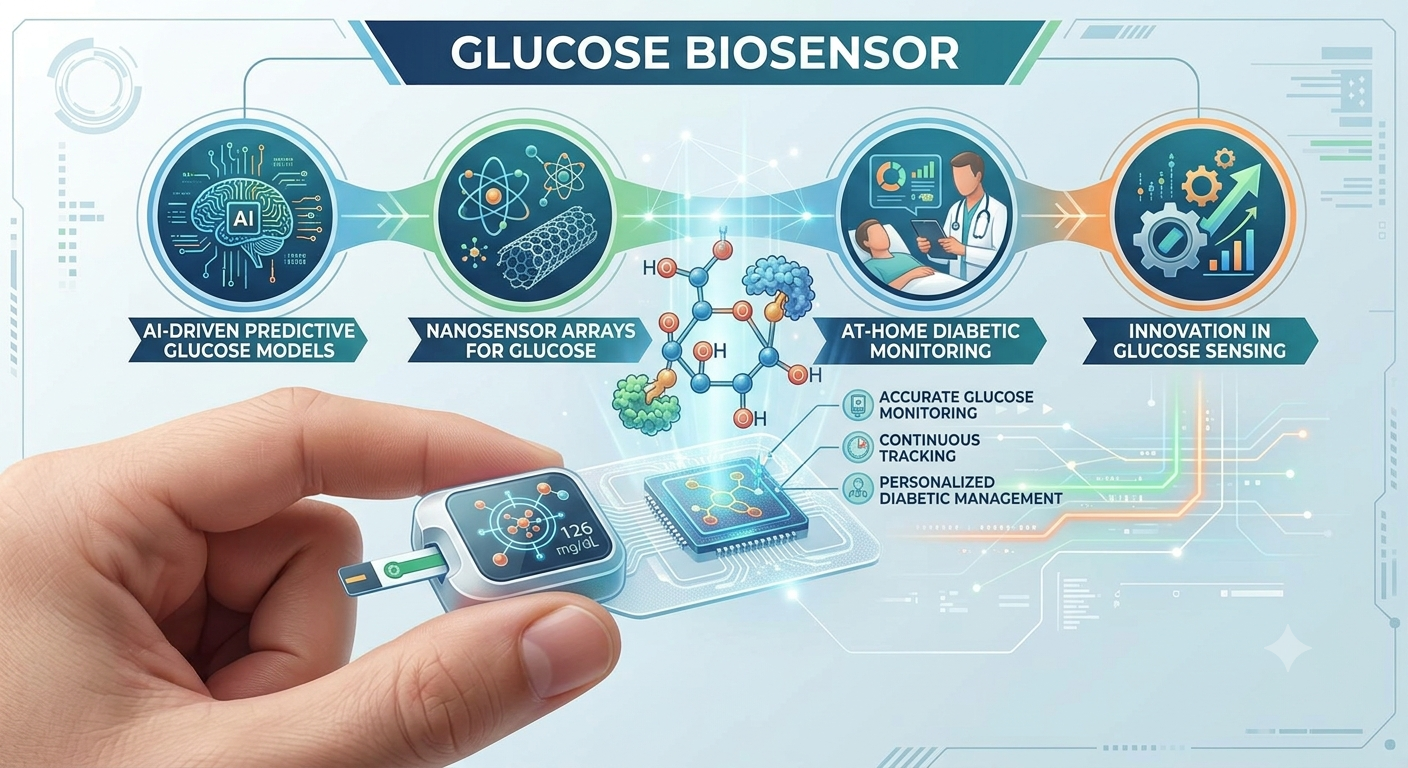
Glucose monitoring is one of the most important applications of electrochemical biosensing. Glucose biosensors are used extensively for diabetes management, including in portable and continuous monitoring systems. The increasing prevalence of diabetes and demand for real-time glucose monitoring are therefore important factors supporting biosensor adoption.
Advancements in electrode materials, enzymes, nanomaterials, and microfluidic structures are improving the sensitivity and performance of electrochemical biosensors. These developments are also supporting the creation of smaller wearable and point-of-care systems.
Download PDF Brochure @ https://www.marketsandmarkets.com/pdfdownloadNew.asp?id=798
Optical Biosensors
Optical biosensors detect biological interactions by measuring changes in optical properties. These may include changes in light intensity, wavelength, refractive index, or other optical characteristics resulting from interactions between biological recognition elements and target analytes.
Among the major Types of Biosensors covered by MarketsandMarkets, optical biosensors are expected to register the highest CAGR during the forecast period. Their ability to analyze biomolecular interactions in real time without necessarily requiring molecular labeling makes them valuable for applications such as drug discovery, assay development, target identification, and quality control.
Optical biosensors are also benefiting from developments in photonics, nanomaterials, surface plasmon resonance, and integrated optical systems. These technologies can enable highly sensitive detection and real-time analysis, making optical sensing important for advanced life-science research.
Piezoelectric Biosensors
Piezoelectric biosensors use piezoelectric materials to detect changes in mass or mechanical properties associated with biological interactions. When a target molecule binds to the sensor surface, the resulting physical change can influence the resonant characteristics of the piezoelectric material.
These Types of Biosensors are particularly relevant to applications requiring label-free detection and analysis of molecular interactions. Piezoelectric technologies can support research, diagnostics, environmental monitoring, and other applications where changes in mass or surface interactions need to be detected.
Continued improvements in microfabrication and sensor materials can increase the potential of piezoelectric biosensors for compact analytical platforms. Integration with microfluidics and digital processing may further improve their usefulness in portable detection systems.
Thermal Biosensors
Thermal biosensors identify biochemical reactions by measuring changes in temperature or heat generated during biological processes. Enzymatic and biochemical reactions can produce or consume heat, creating a measurable thermal signal.
Thermal sensing can be useful when conventional electrical or optical measurements are difficult to implement. These biosensors can potentially be applied to biochemical analysis, food testing, environmental monitoring, and research.
However, thermal biosensor development requires careful control of environmental conditions and sensor design. Advances in miniaturized thermal elements and integrated electronics could improve their portability and application potential.
Nanomechanical Biosensors
Nanomechanical biosensors represent an emerging category within the Types of Biosensors landscape. These sensors detect biological interactions through mechanical changes at very small scales. Binding of biomolecules can modify parameters such as surface stress, resonance, or mechanical displacement.
Nanomechanical technologies are closely associated with advances in nanotechnology and microelectromechanical systems. Their potential for highly sensitive detection makes them relevant to research and advanced diagnostic applications.
The growing emergence of nanotechnology-based biosensors is identified by MarketsandMarkets as an important growth factor for the broader biosensors industry.
Wearable and Non-Wearable Biosensors
Beyond technology classification, Types of Biosensors can also be differentiated according to product format. Wearable biosensors are designed to collect physiological or biochemical information continuously or repeatedly, while non-wearable biosensors are commonly used in point-of-care, laboratory, and diagnostic environments.
According to MarketsandMarkets, non-wearable biosensors held the larger market share in 2024, while wearable biosensors are expected to grow at a higher rate from 2025 to 2030. Wearable technologies are gaining attention because they enable continuous health monitoring and can support remote healthcare models.
Wearable biosensors can be incorporated into wristwear, bodywear, patches, smart textiles, and other connected devices. They can monitor biomarkers and physiological parameters while transmitting information to smartphones, cloud platforms, or healthcare systems.
Embedded Devices and Sensor Patches
Embedded devices represent another important category of biosensor products. MarketsandMarkets identifies embedded devices as holding a larger share based on biosensor type. These devices are used across point-of-care diagnostics, home diagnostics, food and beverage testing, research laboratories, environmental monitoring, and biodefense.
Sensor patches are particularly relevant to wearable healthcare. Flexible and conformal patches can be placed on the skin to collect physiological information over extended periods. Their integration with printed electronics, wireless connectivity, and miniaturized sensing components can create new opportunities for remote and continuous monitoring.
Applications of Different Types of Biosensors
Healthcare remains one of the most important application areas for biosensors. Point-of-care testing, glucose monitoring, cardiac marker detection, infectious disease detection, and home diagnostics are driving demand for rapid and convenient sensing technologies.
Home diagnostics represents a particularly important growth opportunity. MarketsandMarkets expects the home diagnostics application to grow at the highest rate during the forecast period, supported by healthcare developments, adoption of new diagnostic methods, and the convenience of home-based medical devices.
Glucose monitoring is another major application. Biosensors enable frequent measurement of glucose levels and support disease management. Increasing demand for wearable and point-of-care glucose monitoring technologies is strengthening the role of biosensors in diabetes care.
Beyond healthcare, biosensors are increasingly used in food and beverage testing. They can help identify contaminants, pathogens, chemicals, and other biological targets. Their rapid response and field applicability can make them useful for food safety and quality control.
Environmental monitoring is another emerging opportunity. Biosensors can potentially be used to detect biological and chemical contaminants in water, soil, and other environments. Their specificity and ability to provide rapid results can complement conventional analytical techniques.
Research laboratories also represent an important application area. Optical and other advanced biosensors can provide real-time information about biomolecular interactions, supporting drug discovery, biotechnology research, and assay development.
AI, IoT, and Digital Technologies Transforming Biosensors
One of the most significant trends shaping Types of Biosensors is the integration of biosensing with artificial intelligence, IoT, cloud platforms, and connected healthcare systems.
AI algorithms can process large volumes of sensor data, identify patterns, and support automated interpretation. When integrated into wearable and point-of-care devices, AI can help transform raw biosensor signals into actionable information.
IoT connectivity enables biosensors to transmit measurements to smartphones, remote monitoring platforms, and cloud systems. This is particularly important for chronic disease management and telemedicine because healthcare professionals can receive patient information without requiring every measurement to be performed in a hospital or laboratory.
MarketsandMarkets also identifies miniaturization, wireless technologies, non-invasive sensing, AI, IoT, and cloud-based platforms as important trends supporting the evolution of the biosensors industry.
Key Trends Shaping the Types of Biosensors
The future development of Types of Biosensors is being influenced by several technology trends. Miniaturization is allowing biosensors to become smaller and more suitable for portable and wearable applications. Microfluidics is enabling the controlled handling of very small quantities of biological samples, supporting compact diagnostic platforms.
Nanotechnology is improving opportunities for high-sensitivity detection by enabling the development of advanced sensing materials and structures. Flexible electronics are also helping integrate biosensors into wearable patches and smart textiles.
Another important trend is the development of non-invasive and minimally invasive sensing. Users increasingly seek monitoring technologies that can operate continuously without complex sample collection procedures. This trend is supporting innovation in wearable patches, smart devices, and connected monitoring systems.
Personalized healthcare is also creating opportunities for biosensors. Continuous data collection can provide more detailed information about individual biological responses, potentially supporting more personalized monitoring and treatment strategies.
Growth Drivers for the Biosensors Market
The rising incidence of chronic diseases is a major driver of biosensor adoption. Diabetes, cardiovascular diseases, obesity, and other lifestyle-related disorders require regular monitoring, creating demand for accurate and convenient sensing technologies.
Rapid diagnostic requirements are another growth factor. Point-of-care biosensors can reduce dependence on centralized laboratories and provide results closer to the patient. This can be particularly valuable in remote and resource-limited settings.
Technological advances in enzymes, nucleic-acid-based sensors, miniaturization, nanotechnology, and wearable devices are also improving biosensor capabilities. MarketsandMarkets identifies increasing demand for glucose monitoring, technological innovation, and the adoption of biosensor-based testing kits as important market drivers.
Challenges Affecting Biosensor Adoption
Despite strong opportunities, the development and commercialization of different Types of Biosensors face several challenges. High R&D costs can make advanced biosensor development expensive, particularly when new biological recognition elements, materials, and transduction technologies are involved.
Regulatory requirements are another challenge, particularly for medical biosensors. Point-of-care diagnostic devices may require extensive performance validation and regulatory approval before commercialization. Long certification and approval cycles can increase development timelines and costs.
Biological stability can also affect biosensor performance. Enzymes, antibodies, cells, and other biological materials may be sensitive to environmental conditions such as temperature, pH, and ionic conditions. Improving stability and shelf life remains an important research area.
Future Opportunities for Types of Biosensors
The future of Types of Biosensors is likely to be shaped by the convergence of sensing, AI, biotechnology, advanced materials, and connected devices. Healthcare applications will continue to provide significant opportunities, particularly in continuous monitoring, home diagnostics, remote patient monitoring, and personalized healthcare.
Wearable biosensors offer substantial opportunities because they can support continuous measurement outside traditional healthcare settings. Smart patches, smart textiles, and connected devices can collect physiological and biochemical data over longer periods. MarketsandMarkets highlights wearable biosensors as an important high-growth opportunity and notes their potential applications in monitoring patients, children, athletes, and people in remote locations.
Developing economies also present opportunities for biosensor manufacturers. Affordable, portable, and easy-to-use diagnostic devices can address the need for rapid testing where centralized laboratory infrastructure may be limited.
Food safety and environmental monitoring provide additional opportunities beyond healthcare. As industries seek faster and more specific testing solutions, biosensors can complement traditional analytical methods.
Regional Outlook
Asia Pacific is expected to experience the highest growth rate in the biosensors market during the forecast period, according to MarketsandMarkets. The region’s large population base and increasing incidence of lifestyle-related diseases are identified as key factors supporting market expansion.
The regional opportunity is also supported by expanding healthcare infrastructure, growing awareness of advanced diagnostics, increasing technology adoption, and demand for affordable healthcare solutions. These factors can create opportunities for manufacturers developing portable, wearable, and point-of-care biosensors.
North America and Europe remain important markets because of established healthcare systems, advanced research capabilities, and adoption of innovative medical technologies. Meanwhile, emerging markets can provide opportunities for cost-effective diagnostic and monitoring solutions.
Conclusion
The growing diversity of Types of Biosensors is expanding the role of biosensing technologies across healthcare, biotechnology, food safety, environmental monitoring, and research. Electrochemical, optical, piezoelectric, thermal, and nanomechanical biosensors each offer different sensing mechanisms and application advantages.
According to MarketsandMarkets, the global biosensors market is projected to increase from USD 34.5 billion in 2025 to USD 54.37 billion by 2030, at a CAGR of 9.5%. Optical biosensors are expected to register the highest growth rate among technology segments, while wearable biosensors are projected to grow faster than non-wearable products. Home diagnostics is also expected to be the fastest-growing application segment, and Asia Pacific is expected to record the highest regional growth rate.
Going forward, the convergence of AI, IoT, nanotechnology, microfluidics, flexible electronics, and advanced data analytics is expected to create new generations of smaller, smarter, and more connected biosensors. These developments can support faster diagnostics, continuous monitoring, decentralized healthcare, and new industrial applications, positioning biosensors as an increasingly important component of next-generation sensing and diagnostic technologies.
Frequently Asked Questions (FAQs)
1. What are the main Types of Biosensors?
The main Types of Biosensors include electrochemical, optical, piezoelectric, thermal, and nanomechanical biosensors. These technologies differ based on the mechanism used to convert biological interactions into measurable signals. Electrochemical and optical biosensors are widely used in healthcare and diagnostic applications.
2. What are the major applications of different Types of Biosensors?
Types of Biosensors are used across healthcare, point-of-care diagnostics, home diagnostics, glucose monitoring, infectious disease detection, cardiac monitoring, food and beverage testing, environmental monitoring, biotechnology research, and drug discovery. Their ability to provide rapid and sensitive detection makes them valuable across multiple industries.
3. How is AI transforming the Types of Biosensors?
AI can analyze large volumes of biosensor-generated data, identify patterns, improve signal interpretation, and support automated diagnostics. Combining AI with wearable and connected biosensors can enable continuous health monitoring and more personalized healthcare insights.
4. Which Types of Biosensors are expected to experience significant growth?
Optical biosensors are expected to register a high growth rate among biosensor technologies, while wearable biosensors are also projected to grow rapidly. The increasing demand for continuous monitoring, point-of-care testing, miniaturized devices, and advanced diagnostics is supporting these opportunities.
5. What is the future outlook for the biosensors market?
According to MarketsandMarkets, the global biosensors market is projected to grow from approximately USD 34.5 billion in 2025 to USD 54.37 billion by 2030, at a CAGR of 9.5% during 2025–2030. Future opportunities are expected to come from AI-enabled sensing, nanotechnology, wearable devices, point-of-care diagnostics, home healthcare, and connected monitoring solutions
