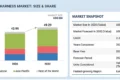
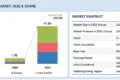
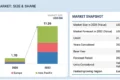
The CNG vehicles market is projected to grow from USD 23.76 billion in 2026 to USD 35.27 billion by 2033, at a CAGR of 5.8%. Market growth is supported by the adoption of higher-output natural gas powertrains, particularly in medium- and heavy-duty vehicles. OEMs such as Volvo, Scania, and Iveco are developing natural gas powertrains with higher torque and power output while maintaining stable combustion with methane-based fuels. Higher compression ratios, turbocharging, cooled EGR, improved combustion chamber designs, and precise gas injections are being used to improve engine performance and efficiency. These technologies allow CNG and LNG powertrains to meet the requirements of demanding commercial and passenger vehicle applications.
The business landscape is changing as renewable natural gas is being used with existing CNG and LNG vehicle platforms, allowing the same vehicle to operate with different gas sources during its lifetime. This gives fleet operators greater flexibility in selecting fuel sources without requiring major changes to vehicle assets. Fuel suppliers can also use existing CNG and LNG distribution and refueling infrastructure while increasing renewable gas supply. For OEMs, compatibility with renewable natural gas is becoming an important vehicle platform consideration, as it can support longer use of natural gas vehicles as fleets move toward lower-carbon operations.
India is expected to be the fastest-growing market in Asia Pacific for the CNG vehicles market, supported by the expansion of CNG powertrains from passenger vehicles and light commercial vehicles into higher-GVW commercial vehicle applications. The market is shifting toward broader vehicle platform coverage, with OEMs adapting CNG technology to different payload requirements, operating cycles, and vehicle categories. This is increasing the addressable market for CNG beyond traditional urban applications and supporting its use in medium and heavy commercial vehicles. For instance, Ashok Leyland offers CNG models across multiple GVW categories, including the 18.5-tonne 1922HF CNG and 28-tonne AVTR 2822 CNG, while Tata Motors offers CNG trucks such as the LPT 709G and Signa 2820.K CNG. Additionally, in August 2025, PNGRB announced a target of 18,336 CNG stations by 2034, which reached 9,096 stations as of July 2026. The expanding refueling network is expected to support wider CNG vehicle adoption and demand for CNG system architecture and components. The expansion of CNG offerings across higher-GVW categories is allowing OEMs to address a wider range of logistics, construction, and goods transportation applications in India.
Download PDF Brochure @ https://www.marketsandmarkets.com/pdfdownloadNew.asp?id=264307618
Type 2 cylinders are expected to register the fastest growth during the forecast period, supported by their lower weight compared with Type 1 cylinders while retaining a steel liner for structural integrity. OEMs are focusing on reducing CNG storage system weight to preserve vehicle payload and improve packaging efficiency as onboard gas capacity increases. Faber states that its Type 2 CNG cylinders can reduce weight by around 35% compared with Type 1 cylinders of comparable dimensions, enabling higher usable gas storage without a proportional increase in vehicle weight. Supplier activity is also supporting broader vehicle integration. For instance, in China, Anhui Clean Energy produces Type 2 CNG cylinders for vehicle applications compliant with ECE R110 and ISO 11439, while Faber supplies Type 2 cylinders in Europe with capacities of up to 200 liters for passenger cars and other commercial applications. The combination of weight reduction, established manufacturing processes, and compatibility with existing CNG vehicle architectures is supporting the shift from conventional steel cylinders toward Type 2 designs, particularly in applications where manufacturers need to increase onboard CNG capacity while limiting the impact on vehicle payload and packaging.
The bi-fuel engines segment is expected to account for the largest market share during the forecast period, supported by integrating CNG and petrol operation within a single powertrain. Bi-fuel systems use separate fuel delivery paths and electronic engine controls to manage fuel selection, injection, and switching based on engine operating conditions. OEMs are integrating CNG systems with factory-calibrated engine management, allowing the gas fuel system to work with the vehicle’s existing engine control architecture. Bi-fuel architecture also allows OEMs to retain the performance characteristics of petrol engines while adding CNG operation without developing a separate vehicle powertrain. Engine control software can coordinate fuel switching, ignition timing, and fuel delivery between the two modes, reducing the need for separate calibration strategies for different vehicle operating conditions. Platform commonality and software-controlled fuel switching are therefore becoming key factors supporting bi-fuel powertrains across OEM CNG portfolios.
- In June 2026, Tata Motors launched the Intra V40 with CNG plus petrol bi-fuel technology, featuring a 1.2-liter engine and 1,525 kg payload capacity. The launch expands bi-fuel powertrain availability in the small commercial vehicle segment and supports adoption of CNG-based dual-fuel systems in higher-payload applications.
Opportunities in the CNG vehicles market are emerging from the expansion of factory-fitted CNG platforms into higher vehicle categories, digital fleet management, and integrated fuel system services. OEMs can tap these opportunities by developing modular CNG powertrains that adapt across multiple vehicle platforms, reducing engineering and component costs when extending CNG variants into new segments. Component suppliers can expand their role by supplying integrated fuel storage, pressure regulation, injectors, and electronic control systems as complete modules rather than individual components. Fleet technology providers can also combine fuel consumption data, vehicle diagnostics, and route information to identify CNG vehicles and operating cycles where fuel utilization can be optimized. These approaches can allow market players to capture value beyond vehicle sales through platform standardization, integrated fuel system supply, and fleet-based services.
“Europe is estimated to hold a significant share of the CNG vehicles market during the forecast period.”
An established gas refueling network and an increasing integration of renewable gas into transportation bolster the growth of CNG and LNG vehicles in Europe. By early 2026, Europe had approximately 800 LNG refueling stations, creating a growing infrastructure for LNG truck operations along major freight corridors.
Gasum’s strategy for 2026 to 2030 aims to supply 7 TWh of renewable gas annually by 2027, supported by new investments in biogas production. This includes plans for two Swedish plants, each expected to produce 120 GWh annually, starting in 2028 and 2029. This expansion will enhance the availability of renewable gas for road transport and facilitate the transition from fossil natural gas to biogas.
For passenger cars and LCVs, CNG adoption is becoming more selective as new vehicle registrations increasingly shift toward zero-emission powertrains. However, the existing CNG infrastructure and the availability of renewable biomethane provide a viable path for the continued use of gas-powered vehicles in appropriate applications.
Request Free Sample Report @ https://www.marketsandmarkets.com/requestsampleNew.asp?id=264307618