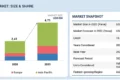
The EV assembly market is projected to grow from USD 190.11 billion in 2026 to USD 291.39 billion by 2035, at a CAGR of 4.9%. The EV industry is seeing the rise of contract manufacturing and asset-light production models, enabling new vehicle brands to enter the market without significant investments in assembly plants and production infrastructure. Companies such as Magna International (Canada), Foxconn (Taiwan), and Valmet Automotive (Finland) are expanding their capabilities to provide OEMs with vehicle engineering, assembly, battery integration, and manufacturing services. This Manufacturing-as-a-Service (MaaS) approach allows automakers to reduce capital expenditure, accelerate vehicle launches, and scale production based on market demand. As EV architectures become more modular and software-driven, contract manufacturers are increasingly serving as strategic partners within the global EV assembly ecosystem, supporting flexible and cost-efficient production models.
The EV assembly market is undergoing a significant transformation driven by advances in manufacturing technologies, vehicle architectures, battery integration, regulatory frameworks, and supply chain strategies. Automakers are increasingly adopting gigacasting, structural battery pack designs, Cell-to-Pack (CTP) manufacturing, digital twins, AI-driven production planning, and smart factory technologies to reduce assembly complexity, shorten production cycles, and improve manufacturing efficiency. Similarly, EV platforms such as Volkswagen’s SSP, BMW’s Neue Klasse, Mercedes-Benz’s MMA and MB.EA, Stellantis’ STLA architectures, and BYD’s Super e-Platform help OEMs reduce development and assembly costs through shared vehicle architectures, integrated software systems, and standardized components. For instance, Stellantis’ STLA One platform targets a 20% improvement in cost efficiency and up to 70% component reuse. Regulatory developments, including battery passport requirements, carbon footprint reporting standards, recycling mandates, local content regulations, and supply chain traceability requirements, are encouraging OEMs to localize production and strengthen regional supply chains. Additionally, North American battery localization initiatives, European gigafactory investments, and China’s vertically integrated manufacturing ecosystem are reshaping global production footprints. The construction of new EV-only factories, the conversion of conventional vehicle plants into EV production facilities, and the deployment of flexible manufacturing systems are further expanding assembly capacity and strengthening long-term market growth.
Download PDF Brochure @ https://www.marketsandmarkets.com/pdfdownloadNew.asp?id=255751150
Software-defined vehicle (SDV) architectures are increasingly shaping EV manufacturing strategies by enabling centralized computing, zonal electrical architectures, and greater software standardization across vehicle platforms. OEMs, including Tesla, Volkswagen, Mercedes-Benz, BMW, Geely, and Rivian, are replacing distributed ECU-based systems with high-performance computing platforms that consolidate vehicle functions into fewer hardware modules. This transition reduces wiring requirements, lowers ECU counts, and increases component commonality across vehicle programs, helping manufacturers simplify assembly operations and reduce vehicle complexity. For instance, BMW’s Neue Klasse architecture reduces wiring length by approximately 600 meters and lowers wiring harness weight by around 30% through its zonal electrical architecture. SDV architectures also enable greater reuse of software, electronics, and computing modules across multiple vehicle models, reducing engineering effort and supporting manufacturing scale economies. In parallel, OEMs are transitioning from conventional 400V systems to 800V and 1000V architectures, which support faster charging and improved energy efficiency while requiring new approaches to battery integration, power electronics assembly, thermal management, and vehicle validation. As a result, software-defined and high-voltage vehicle architectures are becoming important enablers of manufacturing efficiency, platform commonization, and long-term cost optimization in the EV assembly market.
Digital twin and virtual manufacturing technologies are increasingly adopted in EV production to improve factory planning, commissioning, and operational efficiency. Automakers are partnering with technology providers such as Siemens, Dassault Systèmes, NVIDIA, Hexagon, and PTC to create virtual factory environments that simulate assembly lines, material flows, robotics, and production processes before physical deployment. For instance, BMW uses NVIDIA Omniverse to scale digital twins across more than 30 production sites worldwide as part of its Virtual Factory initiative and expects to reduce production planning costs by up to 30% through virtual validation of factory layouts, logistics systems, and assembly processes. Similarly, Mercedes-Benz collaborates with Siemens on digital twin-enabled factory planning, and Volkswagen has partnered with Dassault Systèmes to standardize engineering and manufacturing processes across its brands. These technologies enable manufacturers to validate production layouts, identify bottlenecks, support predictive maintenance, and reduce commissioning time for new facilities and vehicle programs. As EV factories become more automated and software-driven, digital twins are emerging as a key enabler for faster plant ramp-up, lower implementation risks, and scalable vehicle production.
Regional competitiveness in the EV assembly market is increasingly shaped by manufacturing scale, supply chain localization, and the ability to secure critical battery and component production. China maintains a strong competitive advantage through its vertically integrated EV ecosystem, where leading manufacturers such as BYD, Geely, and SAIC benefit from local battery production, raw material processing, power electronics manufacturing, and extensive supplier networks, enabling lower production costs and faster scaling. North America is strengthening its position by aggressively localizing battery cells, battery packs, cathode materials, and critical mineral processing, supported by major investments from automakers and battery manufacturers to reduce import dependence and enhance supply chain resilience. Europe is building a regional battery ecosystem through gigafactory investments, localized battery pack assembly, and strategic partnerships that support EV production while complying with evolving sustainability and battery traceability regulations. Meanwhile, India and Southeast Asia are emerging as attractive EV manufacturing hubs due to competitive labor costs, expanding supplier bases, supportive industrial policies, and growing investments in vehicle assembly and battery production facilities. The EV assembly market offers significant growth opportunities through the adoption of dedicated EV platforms, advanced manufacturing technologies, battery localization initiatives, and next-generation battery integration solutions. Manufacturers can capitalize on these opportunities by increasing platform sharing across multiple vehicle models, standardizing key components such as battery packs, e-axles, electronics, and software systems, and investing in scalable production architectures. The growing adoption of gigacasting and factory automation technologies is enabling OEMs to simplify vehicle structures, reduce component counts, and improve manufacturing efficiency. In addition, the regionalization of battery supply chains in North America and Europe is creating opportunities for local battery assembly and component manufacturing, helping companies reduce supply chain risks and enhance cost competitiveness. For instance, according to Transport & Environment (T&E), scaling up battery production in Europe could reduce the cost gap between European-made and Chinese batteries from approximately 90% to around 30%, highlighting the potential cost benefits of localized battery manufacturing. The expansion of electric buses, trucks, and delivery vehicles is also driving demand for dedicated commercial EV platforms and specialized assembly facilities. Further, investments in smart manufacturing technologies, including AI, digital twins, predictive maintenance, and Industry 4.0 systems, are helping manufacturers optimize production processes and improve plant utilization. The adoption of CTP, CTB, and CTC technologies is further creating opportunities to redesign vehicle architectures, enhance vehicle performance, and reduce assembly complexity. For instance, according to CATL, its CTP technology can increase battery pack volume utilization by 15–20% while reducing battery pack components by approximately 40%, supporting more efficient vehicle assembly and production scalability.
Key Players
The major players in the EV assembly market include Tesla (US), BYD Company Ltd. (China), VOLKSWAGEN AG (Germany), Geely Auto (China), and Hyundai Motor Company (South Korea).
Request Free Sample Report @ https://www.marketsandmarkets.com/requestsampleNew.asp?id=255751150