The global Fingerprint Sensor Market is entering a steady growth phase as biometric authentication becomes increasingly important across consumer electronics, financial services, government, healthcare, commercial security, and connected devices. According to MarketsandMarkets, the market is projected to grow from USD 5.01 billion in 2026 to USD 6.98 billion by 2032, representing a 5.7% CAGR from 2026 to 2032. This growth is being supported by the increasing adoption of fingerprint-enabled smartphones, laptops, tablets, wearables, payment cards, access control systems, and other connected devices.
The growing need for secure, convenient, and reliable authentication is one of the primary factors driving market expansion. As cybersecurity threats, identity theft, fraud, and unauthorized access continue to increase, organizations and consumers are looking for alternatives to traditional passwords and PINs. Fingerprint authentication offers a combination of convenience and security, allowing users to verify their identities quickly while supporting passwordless access across a growing range of digital and physical environments
The rapid expansion of digital payments, mobile banking, e-commerce, and digital identity programs is creating additional opportunities for fingerprint sensor manufacturers. Financial institutions and technology providers are increasingly focused on delivering secure yet frictionless authentication experiences. The emergence of biometric smart cards for banking and financial services is particularly significant, as fingerprint-based verification can strengthen transaction security and help reduce fraud risks.
Technology innovation is another major trend shaping the fingerprint sensor market. Fingerprint sensing technologies include capacitive, optical, thermal, and ultrasonic solutions, while the market is also segmented into 2D and 3D sensor technologies. Capacitive technology is expected to maintain the largest market share due to its accuracy, rapid response, low power consumption, and cost-effectiveness. At the same time, the ultrasonic segment is projected to record the fastest CAGR of 11.9% during 2026–2032, highlighting growing interest in advanced fingerprint sensing capabilities, particularly for premium and under-display applications.
Download PDF Brochure @ https://www.marketsandmarkets.com/pdfdownloadNew.asp?id=169519533
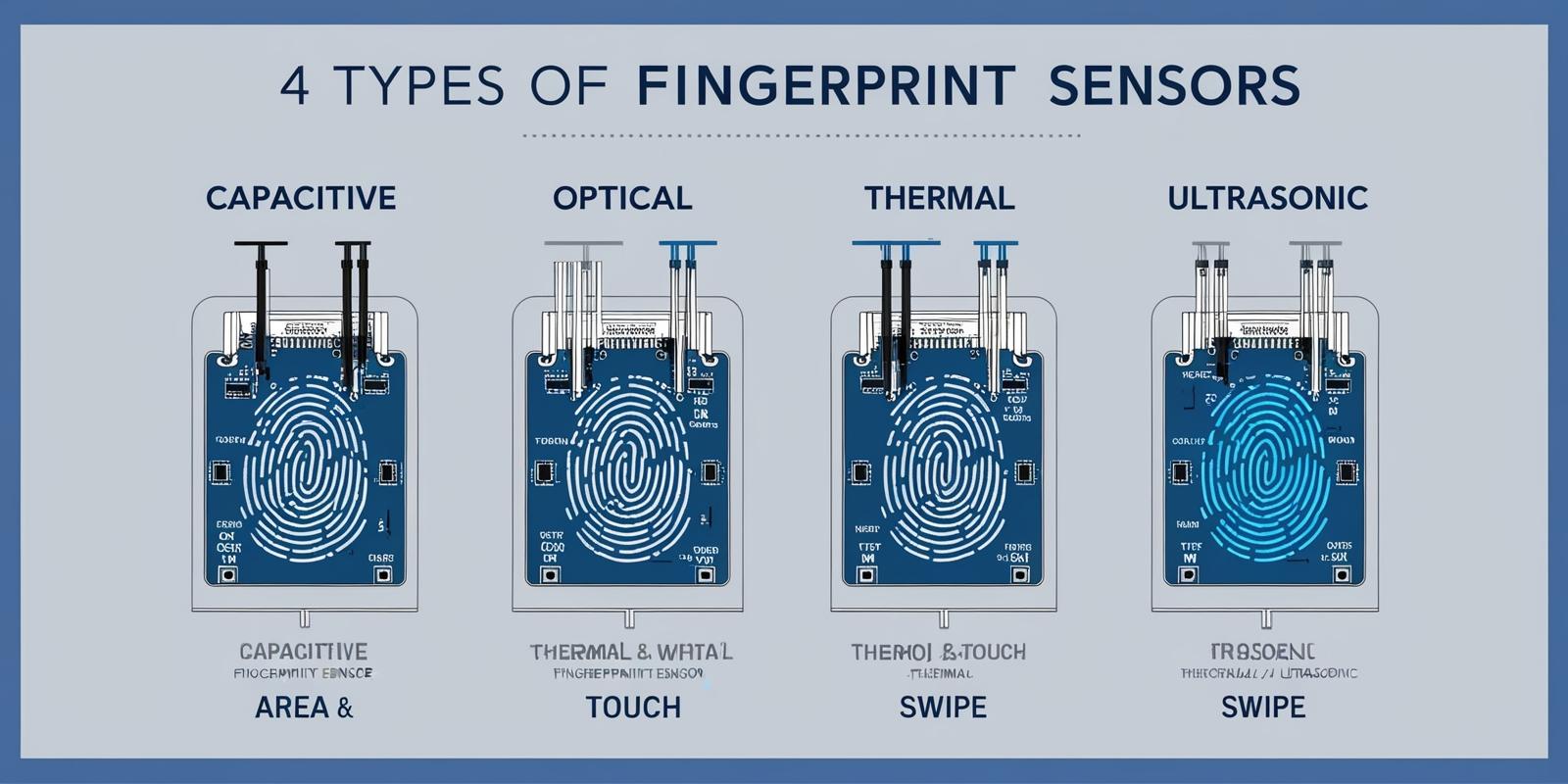
The market continues to be strongly influenced by consumer electronics. Smartphones, laptops, tablets, and wearable devices remain important applications for fingerprint authentication because consumers increasingly expect fast and seamless device security. Area and touch sensors are expected to dominate the market, accounting for approximately 97.0% of the market in 2026, reflecting their widespread deployment across consumer and commercial devices. Similarly, 2D fingerprint sensors are expected to account for 93.1% of the market in 2026, supported by their established use, relatively low manufacturing costs, and ease of integration.
Beyond consumer electronics, fingerprint sensors are increasingly finding applications across government and law enforcement, banking and finance, healthcare, military and defense, smart homes, and commercial environments. Government-led identity programs and access-control initiatives are increasing demand for biometric technologies, while enterprises are adopting fingerprint authentication to secure facilities, devices, systems, and sensitive information. The integration of fingerprint sensors with IoT ecosystems is also opening new possibilities for secure authentication in connected environments.
Asia Pacific is emerging as the fastest-growing regional market, with MarketsandMarkets projecting a 6.7% CAGR from 2026 to 2032. Strong smartphone penetration, rapid digital payment adoption, expanding consumer electronics manufacturing, and increasing investment in biometric authentication are supporting regional growth. Countries including China, India, Japan, and South Korea are contributing to the expansion through technology development, manufacturing capabilities, digital identity initiatives, and growing demand for secure authentication solutions.
Despite these growth opportunities, the industry faces challenges related to biometric data security and privacy. Unlike passwords, biometric characteristics cannot simply be changed if compromised. Concerns surrounding unauthorized access, data breaches, misuse of biometric information, and regulatory requirements can affect user confidence and adoption. Sensor performance can also be affected by conditions such as wet, dirty, or damaged fingers, creating a need for continued improvements in sensing technologies, algorithms, accuracy, and anti-spoofing capabilities.
At the same time, the availability of alternative biometric technologies—including facial recognition and iris recognition—creates competitive pressure for fingerprint sensor providers. Manufacturers therefore need to differentiate their solutions through improved accuracy, faster authentication, lower power consumption, stronger spoof resistance, seamless integration, and enhanced privacy protection. Continued innovation will be essential for fingerprint sensors to maintain their position within the broader biometric authentication ecosystem.
The competitive landscape includes established technology companies and specialized biometric providers such as Shenzhen Goodix Technology, Fingerprint Cards, Synaptics, Egis Technology, Qualcomm Technologies, Apple, CrucialTec, NEXT Biometrics, Novatek Microelectronics, and Qtechnology. These companies are competing through technology development, product innovation, strategic partnerships, and expansion into new applications such as consumer electronics, access control, payment authentication, and digital identity.
Looking ahead, the fingerprint sensor market is expected to evolve beyond traditional smartphone authentication. Biometric payment cards, IoT devices, smart homes, connected products, commercial security systems, and digital identity platforms represent important areas of future opportunity. The integration of fingerprint sensing with AI, edge computing, cybersecurity, and digital identity ecosystems could further improve authentication performance while enabling new use cases. M
The future of fingerprint authentication will ultimately depend on the industry’s ability to balance security, privacy, convenience, accuracy, cost, and user experience. As organizations and consumers demand more seamless ways to protect digital identities and physical access, fingerprint sensors are positioned to remain an important component of the global biometric technology landscape.
With the market projected to reach USD 6.98 billion by 2032, the opportunity is expanding across technologies, applications, regions, and industry verticals. The next phase of growth will likely be defined by advanced sensing technologies, biometric smart cards, connected devices, digital identity initiatives, and increasingly sophisticated security requirements.
