Future of South Korea Humanoid Robot Market
The future of the humanoid robot market in South Korea is poised for remarkable growth, fueled by rapid advancements in artificial intelligence (AI) and increasing adoption of automation across industries. As humanoid robots evolve from experimental prototypes to commercially viable solutions, South Korea is emerging as a global leader in robotics innovation.
With strong government backing, a technologically advanced ecosystem, and rising demand for automation in manufacturing and service sectors, the country is positioning itself at the forefront of the humanoid robotics revolution.
Humanoid robot market in South Korea Market Overview
According to recent industry insights, the South Korea humanoid robot market is projected to grow from USD 112.6 million in 2025 to USD 583.5 million by 2030, registering an impressive CAGR of 39.0%.
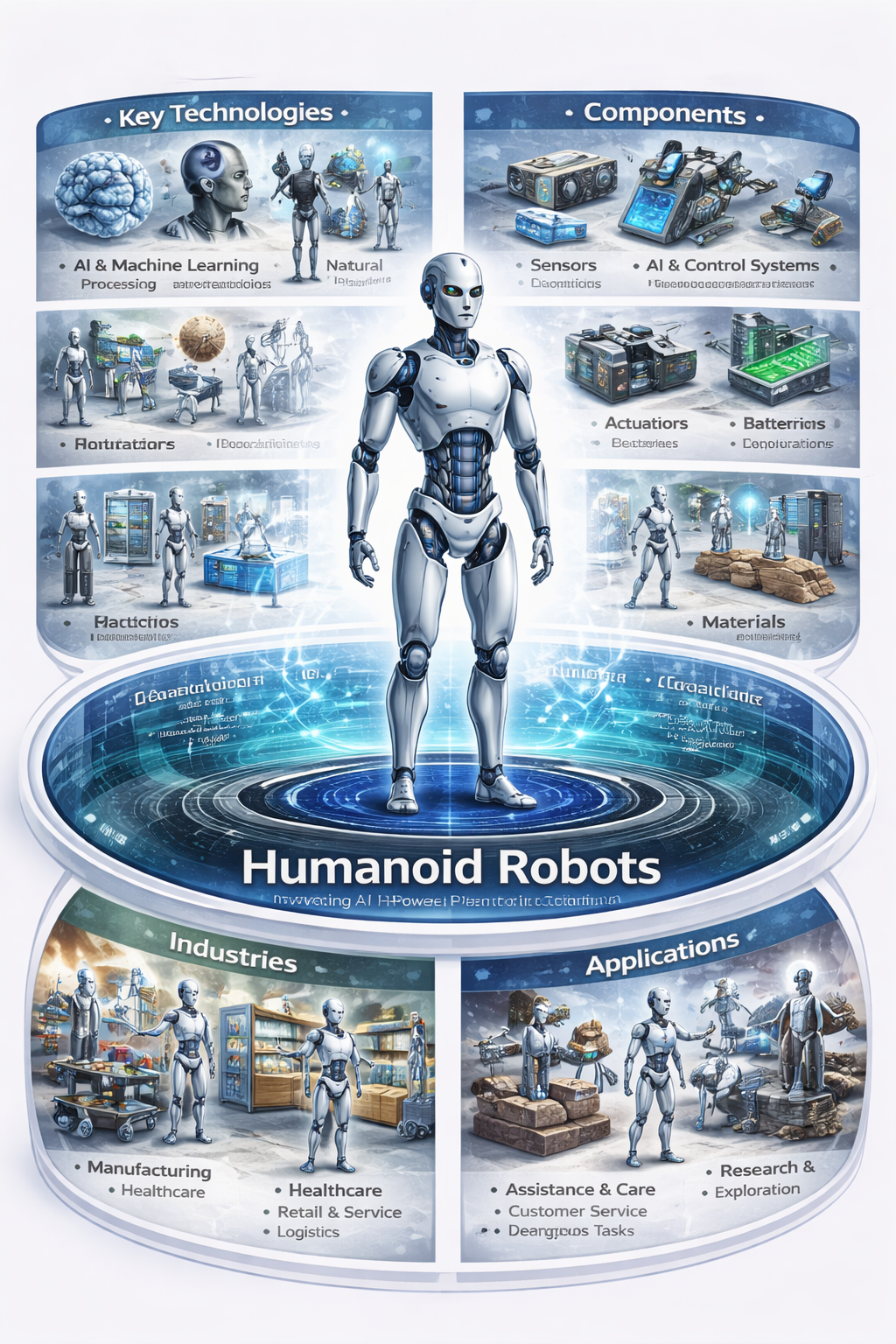
Humanoid robots—designed to replicate human movements and interactions—are increasingly being deployed across industries such as manufacturing, healthcare, education, and public services. These robots integrate AI, machine learning, and advanced sensor technologies to perform complex tasks in dynamic environments.
South Korea’s advanced infrastructure, combined with its focus on smart manufacturing and robotics innovation, is accelerating the commercialization and adoption of humanoid robots.
Role of AI in Shaping the Market
Intelligent and Adaptive Systems
Artificial intelligence is at the core of humanoid robot development. AI enables robots to learn from their surroundings, adapt to new tasks, and interact naturally with humans. Advanced algorithms allow robots to process visual, auditory, and tactile data in real time, improving their functionality across various applications.
Human-Robot Interaction
AI-driven humanoid robots are becoming more capable of understanding human emotions, speech, and behavior. This enhances their usability in customer service, caregiving, and educational environments, where interaction quality is critical.
Download PDF Brochure @ https://www.marketsandmarkets.com/pdfdownloadNew.asp?id=63693423
Autonomous Decision-Making
With AI integration, humanoid robots can operate with minimal human intervention, making them ideal for complex environments such as factories, hospitals, and public spaces.
Automation Driving Market Expansion
Smart Manufacturing and Industry 4.0
South Korea’s strong focus on Industry 4.0 is a major driver of humanoid robot adoption. Robots are increasingly being used in smart factories for tasks such as assembly, inspection, and material handling.
The manufacturing segment is expected to witness strong growth, driven by increasing demand for automation and efficiency improvements.
Service Industry Transformation
Humanoid robots are transforming service industries such as retail, hospitality, and public relations. Businesses are adopting robots to enhance customer engagement, reduce operational costs, and improve service delivery.
Logistics and Warehousing
The growing e-commerce and logistics sectors are creating new opportunities for humanoid robots, particularly in warehouse operations where flexibility and adaptability are essential.
Market Segmentation Insights
By Type
Biped humanoid robots dominate the market, accounting for the largest share due to their ability to navigate human environments effectively.
Wheel-drive robots are used in specific applications where mobility efficiency is prioritized
By Application
- Personal assistance and caregiving: Leading segment driven by aging population
- Manufacturing: Fastest-growing segment due to automation demand
- Education and public relations: Increasing adoption for interaction-based use cases
- Search and rescue: Emerging application area
The caregiving and personal assistance segments are particularly significant, supported by South Korea’s aging demographic and shortage of human caregivers.
Regional Dynamics and Growth Factors
South Korea stands out as a key growth hub within the Asia Pacific humanoid robot market. Several factors contribute to this leadership:
Government support: Initiatives led by the Ministry of Trade, Industry, and Energy promote robotics innovation and commercialization
Advanced technology ecosystem: Strong presence of electronics, AI, and semiconductor industries
Smart city initiatives: Increasing deployment of robots in urban infrastructure
Aging population: Driving demand for caregiving and healthcare robots
These factors collectively create a favorable environment for rapid market expansion.
Competitive Landscape
The South Korea humanoid robot market features a mix of global and regional players driving innovation and deployment. Key companies include:
- SoftBank Robotics
- ROBOTIS
- Samsung
- UBTECH Robotics
- PAL Robotics
- Agility Robotics
These companies are focusing on AI integration, product innovation, and strategic partnerships to strengthen their market presence.
Emerging Trends
Integration of AI and Robotics
The convergence of AI with robotics is enabling more intelligent and autonomous humanoid systems, expanding their application scope.
Growth in Healthcare Robotics
With a rapidly aging population, demand for humanoid robots in healthcare and caregiving is expected to surge.
Expansion of Robotics Ecosystem
Collaboration between research institutions, technology companies, and government agencies is accelerating innovation and deployment.
Rise of Service Robots
Humanoid robots are increasingly being used in customer-facing roles, enhancing user experience and operational efficiency.
Challenges in Market Development
High Development Costs
Developing advanced humanoid robots involves significant investment in R&D, limiting entry for smaller players.
Technical Complexity
Ensuring consistent performance across diverse environments remains a challenge.
Reliability and Safety Concerns
Humanoid robots must meet strict safety and reliability standards, particularly in healthcare and industrial applications.
Future Outlook
The future of the South Korea humanoid robot market is highly promising, driven by continuous advancements in AI and automation technologies. As robots become more intelligent, efficient, and cost-effective, their adoption across industries will accelerate.
The integration of humanoid robots into everyday life—ranging from factories and hospitals to homes and public spaces—will redefine how humans interact with machines. South Korea’s strong technological foundation and proactive policy support position it as a global leader in this transformation.
The South Korea humanoid robot market is entering a high-growth phase, driven by AI innovation and increasing automation across industries. With strong government support, advanced infrastructure, and growing demand for intelligent robotics solutions, the country is set to play a pivotal role in shaping the future of humanoid robotics.
As AI continues to enhance robot capabilities and industries embrace automation, humanoid robots will become an integral part of modern society—transforming industries, improving quality of life, and redefining the future of work.
FAQ
What is driving the growth of the South Korea humanoid robot market?
The market is driven by advancements in artificial intelligence, increasing adoption of automation in manufacturing and services, strong government support, and rising demand for robotics in caregiving and industrial applications.
What is the projected market size of the South Korea humanoid robot market?
The market is expected to grow from USD 112.6 million in 2025 to USD 583.5 million by 2030, at a CAGR of 39.0%.
Which segment dominates the South Korea humanoid robot market?
The biped humanoid robot segment dominates the market due to its ability to operate efficiently in human-centric environments such as homes, hospitals, and workplaces.
What are the key applications of humanoid robots in South Korea?
Key applications include personal assistance, caregiving, manufacturing, education, public relations, and emerging uses in search and rescue operations.
Who are the major players in the South Korea humanoid robot market?
Major players include SoftBank Robotics, ROBOTIS, Samsung, UBTECH Robotics, PAL Robotics, and Agility Robotics, focusing on innovation and commercialization of humanoid robotics technologies.
About MarketsandMarkets™
MarketsandMarkets™ has been recognized as one of America’s Best Management Consulting Firms by Forbes, as per their recent report.
MarketsandMarkets™ is a blue ocean alternative in growth consulting and program management, leveraging a man-machine offering to drive supernormal growth for progressive organizations in the B2B space. With the widest lens on emerging technologies, we are proficient in co-creating supernormal growth for clients across the globe.
Today, 80% of Fortune 2000 companies rely on MarketsandMarkets, and 90 of the top 100 companies in each sector trust us to accelerate their revenue growth. With a global clientele of over 13,000 organizations, we help businesses thrive in a disruptive ecosystem.
The B2B economy is witnessing the emergence of $25 trillion in new revenue streams that are replacing existing ones within this decade. We work with clients on growth programs, helping them monetize this $25 trillion opportunity through our service lines – TAM Expansion, Go-to-Market (GTM) Strategy to Execution, Market Share Gain, Account Enablement, and Thought Leadership Marketing.
Built on the ‘GIVE Growth’ principle, we collaborate with several Forbes Global 2000 B2B companies to keep them future-ready. Our insights and strategies are powered by industry experts, cutting-edge AI, and our Market Intelligence Cloud, KnowledgeStore™, which integrates research and provides ecosystem-wide visibility into revenue shifts.
To find out more, visit www.MarketsandMarkets™.com or follow us on Twitter , LinkedIn and Facebook .
Contact:
Mr. Rohan Salgarkar
MarketsandMarkets™ INC.
1615 South Congress Ave.
Suite 103, Delray Beach, FL 33445
USA: +1-888-600-6441
