The Humanoid Robot Market is entering a transformative phase as advances in artificial intelligence, robotics, computer vision, sensors, and motion-control technologies bring human-like machines closer to real-world deployment.
Humanoid robots are designed to replicate aspects of human appearance, movement, perception, and interaction. Their ability to operate in environments created for people gives them an important potential advantage over specialized robots that are designed for a single task or controlled environment. The humanoid robot market size is estimated to be USD 5.41 billion in 2026 and is projected to reach USD 50.27 billion by 2035, expanding at a CAGR of 28.1% from 2026 to 2035.
From manufacturing and logistics to healthcare, retail, hospitality, education, and household assistance, humanoid robots are being explored for an expanding range of applications. Growing investment in AI-powered robotics, improvements in hardware capabilities, and increasing labor shortages are creating new opportunities for market participants.
The market is also benefiting from the convergence of generative AI, machine learning, advanced vision systems, tactile sensing, lightweight actuators, and autonomous navigation. These technologies are helping humanoid robots move beyond basic programmed movements toward more adaptive and intelligent behavior.
What Are Humanoid Robots?
Humanoid robots are machines designed with a human-like body structure, typically featuring a head, torso, arms, hands, and legs.
Their human-inspired form allows them to potentially perform tasks in environments that already contain human-oriented infrastructure, such as:
- Factories
- Warehouses
- Hospitals
- Offices
- Retail stores
- Hotels
- Homes
A modern humanoid robot may combine:
- Artificial intelligence
- Computer vision
- Machine learning
- Voice recognition
- Natural-language processing
- Force and tactile sensors
- Advanced actuators
- Autonomous navigation
- Motion planning
This combination enables robots to perceive their surroundings, understand commands, make decisions, and perform physical tasks.
Key Factors Driving Humanoid Robot Market Growth
1. Rapid Advances in Artificial Intelligence
AI is one of the most important factors accelerating humanoid robotics.
Earlier generations of robots typically depended on highly structured programming and predefined instructions. Modern AI technologies allow robots to process visual, audio, and environmental information and respond to changing conditions.
Generative AI and large multimodal models can potentially enable humanoid robots to understand natural-language commands and connect them with physical actions.
AI can support:
- Object recognition
- Decision-making
- Navigation
- Task planning
- Human-robot interaction
- Speech understanding
- Adaptive learning
As AI models become more capable and efficient, humanoid robots could become more versatile across different environments.
2. Labor Shortages and Workforce Challenges
Many industries are experiencing difficulties finding workers for repetitive, physically demanding, or hazardous jobs.
Manufacturing, logistics, warehousing, and other industrial sectors are exploring automation to address workforce constraints.
Humanoid robots could potentially fill selected roles while working alongside human employees.
Potential tasks include:
- Material handling
- Picking and placing
- Machine tending
- Inspection
- Packaging
- Warehouse movement
- Repetitive assembly
This creates a significant opportunity for humanoid robot developers targeting labor-intensive applications.
3. Increasing Demand for Flexible Automation
Traditional industrial robots are highly effective for repetitive tasks but may require specialized equipment and carefully structured workspaces.
Humanoid robots are being developed to provide more flexible automation.
Their human-like form can allow them to interact with tools, workstations, shelves, doors, and other infrastructure originally designed for people.
This could reduce the need to redesign entire facilities for automation.
Download PDF Brochure @ https://www.marketsandmarkets.com/pdfdownloadNew.asp?id=99567653
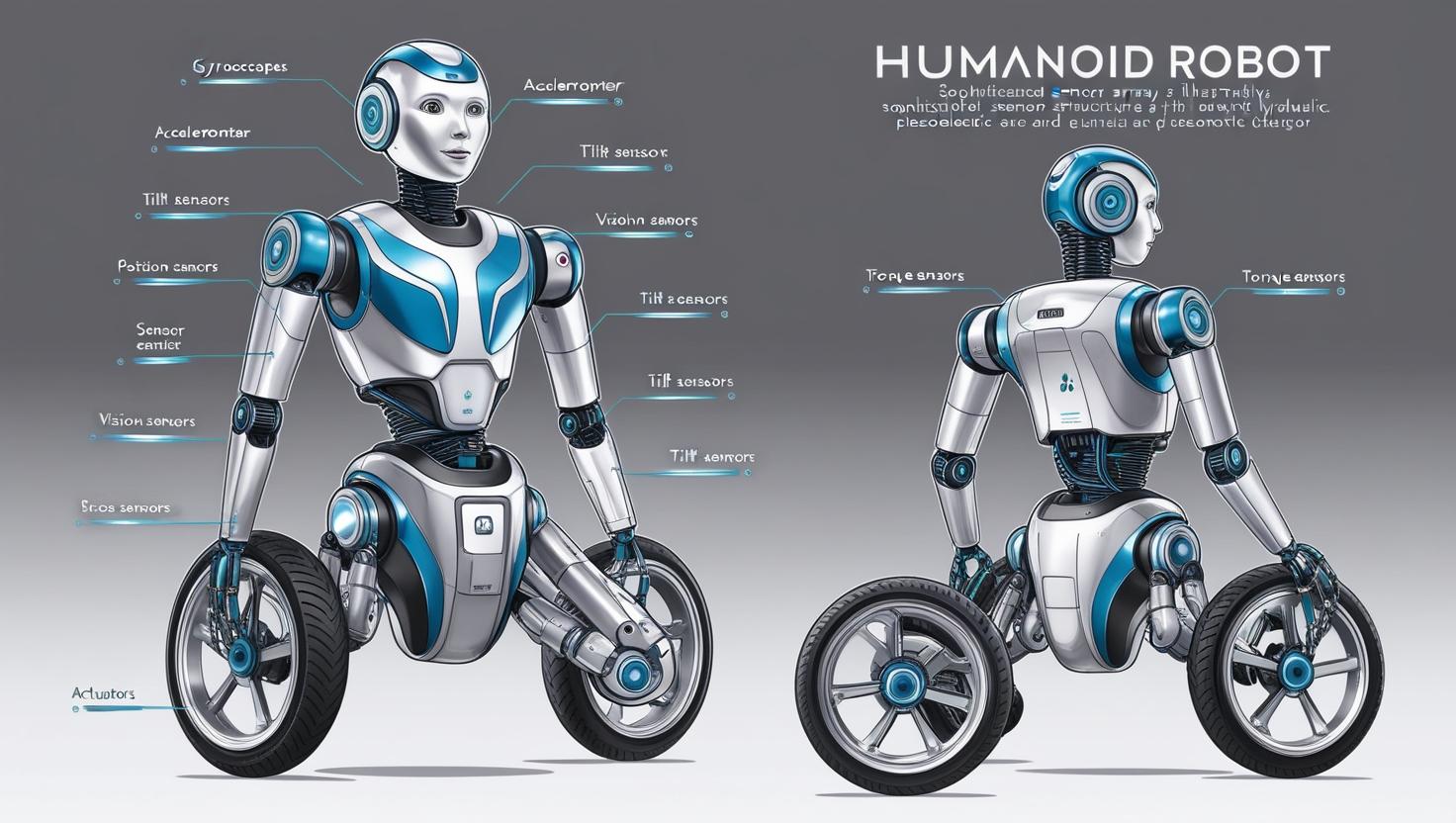
Technology Innovations Shaping the Market
AI and Machine Learning
AI-powered control systems are making humanoid robots more adaptive.
Machine learning can help robots improve their ability to recognize objects, navigate environments, and perform complex movements.
Over time, the combination of physical interaction data and simulation-based training could enable robots to learn new tasks faster.
Computer Vision
Advanced cameras and vision systems allow humanoid robots to perceive their surroundings.
Computer vision can be used for:
- Object detection
- Scene understanding
- Human recognition
- Navigation
- Quality inspection
- Obstacle avoidance
The development of more sophisticated vision systems will be important for reliable autonomous operation.
Tactile Sensing
Humanoid robots need to interact safely with objects and people.
Tactile sensors can provide information about pressure, contact, force, and surface interaction.
This capability is particularly important for applications involving delicate objects or close interaction with humans.
Advanced Actuators
Actuators determine how robots move.
Advancements in electric motors, harmonic drives, hydraulic systems, and other motion technologies are improving robot strength, precision, balance, and energy efficiency.
Future humanoid robots are expected to become lighter, more agile, and capable of more complex movements.
Battery Technology
Humanoid robots require compact energy systems capable of supporting extended operation.
Improvements in battery energy density, charging technologies, and energy management can help increase operating time.
Battery performance will be particularly important for mobile robots working across factories, warehouses, hospitals, and commercial environments.
Major Application Areas
Manufacturing
Manufacturing is expected to remain one of the most important potential markets for humanoid robots.
Factories contain many repetitive tasks that can be physically demanding for workers.
Humanoid robots could support:
- Assembly
- Material handling
- Machine tending
- Quality inspection
- Packaging
- Parts movement
Their ability to operate around existing equipment could make them attractive for factories seeking flexible automation.
Logistics and Warehousing
E-commerce growth has increased demand for efficient warehouse operations.
Humanoid robots could potentially perform tasks such as:
- Picking
- Sorting
- Packing
- Loading
- Unloading
- Inventory movement
The combination of humanoid form factors and AI-based navigation could enable robots to operate in dynamic warehouse environments.
Healthcare
Healthcare represents another emerging opportunity.
Potential applications include:
- Transporting supplies
- Assisting healthcare workers
- Supporting rehabilitation
- Providing basic patient assistance
- Handling repetitive logistical tasks
Humanoid robots could potentially reduce the workload associated with non-clinical activities and allow healthcare professionals to focus more heavily on patient care.
Retail and Hospitality
Retail stores and hospitality environments are increasingly exploring automation.
Humanoid robots could support:
- Customer assistance
- Inventory management
- Product movement
- Information services
- Basic hospitality tasks
Human-like interaction may make humanoid robots particularly suitable for customer-facing environments.
Education and Research
Humanoid robots can serve as educational tools for robotics, programming, AI, and human-machine interaction.
Universities and research organizations are using increasingly sophisticated platforms to develop new algorithms and robotic systems.
Growth Opportunities
Human-Robot Collaboration
One of the most significant opportunities lies in collaborative environments where robots work alongside humans rather than replacing entire workforces.
Humanoid robots can potentially perform physically demanding or repetitive tasks while people handle activities requiring creativity, judgment, and interpersonal skills.
Robot-as-a-Service
Robot-as-a-Service business models could reduce the upfront cost of adopting humanoid robots.
Instead of purchasing robots outright, businesses could pay based on usage, subscription, or service agreements.
This could accelerate adoption among small and medium-sized organizations.
AI Software Ecosystems
The value of humanoid robots is increasingly tied to software.
Companies developing AI models, robot operating systems, simulation environments, task-planning platforms, and perception technologies could benefit from the expansion of humanoid robotics.
Simulation and Digital Training
Robots can be trained in simulated environments before being deployed in the physical world.
Simulation can accelerate training while reducing the risk of damaging hardware.
Digital environments can also generate large amounts of synthetic training data for AI models.
Industrial Retrofit Opportunities
A major advantage of humanoid robots is their potential ability to operate within existing human-oriented environments.
This creates opportunities for manufacturers to automate selected tasks without completely redesigning their facilities.
Regional Outlook
North America
North America is an important center for humanoid robotics innovation due to strong investment in artificial intelligence, robotics startups, advanced manufacturing, and technology research.
The region’s focus on warehouse automation and industrial productivity provides opportunities for commercial deployment.
Europe
Europe has strong capabilities in industrial automation, engineering, automotive manufacturing, and robotics research.
The region’s emphasis on workplace safety and productivity could support the adoption of humanoid robots for selected industrial tasks.
Asia-Pacific
Asia-Pacific is expected to be a major growth region due to its large manufacturing base, strong electronics ecosystem, robotics expertise, and increasing automation investment.
Countries such as Japan, South Korea, and China have extensive experience in robotics and industrial automation, creating a strong foundation for humanoid robot development.
Middle East and Africa
Investment in smart cities, logistics, healthcare, and advanced technology is creating emerging opportunities for robotics across the region.
Latin America
Manufacturing, logistics, mining, and service industries could create long-term opportunities as robotics adoption expands.
Challenges Facing the Humanoid Robot Market
Despite significant potential, several challenges must be addressed before widespread adoption.
High Development Costs
Humanoid robots require sophisticated hardware, software, sensors, batteries, and control systems. Manufacturing costs remain a major challenge.
Safety
Humanoid robots operating near people must meet strict safety requirements. Reliable motion control, collision detection, and emergency-response systems are essential.
Battery Life
Operating a complex humanoid platform requires substantial energy. Improving battery life without increasing weight remains an important technical challenge.
Reliability
Industrial users require highly reliable equipment capable of operating for long periods with minimal downtime.
Limited Commercial Scalability
Many humanoid robot technologies remain at early stages of commercialization. Scaling production while maintaining quality and reducing costs will be critical.
Future Outlook
The future of the Humanoid Robot Market will depend on the convergence of AI and physical robotics.
The next generation of humanoid robots is expected to become increasingly capable of:
- Understanding natural language
- Recognizing complex environments
- Learning new tasks
- Manipulating diverse objects
- Navigating dynamic spaces
- Collaborating with humans
- Operating autonomously
The development of AI foundation models specifically designed for robotics could accelerate this transition.
Humanoid robots may eventually function as general-purpose physical agents capable of performing multiple tasks rather than single-purpose machines.
Key Trends to Watch
Several trends will shape the market:
- AI-powered robot intelligence will improve autonomy and adaptability.
- Generative AI and multimodal models will enhance human-robot communication.
- Advanced sensors will improve environmental awareness and physical interaction.
- Smaller and more efficient actuators will improve movement and energy efficiency.
- Simulation-based training will accelerate robot learning.
- Robot-as-a-Service models could reduce adoption barriers.
- Industrial deployments will provide important real-world validation.
- Collaborative robotics will encourage human-machine teamwork.
- Falling hardware costs could expand the addressable market.
- Improved battery technology will increase operating time and mobility.
The Humanoid Robot Market represents one of the most promising intersections of artificial intelligence and physical automation. Advances in machine learning, computer vision, sensors, actuators, batteries, and robotics software are creating increasingly capable machines that can operate in human-centered environments.
Manufacturing and logistics are likely to remain important early application areas, while healthcare, retail, hospitality, education, and household assistance could provide additional long-term opportunities.
The greatest opportunity may come from the development of general-purpose humanoid robots that can learn multiple tasks and adapt to changing environments.
While challenges involving cost, safety, reliability, battery life, and scalability remain, continued technological progress is steadily expanding the possibilities.
Ultimately, the rise of humanoid robotics could mark a shift from traditional task-specific automation toward intelligent, flexible, and human-centric automation, creating a new generation of machines capable of working alongside people across a wide range of environments.
FAQs
1. What is driving the growth of the humanoid robot market?
The market is being driven by rapid advances in artificial intelligence, increasing automation across industries, labor shortages, improvements in sensors and actuators, and growing demand for flexible robots capable of operating in human-centered environments.
2. Which industries are adopting humanoid robots?
Key application areas include manufacturing, logistics and warehousing, healthcare, retail, hospitality, education, and research. Manufacturing and logistics are particularly promising because of their demand for repetitive, physically demanding, and labor-intensive tasks.
3. How is AI transforming humanoid robots?
AI enables humanoid robots to understand their surroundings, interpret natural-language instructions, recognize objects, plan tasks, and adapt to changing environments. Generative AI and multimodal models are also helping improve human-robot interaction and autonomous decision-making.
4. What are the major challenges facing humanoid robot adoption?
Major challenges include high development and deployment costs, battery limitations, safety requirements, reliability, complex hardware and software integration, and limited large-scale commercial deployment. Reducing costs and improving performance will be critical for widespread adoption.
5. What is the future outlook for the humanoid robot market?
The long-term outlook is promising as AI, robotics, computer vision, advanced actuators, tactile sensors, and battery technologies continue to improve. Humanoid robots are expected to increasingly support human-robot collaboration, industrial automation, logistics, healthcare, and service applications, potentially establishing a new generation of flexible, general-purpose automation
About MarketsandMarkets™
MarketsandMarkets™ has been recognized as one of America’s Best Management Consulting Firms by Forbes, as per their recent report.
MarketsandMarkets™ is a blue ocean alternative in growth consulting and program management, leveraging a man-machine offering to drive supernormal growth for progressive organizations in the B2B space. With the widest lens on emerging technologies, we are proficient in co-creating supernormal growth for clients across the globe.
Today, 80% of Fortune 2000 companies rely on MarketsandMarkets, and 90 of the top 100 companies in each sector trust us to accelerate their revenue growth. With a global clientele of over 13,000 organizations, we help businesses thrive in a disruptive ecosystem.
The B2B economy is witnessing the emergence of $25 trillion in new revenue streams that are replacing existing ones within this decade. We work with clients on growth programs, helping them monetize this $25 trillion opportunity through our service lines – TAM Expansion, Go-to-Market (GTM) Strategy to Execution, Market Share Gain, Account Enablement, and Thought Leadership Marketing.
Built on the ‘GIVE Growth’ principle, we collaborate with several Forbes Global 2000 B2B companies to keep them future-ready. Our insights and strategies are powered by industry experts, cutting-edge AI, and our Market Intelligence Cloud, KnowledgeStore™, which integrates research and provides ecosystem-wide visibility into revenue shifts.
To find out more, visit www.MarketsandMarkets™.com or follow us on Twitter , LinkedIn and Facebook .
Contact:
Mr. Rohan Salgarkar
MarketsandMarkets™ INC.
1615 South Congress Ave.
Suite 103, Delray Beach, FL 33445
USA: +1-888-600-6441
