The Humanoid Robot Market is entering a new phase of growth as advancements in artificial intelligence (AI), machine learning, robotics, and sensor technologies accelerate the development of human-like robotic systems. Designed to perform tasks in environments created for humans, humanoid robots are emerging as a key technology for intelligent automation, workforce assistance, and human-robot collaboration. The increasing need for flexible automation solutions across industries such as manufacturing, healthcare, logistics, retail, and service sectors is driving investments in humanoid robotics.
One of the major trends shaping the humanoid robot market is the rapid integration of AI and generative AI technologies. Advanced AI models are enabling humanoid robots to understand natural language, recognize objects, learn from experiences, and make real-time decisions. These capabilities are improving robot autonomy and allowing machines to perform more complex tasks with minimal human intervention. As AI systems become more sophisticated, humanoid robots are expected to move beyond controlled environments and support real-world applications.
The growing adoption of Industry 4.0 and smart manufacturing technologies is another key factor influencing market growth. Manufacturers are increasingly exploring humanoid robots to improve productivity, address labor shortages, and enhance operational efficiency. Unlike traditional industrial robots designed for specific repetitive tasks, humanoid robots offer greater flexibility and can adapt to different work environments. Their ability to operate alongside human workers makes them suitable for collaborative automation in factories and production facilities.
Download PDF Brochure @ https://www.marketsandmarkets.com/pdfdownloadNew.asp?id=99567653
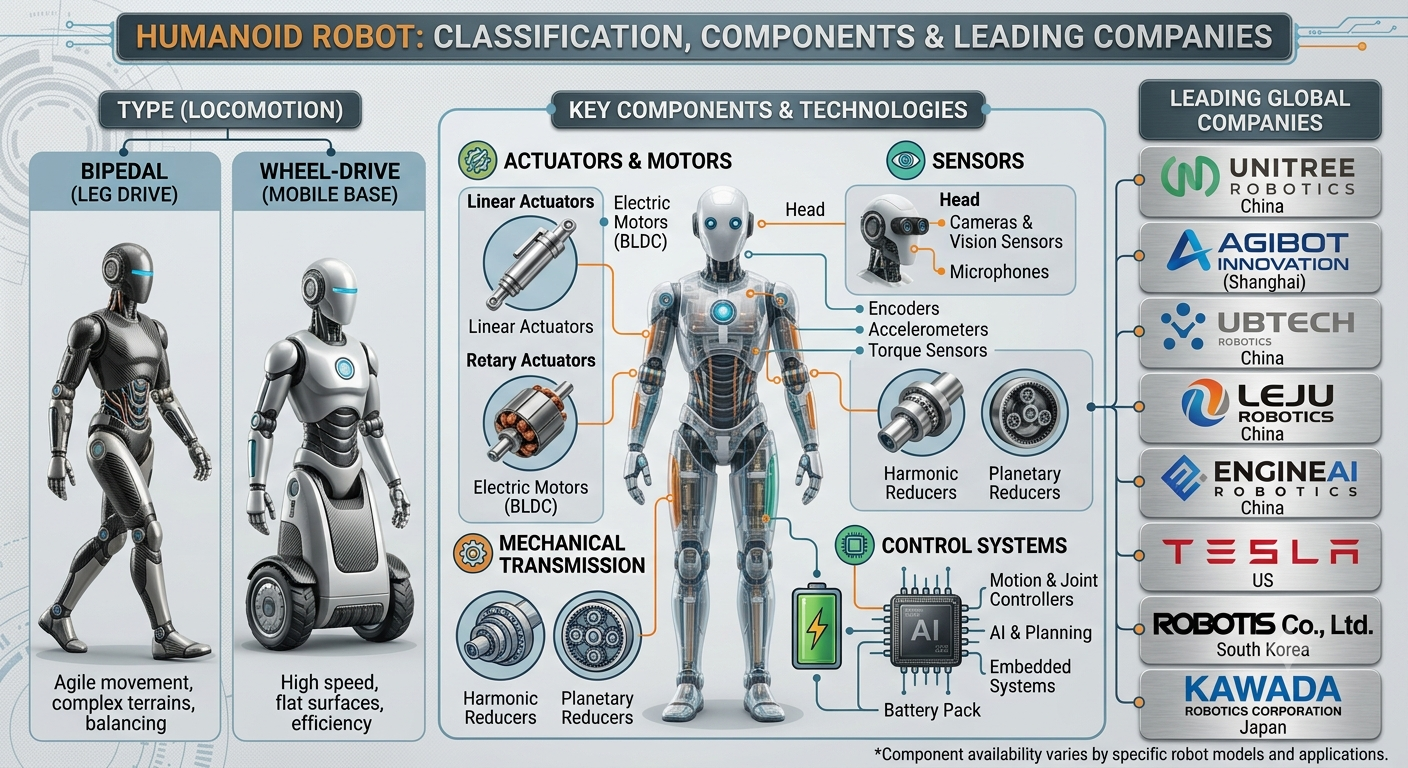
The demand for human-robot collaboration is becoming a defining trend in the industry. Businesses are focusing on robotic systems that support human employees rather than replace them completely. Humanoid robots can assist workers by performing physically demanding, repetitive, or hazardous tasks while allowing humans to focus on decision-making and specialized activities. This collaborative approach is expected to create new opportunities across manufacturing, healthcare, logistics, and customer service applications.
Advancements in robotic hardware and mobility systems are also accelerating the development of humanoid robots. Improvements in actuators, sensors, cameras, processors, batteries, and lightweight materials are enabling robots to achieve better balance, movement, and dexterity. Enhanced robotic hands and improved motion control technologies are helping humanoid robots perform tasks that require greater precision, such as handling objects, operating equipment, and interacting with their surroundings.
The manufacturing and logistics sectors are expected to remain among the leading adopters of humanoid robots. In manufacturing environments, humanoid robots can support assembly, inspection, material handling, and production assistance. In warehouses and supply chain operations, they can help manage repetitive tasks, improve efficiency, and support automated workflows. The growing demand for flexible automation solutions is encouraging companies to invest in humanoid robotic platforms.
The healthcare industry represents another promising area for humanoid robot adoption. With increasing demand for healthcare services and challenges related to workforce availability, humanoid robots can assist with patient support, rehabilitation, elderly care, and hospital operations. Their ability to interact with people and perform assistance-related tasks creates new opportunities for improving healthcare delivery.
The rise of edge AI and real-time processing is further enhancing humanoid robot capabilities. By processing data closer to the point of operation, edge AI enables faster decision-making, improved responsiveness, and more reliable autonomous performance. This technology is particularly important for applications requiring immediate reactions, such as industrial collaboration and navigation in dynamic environments.
Despite significant opportunities, the humanoid robot market faces challenges including high development costs, complex engineering requirements, battery limitations, safety concerns, and the need for advanced AI training. Large-scale commercial adoption will depend on continued improvements in affordability, reliability, and regulatory frameworks.
Looking ahead, the Humanoid Robot Market is expected to experience strong expansion as AI, automation, and robotics technologies continue to evolve. Increasing investments from technology companies, manufacturers, and research organizations are accelerating innovation and bringing humanoid robots closer to widespread adoption. As these systems become more intelligent and capable, they are expected to play a crucial role in the future of automation, transforming workplaces and enabling a new era of human-machine collaboration.
Frequently Asked Questions (FAQs) – Humanoid Robot Market
1. What is driving the growth of the Humanoid Robot Market?
The growth of the Humanoid Robot Market is driven by rapid advancements in artificial intelligence (AI), machine learning, robotics, automation, and sensor technologies. Increasing demand for workforce automation, smart manufacturing, healthcare assistance, and human-robot collaboration is accelerating the adoption of humanoid robots across various industries.
2. What are humanoid robots used for?
Humanoid robots are used for a wide range of applications, including manufacturing assistance, logistics operations, healthcare support, customer service, education, research, and hazardous environment tasks. Their human-like design enables them to operate in environments created for people and perform tasks requiring mobility and interaction.
3. How is AI influencing the development of humanoid robots?
AI is playing a crucial role in improving humanoid robot capabilities by enabling natural language understanding, object recognition, autonomous decision-making, learning abilities, and real-time adaptation. Generative AI and advanced machine learning models are helping humanoid robots perform more complex tasks with greater accuracy and independence.
4. Which industries are expected to adopt humanoid robots the most?
Key industries adopting humanoid robots include manufacturing, automotive, logistics and warehousing, healthcare, retail, hospitality, education, and research. Manufacturing and logistics are expected to be major adoption areas due to the increasing need for flexible automation and operational efficiency.
5. What are the key trends shaping the Humanoid Robot Market?
Major trends shaping the market include:
- Integration of generative AI and advanced robotics
- Growth of human-robot collaboration
- Development of smart factories and Industry 4.0 solutions
- Improvements in robotic mobility and dexterity
- Adoption of edge AI for real-time decision-making
- Increasing use of robots in healthcare and service applications
6. What are the advantages of humanoid robots compared with traditional robots?
Humanoid robots offer greater flexibility and adaptability compared with traditional industrial robots. Their human-like structure allows them to work in existing environments without major infrastructure changes. They can perform multiple tasks, interact naturally with people, and support collaborative workflows.
About MarketsandMarkets™
MarketsandMarkets™ provides quantified B2B research on 30,000 high growth niche opportunities/threats which will impact 70% to 80% of worldwide companies’ revenues. Currently servicing 7500 customers worldwide including 80% of global Fortune 1000 companies as clients. Almost 75,000 top officers across eight industries worldwide approach MarketsandMarkets™ for their painpoints around revenues decisions.
Our 850 fulltime analyst and SMEs at MarketsandMarkets™ are tracking global high growth markets following the “Growth Engagement Model – GEM”. The GEM aims at proactive collaboration with the clients to identify new opportunities, identify most important customers, write “Attack, avoid and defend” strategies, identify sources of incremental revenues for both the company and its competitors. MarketsandMarkets™ now coming up with 1,500 MicroQuadrants (Positioning top players across leaders, emerging companies, innovators, strategic players) annually in high growth emerging segments. MarketsandMarkets™ is determined to benefit more than 10,000 companies this year for their revenue planning and help them take their innovations/disruptions early to the market by providing them research ahead of the curve.
MarketsandMarkets’s flagship competitive intelligence and market research platform, “Knowledgestore” connects over 200,000 markets and entire value chains for deeper understanding of the unmet insights along with market sizing and forecasts of niche markets.
Contact:
Mr. Rohan Salgarkar
MarketsandMarkets™ INC.
630 Dundee Road
Suite 430
Northbrook, IL 60062
USA : 1-888-600-6441
