The land mobile radio (LMR) market is evolving as public safety organizations, transportation operators, utilities, industrial enterprises, and government agencies increasingly require secure, reliable, and mission-critical communications. LMR systems enable voice and data communication for users operating in environments where network availability, rapid response, interoperability, and secure communication are essential.
The transition from conventional analog systems toward digital LMR technologies, including Project 25 (P25), Digital Mobile Radio (DMR), and Terrestrial Trunked Radio (TETRA), is creating new opportunities for equipment manufacturers and communication solution providers. Integration with broadband networks, cloud platforms, location technologies, and advanced command-and-control systems is further expanding the capabilities of LMR infrastructure.
According to MarketsandMarkets, the global land mobile radio market size is projected to reach USD 32.24 billion by 2030, growing from USD 19.41 billion in 2025 at a CAGR of 10.7% from 2025 to 2030. Rising investments in public safety communications, critical infrastructure protection, industrial automation, and emergency response are expected to support this expansion.
Download PDF Brochure @ https://www.marketsandmarkets.com/pdfdownloadNew.asp?id=27811764
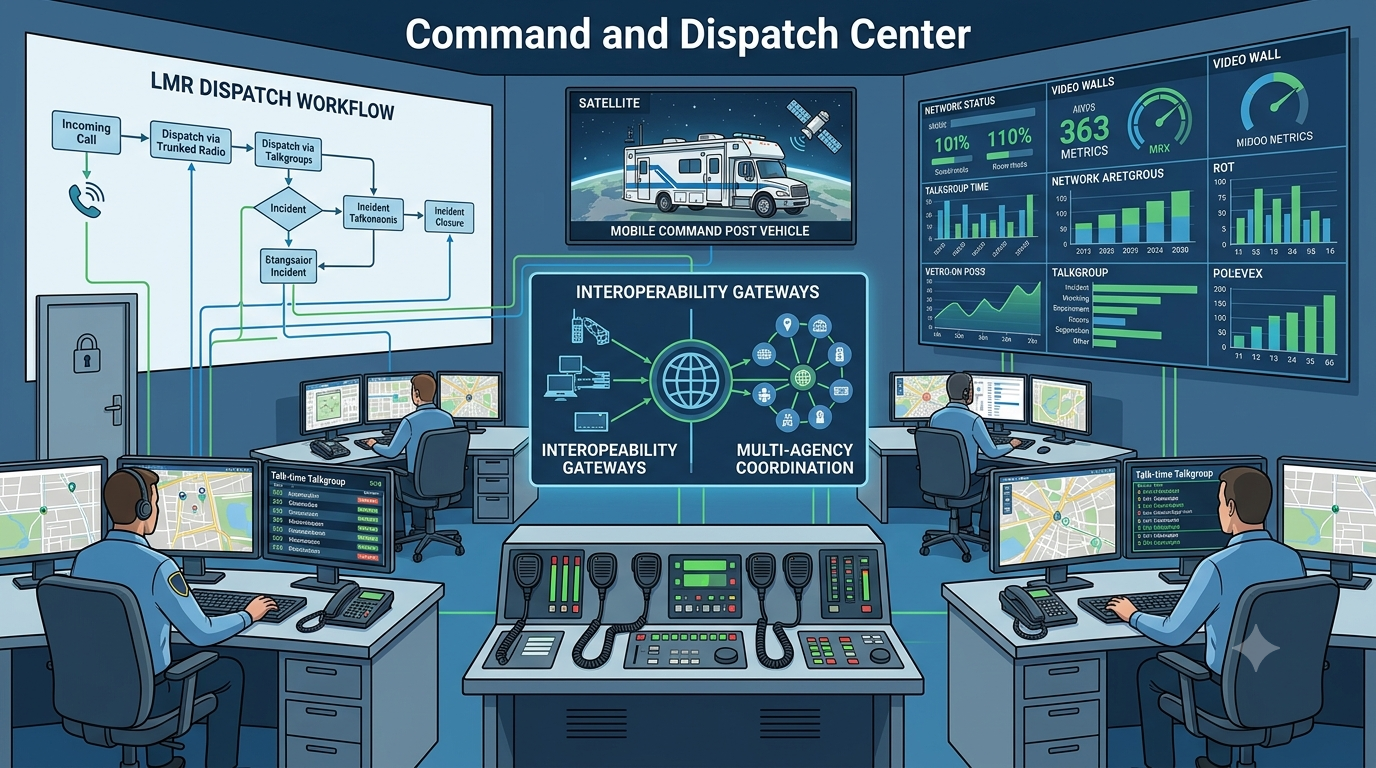
Land Mobile Radio Market Growth Driven by Mission-Critical Communications
The increasing need for reliable communication during emergencies is a major factor driving the land mobile radio market. Police departments, fire services, emergency medical services, defense organizations, and other public safety agencies require communication systems capable of operating under challenging conditions.
Unlike consumer communication platforms, LMR networks are designed around mission-critical requirements such as high availability, dedicated communication channels, group calling, priority access, and coverage across large operational areas.
Natural disasters, infrastructure failures, security incidents, and other emergencies can place significant pressure on communication networks. LMR systems provide dedicated communications capabilities that allow emergency personnel to coordinate operations effectively.
The modernization of legacy radio networks is another important market opportunity. Organizations are upgrading analog infrastructure with digital systems that provide improved audio quality, enhanced security, data capabilities, and interoperability.
Leading Land Mobile Radio Companies Strengthen Their Market Positions
The competitive landscape of the land mobile radio market includes global communication technology companies, specialized radio manufacturers, public safety technology providers, and system integrators. Major companies include Motorola Solutions, L3Harris Technologies, Hytera Communications, JVCKENWOOD, Icom, Tait Communications, Sepura, and BK Technologies, among other market participants.
Leading companies are increasingly developing comprehensive communication ecosystems rather than standalone radio products. These ecosystems can combine portable radios, mobile radios, dispatch consoles, broadband connectivity, command center software, video systems, location services, and cybersecurity capabilities.
Motorola Solutions, for example, has expanded its public safety technology portfolio beyond radio communications into command center software, video security, and incident management. L3Harris similarly provides mission-critical communications technologies for government and public safety customers.
The ability to integrate LMR with broader public safety platforms is becoming an increasingly important competitive differentiator.
Mergers and Acquisitions Reshape the LMR Competitive Landscape
Mergers and acquisitions (M&A) remain an important strategy among communication technology companies seeking to expand their capabilities and market reach. Acquisitions can provide access to specialized radio technologies, software, cybersecurity capabilities, broadband solutions, and established customer relationships.
The convergence of LMR with broadband communications is creating opportunities for companies to expand beyond traditional radio equipment. Acquiring software and technology providers can help LMR companies develop unified communication platforms capable of supporting voice, data, video, and location information.
Geographic expansion is another driver of M&A. Regional radio manufacturers and specialized communication providers can offer established distribution networks and regulatory expertise, making them attractive targets for larger global organizations.
As public safety agencies increasingly seek integrated communication solutions, companies with complementary capabilities across hardware, software, networks, and services can strengthen their competitive positions through strategic transactions.
Digital LMR Technologies Accelerate Market Transformation
The migration from analog to digital communication is a major trend in the land mobile radio market. Digital technologies can provide enhanced audio quality, improved spectrum efficiency, encryption capabilities, and support for data services.
P25 is widely associated with public safety communications, particularly in North America, while TETRA has significant adoption in public safety, transportation, utilities, and industrial applications across various international markets. DMR technologies are also used in commercial and professional communication applications.
Digital LMR systems can support features such as group communication, emergency alerts, GPS-based location services, text messaging, and remote device management. These capabilities allow organizations to improve operational coordination while maintaining dedicated communication channels.
The transition to digital infrastructure is also creating opportunities for system upgrades, network modernization, radio replacement, and software integration.
Broadband and LMR Convergence Creates New Opportunities
The convergence of LMR and broadband communication is reshaping the competitive landscape. Public safety organizations increasingly require high-bandwidth capabilities such as video transmission, multimedia messaging, real-time location, and access to cloud-based applications.
LMR remains valuable for highly reliable mission-critical voice communications, while broadband networks provide greater data capacity. Combining these technologies can enable public safety personnel to use the most appropriate communication method for each operational requirement.
Mission-critical push-to-talk (MCPTT), LTE, and 5G technologies are therefore becoming complementary components of modern communication ecosystems. LMR vendors are increasingly developing solutions that allow users to communicate across different network technologies.
This hybrid approach can help organizations preserve existing LMR investments while gradually incorporating newer broadband capabilities.
Public Safety and Critical Infrastructure Drive Adoption
Public safety remains one of the most important application areas for LMR systems. Police, fire, emergency medical services, and other agencies depend on reliable communications to coordinate field operations.
Transportation is another significant application segment. Airports, railways, ports, and transit operators require dependable communication between control centers, field personnel, maintenance teams, and emergency responders.
Utilities and industrial organizations also rely on LMR for field communication. Power plants, oil and gas facilities, mining operations, manufacturing plants, and other industrial environments can have challenging conditions where reliable wireless communication is essential.
The growing focus on critical infrastructure protection is expected to create additional demand for secure and resilient communication networks.
AI, Location Intelligence, and Cybersecurity Enhance LMR Systems
The integration of advanced software technologies is creating new opportunities for LMR providers. Artificial intelligence can support communication management, incident analysis, and operational decision-making when integrated into broader public safety platforms.
Location intelligence is another important capability. GPS-enabled radios can help dispatchers identify the location of field personnel, improving situational awareness and emergency response.
Cybersecurity is also becoming increasingly important as LMR systems become more connected to IP networks and enterprise applications. Encryption, authentication, secure device management, and network protection are essential for organizations handling sensitive communications.
These developments are shifting competition toward secure, software-enabled communication ecosystems rather than hardware specifications alone.
Regional Outlook for the Land Mobile Radio Market
North America represents a major market for LMR systems due to significant investments in public safety communications, government infrastructure, and network modernization. The continued replacement of aging radio systems and integration with broadband technologies provides opportunities for vendors.
Europe also has a mature LMR ecosystem, particularly across public safety, transportation, utilities, and industrial applications. TETRA and other digital technologies are important components of professional communication infrastructure.
Asia Pacific is expected to provide significant growth opportunities due to urbanization, infrastructure development, public safety modernization, transportation investments, and industrial expansion. Countries across the region are increasingly investing in secure communication systems for emergency services and critical infrastructure.
Future Outlook for the Land Mobile Radio Market
The land mobile radio market is expected to experience strong growth as organizations modernize legacy communication systems and demand increasingly integrated mission-critical solutions. The market is projected to increase from USD 19.41 billion in 2025 to USD 32.24 billion by 2030, representing a 10.7% CAGR.
Future competition is likely to focus on digital LMR, broadband integration, cybersecurity, cloud-based services, advanced dispatch platforms, location intelligence, and interoperability. Mergers and acquisitions will continue to provide companies with opportunities to expand their technology portfolios and geographic presence.
The future of LMR is likely to be defined by hybrid communication architectures that combine the reliability of dedicated radio networks with the data capabilities of LTE and 5G. Companies that can deliver secure, interoperable, resilient, and software-enabled communication solutions will be well positioned to capture opportunities in the evolving market.
As public safety agencies and critical infrastructure operators place greater emphasis on operational resilience and situational awareness, LMR will remain a foundational technology for mission-critical communications while increasingly becoming part of broader digital communication ecosystems.
Find More Information on Land Mobile Radio Market Innovation @ https://www.marketsandmarkets.com/Market-Reports/land-professional-mobile-radio-market-27811764.html
