Microdisplay Market Growth
The Microdisplay Market is entering a new phase of growth as demand for compact, high-resolution, and energy-efficient visual technologies expands across augmented reality (AR), virtual reality (VR), mixed reality (MR), smart glasses, automotive head-up displays (HUDs), defense systems, healthcare equipment, and industrial applications. Unlike conventional displays, microdisplays are designed to deliver high pixel density within extremely small form factors, making them particularly valuable for near-eye and portable applications.
Market forecasts vary depending on market definition and scope. The global microdisplay market is expected to grow from USD 1.65 billion in 2025 to USD 5.33 billion by 2030, growing at a CAGR of 26.4%. Other research firms forecast even faster expansion as AR/VR and automotive applications scale.
AR and Smart Glasses Fueling Market Expansion
One of the strongest forces behind Microdisplay Market Growth is the increasing development of AR-enabled smart glasses and near-eye displays. These devices require displays that are extremely small while delivering high resolution, brightness, contrast, and power efficiency.
Microdisplays provide the visual foundation for these experiences by projecting digital information into the user’s field of view. Applications can include navigation, real-time translation, remote assistance, industrial instructions, training, entertainment, and productivity.
The shift toward lightweight smart glasses is particularly important because traditional display technologies can make wearable devices bulky or power-hungry. Advances in OLED-on-silicon, MicroLED, and LCoS technologies are helping manufacturers pursue smaller and more capable display engines.
OLED-on-Silicon Drives Premium Applications
OLED-on-silicon, often referred to as OLEDoS or micro-OLED, is becoming an important technology for high-end AR and VR applications.
Because OLED pixels can be integrated on a silicon backplane, manufacturers can achieve very high pixel densities in compact display modules. This makes the technology attractive for premium headsets and near-eye applications where image quality and small size are critical.
Recent industry developments are also pushing brightness higher. In 2026, Samsung Display demonstrated RGB OLEDoS technology aimed at XR applications, highlighting the industry’s focus on achieving brighter and more visually capable microdisplays for next-generation wearable devices.
MicroLED: A Major Technology Opportunity
MicroLED represents another major opportunity in the Microdisplay Market.
MicroLED displays use microscopic inorganic LEDs as individual pixels. The technology has the potential to provide high brightness, strong contrast, fast response, long operating life, and excellent energy efficiency.
MicroLED is particularly attractive for AR because outdoor and bright-environment visibility remains a major challenge for wearable displays. However, manufacturing complexity and cost remain important barriers.
Recent improvements in mass-transfer processes, backplane integration, and manufacturing yields are helping address some of these challenges. Industry research indicates that improvements in MicroLED manufacturing are beginning to support broader commercialization across smartwatches, public displays, and near-eye applications.
Download PDF Brochure @ https://www.marketsandmarkets.com/pdfdownloadNew.asp?id=430
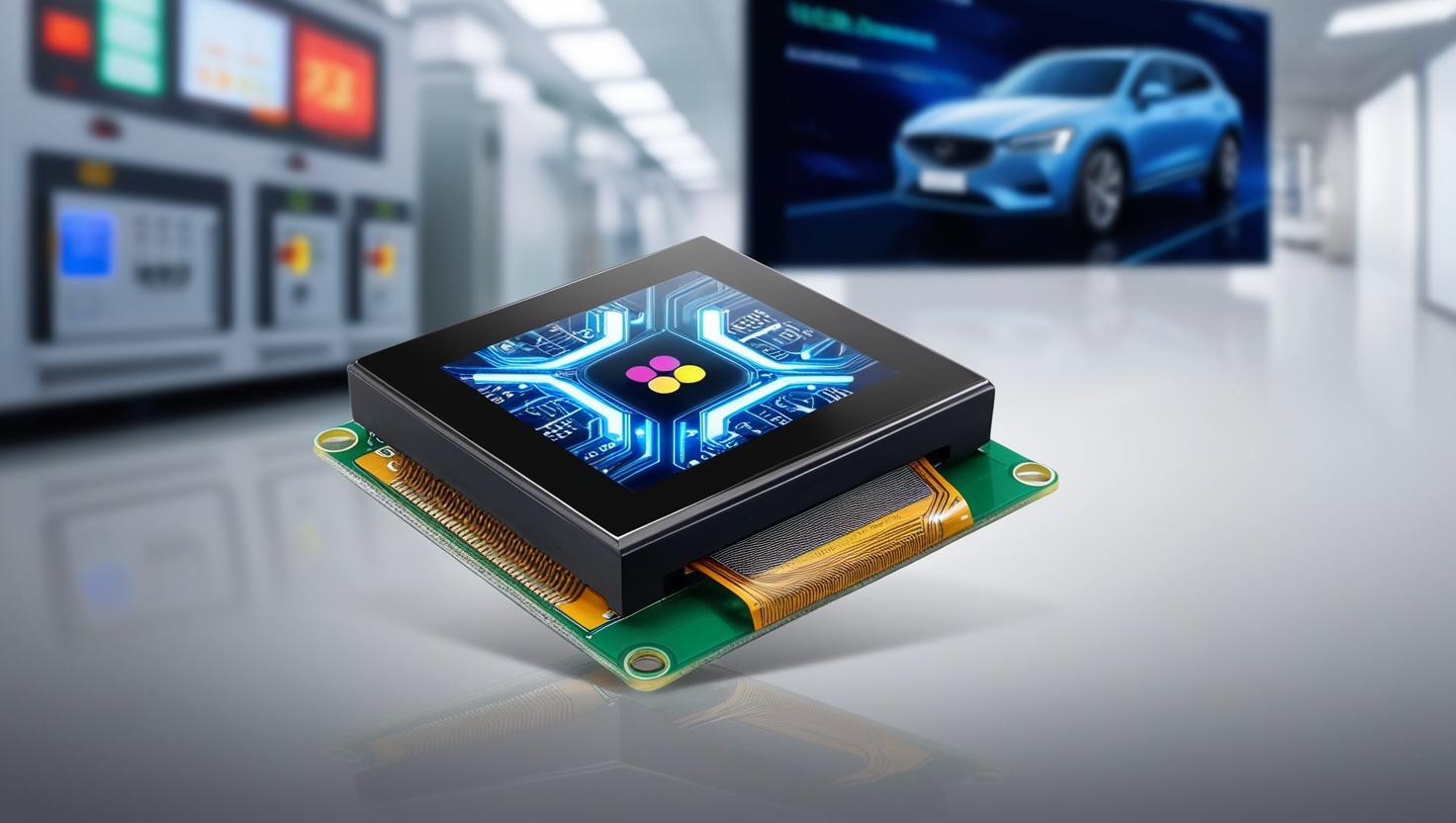
Automotive Head-Up Displays Create New Opportunities
The automotive industry is becoming another important growth area.
Microdisplays can support advanced head-up displays that project information such as speed, navigation, warnings, and driver-assistance information into the driver’s field of view. This can reduce the need for drivers to look away from the road.
As vehicles adopt increasingly sophisticated driver-assistance systems, demand for advanced visual interfaces is expected to increase. Research indicates that automotive HUD applications are becoming an important component of the broader microdisplay opportunity.
Future systems could combine microdisplays with cameras, sensors, AI, and vehicle data to deliver context-aware information directly within the driver’s visual environment.
AI Is Transforming Microdisplay Applications
Artificial intelligence is creating new possibilities for microdisplay technology.
AI-powered systems can determine what information should be presented to users and when it should appear. In smart glasses, for example, AI could support real-time translation, object recognition, navigation, digital assistance, and contextual information.
This creates a new technology chain:
AI → Sensors → Processing → Microdisplay → Human Interaction
Rather than simply displaying static information, next-generation microdisplays could become part of intelligent visual interfaces that dynamically respond to the environment and the user’s needs.
Healthcare and Medical Applications
Healthcare is another promising application area for microdisplays.
Compact displays can be integrated into surgical visualization systems, medical imaging equipment, diagnostic devices, and specialized wearable technologies. High resolution and precise image reproduction are particularly important in applications where professionals need detailed visual information.
Microdisplays can also support lightweight visualization equipment where conventional screens are impractical.
As healthcare organizations invest in digital imaging, surgical technologies, and wearable systems, demand for compact high-performance displays could create additional market opportunities.
Defense and Aerospace Applications
Defense and aerospace applications have historically been important users of advanced display technologies.
Microdisplays can be integrated into helmet-mounted displays, thermal imaging systems, night-vision equipment, targeting systems, and other specialized visualization platforms.
These applications often require high brightness, high resolution, low weight, ruggedness, and reliable operation. The ability to deliver advanced visual information within a compact system makes microdisplays particularly attractive for defense applications.
Industrial and Enterprise Adoption
Microdisplays are also finding opportunities in industrial and enterprise environments.
Workers can use wearable displays to access instructions, technical diagrams, maintenance information, inventory data, or remote expert assistance without constantly looking down at a handheld device.
This could support applications in manufacturing, logistics, warehousing, field service, utilities, and industrial maintenance.
The broader adoption of connected industrial systems and digital workflows could therefore become an important driver of Microdisplay Market Growth.
The Importance of High Resolution and Brightness
As microdisplay applications expand, performance requirements are becoming increasingly demanding.
Manufacturers are focusing on achieving:
- Higher pixel density
- Greater brightness
- Improved contrast
- Lower power consumption
- Faster refresh rates
- Better color accuracy
- Smaller form factors
- Improved thermal performance
For AR glasses in particular, the display must remain visible while fitting into a lightweight device. This creates a difficult engineering balance between brightness, efficiency, heat, battery life, and size.
Recent developments in OLEDoS demonstrate how manufacturers are pushing brightness and image quality to address these challenges.
Manufacturing Remains a Critical Challenge
Despite significant technological progress, manufacturing remains one of the biggest challenges facing the Microdisplay Market.
MicroLED manufacturing, for example, requires highly precise processes for producing, transferring, placing, and controlling microscopic LEDs. Yield problems can significantly increase production costs.
Similarly, high-performance OLED-on-silicon displays require specialized semiconductor and display manufacturing capabilities.
As production volumes increase, manufacturers are investing in process improvements, automation, better yields, and new manufacturing architectures. These developments could be crucial for moving microdisplays from premium products toward broader commercial adoption.
The Future of Microdisplay Market Growth
The future of the Microdisplay Market will likely be defined by the convergence of displays, AI, sensors, optics, and wearable computing.
Smart glasses could evolve from simple visual accessories into AI-powered computing platforms. Automotive HUDs could become more interactive and context-aware. Industrial wearables could provide real-time instructions, while healthcare devices could deliver highly detailed visual information in compact form factors.
At the technology level, OLED-on-silicon and MicroLED are expected to remain key areas of innovation, while LCoS and other established technologies will continue serving applications where their performance and cost characteristics remain attractive.
The market is already showing signs of accelerating commercialization. Omdia estimates that MicroLED display revenue could rise from USD 52.4 million in 2025 to USD 105.4 million in 2026, driven by applications including smartwatches, smart glasses, and public displays.
Conclusion
The Microdisplay Market Growth story is being driven by a fundamental shift in how people interact with digital information.
Instead of relying exclusively on smartphones, monitors, and traditional screens, users are increasingly moving toward near-eye, wearable, immersive, and context-aware visual interfaces.
AR glasses, VR headsets, automotive HUDs, healthcare systems, defense equipment, and industrial wearables are creating new demand for displays that are smaller, brighter, sharper, and more energy-efficient.
The biggest opportunities will likely belong to companies that can solve the industry’s core challenges—particularly manufacturing cost, production yield, brightness, power consumption, thermal management, and miniaturization.
Top 5 FAQs – Microdisplay Market
1. What is driving Microdisplay Market Growth?
Microdisplay Market Growth is being driven by rising demand for compact, high-resolution, and energy-efficient displays in AR/VR devices, smart glasses, automotive head-up displays, healthcare equipment, defense systems, and industrial wearables. The increasing integration of AI and immersive technologies is also creating new opportunities.
2. Which technologies are shaping the Microdisplay Market?
Key technologies include OLED-on-Silicon (OLEDoS), MicroLED, LCoS (Liquid Crystal on Silicon), and DLP. OLEDoS is gaining traction in high-resolution near-eye applications, while MicroLED is attracting attention because of its potential for high brightness, contrast, efficiency, and long operating life.
3. What are the major applications of microdisplays?
Major applications include AR/VR headsets, smart glasses, automotive HUDs, medical and healthcare devices, defense and aerospace systems, industrial wearables, and consumer electronics. AR and smart glasses are particularly important growth areas.
4. What challenges could affect the Microdisplay Market?
Major challenges include high manufacturing costs, complex production processes, limited manufacturing yields, thermal management, power consumption, and the difficulty of achieving high brightness in compact devices. These factors can influence the cost and scalability of next-generation microdisplay products.
5. What is the future outlook for the Microdisplay Market?
The outlook is positive as microdisplays become increasingly important for AI-powered smart glasses, AR/VR, automotive visualization, healthcare, defense, and industrial applications. Continued improvements in MicroLED, OLEDoS, miniaturization, brightness, and manufacturing efficiency are expected to create significant opportunities for future market expansion.
About MarketsandMarkets™
MarketsandMarkets™ has been recognized as one of America’s Best Management Consulting Firms by Forbes, as per their recent report.
MarketsandMarkets™ is a blue ocean alternative in growth consulting and program management, leveraging a man-machine offering to drive supernormal growth for progressive organizations in the B2B space. With the widest lens on emerging technologies, we are proficient in co-creating supernormal growth for clients across the globe.
Today, 80% of Fortune 2000 companies rely on MarketsandMarkets, and 90 of the top 100 companies in each sector trust us to accelerate their revenue growth. With a global clientele of over 13,000 organizations, we help businesses thrive in a disruptive ecosystem.
The B2B economy is witnessing the emergence of $25 trillion in new revenue streams that are replacing existing ones within this decade. We work with clients on growth programs, helping them monetize this $25 trillion opportunity through our service lines – TAM Expansion, Go-to-Market (GTM) Strategy to Execution, Market Share Gain, Account Enablement, and Thought Leadership Marketing.
Built on the ‘GIVE Growth’ principle, we collaborate with several Forbes Global 2000 B2B companies to keep them future-ready. Our insights and strategies are powered by industry experts, cutting-edge AI, and our Market Intelligence Cloud, KnowledgeStore™, which integrates research and provides ecosystem-wide visibility into revenue shifts.
To find out more, visit www.MarketsandMarkets™.com or follow us on Twitter , LinkedIn and Facebook .
Contact:
Mr. Rohan Salgarkar
MarketsandMarkets™ INC.
1615 South Congress Ave.
Suite 103, Delray Beach, FL 33445
USA: +1-888-600-6441
