The global microscopy market plays a very important and enabling part in the life sciences and research community, and its applications beyond biologic imaging are growing very rapidly in semiconductor device manufacturing. In addition to biologic imaging, microscopes today find important and widespread uses in semiconductor device wafer inspection, semiconductor device failure analysis, nanomanufacturing, and surface metrology. As semiconductor device technology continues to scale down into smaller nodes and integrates more diverse and complex technologies, the use of microscopes has shifted from being an important but supplemental analytical capability to being a highly critical and directly enabling one. Both the biologic and semiconductor device markets have widened the scope of the microscopy market.
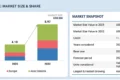
Microscopy Market Size & Forecast:
- Market Size Available for Years: 2025–2031
- 2025 Market Size: USD 8.81 billion
- 2031 Projected Market Size: USD 11.44 billion
- CAGR (2026–2031): 5.5%
Microscopy Market Trends & Insights:
- For 2025, the semiconductors & electronics industry segment held the largest share of 31% of the global microscopy market as of 2025.
- The semiconductors & electronics applications segment accounts for 38% of market share as of 2025.
- The optical microscopes segment dominated the global microscopy market with a share of 37% in 2025.
Download PDF Brochure @ https://www.marketsandmarkets.com/pdfdownloadNew.asp?id=399
The global microscopy market demand is fueled by recent advancements in digital and super-resolution microscopy, coupled with AI and machine learning to improve imaging analysis and automation, as well as by increased R&D investments in life sciences and nanotechnology. In addition, new applications of nanotechnology in fields such as nanoparticle characterization, semiconductor metrology, cell biology, infectious disease studies, and personalized medicine are driving the installation of microscopy platforms in key markets.
By product, Optical microscopes dominated the global microscopy market as of 2025.
optical microscopes dominated the market in 2025 owing to the significant installed base across the US, EU, and APAC; supportive regulations that promote the adoption of advanced optical microscopes in the research & healthcare; and continued rise in research funding across mature markets in the field of material science, nanotechnology, & automation. The optical microscopes cost significantly less than electron and confocal microscopes, which enables widespread adoption in labs, education, and industry. The advantage of price/cost makes the total addressable market for optical microscopes larger than the other microscope categories. The ease of operation also adds more value and volume to the demand for optical microscopes. Users require minimal training, as samples image in air or water with natural color output, unlike vacuum-bound SEMs needing skilled operators. Optical microscopy also offers versatility in applications. The technique is suitable for living cells, tissues, and routine inspections in biology, pathology, and quality control, where sub-200nm resolution suffices for most tasks. Non-destructive imaging preserves samples, unlike electron methods requiring fixation. All these factors have helped optical microscopes as a product to acquire a significant share of the market.
Request Sample Pages@ https://www.marketsandmarkets.com/requestsampleNew.asp?id=399
By end user, Semiconductor & electronics industry holds the largest share in the end-user market.
the semiconductor & electronics industry dominated the market in 2025, owing to the establishment of new semiconductor manufacturing capacity in the US, Europe, India, and Japan; rising investments in semiconductor research to develop advanced chips, evolving regulatory mandates by various governments, and increased adoption of advanced microscopy technologies. A shift towards more miniaturized electronic and semiconductor components has really contributed to the demand for microscopy. Shrinking semiconductor nodes to 3nm and beyond requires high-resolution imaging for nanostructures invisible to optical methods alone, boosting electron microscope adoption. Microscopes enable sub-micron defect identification in wafers, solder joints, and ICs, critical for high-yield production where even minor flaws cause failures. Techniques like SEM and TEM support failure analysis, reducing downtime in high-volume fabs. Such use cases have promoted the adoption of microscopy in defect detection needs/methods.
Asia Pacific will register the highest growth in the microscopy market during the forecast period.
the Asia Pacific is poised to grow the fastest during the forecast period, driven by the higher outsourcing of research coupled with new installations, growing manufacturing capacity in the semiconductor & pharma-biotech industry, evolving regulatory mandates that aim to support the adoption of new microscopy technologies, and product affordability owing to localized manufacturing. Governments in China, Japan, and India are directing funds into research infrastructure and initiatives to boost nanotechnology and biotech labs. Semiconductor industries in Taiwan, South Korea, and China are driving demand for SEM/TEM in wafer inspection and defect analysis. The region gains an advantage in terms of cost and manufacturing liabilities. Low-cost labor, raw materials, and local OEMs enable affordable microscope production, reducing reliance on imports and spurring adoption in electronics and healthcare. All these factors have helped the Asia Pacific region to show significant growth in the forecast period.
Inquire Before Buying@ https://www.marketsandmarkets.com/Enquiry_Before_BuyingNew.asp?id=399
Top Companies in Microscopy Market:
The Top Companies in Microscopy Market include Carl Zeiss AG (Germany), Thermo Fisher Scientific (US), EVIDENT SCIENTIFIC (Japan), Danaher Corporation (US), Nikon Corporation (Japan), JEOL Ltd. (Japan), Oxford Instruments plc (UK), Hitachi High–Tech Corporation (Japan), Keyence Corporation (Japan), Shimadzu Corporation (Japan), Euromex (Netherlands), Bruker Corporation (US) and Helmut Hund GmbH (Germany), among others.