The Non-Destructive Testing Market Growth Statistics highlight a significant transformation taking place across industrial inspection. As manufacturers, energy companies, aerospace organizations, infrastructure operators, and other industries place greater emphasis on safety, asset integrity, predictive maintenance, and operational efficiency, non-destructive testing (NDT) is becoming an increasingly important part of industrial asset management. The NDT and inspection market is expected to reach USD 22.34 billion by 2030 from USD 14.99 billion in 2025 at a CAGR of 8.3.%
What Is Driving Non-Destructive Testing Market Growth?
One of the strongest drivers behind the Non-Destructive Testing Market Growth Statistics is the increasing focus on safety and asset integrity. Industries such as oil & gas, aerospace, power generation, automotive, manufacturing, and public infrastructure operate expensive assets where undetected defects can lead to equipment failure, production losses, safety incidents, and regulatory consequences.
NDT enables organizations to evaluate components without destroying them. This makes inspection possible while preserving the usability of equipment, structures, pipelines, aircraft components, welds, and other critical assets.
Stringent safety and quality regulations are further encouraging organizations to implement reliable inspection procedures. MarketsandMarkets identifies regulatory requirements, asset integrity, predictive maintenance, and product quality as major factors supporting market growth.
Aging Infrastructure Creates New Inspection Opportunities
Aging infrastructure is another major factor influencing the Non-Destructive Testing Market Growth Statistics. Industrial plants, pipelines, bridges, power-generation assets, transportation infrastructure, and other facilities require regular assessment as they approach or exceed their original operating lifespans.
NDT technologies can help identify cracks, corrosion, weld defects, material degradation, and other conditions before they become critical failures.
This creates a growing shift from reactive maintenance toward condition-based and predictive maintenance. Rather than waiting for equipment to fail, operators can use inspection data to determine when maintenance or replacement is necessary.
Download PDF Brochure @ https://www.marketsandmarkets.com/pdfdownloadNew.asp?id=882
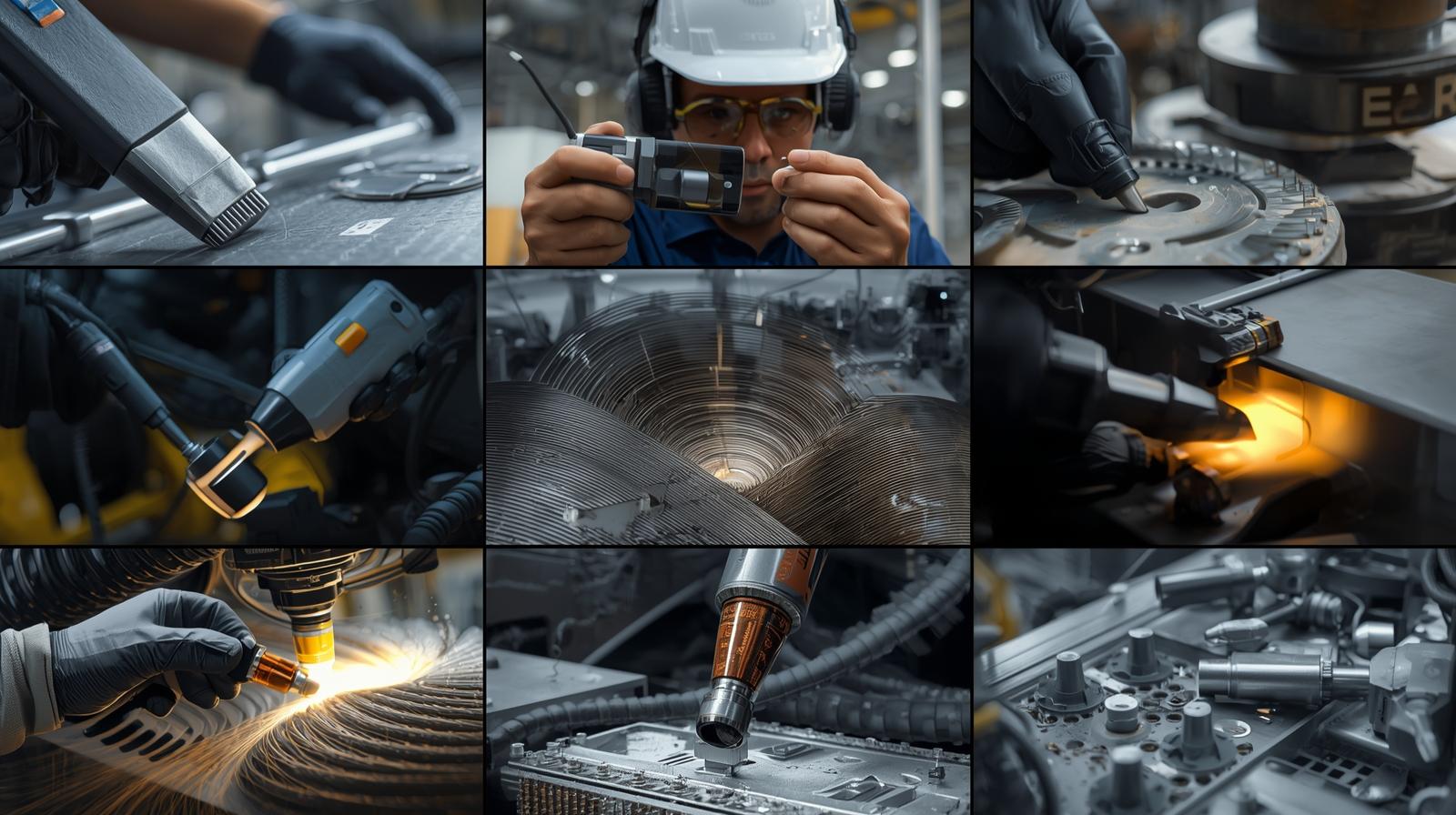
Ultrasonic Testing Remains a Market Leader
Among the techniques covered by the market, Ultrasonic Testing (UT) accounted for the largest market share in 2024, according to MarketsandMarkets. UT is widely used for detecting internal flaws, measuring thickness, inspecting welds, and assessing material integrity across industries.
Ultrasonic testing includes methods such as straight beam, angle beam, immersion, phased array, time-of-flight diffraction (TOFD), and guided wave testing.
Its versatility makes UT particularly valuable in oil & gas, aerospace, power generation, and other industrial applications.
The continued development of phased-array ultrasonic testing and automated ultrasonic inspection is also expanding the capabilities of the technology.
Acoustic Emission Testing Offers High-Growth Potential
The Acoustic Emission Testing (AET) segment is projected to register the fastest growth among techniques during the forecast period. MarketsandMarkets links this growth to increasing demand for predictive maintenance, structural health monitoring, and AI-enabled detection capabilities.
AET can monitor acoustic signals generated by changes or defects within materials and structures. This makes it particularly valuable for monitoring asset behavior and identifying potential problems without requiring conventional point-by-point inspection.
The increasing integration of AET with digital monitoring and analytics could further expand its industrial applications.
AI Is Transforming Industrial Inspection
Artificial intelligence is becoming one of the most important technology trends reflected in the Non-Destructive Testing Market Growth Statistics.
AI-enabled inspection systems can analyze large volumes of inspection data and help identify patterns associated with defects. Automated image analysis, defect classification, anomaly detection, and predictive analytics can support inspectors and potentially improve inspection consistency.
MarketsandMarkets identifies AI, IoT, and digital twin technologies as important developments enhancing defect detection, real-time monitoring, data accuracy, and decision-making.
This represents a significant shift from inspection as a standalone activity toward inspection as part of an integrated digital asset-management ecosystem.
IoT Enables Real-Time Monitoring
The Internet of Things is helping connect inspection equipment and sensors to broader industrial networks.
IoT-enabled NDT systems can collect information from equipment and transmit inspection data to centralized platforms for analysis. This can allow organizations to monitor asset conditions more continuously rather than relying exclusively on periodic inspections.
When combined with AI analytics, IoT sensors can support early identification of abnormal conditions and contribute to predictive maintenance strategies.
Digital Twins Are Creating New Possibilities
Digital twins are another emerging technology influencing the Non-Destructive Testing Market Growth Statistics.
A digital twin can represent the condition and behavior of a physical asset using data from sensors, inspection systems, and operational sources. Integrating NDT data with digital-twin platforms can provide a more comprehensive view of asset health.
For industrial operators, this can support risk assessment, maintenance planning, lifecycle management, and decision-making.
MarketsandMarkets specifically highlights the integration of digital twins with NDT as a technology trend supporting real-time monitoring and proactive maintenance
Robotics and Drones Are Changing Inspection Workflows
Industrial inspection is increasingly moving toward automation. Robotics, drones, remotely operated systems, and automated NDT equipment can perform inspections in hazardous, elevated, confined, or difficult-to-access environments.
This trend is particularly relevant to oil & gas, power, aerospace, manufacturing, and infrastructure applications.
MarketsandMarkets identifies industrial automation and robotics as important growth drivers because these systems can reduce human intervention, improve inspection efficiency, and support inspection in complex environments.
Drone-based inspection can also provide access to infrastructure such as towers, bridges, pipelines, and other structures without requiring extensive scaffolding or exposing workers to unnecessary risks.
Oil & Gas Remains the Largest Vertical
Oil & gas continues to represent the largest vertical in the NDT and inspection market. MarketsandMarkets estimates the oil & gas segment at USD 4.06 billion in 2025, with the segment projected to reach USD 6.20 billion by 2030.
NDT is extensively used across pipelines, refineries, offshore facilities, storage tanks, LNG infrastructure, and other assets.
Pipeline integrity programs and regulatory requirements create continuing demand for technologies capable of detecting corrosion, cracks, weld defects, and other forms of degradation.
Aerospace Is a High-Growth Application Area
The aerospace segment is projected to register the highest CAGR among the major verticals, according to MarketsandMarkets. M
Aircraft safety depends heavily on detecting defects in critical components without damaging them. NDT techniques are used to inspect engines, airframes, welds, composite structures, and other components.
The growing use of advanced materials and composites is also creating demand for more sophisticated inspection methods capable of detecting defects in complex structures.
Renewable Energy Is Creating New Opportunities
The expansion of renewable energy is opening another opportunity for NDT providers.
Wind turbines, solar installations, energy-storage systems, and other power infrastructure require inspection and maintenance throughout their operating lifecycles.
MarketsandMarkets identifies growing demand for NDT and inspection services in renewable energy and power sectors as a significant opportunity. Advanced techniques combined with AI analytics and remote monitoring can support asset integrity and predictive maintenance.
Asia Pacific Is the Fastest-Growing Region
One of the most significant regional Non-Destructive Testing Market Growth Statistics is Asia Pacific’s position as the fastest-growing market.
MarketsandMarkets expects Asia Pacific to register the highest growth rate during the forecast period, supported by industrial expansion, infrastructure development, aerospace manufacturing, automotive production, energy investments, and stronger regulatory requirements.
Countries including China, India, Japan, South Korea, and markets across Southeast Asia are contributing to regional demand.
Rapid industrialization is creating a large installed base of assets that require inspection, maintenance, and quality assurance.
North America Maintains a Strong Position
North America remains an important NDT market because of its mature industrial infrastructure, established regulatory environment, aerospace sector, energy assets, and adoption of advanced inspection technologies.
MarketsandMarkets’ latest analysis indicates that North America was valued at approximately USD 5.16 billion in 2025 and is projected to reach USD 7.71 billion by 2030. MMarketsandMarkets
The region’s established inspection ecosystem also supports demand for specialized services, advanced equipment, and digital inspection platforms.
Portable NDT Devices Are Expanding Market Reach
The development of smaller and more portable inspection equipment is another important opportunity.
Portable NDT devices can enable technicians to conduct inspections directly at industrial sites, reducing the need to transport components or equipment to dedicated testing facilities.
MarketsandMarkets identifies miniaturized and portable NDT devices as an opportunity for future market expansion.
This trend is particularly relevant for field inspections, remote locations, maintenance operations, and applications where mobility is essential.
Digital Inspection Is Reshaping the Industry
Digital transformation is changing how inspection data is collected, stored, analyzed, and shared.
Digital radiography, automated ultrasonic inspection, AI-powered analytics, cloud-based inspection platforms, connected sensors, and digital documentation are increasingly being integrated into NDT workflows.
These technologies can help improve inspection efficiency and provide organizations with more structured historical data for asset-management decisions.
MarketsandMarkets identifies digital imaging, automated inspection, AI-enabled analytics, and cloud-based inspection data management among the developments shaping the industry.
Challenges Could Influence Market Expansion
Despite favorable Non-Destructive Testing Market Growth Statistics, the industry faces several challenges.
The high cost of advanced NDT equipment can limit adoption, particularly among small and medium-sized organizations. Advanced systems can also require investment in training, calibration, software integration, and maintenance.
A shortage of skilled NDT technicians is another important concern. Advanced inspection systems require professionals who understand both inspection methodologies and increasingly sophisticated digital tools.
The growing complexity of modern materials and structures also creates technical challenges. Composite materials, advanced alloys, ceramics, and 3D-printed components can require specialized inspection techniques and expertise.
Competitive Landscape
The NDT and inspection market includes global inspection service providers, equipment manufacturers, technology companies, and specialized testing organizations.
MarketsandMarkets identifies companies including SGS, Bureau Veritas, Baker Hughes, Applus+, Intertek, MISTRAS Group, TÜV Rheinland, DEKRA, Evident, Eddyfi Technologies, Acuren, NDT Global, Comet Yxlon, Nikon Metrology, Magnaflux, and Sonatest, among others.
Competition is increasingly centered on advanced equipment, digital inspection capabilities, AI-based analytics, remote inspection, automation, global service networks, and integrated asset-management solutions.
Future Outlook for Non-Destructive Testing
The future Non-Destructive Testing Market Growth Statistics point toward continued expansion as inspection becomes more connected, automated, predictive, and data-driven.
The market’s projected increase from USD 14.99 billion in 2025 to USD 22.34 billion by 2030 demonstrates the growing economic importance of NDT and inspection technologies.
The next stage of development will likely involve greater integration between NDT equipment, robotics, AI, IoT sensors, digital twins, cloud platforms, and predictive maintenance systems.
Instead of simply detecting defects after they occur, inspection systems are increasingly expected to help organizations understand asset condition, predict potential failures, and optimize maintenance schedules.
The Non-Destructive Testing Market Growth Statistics demonstrate that NDT is evolving from a traditional quality-control function into a strategic component of industrial asset management.
A projected market size of USD 22.34 billion by 2030, an 8.3% CAGR, strong demand from oil & gas and aerospace, rapid growth in Asia Pacific, and increasing adoption of AI, robotics, IoT, digital twins, and portable inspection systems all point toward a dynamic market outlook.
As industries prioritize safety, reliability, uptime, and predictive maintenance, NDT technologies will play an increasingly important role in keeping critical infrastructure and industrial assets operating safely and efficiently.
