As humanoid robots become increasingly lifelike in appearance and function, the need for highly precise, compact, and responsive actuation systems is greater than ever. Among the most promising technologies at the forefront of this evolution are piezoelectric actuators. These specialized components are redefining how robots move, interact, and sense the world around them. In this article, we explore the growing role of piezoelectric actuators in humanoid robotics applications, their benefits, current uses, and the future of this cutting-edge actuation technology.
What Are Piezoelectric Actuators?
Piezoelectric actuators convert electrical voltage into mechanical movement using the piezoelectric effect, where certain crystalline or ceramic materials physically deform when voltage is applied. Though their movement range is typically very small—on the order of micrometers or nanometers—their speed and precision are unmatched.
In the context of humanoid robotics applications, these actuators are ideal for tasks requiring ultra-fine positioning, high-frequency vibration, and compact integration into small joints, fingertips, or facial features.
Why Use Piezoelectric Actuators in Humanoid Robots?
The value of piezoelectric actuators in humanoid robotics applications lies in their unique combination of features:
1. High Precision at Micro/Nano Scale
Piezoelectric actuators are capable of nanometer-level accuracy, making them perfect for robotic applications where fine manipulation or subtle motion is critical—such as in robotic fingers, eyelids, or tactile feedback systems.
2. Fast Response Time
These actuators operate with response times in the microsecond range, enabling real-time adjustments in robotic movement or sensory systems. This responsiveness is critical in interactive humanoid robots that must adapt instantly to their environment.
3. Compact Size and Lightweight Design
Their small form factor allows piezoelectric actuators to be embedded directly into space-constrained areas of humanoid robots, such as facial muscles, finger joints, or synthetic skin layers.
4. Silent Operation
Humanoid robots used in healthcare, caregiving, or education must be quiet. Piezoelectric actuators operate silently, enhancing the comfort and acceptance of robots in close human environments.
Download PDF Brochure @ https://www.marketsandmarkets.com/pdfdownloadNew.asp?id=99567653
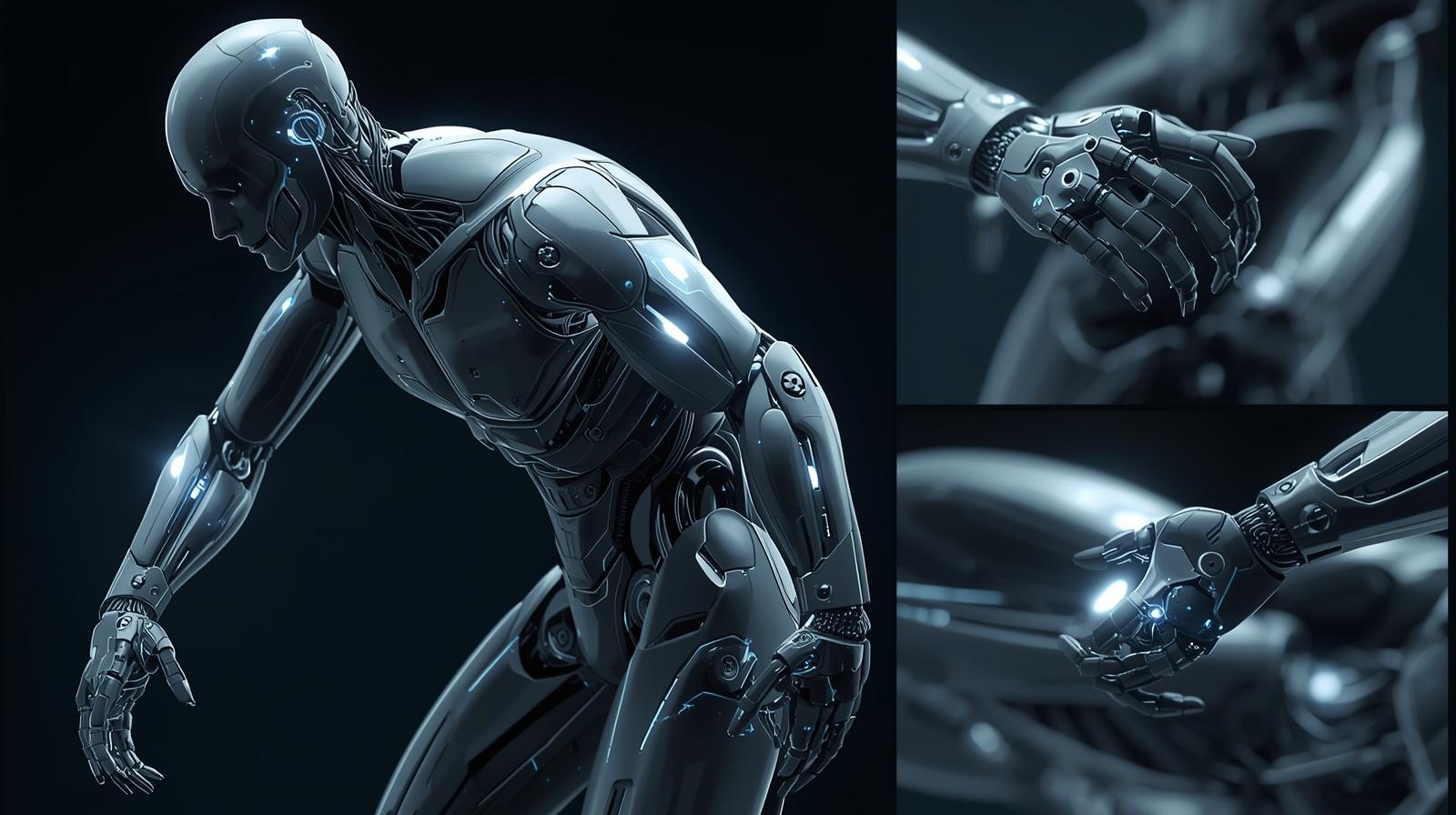
Key Applications of Piezoelectric Actuators in Humanoid Robotics
1. Robotic Tactile Feedback and Artificial Skin
One of the most impactful uses of piezoelectric actuators in humanoid robotics applications is in the development of haptic systems and electronic skin (e-skin). By embedding tiny piezo actuators beneath synthetic skin layers, robots can simulate the sensation of touch and adjust grip or pressure based on tactile input.
2. Facial Expression Mechanisms
To communicate emotions effectively, humanoid robots must display subtle facial expressions. Piezoelectric actuators enable fine movement of components like eyelids, eyebrows, and lips, allowing for more natural and expressive human-robot interaction.
3. Precision Gripping and Object Handling
In tasks involving delicate or precise manipulation—such as picking up fragile objects or using tools—robots require rapid and accurate micro-adjustments. Piezo actuators offer this capability in compact form, making them ideal for dexterous humanoid hands.
4. Vision Stabilization and Eye Movement
Some humanoid robots use piezoelectric actuators to control camera systems or simulate eye movements. Their high-speed motion is especially useful in image stabilization and saccadic (rapid) eye tracking.
Challenges in Piezoelectric Actuator Integration
Despite their benefits, piezoelectric actuators are not without limitations:
- Small Displacement Range: Their movement is typically minimal, requiring mechanical amplification for large joint movements.
- High Voltage Requirements: Most piezo actuators need relatively high operating voltages (up to 150V or more), which complicates power system design.
- Material Fragility: Ceramic-based piezo elements can be brittle and susceptible to cracking under heavy loads or shock.
- Cost and Complexity: High-performance piezo actuators can be costly and require specialized driving electronics.
- Nonetheless, research is ongoing to address these issues, making piezoelectric actuation more practical for broader use in humanoid robots.
Recent Innovations and Research Trends
Innovations in flexible piezoelectric materials, low-voltage operation, and 3D-printed actuators are expanding the potential for piezoelectric actuators in humanoid robotics applications. Engineers are developing hybrid systems that combine piezoelectric motion with compliant materials or traditional motors to achieve larger strokes without sacrificing precision.
In addition, advancements in edge computing and AI-powered motion control are allowing piezoelectric systems to adapt more intelligently to environmental feedback—leading to more fluid and lifelike robot behavior.
The Future of Piezoelectric Actuators in Humanoid Robotics
As humanoid robots become more integrated into daily life—serving roles in eldercare, surgery, education, customer service, and entertainment—the demand for precision movement, realistic expression, and safe interaction will only grow. Piezoelectric actuators will play a pivotal role in this future by enabling micro-scale motion that mimics human muscle control and sensory feedback.
By 2030, we can expect to see:
- Broader use of piezo actuators in facial expression and fine motor control
- Smart e-skin systems with embedded piezo-based haptics
- Lower-cost, more robust piezo materials
- Integration into soft robotics and wearable humanoid systems
The integration of piezoelectric actuators in humanoid robotics applications represents a significant leap toward achieving true human-like functionality. With unmatched speed, precision, and miniaturization, these actuators are enabling robots to move more like humans and interact more naturally with the world.
While they are not suited for every motion task—particularly large or high-torque movements—piezoelectric actuators are becoming indispensable in areas where sensitivity, responsiveness, and subtlety define performance. As the technology matures, their role in humanoid robotics will expand from niche enhancements to essential components in creating the robots of the future.
FAQ: Piezoelectric Actuators in Humanoid Robotics Applications
1. What are piezoelectric actuators, and how do they work in humanoid robots?
Piezoelectric actuators use the piezoelectric effect—a property of certain materials like ceramics or crystals that allows them to deform slightly when an electric voltage is applied. In humanoid robots, these tiny deformations are used to create ultra-precise linear or vibrational movements, especially in small joints, fingers, or facial components.
2. Why are piezoelectric actuators important in humanoid robotics applications?
They offer nanometer-level precision, extremely fast response times, and a compact form factor. These qualities are ideal for applications where humanoid robots need to perform delicate tasks such as facial expressions, tactile sensing, haptic feedback, or fine object manipulation.
3. What makes piezoelectric actuators different from other actuator types?
Unlike motors or hydraulics, piezoelectric actuators:
- Operate silently and with ultra-fine movement
- Are compact and lightweight
- React instantly to voltage changes
- Provide direct linear motion without needing complex gearing systems
However, they generally produce small displacement and limited force, which restricts their use to precision tasks.
4. Can piezoelectric actuators be used to power large robot joints or limbs?
No. Piezoelectric actuators typically cannot generate large movements or high torque, so they’re not suitable for powering robot legs, arms, or torso joints. Instead, they complement other actuator types by enabling micro-motion and fine control where high strength isn’t needed.
5. Where are piezoelectric actuators used in humanoid robots?
Common use cases include:
- Robotic fingertips for micro-adjustments during gripping
- Facial muscles for simulating human expressions
- Camera or eye control systems for fast visual tracking
- Artificial skin to simulate haptic feedback or vibration-based sensing
About MarketsandMarkets™
MarketsandMarkets™ is a blue ocean alternative in growth consulting and program management, leveraging a man-machine offering to drive supernormal growth for progressive organizations in the B2B space. We have the widest lens on emerging technologies, making us proficient in co-creating supernormal growth for clients.
The B2B economy is witnessing the emergence of $25 trillion of new revenue streams that are substituting existing revenue streams in this decade alone. We work with clients on growth programs, helping them monetize this $25 trillion opportunity through our service lines – TAM Expansion, Go-to-Market (GTM) Strategy to Execution, Market Share Gain, Account Enablement, and Thought Leadership Marketing.
Built on the ’GIVE Growth’ principle, we work with several Forbes Global 2000 B2B companies – helping them stay relevant in a disruptive ecosystem. Our insights and strategies are molded by our industry experts, cutting-edge AI-powered Market Intelligence Cloud, and years of research. The KnowledgeStore™ (our Market Intelligence Cloud) integrates our research, facilitates an analysis of interconnections through a set of applications, helping clients look at the entire ecosystem and understand the revenue shifts happening in their industry.
To find out more, visit www.MarketsandMarkets™.com or follow us on Twitter, LinkedIn and Facebook.
Contact:
Mr. Rohan Salgarkar
MarketsandMarkets™ INC.
630 Dundee Road
Suite 430
Northbrook, IL 60062
USA : 1-888-600-6441
