Refrigeration Coolers Market Trends are increasingly being shaped by smart cooling technologies, IoT-enabled monitoring, predictive maintenance, energy efficiency, and the transition toward natural and low-global-warming-potential (GWP) refrigerants. Refrigeration coolers are essential across supermarkets, cold-storage facilities, food-processing plants, pharmaceutical warehouses, logistics operations, and other temperature-sensitive environments.
According to MarketsandMarkets, the global Refrigeration Coolers Market is projected to reach USD 6.85 billion by 2032 from USD 4.72 billion in 2026, at a CAGR of 6.4 during the forecast period. Expanding cold-chain infrastructure, demand for energy-efficient refrigeration, adoption of natural refrigerants, and modernization of food retail and processing facilities are among the major factors supporting market growth.
Among the most significant Refrigeration Coolers Market Trends is the transition from conventional refrigeration systems toward intelligent cooling infrastructure capable of monitoring operating conditions in real time and supporting predictive maintenance.
Smart Cooling Transforms Refrigeration Operations
Traditional refrigeration systems generally depend on periodic inspections and manual adjustments. Smart cooling technologies are changing this model by connecting refrigeration equipment with sensors, controllers, cloud platforms, and analytics systems.
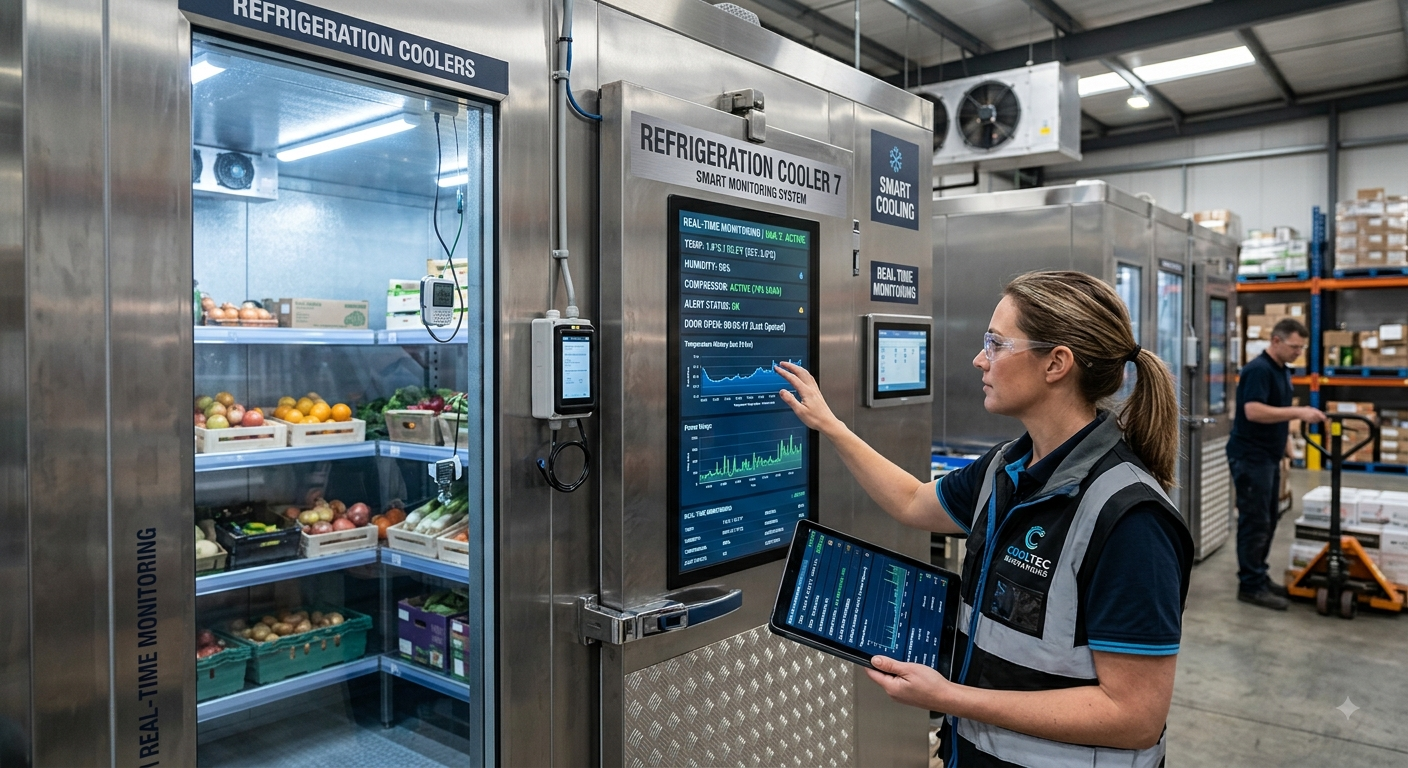
IoT-enabled refrigeration systems can collect information such as temperature, pressure, energy consumption, humidity, compressor performance, and equipment operating conditions. This information can then be analyzed to identify abnormal patterns and provide operators with actionable insights.
MarketsandMarkets identifies IoT-enabled monitoring systems and predictive maintenance capabilities as important technological developments supporting the refrigeration coolers industry.
These capabilities are helping businesses move toward more proactive refrigeration management.
Real-Time Monitoring Improves Temperature Control
Real-time monitoring is particularly important in applications where temperature deviations can result in product loss or regulatory issues.
In food retail and processing, refrigeration systems must maintain appropriate temperatures to protect perishable products. Pharmaceutical cold storage has even stricter requirements because temperature excursions can affect the quality and integrity of sensitive medicines and vaccines.
Smart refrigeration systems continuously monitor temperature conditions and can automatically generate alerts when readings move outside predefined thresholds. Operators can receive notifications remotely, enabling them to investigate potential problems before they develop into major failures.
This capability represents one of the most important Refrigeration Coolers Market Trends because it combines continuous visibility with faster decision-making.
Download PDF Brochure @ https://www.marketsandmarkets.com/pdfdownloadNew.asp?id=250448757
IoT Enables Connected Refrigeration
The integration of the Internet of Things is transforming refrigeration equipment into connected assets.
Sensors installed across compressors, condensers, evaporators, and other components can transmit operational data to centralized monitoring platforms. Cloud connectivity enables users to access information remotely across multiple facilities.
For companies operating large supermarket chains, cold-storage networks, or logistics facilities, centralized monitoring can provide visibility across geographically distributed refrigeration assets.
MarketsandMarkets identifies the adoption of IoT in refrigeration technologies as an important market opportunity.
As connectivity becomes more affordable, IoT-enabled refrigeration is expected to become increasingly common across commercial and industrial applications.
Predictive Maintenance Reduces Downtime
Another important development among Refrigeration Coolers Market Trends is the growing use of predictive maintenance.
Conventional maintenance strategies often rely on fixed schedules or reactive repairs. Predictive maintenance instead uses equipment data and analytics to identify potential failures before they occur.
For example, abnormal compressor behavior, changes in pressure, unusual temperature patterns, or increased energy consumption can indicate that equipment requires inspection.
By identifying these signals early, operators can schedule maintenance before a failure disrupts refrigeration operations.
This approach can help reduce unexpected downtime, improve equipment reliability, extend asset life, and potentially reduce maintenance costs.
AI Strengthens Smart Refrigeration
Artificial intelligence is adding another layer of intelligence to connected refrigeration systems.
AI-based analytics can process large volumes of operational data and identify patterns that may be difficult to detect through manual monitoring. Machine-learning models can potentially recognize early indicators of equipment degradation and support predictive maintenance.
AI can also assist with energy optimization by analyzing cooling demand and adjusting system operation according to changing conditions.
MarketsandMarkets specifically identifies AI-driven predictive maintenance, smart energy optimization, and real-time monitoring as important areas of technological transformation in the Refrigeration Coolers Market.
The increasing integration of AI and IoT is expected to make refrigeration systems more autonomous and data-driven.
Energy Efficiency Becomes a Market Priority
Energy consumption represents a major operating cost for refrigeration-intensive businesses. Consequently, improving energy efficiency has become a major priority for equipment manufacturers and end users.
High-efficiency compressors, condensers, evaporators, and air coolers can help reduce energy requirements while maintaining the required cooling performance.
Smart controls can further improve efficiency by adjusting refrigeration operation according to demand and operating conditions.
MarketsandMarkets identifies increasing demand for energy-efficient refrigeration systems as a key driver of the market.
This focus on efficiency is expected to encourage replacement of older refrigeration systems with modern equipment featuring advanced controls and monitoring capabilities.
Natural Refrigerants Gain Momentum
Sustainability is another major force shaping Refrigeration Coolers Market Trends.
Regulatory pressure to reduce greenhouse-gas emissions and the growing focus on low-GWP refrigeration are encouraging businesses to evaluate natural refrigerants and other environmentally preferable alternatives.
MarketsandMarkets highlights growing adoption of refrigerants such as CO₂, ammonia (NH₃), and propane, alongside low-GWP HFO solutions.
CO₂ is particularly gaining attention in commercial refrigeration applications, while ammonia remains important in industrial refrigeration. Propane and other hydrocarbons are also being evaluated for suitable applications.
The shift toward natural refrigerants is therefore influencing equipment design, system architecture, maintenance practices, and technology investments.
Cold-Chain Expansion Supports Market Growth
The expansion of cold-chain infrastructure is one of the fundamental drivers of Refrigeration Coolers Market Trends.
Growing demand for fresh and frozen foods, pharmaceuticals, temperature-sensitive products, and refrigerated logistics is increasing the need for reliable cooling infrastructure.
Cold-storage warehouses and refrigerated transportation require continuous temperature control to preserve product quality throughout the supply chain.
MarketsandMarkets identifies increasing investments in refrigerated warehouses and cold-storage facilities as a key market driver.
As cold chains expand across emerging economies, demand for modern refrigeration coolers is expected to increase.
Retail Sector Creates Strong Opportunities
Retail is an important application area for refrigeration coolers, particularly as supermarkets, hypermarkets, convenience stores, and organized food retailers expand.
Refrigeration systems are used for fresh produce, dairy products, meat, seafood, beverages, frozen foods, and other temperature-sensitive products.
MarketsandMarkets expects the retail application to register the highest CAGR during the forecast period.
Retailers are increasingly interested in intelligent refrigeration systems because energy consumption, equipment uptime, food preservation, and operational efficiency directly affect profitability.
Smart monitoring can allow retail operators to manage refrigeration assets across multiple stores from centralized platforms.
Pharmaceutical Cold Storage Drives Reliability Requirements
The pharmaceutical industry represents another important opportunity for advanced refrigeration technologies.
Pharmaceutical products often require tightly controlled storage conditions. Temperature deviations can result in product degradation, financial losses, and compliance challenges.
Smart refrigeration systems can continuously monitor storage environments and create digital records of temperature conditions.
Real-time alerts and remote monitoring can also help operators respond rapidly to equipment problems.
As pharmaceutical manufacturing, distribution, and cold-chain logistics expand, demand for reliable and intelligent refrigeration systems is expected to grow.
Digitalization Supports Remote Management
Remote management is becoming increasingly valuable as businesses operate large numbers of refrigeration assets across different locations.
Cloud-connected systems allow operators to monitor equipment performance without physically inspecting each unit. This can improve operational visibility and help organizations coordinate maintenance activities across facilities.
For large retail chains and logistics companies, centralized dashboards can provide information about refrigeration performance, energy consumption, alarms, and maintenance requirements.
This digital approach represents a major shift from isolated refrigeration equipment toward connected infrastructure.
Evaporators and Air Coolers Offer Growth Potential
By offering, the evaporators and air coolers segment is expected to register the highest CAGR during the forecast period, according to MarketsandMarkets.
These components play an important role in transferring heat and maintaining required temperatures within refrigeration systems.
Technological improvements in heat-transfer performance, energy efficiency, materials, and intelligent controls are creating opportunities for manufacturers to develop more advanced cooling solutions.
The integration of sensors and digital monitoring can further improve visibility into equipment performance.
CO₂ Refrigeration Gains Momentum
Among refrigerants, the CO₂ segment is expected to register the highest CAGR during the forecast period, according to MarketsandMarkets.
CO₂-based refrigeration systems are attracting attention because they offer a low-GWP alternative for appropriate commercial and industrial applications.
The growing focus on environmentally responsible refrigeration is encouraging retailers, food processors, and cold-chain operators to evaluate CO₂ systems.
As system designs improve and technical expertise expands, CO₂ refrigeration could play an increasingly important role in the transition toward sustainable cooling.
Asia Pacific Strengthens Market Opportunities
Asia Pacific is estimated to lead the Refrigeration Coolers Market in 2026, supported by expanding cold-chain infrastructure and increasing investment in refrigeration technologies across countries such as China, India, Japan, and Southeast Asian markets.
Growing urbanization, expanding organized retail, increasing demand for processed and frozen foods, pharmaceutical logistics, and investments in refrigerated warehouses are creating strong regional opportunities.
The development of modern cold-chain networks is particularly important in emerging markets where food distribution and pharmaceutical logistics are becoming increasingly sophisticated.
Challenges to Smart Refrigeration Adoption
Despite strong growth opportunities, several challenges could affect the adoption of advanced refrigeration technologies.
The initial cost of installing smart refrigeration systems can be higher than conventional equipment. Businesses may also need to invest in sensors, connectivity infrastructure, software platforms, cybersecurity, and employee training.
MarketsandMarkets identifies high installation and operational costs, along with a lack of skilled personnel and installation complexity, as important market challenges.
Organizations must therefore evaluate the long-term benefits of energy savings, reduced downtime, predictive maintenance, and improved operational visibility against initial implementation costs.
Future Outlook
The future of Refrigeration Coolers Market Trends will be defined by the convergence of IoT, AI, automation, predictive maintenance, energy optimization, and sustainable refrigerants.
Refrigeration equipment will increasingly become connected and intelligent, enabling operators to monitor performance continuously and respond to issues before they become costly failures.
At the same time, environmental regulations and sustainability objectives will encourage the adoption of low-GWP and natural refrigerants.
The combination of digitalization and sustainability is expected to create significant opportunities for manufacturers that can deliver high-efficiency refrigeration equipment with advanced monitoring and control capabilities.
The Refrigeration Coolers Market Trends highlight a fundamental transition from conventional cooling equipment toward intelligent, connected, energy-efficient, and sustainable refrigeration systems.
Smart cooling technologies are enabling real-time monitoring, predictive maintenance, remote management, energy optimization, and faster response to equipment problems. These capabilities are particularly valuable in retail, food processing, cold storage, logistics, and pharmaceutical applications where reliable temperature control is essential.
According to MarketsandMarkets, the global Refrigeration Coolers Market is projected to increase from USD 4.72 billion in 2026 to USD 6.85 billion by 2032, at a 6.4% CAGR.
As cold-chain infrastructure expands and businesses prioritize energy efficiency and sustainability, smart refrigeration will become increasingly important. The integration of IoT, AI, predictive analytics, advanced cooling components, and natural refrigerants will shape the next generation of refrigeration systems and create new growth opportunities across the global market.
Top 5 FAQs: Refrigeration Coolers Market Trends
1. What are the key Refrigeration Coolers Market Trends?
Key trends include the adoption of IoT-enabled monitoring, AI-powered predictive maintenance, smart controls, energy-efficient cooling systems, remote monitoring, and natural refrigerants such as CO₂ and ammonia.
2. How are smart cooling technologies transforming refrigeration?
Smart cooling technologies use sensors, connectivity, and analytics to monitor temperature, pressure, energy consumption, and equipment performance in real time. This enables faster fault detection, predictive maintenance, and improved energy management.
3. Why is IoT important for the Refrigeration Coolers Market?
IoT enables refrigeration equipment to become connected assets. Operators can remotely monitor multiple cooling systems, receive alerts about abnormal conditions, track performance, and identify maintenance requirements before equipment failure.
4. Which industries are driving demand for refrigeration coolers?
Major application areas include food and beverage, supermarkets and retail, cold-storage and logistics, food processing, pharmaceuticals, and other temperature-sensitive industries. Expanding cold-chain infrastructure is a major market growth driver.
About MarketsandMarkets™
MarketsandMarkets™ has been recognized as one of America’s Best Management Consulting Firms by Forbes, as per their recent report.
MarketsandMarkets™ is a blue ocean alternative in growth consulting and program management, leveraging a man-machine offering to drive supernormal growth for progressive organizations in the B2B space. With the widest lens on emerging technologies, we are proficient in co-creating supernormal growth for clients across the globe.
Today, 80% of Fortune 2000 companies rely on MarketsandMarkets, and 90 of the top 100 companies in each sector trust us to accelerate their revenue growth. With a global clientele of over 13,000 organizations, we help businesses thrive in a disruptive ecosystem.
The B2B economy is witnessing the emergence of $25 trillion in new revenue streams that are replacing existing ones within this decade. We work with clients on growth programs, helping them monetize this $25 trillion opportunity through our service lines – TAM Expansion, Go-to-Market (GTM) Strategy to Execution, Market Share Gain, Account Enablement, and Thought Leadership Marketing.
Built on the ‘GIVE Growth’ principle, we collaborate with several Forbes Global 2000 B2B companies to keep them future-ready. Our insights and strategies are powered by industry experts, cutting-edge AI, and our Market Intelligence Cloud, KnowledgeStore™, which integrates research and provides ecosystem-wide visibility into revenue shifts.
To find out more, visit www.MarketsandMarkets™.com or follow us on Twitter , LinkedIn and Facebook .
Contact:
Mr. Rohan Salgarkar
MarketsandMarkets™ INC.
1615 South Congress Ave.
Suite 103, Delray Beach, FL 33445
USA: +1-888-600-6441
