Temperature measurement plays a critical role in maintaining safety, efficiency, and operational reliability across modern industries. From industrial manufacturing and automotive electronics to healthcare equipment and pharmaceutical processing, accurate temperature monitoring is essential for controlling processes, protecting equipment, and ensuring product quality. Among the various temperature sensing technologies available, Resistive Temperature Detectors (RTDs) are widely recognized for their accuracy, stability, repeatability, and long-term reliability.
The increasing adoption of industrial automation, smart manufacturing, electric vehicles, and advanced medical technologies is creating new opportunities for the global RTD temperature sensor industry. RTD Temperature Sensor Market Growth is being supported by rising demand for precise thermal monitoring, expanding Internet of Things (IoT) applications, and increasing investments in advanced manufacturing infrastructure.
According to MarketsandMarkets, the global Resistive Temperature Detector (RTD) Temperature Sensor Market is projected to grow from USD 1.64 billion in 2025 to USD 1.96 billion by 2030, registering a compound annual growth rate (CAGR) of 3.7% during the forecast period.
The growing importance of process automation, predictive maintenance, energy efficiency, and temperature-sensitive applications is expected to strengthen the adoption of RTD sensors across several end-user industries.
What Is Driving RTD Temperature Sensor Market Growth?
Several technological and industrial developments are accelerating the adoption of RTD temperature sensors worldwide.
1. Increasing Demand for Industrial Automation
Industrial automation is one of the major factors contributing to RTD Temperature Sensor Market Growth. Manufacturing facilities are increasingly adopting automated production lines, intelligent control systems, robotics, and Industry 4.0 technologies.
These applications require accurate temperature measurement to maintain process consistency, improve product quality, and prevent equipment failures.
RTD sensors are commonly used in industrial environments because they provide stable and repeatable temperature measurements. They are particularly valuable in applications where precise thermal control is essential.
Industries such as chemicals, oil and gas, power generation, pharmaceuticals, and food processing depend on RTD sensors to monitor operating temperatures and maintain process efficiency.
The integration of RTD sensors with programmable logic controllers (PLCs), supervisory control and data acquisition (SCADA) systems, and industrial IoT platforms is further expanding their applications.
2. Growing Adoption of Industry 4.0 and IoT Technologies
The transition toward smart manufacturing is creating demand for connected temperature sensing technologies.
Industrial IoT systems allow manufacturers to collect real-time temperature information from machines, production lines, and equipment. This data helps operators identify unusual temperature variations and take preventive action before equipment failures occur.
Digital RTD sensors are gaining attention because of their accuracy, noise immunity, and compatibility with modern electronic systems.
The increasing adoption of connected sensors and intelligent monitoring platforms is creating additional opportunities for manufacturers and strengthening the RTD Temperature Sensor Market Growth outlook.
3. Increasing Focus on Predictive Maintenance
Unexpected equipment failures can lead to production delays, financial losses, and operational disruptions.
RTD sensors support predictive maintenance by continuously monitoring temperature changes in industrial machinery, electrical equipment, and critical manufacturing processes.
When integrated with analytics platforms, temperature information can help identify abnormal operating conditions and potential equipment problems.
As industries increasingly prioritize operational efficiency and reduced maintenance costs, demand for reliable temperature sensing technologies is expected to increase.
Download PDF Brochure @ https://www.marketsandmarkets.com/pdfdownloadNew.asp?id=167152360
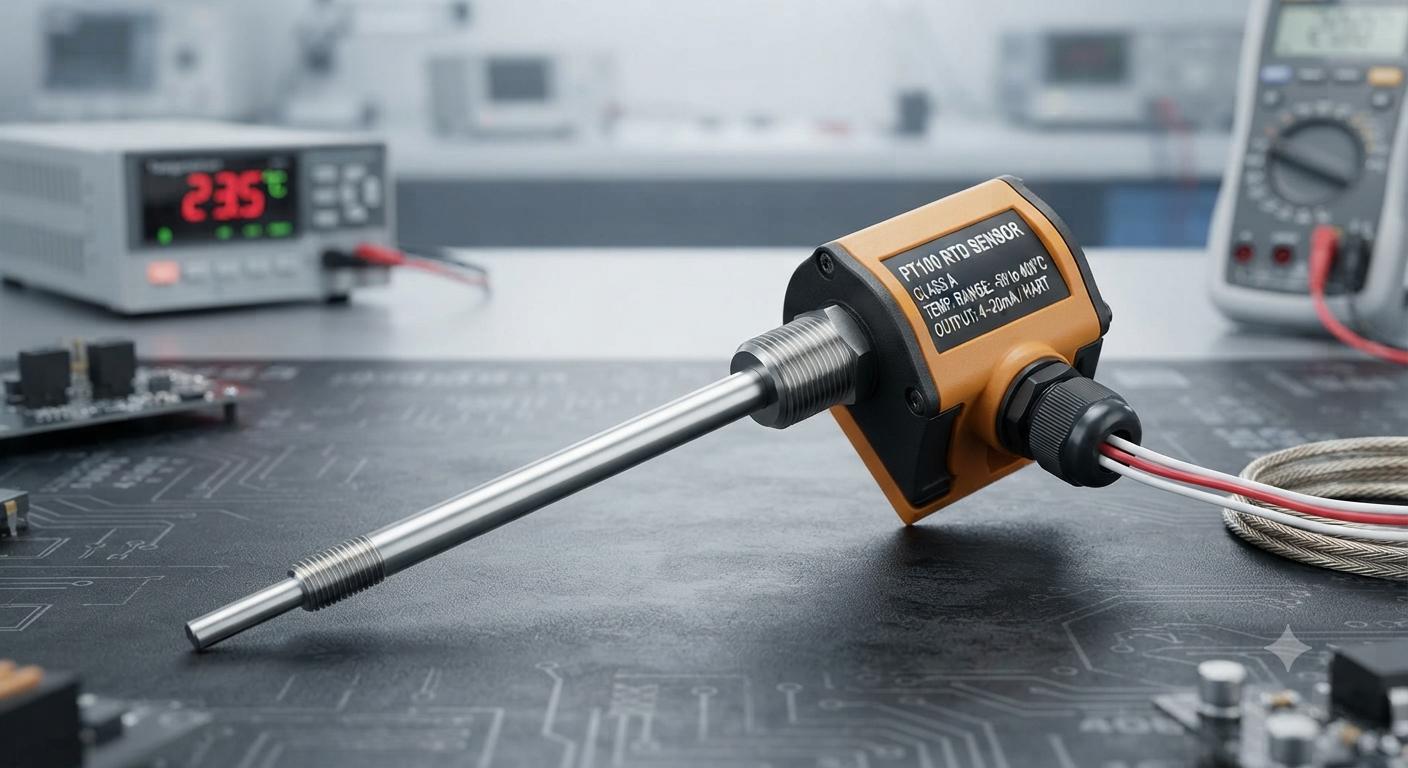
Industrial Sector: A Major Application Area for RTD Temperature Sensors
The industrial sector represents an important application area for RTD temperature sensors because precise thermal measurement is essential across multiple manufacturing and processing operations.
Chemical and Petrochemical Industries
Chemical manufacturing processes often involve temperature-sensitive reactions that require accurate monitoring and control.
RTD sensors are used in reactors, storage tanks, pipelines, heat exchangers, and processing equipment to maintain appropriate operating temperatures.
Their stability and measurement repeatability make them suitable for applications requiring consistent process control.
Oil and Gas Industry
The oil and gas sector relies on temperature monitoring across exploration, production, refining, transportation, and processing operations.
RTD sensors are used to monitor temperatures in pipelines, compressors, pumps, refineries, and industrial processing systems.
Reliable temperature measurement supports operational safety, equipment protection, and process optimization.
Power Generation
Power generation facilities require accurate temperature monitoring across turbines, generators, transformers, and other electrical equipment.
RTD sensors help operators monitor equipment conditions and maintain efficient operating performance.
As investments in electricity infrastructure and renewable energy systems increase, demand for reliable temperature measurement technologies is expected to remain important.
Food and Beverage Processing
Food processing operations require accurate temperature monitoring to maintain product quality, safety, and consistency.
RTD sensors are used in pasteurization, refrigeration, storage, and food manufacturing processes.
Their measurement stability supports temperature control across different stages of production.
Automotive Sector: Supporting Electrification and Advanced Vehicle Electronics
The automotive industry is creating new opportunities for RTD temperature sensor manufacturers through increasing vehicle electrification and the growing complexity of automotive electronic systems.
Modern vehicles contain numerous temperature-sensitive components that require accurate monitoring to ensure reliability, efficiency, and safety.
Electric Vehicle Battery Thermal Management
Electric vehicles depend on battery systems that must operate within appropriate temperature ranges.
RTD sensors can support temperature monitoring in battery packs, battery management systems, charging infrastructure, and associated thermal management applications.
Accurate temperature information helps vehicle control systems manage battery operating conditions and identify potential thermal abnormalities.
The expansion of electric vehicle production is therefore creating additional opportunities for advanced temperature sensing technologies.
Electric Motor and Power Electronics Monitoring
Electric motors, inverters, converters, and other power electronics generate heat during operation.
RTD sensors can be used to monitor component temperatures and support thermal management strategies.
As automotive manufacturers focus on improving vehicle efficiency and powertrain performance, reliable temperature monitoring is becoming increasingly important.
Advanced Automotive Electronics
Modern vehicles integrate sophisticated electronic systems, including advanced driver assistance systems, onboard computers, and intelligent power management technologies.
These systems require reliable thermal monitoring to support performance and component protection.
The growing integration of electronic technologies into conventional, hybrid, and electric vehicles is expected to support long-term RTD Temperature Sensor Market Growth.
Healthcare Sector: Expanding Opportunities in Medical Temperature Monitoring
Healthcare is another important application area for precision temperature sensing technologies. Medical equipment, laboratory systems, pharmaceutical manufacturing, and patient monitoring applications depend on accurate temperature measurement.
Although healthcare is not listed as a separate end-user category in the specified MarketsandMarkets report segmentation, it represents a relevant application area for RTD technology.
Medical Equipment and Diagnostic Systems
Medical equipment often requires stable temperature conditions to ensure reliable performance.
RTD sensors can be integrated into diagnostic instruments, laboratory equipment, and medical devices to monitor internal operating temperatures.
Their accuracy and long-term stability make them suitable for applications where consistent thermal measurement is important.
Pharmaceutical Manufacturing
Pharmaceutical manufacturing involves temperature-sensitive processes, including drug formulation, storage, processing, and quality control.
RTD sensors help monitor temperature conditions in manufacturing equipment, processing systems, and controlled storage environments.
Accurate monitoring supports process consistency and helps pharmaceutical manufacturers maintain appropriate operating conditions.
Laboratory and Healthcare Infrastructure
Hospitals, diagnostic laboratories, and research facilities use temperature monitoring systems across refrigeration equipment, laboratory instruments, and specialized medical infrastructure.
RTD sensors can support reliable measurement in these applications, particularly where temperature stability is essential.
The growing adoption of advanced healthcare equipment and laboratory automation is creating additional opportunities for precision temperature sensing solutions.
Technology Trends Reshaping the RTD Temperature Sensor Market
Technological innovation is improving RTD sensor performance and expanding their application possibilities.
1. Digital RTD Temperature Sensors
Digital output is expected to register the highest CAGR during the forecast period, according to MarketsandMarkets.
Digital RTD solutions offer advantages such as improved noise immunity, easier integration with electronic systems, and compatibility with IoT-enabled monitoring platforms.
They can also reduce signal-conditioning complexity and support efficient data communication.
2. Platinum-Based RTD Sensors
Platinum is widely used in RTD manufacturing because of its stability, accuracy, and repeatable resistance-temperature characteristics.
Platinum RTDs are commonly used in industrial applications requiring reliable temperature measurement over extended operating periods.
3. Miniaturization and Advanced Sensor Integration
Manufacturers are developing compact temperature sensors that can be integrated into smaller electronic systems and sophisticated industrial equipment.
Miniaturized RTD solutions are becoming increasingly relevant for automotive electronics, medical equipment, and advanced manufacturing applications.
4. Wireless and IoT-Enabled Temperature Monitoring
The integration of RTD sensors with wireless communication and IoT platforms is enabling remote temperature monitoring and real-time data collection.
These technologies support predictive maintenance, equipment diagnostics, and intelligent process management.
Market Segmentation: Material, Output and End-User Industry
The MarketsandMarkets report categorizes the RTD temperature sensor market across several important segments.
By Material:
- Platinum
- Nickel
- Copper
By Output:
- Digital
- Analog
By End-User Industry:
- Chemicals
- Oil and Gas
- Consumer Electronics
- Energy and Power
- Automotive
- Food and Beverage
- Other End-User Industries
According to MarketsandMarkets, the consumer electronics segment is expected to hold the largest market share in 2025, while the digital output segment is projected to record the highest CAGR during the forecast period.
This segmentation highlights the broad applicability of RTD technologies across industrial, commercial, and electronic applications.
Regional Outlook: Asia Pacific Leads the RTD Temperature Sensor Market
Asia Pacific is expected to dominate the global RTD temperature sensor market, accounting for approximately 48.0% of the market share in 2025, according to MarketsandMarkets.
The region benefits from a strong manufacturing ecosystem, expanding industrial automation, growing electronics production, and increasing investments in automotive and energy infrastructure.
China, Japan, India, and South Korea are important markets supporting the adoption of advanced temperature sensing technologies.
Key regional growth drivers include:
- Increasing investments in smart manufacturing.
- Expansion of automotive and electric vehicle production.
- Growing demand for industrial automation.
- Increasing electronics and semiconductor manufacturing.
- Rising adoption of IoT-enabled monitoring solutions.
The expansion of pharmaceutical manufacturing and healthcare infrastructure is also creating opportunities for precision temperature measurement technologies across the region.
Challenges Affecting RTD Temperature Sensor Market Growth
Despite favorable growth opportunities, the market faces several challenges.
Fluctuating Raw Material Costs: Changes in the prices of platinum, nickel, copper, and other materials can affect manufacturing expenses and product pricing.
Stringent Performance Requirements: Advanced applications require sensors with high accuracy, long-term stability, and reliable performance under demanding operating conditions.
Competition from Alternative Technologies: Thermocouples and thermistors offer advantages in certain temperature measurement applications, creating competition for RTD manufacturers.
Integration Complexity: Connecting traditional temperature sensors with modern industrial control systems and digital platforms can require additional signal-conditioning and system integration capabilities.
Addressing these challenges through material innovation, improved manufacturing processes, and advanced sensor design will be important for industry participants.
Competitive Landscape: Key Companies in the RTD Temperature Sensor Market
The global RTD temperature sensor market includes established sensor manufacturers, semiconductor companies, and industrial automation technology providers.
Some prominent market participants identified by MarketsandMarkets include:
- Honeywell International Inc.
- Texas Instruments Incorporated
- Emerson Electric Co.
- Endress+Hauser Group Services AG
- Amphenol Corporation
- Siemens AG
- ABB Ltd.
- TE Connectivity
- Pyromation
These companies are focusing on product innovation, digital sensing technologies, improved accuracy, sensor miniaturization, and application-specific temperature monitoring solutions.
Strategic partnerships, portfolio expansion, and investments in advanced sensing technologies are helping manufacturers strengthen their competitive positions.
Future Outlook: What Lies Ahead for the RTD Temperature Sensor Industry?
The future of the RTD temperature sensor industry will be shaped by industrial digitalization, vehicle electrification, connected healthcare technologies, and increasing demand for precision monitoring.
Digital RTDs are expected to gain traction as manufacturers increasingly integrate sensors with IoT platforms and intelligent control systems.
The automotive sector will create additional opportunities through electric vehicle battery monitoring, power electronics, and advanced thermal management systems.
Industrial automation will remain an important source of demand, particularly across chemicals, oil and gas, power generation, and pharmaceutical manufacturing.
Healthcare applications will also offer opportunities through diagnostic equipment, laboratory automation, and pharmaceutical temperature monitoring.
Furthermore, increasing investments in smart manufacturing and connected infrastructure will encourage the development of more accurate, compact, and intelligent temperature sensing solutions.
The global RTD temperature sensor industry is evolving as industries increasingly prioritize precision measurement, operational efficiency, automation, and equipment reliability.
Industrial manufacturing, automotive electrification, and healthcare technology are creating important application opportunities for advanced temperature sensing solutions.
The increasing adoption of digital RTDs, IoT-enabled monitoring, and predictive maintenance technologies will continue to influence market development.
Ultimately, RTD Temperature Sensor Market Growth will be supported by the expanding need for accurate, stable, and reliable temperature measurement across modern industrial processes, automotive systems, and healthcare applications.
As technology advances, RTD sensors will remain an important component of intelligent monitoring systems and next-generation temperature management solutions.
Frequently Asked Questions (FAQs)
1. What is the projected size of the RTD Temperature Sensor Market by 2030?
According to MarketsandMarkets, the global RTD temperature sensor market is projected to grow from USD 1.64 billion in 2025 to USD 1.96 billion by 2030, registering a CAGR of 3.7%.
2. What are the major factors driving RTD Temperature Sensor Market Growth?
Key growth drivers include increasing industrial automation, rising adoption of IoT-enabled monitoring systems, growing electric vehicle production, demand for precise temperature measurement, and expansion of smart manufacturing.
3. Which industries are the major end users of RTD temperature sensors?
Major end-user industries include chemicals, oil and gas, consumer electronics, energy and power, automotive, and food and beverage. Healthcare and pharmaceutical applications also offer opportunities for RTD sensor adoption.
4. Which region dominates the global RTD Temperature Sensor Market?
Asia Pacific is expected to dominate the market, accounting for approximately 48.0% of the global market share in 2025, supported by industrial growth, electronics manufacturing, automotive production, and increasing automation investments.
5. What are the key trends shaping the RTD Temperature Sensor Market?
Major trends include increasing adoption of digital RTD sensors, IoT-enabled temperature monitoring, sensor miniaturization, wireless connectivity, predictive maintenance, and growing demand for accurate temperature measurement in electric vehicles and industrial applications.
About MarketsandMarkets™
MarketsandMarkets™ has been recognized as one of America’s Best Management Consulting Firms by Forbes, as per their recent report.
MarketsandMarkets™ is a blue ocean alternative in growth consulting and program management, leveraging a man-machine offering to drive supernormal growth for progressive organizations in the B2B space. With the widest lens on emerging technologies, we are proficient in co-creating supernormal growth for clients across the globe.
Today, 80% of Fortune 2000 companies rely on MarketsandMarkets, and 90 of the top 100 companies in each sector trust us to accelerate their revenue growth. With a global clientele of over 13,000 organizations, we help businesses thrive in a disruptive ecosystem.
The B2B economy is witnessing the emergence of $25 trillion in new revenue streams that are replacing existing ones within this decade. We work with clients on growth programs, helping them monetize this $25 trillion opportunity through our service lines – TAM Expansion, Go-to-Market (GTM) Strategy to Execution, Market Share Gain, Account Enablement, and Thought Leadership Marketing.
Built on the ‘GIVE Growth’ principle, we collaborate with several Forbes Global 2000 B2B companies to keep them future-ready. Our insights and strategies are powered by industry experts, cutting-edge AI, and our Market Intelligence Cloud, KnowledgeStore™, which integrates research and provides ecosystem-wide visibility into revenue shifts.
To find out more, visit www.MarketsandMarkets™.com or follow us on Twitter , LinkedIn and Facebook .
Contact:
Mr. Rohan Salgarkar
MarketsandMarkets™ INC.
1615 South Congress Ave.
Suite 103, Delray Beach, FL 33445
USA: +1-888-600-6441
