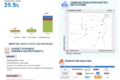
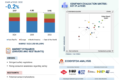
The global single-cell sequencing market is on a strong growth trajectory, projected to reach USD 3.46 billion by 2030, up from USD 1.95 billion in 2025, growing at a CAGR of 12.2% during the forecast period.
Single-cell sequencing (SCS) is revolutionizing modern genomics by enabling researchers to analyze the genetic material of individual cells. This powerful technology provides deeper insights into cellular diversity, disease mechanisms, and treatment responses, making it a cornerstone in precision medicine and advanced biomedical research.
What is Single-Cell Sequencing?
Single-cell sequencing is an advanced genomic technique that allows scientists to study the DNA or RNA of individual cells rather than bulk cell populations. This helps in:
- Identifying rare cell populations
- Understanding tumor heterogeneity
- Mapping immune responses
- Accelerating biomarker discovery
- Enabling personalized treatment strategies
Download PDF Brochure: https://www.marketsandmarkets.com/pdfdownloadNew.asp?id=244864213
Market Overview & Key Highlights
- 🌎 North America dominated the market with a 45.3% share in 2024
- 🧪 Products segment held the largest share (75.3%) by offering
- 🔬 Consumables expected to grow fastest (CAGR 11.4%)
- ⚙️ Pre-sequencing workflow dominated the market
- 🧫 Sequencing services to witness fastest growth (2025–2030)
- 🧬 scRNA-seq technology led the sequencing type segment
- 🧠 Research applications accounted for the largest share
- 🎓 Academic & research institutions are the leading end users
Key Players Driving Innovation
Several leading companies are shaping the single-cell sequencing landscape through innovation and strategic expansion:
- 10x Genomics, Inc.
- Illumina, Inc.
- BD
Emerging startups and SMEs also making a strong impact include:
- Precision Cell Systems (S2 Genomics, Inc.)
- BioSkryb Genomics
- ScaleBio
Additionally, companies like Roche are investing in next-generation platforms such as SBX technology to improve scalability, accuracy, and cost efficiency.
Market Dynamics
Drivers
1. Advancements in Single-Cell Technologies
Continuous innovation in sequencing platforms and workflows is enhancing throughput, sensitivity, and accuracy.
2. Rising Demand for Precision Medicine
The growing focus on personalized healthcare and targeted therapies is accelerating adoption.
Restraints
High Cost of Sequencing
Despite advancements, the high cost of instruments, consumables, and services remains a barrier for widespread adoption.
Request Sample Pages : https://www.marketsandmarkets.com/requestsampleNew.asp?id=244864213
Opportunities
1. Multi-Omics Integration
Combining genomics, transcriptomics, and proteomics offers comprehensive biological insights.
2. Emergence of SBX Technology
Next-gen sequencing platforms are expected to overcome current limitations in cost and scalability.
Challenges
- Handling high-dimensional data complexity
- Managing biological variability and cell heterogeneity
- Need for advanced computational tools and expertise
Trends & Disruptions Shaping the Market
The single-cell sequencing ecosystem is evolving rapidly due to technological disruptions:
- 🤖 AI & Machine Learning Integration
Enhances data analysis, reduces costs, and improves scalability - 🧬 Multi-Omics Approaches
Enables deeper biological insights by integrating multiple data layers - ⚡ Advanced Sequencing Platforms
Innovations like SBX are pushing the boundaries of performance
These trends are not only transforming research capabilities but also creating new opportunities for sequencing providers and end users.
End-User Insights
Products Market
- Dominated by academic & research institutions
- Followed by pharma, biotech companies, hospitals, and CROs
Services Market
- Pharmaceutical & biotechnology companies expected to grow fastest due to increasing outsourcing trends
Future Outlook
The single-cell sequencing market is poised for significant expansion, driven by:
- Rapid technological advancements
- Growing demand for personalized medicine
- Increasing applications in oncology, immunology, and neurology
- Integration of AI-driven analytics
As innovation continues to lower costs and improve scalability, single-cell sequencing will become more accessible, unlocking new frontiers in biomedical research and clinical diagnostics.
Conclusion
Single-cell sequencing is transforming the way we understand biology at the most fundamental level. With strong market growth, expanding applications, and continuous innovation, the industry is set to play a critical role in the future of healthcare and precision medicine.
Inquire Before Buying @ https://www.marketsandmarkets.com/Enquiry_Before_BuyingNew.asp?id=244864213