Smart Home Market Analysis: Market Overview and Growth Outlook
The Smart Home Market Analysis highlights a rapid transformation in residential environments as artificial intelligence (AI), the Internet of Things (IoT), wireless connectivity, cloud platforms, and automation become increasingly integrated into everyday living. Smart home technologies are moving beyond standalone connected devices toward integrated ecosystems that enable homeowners to control, monitor, and automate lighting, security, HVAC, entertainment, appliances, healthcare systems, and energy consumption.
According to MarketsandMarkets, the global smart home market is projected to reach USD 230.76 billion in 2026 and USD 450.20 billion by 2032, exhibiting a CAGR of 11.8%. Increasing internet penetration, proliferation of connected devices, rising disposable income, demand for remote monitoring, and growing consumer emphasis on safety, convenience, and energy efficiency are among the major factors supporting market growth.
The Smart Home Market Analysis indicates that the industry is increasingly focused on integrated and intelligent residential ecosystems. Consumers are seeking solutions that can communicate with each other and provide centralized control through smartphones, tablets, voice assistants, wall panels, and other interfaces.
AI and IoT Transforming the Smart Home Market
Artificial intelligence is becoming a major technology catalyst within the smart home ecosystem. AI-powered systems can analyze user behavior, occupancy patterns, environmental conditions, and device data to automate household functions and provide more personalized experiences.
AI can support intelligent lighting, predictive HVAC control, security monitoring, voice-based interaction, appliance management, and energy optimization. Instead of simply responding to commands, connected systems can increasingly anticipate user requirements and adjust home environments automatically.
IoT is equally important to the Smart Home Market Analysis, as connected sensors, appliances, cameras, thermostats, locks, lighting systems, and entertainment devices create continuous communication between household assets. IoT-enabled ecosystems allow users to remotely monitor and manage devices while providing data that can support automation and predictive control.
MarketsandMarkets identifies AI-powered automation growth and expansion of IoT ecosystems as important drivers of the smart home market.
Connected Devices and Integrated Smart Home Ecosystems
The smart home industry is shifting from individual connected products toward integrated platforms. Earlier smart home adoption often centered on products such as smart speakers, connected bulbs, security cameras, or thermostats. Increasingly, consumers are looking for ecosystems capable of integrating multiple functions through centralized control.
This transition is an important trend in the Smart Home Market Analysis because interoperability and seamless device communication can improve convenience and expand the value of connected technologies.
Smart home platforms can connect lighting with security, HVAC with occupancy sensors, and energy management systems with smart appliances. These integrated environments can enable automated responses based on time, occupancy, temperature, security events, and energy consumption.
Cloud computing and edge technologies can further support these ecosystems by enabling data processing, remote access, analytics, and faster device responses.
Download PDF Brochure @ https://www.marketsandmarkets.com/pdfdownloadNew.asp?id=121
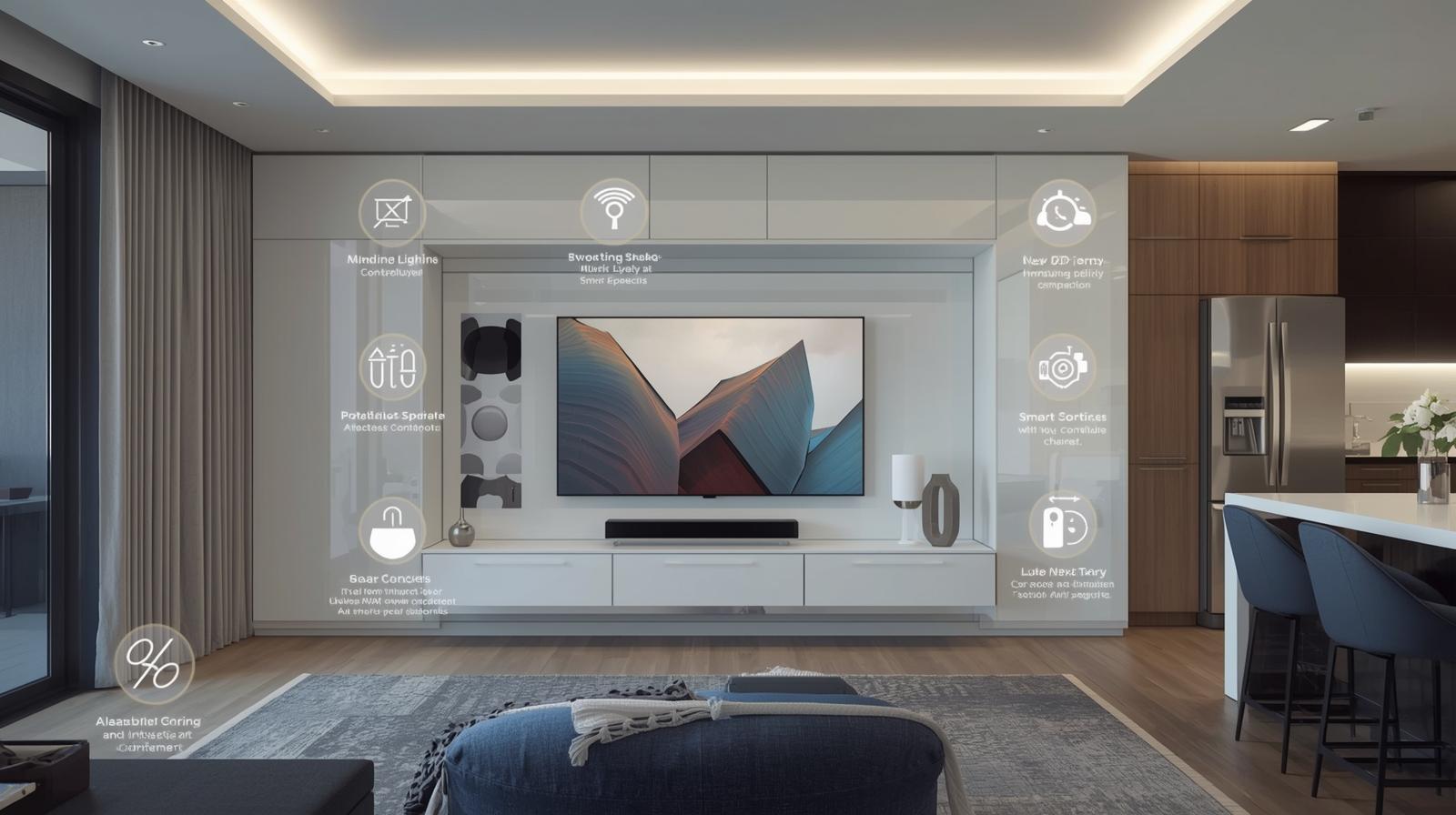
Smart Security and Access Control Driving Adoption
Safety and security remain major applications within the smart home market. Increasing adoption of connected cameras, smart locks, alarm systems, motion sensors, video doorbells, and digital access-control technologies is strengthening demand for intelligent security solutions.
Smart security systems allow homeowners to monitor properties remotely, receive real-time alerts, manage access, and review security events through mobile applications. AI-based analytics can further support intelligent threat detection and automated alerts.
The Smart Home Market Analysis shows that consumer demand for greater safety, security, remote monitoring, and convenience is supporting continued investment in connected security technologies. MarketsandMarkets identifies growing smart security demand as one of the key market growth drivers.
Smart HVAC and Energy Management Creating Growth Opportunities
Energy efficiency is becoming increasingly important as households seek to reduce energy consumption and operating costs. Smart HVAC systems, connected thermostats, smart lighting, energy monitoring platforms, and automated appliances are enabling homeowners to manage energy use more effectively.
MarketsandMarkets expects Smart Home HVAC to register the highest CAGR among product types, at approximately 20%, highlighting the growing importance of intelligent heating, ventilation, and air-conditioning technologies.
AI and IoT can make HVAC systems more responsive by combining temperature, occupancy, weather, and usage data. Automated systems can adjust heating and cooling based on household conditions, potentially improving comfort while reducing unnecessary energy consumption.
Government initiatives supporting energy efficiency and green buildings are also creating opportunities for smart lighting, thermostats, energy-management systems, and other connected solutions.
Wireless Connectivity Accelerating Smart Home Adoption
Wireless technologies are playing a critical role in the expansion of connected homes because they simplify installation and enable flexible device placement. According to MarketsandMarkets, the wireless segment accounted for approximately 64% of the smart home market by protocol and communication technology in 2025.
Wireless connectivity supports smart lighting, security systems, appliances, HVAC controls, entertainment devices, and other residential applications. It is particularly valuable for existing homes where installing new wired infrastructure may involve significant cost or structural modifications.
The growing availability of reliable wireless connectivity is therefore supporting both new smart home deployments and upgrades of traditional residential environments.
Retrofit Installations Supporting Market Expansion
The expansion of retrofit installations represents another important trend identified in the Smart Home Market Analysis. A large installed base of conventional homes provides significant opportunities for homeowners to upgrade existing properties with connected technologies.
Retrofit solutions can include wireless lighting controls, smart thermostats, security cameras, smart locks, energy monitors, and connected appliances. Advances in wireless communication, plug-and-play devices, and app-based configuration are making smart home upgrades easier to implement without extensive structural modifications.
MarketsandMarkets expects retrofit installations to register fast growth during the forecast period, supported by demand for greater convenience, security, and energy optimization.
Smart Healthcare and Wellness Applications
Healthcare and wellness are becoming increasingly connected with smart residential environments. Smart home healthcare solutions can support remote monitoring, connected medical devices, environmental monitoring, and technologies designed to improve comfort and independent living.
Connected devices can collect and communicate information through home networks, while AI and cloud technologies can support data analysis and remote monitoring. These capabilities can be particularly relevant for aging populations, individuals requiring continuous monitoring, and households seeking greater health and wellness management.
The expansion of smart healthcare solutions demonstrates how the smart home ecosystem is moving beyond traditional automation into broader residential digital services.
Asia Pacific Emerging as a High-Growth Smart Home Market
Regional expansion is an important component of the Smart Home Market Analysis. Asia Pacific is projected to register the highest CAGR of approximately 17% during the forecast period.
Rapid urbanization, increasing internet penetration, expanding digital infrastructure, rising consumer purchasing power, and growing adoption of connected technologies are supporting smart home deployment across the region. Markets such as China, India, Japan, and South Korea are contributing to the expansion of connected residential technologies.
The region also presents opportunities for affordable connected devices, wireless technologies, smart security, energy management, and integrated home automation platforms.
Key Challenges in the Smart Home Market
Despite strong growth opportunities, the Smart Home Market Analysis identifies several challenges that can affect adoption. High upfront costs associated with devices, installation, integration, and system upgrades can limit adoption, particularly among price-sensitive consumers.
Data security and privacy concerns are also important because connected homes generate and transmit potentially sensitive household information. Dependence on stable internet connectivity can create additional limitations in areas with weaker network infrastructure.
Interoperability remains another challenge. Devices from different manufacturers may use different communication protocols or platforms, making seamless integration more difficult. MarketsandMarkets identifies interoperability gaps and the lack of unified standards as significant challenges for smart home ecosystem development.
Competitive Landscape of the Smart Home Market
The smart home market includes companies from technology, building automation, security, HVAC, consumer electronics, and energy-management industries. Major companies identified by MarketsandMarkets include Schneider Electric, Siemens, Amazon, Honeywell International, ASSA ABLOY, Johnson Controls, Robert Bosch, ADT, Daikin Industries, and ABB.
Competition is increasingly focused on integrated ecosystems rather than individual products. Companies are developing connected platforms that combine hardware, software, AI, analytics, cloud connectivity, and automation capabilities.
Strategic partnerships and ecosystem development are also becoming important as manufacturers seek to improve interoperability and provide consumers with more comprehensive connected-home experiences.
Future Outlook for Smart Home Market Analysis
The future outlook for the Smart Home Market Analysis remains closely linked to the convergence of AI, IoT, wireless connectivity, cloud computing, energy management, and residential automation.
The market is expected to move increasingly toward intelligent ecosystems in which connected devices communicate automatically and adapt to household conditions. AI can support predictive automation, personalized experiences, security analytics, and energy optimization, while IoT provides the connectivity layer required to bring these capabilities together.
With the market projected to increase from USD 230.76 billion in 2026 to USD 450.20 billion by 2032, the smart home industry is transitioning toward more integrated, intelligent, secure, and energy-efficient residential environments.
As consumers, residential developers, technology providers, and utilities increasingly prioritize convenience, safety, sustainability, and digital connectivity, smart home technologies are expected to become an increasingly important component of modern residential infrastructure.
FAQs
1. What is the Smart Home Market size?
According to MarketsandMarkets, the global Smart Home Market is projected to grow from USD 230.76 billion in 2026 to USD 450.20 billion by 2032, at a CAGR of 11.8%.
2. What are the major drivers of the Smart Home Market?
Major drivers include increasing internet penetration, connected device adoption, AI-powered automation, expansion of IoT ecosystems, demand for smart security, remote monitoring, and growing focus on energy efficiency.
3. Which smart home product segment is expected to grow fastest?
Smart Home HVAC systems are expected to register the highest CAGR among product types, at approximately 20%, according to MarketsandMarkets.
4. Why are wireless technologies important for smart homes?
Wireless technologies simplify installation, reduce infrastructure requirements, and enable flexible connectivity among smart lighting, security, HVAC, appliances, and entertainment systems.
5. What are the major challenges in the Smart Home Market?
Key challenges include high upfront costs, cybersecurity and data-security concerns, dependence on stable connectivity, interoperability gaps, lack of unified standards, and potential device malfunction
