The global Smart Home Market is experiencing significant growth as consumers increasingly adopt connected devices, intelligent automation, and energy-efficient technologies. Smart homes are transforming traditional residential environments into connected ecosystems where lighting, security systems, heating, ventilation and air conditioning (HVAC), entertainment devices, and household appliances can be monitored and controlled remotely. The integration of artificial intelligence (AI), the Internet of Things (IoT), cloud computing, and wireless connectivity is making homes more convenient, secure, and efficient.
The growing availability of affordable smart devices, increasing internet penetration, and rising consumer expectations for personalized living experiences are supporting the expansion of the Smart Home Market. Homeowners are adopting smart cameras, connected locks, intelligent thermostats, automated lighting, smart speakers, and energy management systems to improve everyday living. At the same time, residential builders and property developers are incorporating connected technologies into new housing projects to differentiate their offerings and improve energy performance.
According to MarketsandMarkets, the global Smart Home Market is projected to grow from USD 230.76 billion in 2026 to USD 450.20 billion by 2032, registering a compound annual growth rate (CAGR) of 11.8% during the forecast period. Growth is supported by rising demand for remote home monitoring, increasing disposable income in emerging economies, growing awareness of energy efficiency, and expanding adoption of connected devices.
As smart home technologies become more integrated, the market is moving beyond individual connected products toward intelligent ecosystems that can automate multiple household functions. This transition is creating opportunities for technology providers, electronics manufacturers, home security companies, software developers, and energy management solution providers.
Top 10 Key Takeaways
- The Smart Home Market is projected to reach USD 450.20 billion by 2032.
- The market is expected to grow at a CAGR of 11.8% between 2026 and 2032.
- AI is enabling more personalized and intelligent residential automation.
- Connected cameras, smart locks, and monitoring systems are supporting demand for residential security.
- IoT technologies are connecting household devices through integrated platforms.
- Smart HVAC and energy management systems are creating opportunities for efficiency-focused solutions.
- Wireless technologies support flexible installations and easier upgrades.
- Asia Pacific is projected to be the fastest-growing regional market.
- High costs, cybersecurity risks, and interoperability issues remain key challenges.
- Integrated ecosystems, affordable devices, and intelligent automation are expected to shape future market opportunities.
Smart Home Market Growth and Industry Outlook
The Smart Home Market is evolving as digital connectivity becomes an increasingly important part of residential infrastructure. Consumers are looking for solutions that simplify daily activities, strengthen home security, and provide greater control over household energy consumption. Smart home technologies address these needs by connecting devices through communication networks and enabling centralized management through mobile applications, voice assistants, and automated control systems.
The expansion of high-speed internet and smartphone usage has made smart home products more accessible to households. Consumers can now remotely monitor security cameras, adjust indoor temperatures, control lighting, manage appliances, and receive alerts about unusual activities. These capabilities are particularly attractive to busy professionals, families, property owners, and individuals seeking greater convenience.
The market is also benefiting from the development of integrated smart home platforms. Rather than operating each device independently, consumers increasingly expect lighting, entertainment, climate control, and security systems to work together. Such integration can improve usability and support more advanced automation, including adjusting indoor temperatures according to occupancy or switching off lights when rooms are unoccupied.
Energy management is another important area of growth. Smart thermostats, connected lighting, intelligent plugs, and energy monitoring systems help households understand and manage electricity consumption. As consumers become more conscious of energy costs and environmental sustainability, demand for solutions that support efficient resource use is expected to increase.
The Smart Home Market is therefore positioned for continued expansion, supported by technological advancements, evolving consumer preferences, and the growing integration of digital services into residential environments.
Download PDF Brochure @ https://www.marketsandmarkets.com/pdfdownloadNew.asp?id=203080758
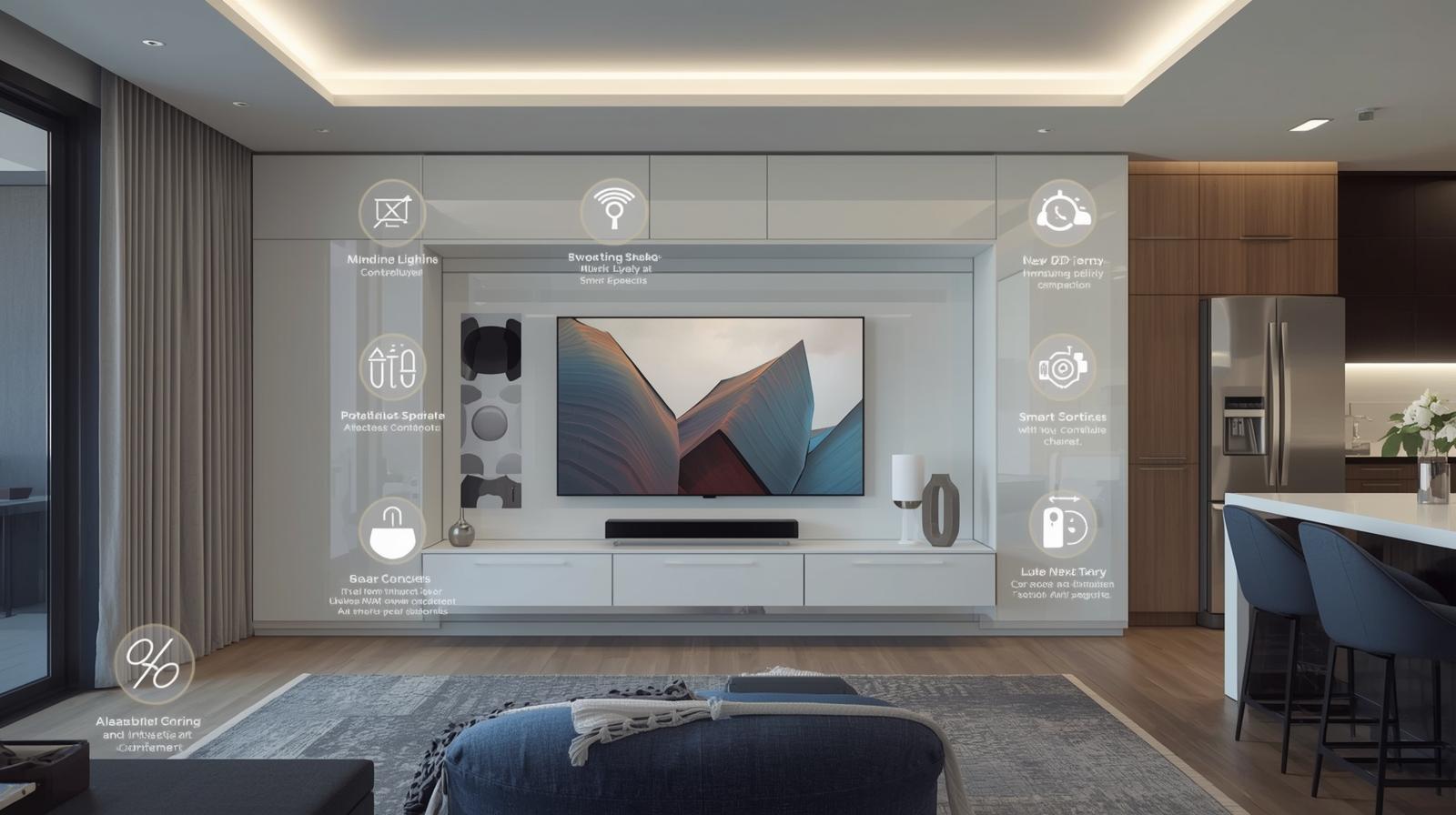
Key Trends Shaping the Smart Home Market
1. AI-Powered Home Automation
Artificial intelligence is becoming an important technology in the Smart Home Market. AI-enabled systems can analyze user preferences, recognize usage patterns, and automate household functions based on changing conditions. This allows smart home solutions to move beyond basic remote control toward more adaptive and personalized experiences.
For example, AI-powered lighting systems can adjust brightness according to user preferences and available daylight. Smart thermostats can learn household schedules and modify temperature settings to balance comfort and energy use. Intelligent security systems can analyze camera feeds to identify unusual activity and provide relevant alerts.
Voice assistants and conversational interfaces are also improving how consumers interact with connected devices. As AI capabilities advance, smart home platforms may increasingly coordinate multiple devices through a single request, simplifying everyday tasks.
The growing adoption of AI is creating opportunities for companies developing intelligent sensors, automation software, voice interfaces, and connected home platforms.
2. Growing Demand for Smart Home Security
Safety and security remain important considerations for homeowners. Connected cameras, video doorbells, smart locks, motion sensors, and alarm systems are gaining attention because they allow users to monitor their properties remotely and receive alerts about potential security incidents.
Modern smart security solutions can integrate multiple devices into a centralized platform. For instance, a homeowner can receive a motion alert, view a camera feed, and control a connected door lock through a smartphone application. AI-enabled analytics can further improve monitoring by distinguishing certain types of activity and helping reduce unnecessary notifications.
Smart security solutions are also becoming increasingly relevant for rental properties, apartment complexes, and vacation homes. Remote access management and connected surveillance can help property owners monitor their assets and manage access more conveniently.
As concerns about residential safety and asset protection continue, security and access control technologies are expected to remain significant components of the Smart Home Market.
3. Energy-Efficient Smart Home Solutions
Energy efficiency is emerging as a major factor influencing smart home adoption. Connected thermostats, intelligent lighting, smart plugs, and home energy monitoring systems enable consumers to manage electricity consumption more effectively.
These solutions can automatically switch off unused devices, adjust heating and cooling settings, and provide information about energy usage. When integrated with compatible solar power systems, batteries, and smart meters, home energy management platforms can also help households coordinate electricity generation, storage, and consumption.
Government initiatives promoting energy-efficient buildings and sustainable residential infrastructure are creating additional opportunities for smart home technology providers. Builders and developers are increasingly evaluating connected systems that can support more efficient housing and improve the overall residential experience.
The demand for energy-efficient technologies is likely to encourage further innovation in smart HVAC systems, connected lighting, intelligent appliances, and home energy management software.
4. Expansion of IoT-Connected Devices
The Internet of Things is the foundation of modern smart home ecosystems. IoT technologies enable household devices to collect information, exchange data, and respond to commands through connected networks.
Smart speakers, appliances, thermostats, lighting systems, locks, and environmental sensors can communicate through compatible platforms to support coordinated automation. This connectivity allows users to manage multiple household functions without operating each device separately.
Wireless technologies are particularly important because they can simplify installation and reduce the need for extensive wiring. According to MarketsandMarkets, wireless communication accounted for approximately 64% of the Smart Home Market in 2025.
As connected device adoption increases, demand for reliable communication protocols, secure software platforms, and compatible hardware is expected to grow. Companies that can provide seamless integration across different product categories may gain a competitive advantage.
5. Smart HVAC and Intelligent Climate Control
Smart HVAC systems are gaining attention as consumers seek greater comfort and improved energy management. These systems use connected thermostats, temperature sensors, occupancy information, and automated controls to regulate indoor environments.
Smart climate control solutions can adjust temperatures according to household schedules, room occupancy, and user preferences. When integrated with other smart home devices, they can support coordinated automation and more efficient operation.
MarketsandMarkets identifies smart home HVAC as a product category expected to register strong growth, with a projected CAGR of approximately 20% according to its report. Increasing attention to indoor comfort, energy efficiency, and intelligent building management is supporting demand for these solutions.
The adoption of connected HVAC technologies also creates opportunities for manufacturers of thermostats, sensors, control systems, and residential energy management platforms.
6. Integration of Voice Assistants and Centralized Control
Voice assistants and centralized control interfaces are making smart home technologies easier to use. Consumers can operate compatible lighting, entertainment systems, thermostats, and other devices through voice commands, smartphone applications, or dedicated control panels.
The growing use of these interfaces is helping simplify device management and improve accessibility. Users can create routines that combine several activities, such as adjusting lighting, locking doors, and modifying temperature settings when leaving home.
Centralized control is particularly important as households adopt products from multiple manufacturers. Platforms that enable different devices to work together can reduce complexity and improve the overall user experience.
Future innovation is likely to focus on more intuitive interfaces, personalized automation, and improved compatibility across connected home ecosystems.
7. Growth of Retrofit Smart Home Installations
The Smart Home Market is benefiting from demand for retrofit installations, which allow homeowners to upgrade existing properties without undertaking major structural changes.
Wireless switches, smart bulbs, connected thermostats, security cameras, and intelligent plugs can often be installed with limited modifications. This makes smart home technology accessible to homeowners who are not planning to purchase or construct a new property.
Retrofit solutions are particularly relevant in established residential markets where a large proportion of housing infrastructure already exists. They also create opportunities for installers, electricians, home improvement retailers, and technology providers offering easy-to-deploy connected devices.
As installation becomes simpler and product compatibility improves, retrofit adoption is expected to support the expansion of smart home technologies across a broader range of households.
Major Growth Drivers of the Smart Home Market
Increasing Internet Penetration and Digital Connectivity
The expansion of broadband networks, wireless communication, and smartphone usage is supporting smart home adoption. Reliable connectivity enables consumers to operate connected devices remotely and access real-time information about household conditions.
As digital infrastructure improves in emerging economies, more households are expected to gain access to the technologies required for connected living.
Rising Demand for Convenience and Personalized Living
Consumers increasingly value solutions that simplify daily routines and provide greater control over their surroundings. Smart home systems support automated lighting, climate control, entertainment, and security management.
Personalization is becoming particularly important as AI-enabled devices learn household preferences and provide more adaptive experiences.
Growing Disposable Income in Emerging Economies
Rising disposable income and expanding middle-class populations in developing economies are creating opportunities for smart home products. As consumers gain greater purchasing power, they may be more willing to invest in connected appliances, home security systems, and automation solutions.
Manufacturers offering affordable products and flexible installation options may be well positioned to reach price-sensitive customer segments.
Increasing Focus on Residential Safety
Demand for smart surveillance, access control, connected alarms, and remote monitoring continues to support the market. These technologies provide homeowners with additional visibility into their properties and help them manage security remotely.
Integration with mobile applications and intelligent analytics is further improving the functionality of modern home security systems.
Energy Management and Sustainability Requirements
Rising interest in energy efficiency is encouraging households to adopt connected solutions that monitor and manage electricity consumption. Smart lighting, HVAC controls, and intelligent energy management platforms can help consumers identify inefficient usage patterns.
The development of green buildings and more sustainable residential infrastructure is also creating opportunities for integrated smart home technologies.
Smart Home Market Segmentation Analysis
The Smart Home Market includes multiple product categories, installation methods, communication technologies, applications, and end users. These segments reflect the different requirements of homeowners, residential developers, and property operators.
By Product Type
The market includes smart lighting solutions, security and access control systems, HVAC systems, entertainment and comfort solutions, home healthcare technologies, smart kitchen appliances, connected home gadgets, and smart furniture.
Smart security products support residential protection, while smart lighting and HVAC systems enable automation and energy management. Connected entertainment devices and centralized controls improve convenience, and smart healthcare technologies can support selected home monitoring applications.
The growing integration of these categories is encouraging manufacturers to develop interoperable products that operate within broader connected home ecosystems.
By Protocol and Communication Technology
Smart home devices use wired and wireless communication technologies. Wired systems can provide dependable connections for certain applications, particularly in buildings designed with integrated automation infrastructure.
Wireless technologies offer flexibility and can simplify the installation of connected devices in existing homes. They are particularly useful for smart lighting, cameras, locks, sensors, and consumer appliances.
As the number of connected devices increases, compatibility, network reliability, and security will remain important considerations when selecting communication technologies.
By Application
Smart home technologies support safety and security, comfort and convenience, energy management, entertainment, health and wellness, and other residential applications.
Safety and security solutions enable remote monitoring and access management. Comfort and convenience applications automate household routines, while energy management systems help monitor electricity consumption.
Entertainment solutions connect audio, video, and control devices, while home healthcare technologies can support selected monitoring and wellness functions. These diverse applications are expanding the potential customer base for connected home products.
By Installation Type
The market includes new installations and retrofit installations. New installations allow connected technologies to be incorporated into residential designs from the planning stage, potentially simplifying integration across lighting, security, climate control, and other systems.
Retrofit installations allow homeowners to add smart features to existing properties. Wireless products and plug-and-play devices are particularly useful for consumers seeking upgrades without extensive renovation.
Both installation types are expected to contribute to market growth as connected home technologies become more widely adopted.
By End User
Individual homeowners represent an important customer group, alongside residential builders and developers and rental housing owners and operators.
Homeowners generally seek convenience, security, comfort, and energy efficiency. Builders and developers can incorporate connected features into new residential projects, while rental property operators can use smart locks, monitoring systems, and automated controls to support property management.
The needs of each customer group create opportunities for providers offering scalable products, installation services, and integrated software platforms.
Regional Analysis of the Smart Home Market
Asia Pacific
Asia Pacific is projected to register the highest regional growth rate in the Smart Home Market, with MarketsandMarkets indicating an expected CAGR of approximately 17% during the forecast period.
Growth is supported by urbanization, increasing digital adoption, expanding residential infrastructure, and government initiatives related to smart cities and energy-efficient buildings. China is an important market because of its connected device ecosystem and large-scale technology deployment. India and other developing economies also offer opportunities as internet access, consumer purchasing power, and awareness of smart home technologies increase.
Affordable connected devices, wireless installations, and localized digital platforms may be particularly important for expanding adoption across diverse residential markets in the region.
North America
North America represents an established market for smart home technologies, supported by relatively high consumer awareness, digital connectivity, and demand for home security and automation.
Smart speakers, connected cameras, smart thermostats, and intelligent lighting systems are among the technologies contributing to adoption. Continued innovation in AI-enabled automation, energy management, and integrated security platforms is expected to create further opportunities.
Europe
Europe’s Smart Home Market is supported by interest in energy efficiency, connected residential infrastructure, and sustainable building practices. Smart heating, lighting, and energy management solutions can help households monitor consumption and improve control over residential environments.
Regulatory emphasis on energy performance and the modernization of existing housing stock may encourage additional adoption of connected home technologies.
South America and the Middle East & Africa
South America and the Middle East & Africa offer opportunities as digital infrastructure develops and consumers increasingly explore connected residential solutions. Adoption will depend on affordability, network availability, installation support, and consumer awareness.
Solutions designed for local requirements and price-sensitive markets may help technology providers expand their presence across these regions.
Challenges Facing the Smart Home Market
Despite strong growth prospects, several challenges may limit the broader adoption of smart home technologies.
High Initial Costs
The cost of purchasing multiple devices, installing compatible systems, and integrating products from different manufacturers can discourage some households. Although individual smart devices may be affordable, creating a fully connected home can require a substantial investment.
Manufacturers can address this challenge by offering modular solutions, entry-level products, and flexible upgrade options.
Data Privacy and Cybersecurity Risks
Smart home devices collect information about household activities, user preferences, access events, and environmental conditions. Poorly secured devices or platforms can expose consumers to privacy violations and unauthorized access.
Manufacturers must prioritize secure authentication, software updates, data protection, and transparent privacy practices to maintain consumer confidence.
Interoperability and Compatibility
Different smart home products may use different communication protocols, applications, and software ecosystems. This fragmentation can make it difficult for devices to work together seamlessly.
Greater adoption of common standards and interoperable platforms can help simplify installation, improve user experience, and reduce integration challenges.
Dependence on Reliable Connectivity
Many smart home solutions rely on internet access or local network connectivity to deliver remote monitoring and automated functions. Unreliable networks can reduce performance and interrupt certain services.
Improved network infrastructure and systems that retain essential local functionality during connectivity interruptions can help address this issue.
Competitive Landscape and Key Market Players
The Smart Home Market includes established industrial companies, consumer technology providers, home security specialists, and manufacturers of connected appliances and automation systems.
Key companies identified by MarketsandMarkets include Schneider Electric, Siemens, Amazon.com, Inc., Honeywell International Inc., ASSA ABLOY, Johnson Controls, Robert Bosch, ADT, Daikin Industries, Ltd., and ABB.
These companies participate in different areas of the market, including home automation, connected security, access control, energy management, HVAC, and intelligent building technologies.
Competition increasingly depends on the ability to deliver reliable products, intuitive interfaces, secure connectivity, and compatibility across device categories. Partnerships between hardware manufacturers, software providers, residential developers, and platform operators are also important for creating integrated smart home ecosystems.
As the market develops, companies that combine product innovation with affordability, interoperability, and strong customer support may be better positioned to capture emerging opportunities.
Future Opportunities in the Smart Home Market
Integration of AI and Predictive Automation
AI-enabled platforms offer opportunities to make home automation more personalized and adaptive. Future systems may coordinate multiple devices based on household routines, environmental conditions, and user preferences.
Smart Energy Management and Connected Appliances
The integration of smart home platforms with solar power systems, batteries, connected appliances, and intelligent meters can create new opportunities for residential energy management. These systems may help consumers gain better visibility into electricity use and coordinate household energy resources.
Affordable Solutions for Emerging Markets
Developing lower-cost connected devices and easy-to-install systems can expand adoption among consumers who may not be able to afford comprehensive automation packages.
Connected Healthcare and Aging-in-Place Solutions
Smart sensors, environmental monitoring, and selected connected healthcare technologies can help support independent living. These applications may create opportunities for companies serving older adults, caregivers, and households seeking additional monitoring capabilities.
Integrated Platforms and Interoperable Ecosystems
As consumers purchase more connected products, demand for systems that work together seamlessly is expected to grow. Platforms that simplify device management, protect personal data, and support multiple product categories can provide differentiation for technology providers.
Conclusion
The Smart Home Market is evolving as AI, IoT, wireless connectivity, and intelligent automation become increasingly integrated into residential environments. Smart security systems, connected lighting, intelligent HVAC, home entertainment, and energy management solutions are helping consumers improve convenience, safety, and control over household resources.
According to MarketsandMarkets, the global Smart Home Market is projected to increase from USD 230.76 billion in 2026 to USD 450.20 billion by 2032, growing at a CAGR of 11.8%. Rising internet penetration, expanding connected device adoption, increasing demand for remote monitoring, and a growing emphasis on energy efficiency are supporting this expansion.
However, high upfront costs, cybersecurity concerns, connectivity limitations, and interoperability issues remain important challenges. Addressing these barriers will be essential to expanding adoption and delivering reliable consumer experiences.
Looking ahead, AI-powered automation, smart HVAC, connected security, retrofit installations, and integrated energy management are expected to create significant opportunities. Companies that prioritize affordability, secure connectivity, seamless integration, and user-friendly solutions will be well positioned to participate in the next phase of connected living.
Frequently Asked Questions (FAQs)
1. What is the projected size of the Smart Home Market?
According to MarketsandMarkets, the global Smart Home Market is projected to grow from USD 230.76 billion in 2026 to USD 450.20 billion by 2032.
2. What is the expected CAGR of the Smart Home Market?
The Smart Home Market is projected to register a CAGR of 11.8% during the 2026–2032 forecast period.
3. What are the major trends in the Smart Home Market?
Key trends include AI-powered automation, connected security systems, IoT-enabled devices, smart HVAC, energy management, voice assistants, and retrofit installations.
4. What factors are driving Smart Home Market growth?
Growth is driven by increasing internet penetration, rising demand for convenience and security, growing disposable income, energy efficiency requirements, and the adoption of connected devices.
5. Which region is expected to grow fastest in the Smart Home Market?
Asia Pacific is projected to register the highest CAGR, supported by urbanization, digital adoption, expanding residential infrastructure, and growing demand for connected home technologies.
MarketsandMarkets
MarketsandMarkets™ is a blue ocean alternative in growth consulting and program management, leveraging a man-machine offering to drive supernormal growth for progressive organizations in the B2B space. We have the widest lens on emerging technologies, making us proficient in co-creating supernormal growth for clients.
The B2B economy is witnessing the emergence of $25 trillion of new revenue streams that are substituting existing revenue streams in this decade alone. We work with clients on growth programs, helping them monetize this $25 trillion opportunity through our service lines – TAM Expansion, Go-to-Market (GTM) Strategy to Execution, Market Share Gain, Account Enablement, and Thought Leadership Marketing.
Built on the ’GIVE Growth’ principle, we work with several Forbes Global 2000 B2B companies – helping them stay relevant in a disruptive ecosystem. Our insights and strategies are molded by our industry experts, cutting-edge AI-powered Market Intelligence Cloud, and years of research. The KnowledgeStore™ (our Market Intelligence Cloud) integrates our research, facilitates an analysis of interconnections through a set of applications, helping clients look at the entire ecosystem and understand the revenue shifts happening in their industry.
To find out more, visit www.MarketsandMarkets™.com or follow us on Twitter, LinkedIn and Facebook.
Contact:
Mr. Rohan Salgarkar
MarketsandMarkets™ INC.
1615 South Congress Ave.
Suite 103
Delray Beach, FL 33445
USA : 1-888-600-6441