The global Smart Home Market Share is witnessing remarkable expansion as artificial intelligence continues to transform how households interact with technology. From voice-controlled lighting systems to intelligent security solutions and energy management platforms, AI-powered home automation is reshaping modern living. As consumers increasingly prioritize convenience, safety, and energy efficiency, the Smart Home Market Share continues to grow across both developed and emerging economies.
The global smart home market is projected to reach USD 95.83 billion in 2026 and USD 139.24 billion by 2032, exhibiting a CAGR of 6.4%. A major factor driving the smart home market is the growing demand for real-time, integrated home automation as residential digitalization accelerates. With the increasing adoption of connected devices, smart appliances, and AI-enabled platforms, homeowners require centralized systems capable of monitoring security, energy usage, and household activities seamlessly. As broadband penetration expands and smart housing developments rise, consumers are investing in interoperable ecosystems that support lighting, HVAC, entertainment, and access control within a unified interface. This is driving increased deployment of IoT-enabled sensors, cloud-based management platforms, and intelligent control systems capable of operating in dynamic residential environments. As households prioritize energy efficiency, security, and convenience, demand for scalable, reliable, and automation-ready smart home solutions continues to grow steadily across regions.
Growing Demand for Intelligent Home Ecosystems
One of the primary factors driving the expansion of the Smart Home Market Share is the growing consumer demand for connected living environments. Smart devices such as thermostats, lighting systems, surveillance cameras, and smart appliances are now designed to work together through integrated platforms. Artificial intelligence enables these systems to learn user preferences, automate routine tasks, and optimize energy consumption.
As a result, the Smart Home Market Share is expanding rapidly, supported by the integration of AI algorithms that enhance device functionality and deliver personalized experiences. AI-powered assistants can manage multiple home devices simultaneously, providing homeowners with seamless control through voice commands or mobile applications.
AI-Powered Automation Transforming Residential Living
Artificial intelligence plays a critical role in accelerating the Smart Home Market Share by enabling predictive automation. Smart systems can analyze data from sensors and user behavior patterns to automatically adjust lighting, heating, cooling, and security settings. This level of intelligent automation significantly improves comfort and operational efficiency within homes.
For example, AI-enabled security systems can identify unusual activity, recognize faces, and send real-time alerts to homeowners. Similarly, AI-powered energy management tools can monitor electricity usage and recommend ways to reduce consumption. These innovations are significantly contributing to the rising Smart Home Market Share as homeowners seek smarter and more efficient living spaces.
Download PDF Brochure @ https://www.marketsandmarkets.com/pdfdownloadNew.asp?id=121
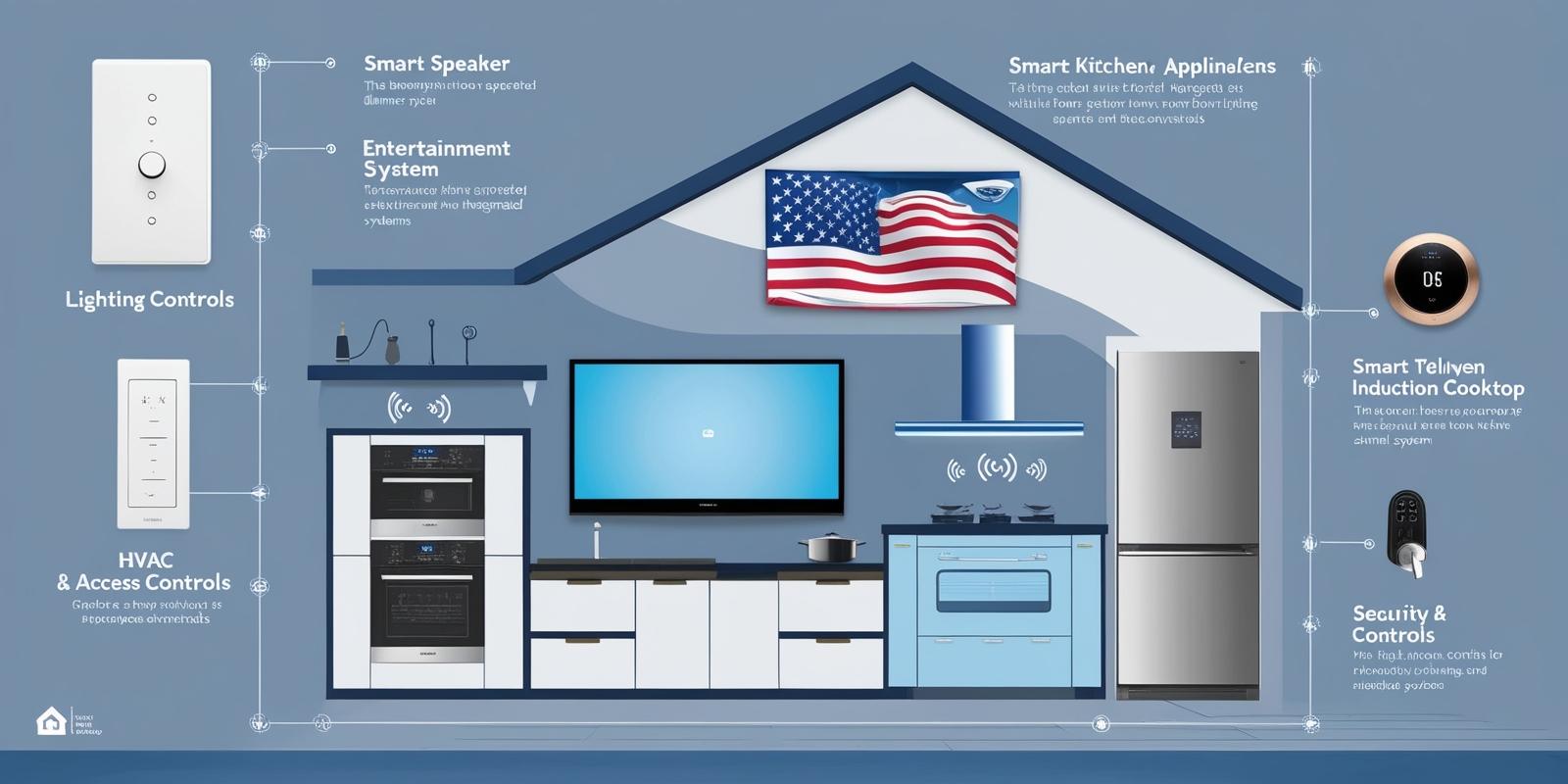
Expansion of IoT Devices Supporting Market Growth
The rapid proliferation of Internet of Things (IoT) devices is another key factor strengthening the Smart Home Market Share. Smart speakers, connected appliances, sensors, and automation hubs are becoming more affordable and accessible, encouraging widespread adoption among consumers.
As IoT ecosystems continue to evolve, the Smart Home Market Share benefits from improved interoperability between devices and platforms. Manufacturers are focusing on developing solutions that integrate multiple technologies, enabling homeowners to manage entire ecosystems from a single interface.
Rising Focus on Energy Efficiency and Sustainability
Energy efficiency has become a significant driver of the Smart Home Market Share, particularly as governments and consumers focus on sustainability and reducing carbon footprints. Smart thermostats, automated lighting systems, and intelligent energy monitoring tools help households minimize energy consumption without compromising comfort.
AI-powered automation allows these systems to optimize energy usage by adjusting settings based on occupancy patterns and environmental conditions. Consequently, the Smart Home Market Share continues to expand as consumers recognize the long-term cost savings and environmental benefits offered by smart technologies.
Increasing Investment and Technological Innovation
Technological innovation and increasing investments in home automation technologies are further accelerating the Smart Home Market Share. Major technology companies and startups are continuously introducing advanced smart home products with enhanced AI capabilities, improved connectivity, and better user interfaces.
Cloud computing, edge computing, and advanced analytics are also playing a vital role in strengthening the Smart Home Market Share by enabling real-time data processing and faster automation responses. These advancements are helping smart home systems become more reliable, efficient, and user-friendly.
Future Smart Home Market Outlook
The future of the Smart Home Market Share looks highly promising as artificial intelligence, IoT, and automation technologies continue to evolve. With increasing consumer awareness, improved connectivity infrastructure, and declining device costs, smart home solutions are expected to become a standard feature in modern households.
Furthermore, the integration of generative AI, advanced voice assistants, and predictive analytics will further enhance smart home capabilities, creating more adaptive and intuitive living environments. As these innovations gain momentum, the Smart Home Market Share is projected to witness sustained growth in the coming years.
The rising adoption of AI-powered home automation is fundamentally transforming residential environments and driving the expansion of the Smart Home Market Share worldwide. As consumers embrace intelligent devices that enhance comfort, security, and energy efficiency, the market continues to evolve rapidly. With ongoing technological advancements and growing demand for connected living, the Smart Home Market Share is set to play a crucial role in shaping the future of modern homes.
Frequently Asked Questions (FAQs)
1. What is driving the growth of the Smart Home Market Share?
The growth of the Smart Home Market Share is primarily driven by the increasing adoption of AI-powered home automation, rising demand for connected devices, improved internet connectivity, and growing consumer interest in convenience, security, and energy efficiency.
2. How does artificial intelligence influence Smart Home Market Share?
Artificial intelligence plays a significant role in expanding the Smart Home Market Share by enabling smart devices to learn user preferences, automate household tasks, and improve energy management. AI-powered assistants and automation systems enhance the overall smart home experience.
3. Which devices contribute most to the Smart Home Market Share?
Devices such as smart speakers, smart thermostats, intelligent lighting systems, smart security cameras, and connected home appliances contribute significantly to the Smart Home Market Share as they provide automation and remote control capabilities.
4. Why are consumers adopting smart home technologies?
Consumers are increasingly adopting smart home technologies due to convenience, improved home security, energy savings, and the ability to control devices remotely. These benefits are contributing to the steady rise of the Smart Home Market Share.
5. How does IoT impact Smart Home Market Share?
The Internet of Things (IoT) significantly impacts the Smart Home Market Share by enabling seamless communication between connected devices, allowing homeowners to create fully integrated smart home ecosystems.
6. What role does energy efficiency play in Smart Home Market Share growth?
Energy efficiency is a major factor driving the Smart Home Market Share, as smart devices such as automated lighting and smart thermostats help reduce energy consumption and lower electricity costs.
About MarketsandMarkets™
MarketsandMarkets™ has been recognized as one of America’s Best Management Consulting Firms by Forbes, as per their recent report.
MarketsandMarkets™ is a blue ocean alternative in growth consulting and program management, leveraging a man-machine offering to drive supernormal growth for progressive organizations in the B2B space. With the widest lens on emerging technologies, we are proficient in co-creating supernormal growth for clients across the globe.
Today, 80% of Fortune 2000 companies rely on MarketsandMarkets, and 90 of the top 100 companies in each sector trust us to accelerate their revenue growth. With a global clientele of over 13,000 organizations, we help businesses thrive in a disruptive ecosystem.
The B2B economy is witnessing the emergence of $25 trillion in new revenue streams that are replacing existing ones within this decade. We work with clients on growth programs, helping them monetize this $25 trillion opportunity through our service lines – TAM Expansion, Go-to-Market (GTM) Strategy to Execution, Market Share Gain, Account Enablement, and Thought Leadership Marketing.
Built on the ‘GIVE Growth’ principle, we collaborate with several Forbes Global 2000 B2B companies to keep them future-ready. Our insights and strategies are powered by industry experts, cutting-edge AI, and our Market Intelligence Cloud, KnowledgeStore™, which integrates research and provides ecosystem-wide visibility into revenue shifts.
To find out more, visit www.MarketsandMarkets™.com or follow us on Twitter , LinkedIn and Facebook .
Contact:
Mr. Rohan Salgarkar
MarketsandMarkets™ INC.
1615 South Congress Ave.
Suite 103, Delray Beach, FL 33445
USA: +1-888-600-6441
