The Smart Home Market is entering a new phase in 2026 as consumers move beyond isolated connected gadgets toward integrated, intelligent, and energy-aware home ecosystems. Smart lighting, security systems, HVAC controls, connected appliances, entertainment systems, healthcare technologies, and energy-management solutions are increasingly being connected through centralized platforms that allow homeowners to monitor and automate everyday activities.
According to MarketsandMarkets, the global Smart Home Market is valued at USD 230.76 billion in 2026 and is projected to reach USD 450.20 billion by 2032, expanding at a CAGR of 11.8% from 2026 to 2032. Rising internet penetration, growing adoption of connected devices, increasing disposable incomes, demand for remote monitoring, and consumer interest in safety, convenience, and energy efficiency are among the major factors supporting market expansion.
This growth indicates an important change in consumer behavior: smart homes are increasingly being viewed not simply as collections of connected products, but as intelligent environments capable of responding to occupants, optimizing resources, and delivering personalized experiences.
2026 Consumer Insight: Smart Homes Shift From Devices to Integrated Ecosystems
One of the most important Smart Home Market Trends in 2026 is the transition from standalone smart products to integrated ecosystems. Consumers previously purchased individual smart speakers, connected bulbs, cameras, thermostats, or appliances based on specific needs. Increasingly, however, they expect these products to communicate with each other.
MarketsandMarkets identifies this shift toward integrated platforms as a significant transformation in the smart home industry. Consumers increasingly want seamless control, monitoring, and automation across security, lighting, HVAC, entertainment, appliances, healthcare, and energy management.
For example, a connected home can automatically adjust lighting and temperature based on occupancy, activate security systems when residents leave, monitor energy consumption, and provide notifications through smartphones. This ecosystem-based approach is creating opportunities for manufacturers and technology providers to move from selling individual products toward providing broader platforms and connected services.
Download PDF Brochure @ https://www.marketsandmarkets.com/pdfdownloadNew.asp?id=121
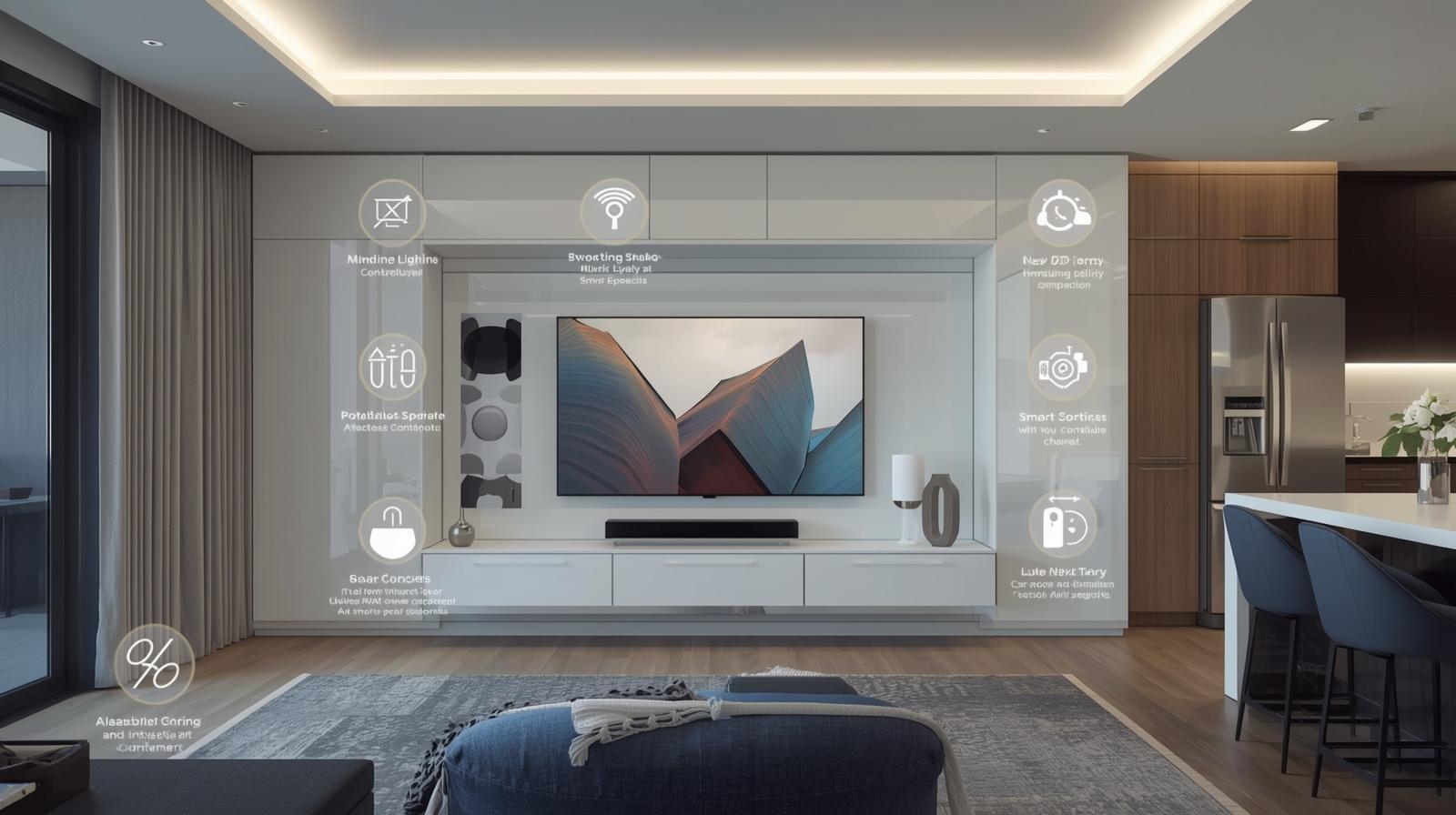
AI-Powered Automation Becomes a Major Consumer Priority
Artificial intelligence is becoming increasingly important to the Smart Home Market in 2026. Consumers are moving from manually controlling connected devices toward systems capable of understanding routines and automating activities.
AI-powered smart home technologies can analyze usage patterns and support personalized control of lighting, HVAC, appliances, security, and entertainment. MarketsandMarkets identifies AI-powered automation as a major growth driver because AI enables smarter control, personalization, and improved home efficiency.
The development of AI-enabled home assistants is also changing the user interface. Instead of opening separate applications for different devices, consumers increasingly expect natural-language interactions and automated recommendations. This creates an opportunity for smart home platforms to become more intuitive and context-aware.
In 2026, the competitive focus is therefore shifting from simply connecting devices to making connected environments more intelligent.
Smart Security Remains a Strong Adoption Driver
Safety and security continue to influence consumer decisions in the Smart Home Market. Connected security cameras, smart locks, video doorbells, alarm systems, motion sensors, and access-control technologies provide homeowners with greater visibility and remote control.
MarketsandMarkets highlights growing demand for smart security as an important market driver. AI, IoT, cloud platforms, and connected sensors are supporting real-time monitoring, intelligent threat detection, faster alerts, and remote access.
Consumers increasingly expect security solutions to operate continuously rather than simply recording events. AI-enabled cameras, for instance, can distinguish between different types of activity and provide more contextual alerts. Smart locks can enable digital access management, while connected sensors can notify homeowners about unusual activity.
The result is a shift from conventional security products toward integrated residential safety ecosystems.
Energy Efficiency Moves to the Center of Smart Home Adoption
Another defining Smart Home Market Trend in 2026 is the growing importance of energy management. Rising awareness of energy costs and sustainability is encouraging consumers to adopt technologies that provide greater visibility and control over household energy consumption.
Smart thermostats, connected HVAC systems, intelligent lighting, smart meters, energy-management platforms, and connected appliances can help homeowners monitor and optimize electricity use. MarketsandMarkets identifies rising demand for energy-efficient and low-carbon smart home solutions as an important factor supporting market growth.
Smart HVAC is particularly significant. MarketsandMarkets expects the smart home HVAC segment to register the highest CAGR among product types, at approximately 20%.
This reflects a broader consumer shift. Smart home technology is increasingly evaluated not only on convenience but also on its ability to reduce energy waste and improve household efficiency.
Wireless Connectivity Supports Mass Adoption
Wireless technologies are playing an increasingly important role in smart home deployment because they simplify installation and reduce the need for extensive structural modifications.
MarketsandMarkets reports that the wireless segment accounted for approximately 64% of the Smart Home Market by protocol and communication technology in 2025.
Wireless connectivity is particularly important for retrofit installations. Homeowners can add smart lighting, security cameras, sensors, thermostats, speakers, and appliances without significant rewiring.
This is expanding the addressable consumer base because smart home adoption no longer depends exclusively on new construction. Existing homes can be upgraded progressively, allowing consumers to start with individual devices and gradually build a connected ecosystem.
Retrofit Solutions Create a Practical Path to Smart Living
Retrofit installation is another important opportunity in the Smart Home Market. Existing homeowners represent a significant customer base because most residential properties were not originally designed as fully connected environments.
Wireless, plug-and-play technologies make it easier to upgrade existing properties. Consumers can install smart locks, lighting systems, sensors, thermostats, cameras, and connected appliances without major renovation.
MarketsandMarkets expects retrofit installations to register fast growth, supported by demand for modernization, energy efficiency, security, and convenient installation.
The retrofit opportunity is especially relevant in mature housing markets where replacing or substantially rebuilding existing homes would be expensive. Instead, consumers can gradually add intelligent technologies according to their budgets and priorities.
Asia Pacific Emerges as a Key Growth Engine
Asia Pacific is becoming an increasingly important region for the global Smart Home Market. MarketsandMarkets projects Asia Pacific to register the highest regional CAGR of approximately 17% during the forecast period.
Rapid urbanization, expanding middle-class populations, rising smartphone penetration, improving digital infrastructure, and increasing consumer awareness are supporting smart home adoption across the region.
MarketsandMarkets’ Asia Pacific analysis also highlights strong growth fundamentals, with the regional market projected to expand from USD 67.22 billion in 2026 to USD 168.46 billion by 2031, representing a 16.5% CAGR.
For consumers, the value proposition extends beyond luxury. Smart security, energy management, connected appliances, and automated climate control can address practical requirements associated with urban residential environments.
Convenience and Personalization Reshape Consumer Expectations
Convenience remains one of the fundamental reasons consumers adopt smart home technologies, but expectations are becoming more sophisticated.
Consumers increasingly want their homes to adapt automatically rather than requiring continuous manual input. Personalized lighting, automated temperature control, scheduled appliances, voice interaction, and intelligent security notifications are examples of this evolution.
MarketsandMarkets identifies safety, real-time monitoring, energy efficiency, personalized comfort, and convenience as key consumer expectations influencing smart home innovation.
This creates a shift from “smart control” to “smart assistance.” A conventional connected product responds when a user gives an instruction. An intelligent ecosystem increasingly attempts to anticipate requirements based on context and routines.
Data Security and Privacy Become Critical Purchase Considerations
The expansion of connected devices also creates concerns around privacy, cybersecurity, and data protection. Smart cameras, speakers, appliances, sensors, and other connected products can generate substantial amounts of household data.
MarketsandMarkets identifies data security risks and connectivity dependence as restraints that can limit smart home adoption.
As consumers become more aware of these risks, security features can become an important part of the purchasing decision. Manufacturers are therefore increasingly required to incorporate secure authentication, encrypted communications, software updates, and privacy controls into connected products.
Trust is becoming as important as functionality. A device that offers advanced automation but provides insufficient transparency around data usage may face adoption barriers.
Interoperability Remains a Key Industry Challenge
Despite the rapid expansion of smart home technologies, fragmented ecosystems remain a challenge. Different manufacturers may use different platforms, protocols, applications, and communication technologies.
MarketsandMarkets identifies interoperability gaps and the lack of unified standards as major challenges for the Smart Home Market.
Consumers increasingly expect products from different brands to work together seamlessly. When devices require separate applications or fail to communicate effectively, the user experience becomes more complicated.
Greater interoperability can therefore support broader adoption by reducing complexity. Companies that can provide seamless integration across multiple categories may have opportunities to strengthen consumer engagement and build longer-term ecosystem relationships.
What 2026 Means for the Smart Home Market
The 2026 consumer landscape shows that smart home adoption is becoming more practical, intelligent, and ecosystem-oriented. Consumers are increasingly looking for technologies that solve everyday problems rather than simply offering novelty.
The most significant trends include AI-powered automation, integrated platforms, smart security, energy management, wireless connectivity, retrofit installations, personalized experiences, and greater interoperability. These trends are transforming smart homes from collections of connected products into intelligent residential environments.
The broader market outlook reinforces this transition. MarketsandMarkets forecasts the global Smart Home Market to increase from USD 230.76 billion in 2026 to USD 450.20 billion by 2032, at an 11.8% CAGR.
As the market expands, competition is likely to increasingly center on ecosystem integration, AI capabilities, energy optimization, security, ease of installation, and consumer trust. Companies will need to address not only what individual devices can do, but also how effectively those devices work together.
The Smart Home Market Trends 2026 reflect a fundamental change in how consumers perceive connected living. Smart homes are moving beyond standalone speakers, cameras, lights, and appliances toward integrated environments capable of automation, personalization, monitoring, and intelligent energy management.
AI and IoT are becoming foundational technologies, while wireless connectivity and retrofit solutions are lowering adoption barriers. At the same time, security, privacy, interoperability, and connectivity reliability remain important considerations.
With the global market projected to reach USD 450.20 billion by 2032, the next phase of smart home development will increasingly focus on making technology simpler, more intelligent, secure, and useful in everyday life.
Frequently Asked Questions (FAQs)
What is the Smart Home Market size in 2026?
The global Smart Home Market is projected to reach USD 230.76 billion in 2026.
What is the Smart Home Market forecast for 2032?
The Smart Home Market is projected to reach USD 450.20 billion by 2032, growing at a CAGR of 11.8% from 2026 to 2032.
What are the key trends in the Smart Home Market in 2026?
Key trends include AI-powered automation, smart security, energy management, wireless connectivity, integrated ecosystems, and retrofit smart home solutions.
Which segment is expected to grow rapidly in the Smart Home Market?
The smart HVAC segment is expected to register strong growth, driven by increasing consumer demand for automated climate control and energy efficiency.
Which region is expected to witness significant growth in the Smart Home Market?
Asia Pacific is expected to register significant growth due to urbanization, rising disposable incomes, expanding digital infrastructure, and increasing adoption of connected technologies.
About MarketsandMarkets™
MarketsandMarkets™ is a blue ocean alternative in growth consulting and program management, leveraging a man-machine offering to drive supernormal growth for progressive organizations in the B2B space. We have the widest lens on emerging technologies, making us proficient in co-creating supernormal growth for clients.
The B2B economy is witnessing the emergence of $25 trillion of new revenue streams that are substituting existing revenue streams in this decade alone. We work with clients on growth programs, helping them monetize this $25 trillion opportunity through our service lines – TAM Expansion, Go-to-Market (GTM) Strategy to Execution, Market Share Gain, Account Enablement, and Thought Leadership Marketing.
Built on the ’GIVE Growth’ principle, we work with several Forbes Global 2000 B2B companies – helping them stay relevant in a disruptive ecosystem. Our insights and strategies are molded by our industry experts, cutting-edge AI-powered Market Intelligence Cloud, and years of research. The KnowledgeStore™ (our Market Intelligence Cloud) integrates our research, facilitates an analysis of interconnections through a set of applications, helping clients look at the entire ecosystem and understand the revenue shifts happening in their industry.
To find out more, visit www.MarketsandMarkets™.com or follow us on Twitter, LinkedIn and Facebook.
Contact:
Mr. Rohan Salgarkar
MarketsandMarkets™ INC.
630 Dundee Road
Suite 430
Northbrook, IL 60062
USA : 1-888-600-6441
