The convergence of artificial intelligence (AI), the Internet of Things (IoT), connected devices, automation, and wireless communication is transforming how people interact with residential environments. Smart Homes and Assisted Living Advanced Technologies are emerging as important solutions for improving safety, comfort, convenience, energy efficiency, and independent living. These technologies connect lighting, security, HVAC, healthcare, appliances, entertainment, and access-control systems to create intelligent residential ecosystems that can respond to user preferences and changing conditions.
According to MarketsandMarkets, the global smart home market is projected to reach USD 230.76 billion in 2026 and USD 450.20 billion by 2032, exhibiting a CAGR of 11.8%. Growth is being supported by increasing internet penetration, expanding adoption of connected devices, rising disposable incomes, demand for remote home monitoring, and growing consumer interest in safety, security, convenience, and energy efficiency.
The evolution of Smart Homes and Assisted Living Advanced Technologies is particularly relevant to older adults and people requiring additional support in daily activities. AI-enabled monitoring, connected sensors, voice interfaces, automated lighting, smart locks, healthcare devices, and remote-control platforms can help create residential environments that are more responsive to individual needs.
AI Is Transforming Smart Homes and Assisted Living
Artificial intelligence is becoming an important technology layer within modern connected homes. Conventional smart home systems primarily followed predefined commands, whereas AI-enabled platforms can analyze information from connected devices and adjust operations according to patterns, preferences, and environmental conditions.
AI can support automated lighting, temperature management, security monitoring, energy optimization, and personalized routines. For example, connected sensors can provide information about occupancy, movement, temperature, and other household conditions. AI-based systems can analyze these inputs and trigger appropriate actions without requiring constant manual intervention.
This capability is especially valuable for assisted living. AI-powered Smart Homes and Assisted Living Advanced Technologies can help simplify daily activities through voice assistants, automated controls, connected healthcare devices, and remote monitoring. These solutions can support individuals who want to remain in their homes while maintaining greater independence.
MarketsandMarkets identifies AI-powered automation as one of the key growth drivers of the smart home market, as AI enables smarter control, personalization, and improved home efficiency.
Connected Devices Create Intelligent Living Environments
The expansion of IoT is fundamentally changing residential environments. Smart lighting, security cameras, locks, thermostats, appliances, speakers, healthcare devices, and sensors can communicate through connected networks, allowing homeowners to monitor and control multiple functions through centralized platforms.
The growing availability of high-speed internet and smartphones has accelerated this transition. Connected devices can provide real-time information while allowing users to manage residential systems remotely. According to MarketsandMarkets, rising internet penetration and proliferation of connected smart devices are major drivers of the market.
For assisted living applications, connectivity can extend beyond convenience. Remote monitoring technologies can enable family members, caregivers, or service providers to receive information about selected home conditions. This creates opportunities for more responsive support while allowing residents to maintain greater control over their daily environments.
As connected ecosystems become more integrated, Smart Homes and Assisted Living Advanced Technologies are moving from individual smart products toward complete platforms that combine automation, monitoring, communication, and control.
Download PDF Brochure @ https://www.marketsandmarkets.com/pdfdownloadNew.asp?id=121
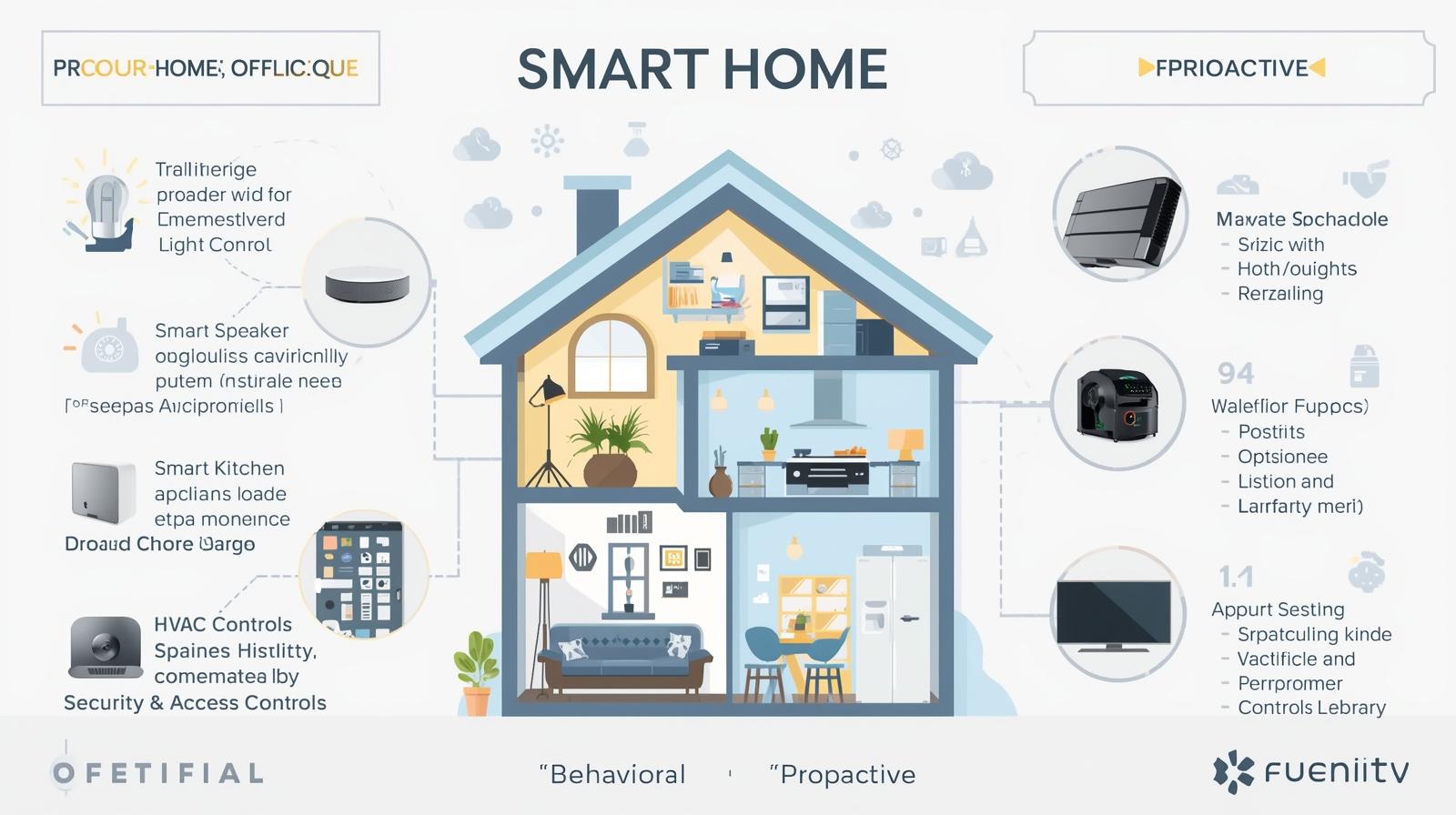
Smart Security Supports Safer Independent Living
Safety and security represent major applications for intelligent residential technologies. Smart cameras, connected locks, sensors, alarms, and access-control systems can provide homeowners with greater visibility into residential activity.
AI can enhance these systems by supporting intelligent detection and automated alerts. Instead of simply recording information, AI-enabled platforms can analyze events and provide notifications based on predefined conditions. Remote access capabilities can also allow users to check security systems and control locks through connected devices.
For older adults living independently, these capabilities can provide additional layers of residential support. Smart doorbells, automated lighting, emergency notification systems, and connected access controls can contribute to a safer home environment.
The MarketsandMarkets analysis identifies growing demand for smart security solutions as an important market driver, with connected cameras, locks, monitoring systems, and sensors contributing to adoption.
Smart HVAC and Energy Management Gain Momentum
Energy efficiency is another important area where Smart Homes and Assisted Living Advanced Technologies are creating new opportunities. Connected thermostats, HVAC systems, lighting controls, smart meters, and energy-management platforms can help households monitor and optimize energy consumption.
AI can make these systems more adaptive by analyzing usage patterns and automatically adjusting heating, cooling, or lighting. This can improve comfort while helping reduce unnecessary energy consumption.
According to MarketsandMarkets, smart HVAC is expected to register the highest CAGR among smart home product types, at approximately 20.0%. The report also highlights increasing demand for energy-efficient and low-carbon smart home solutions.
For assisted living environments, automated HVAC and lighting can reduce the need for continuous manual adjustment. Residents can use voice assistants, smartphone applications, wall panels, or automated routines to control their environment according to their needs.
Healthcare and Wellness Expand the Role of Smart Homes
The integration of healthcare capabilities is expanding the role of smart residential environments beyond traditional automation. Smart healthcare solutions, wearable devices, connected sensors, and remote-monitoring technologies can support health and wellness applications within residential settings.
For people who require assistance with daily living, connected technologies can potentially provide greater visibility into selected activities and environmental conditions. Wearables and connected interfaces can also make interaction with smart home systems easier for users with mobility or accessibility requirements.
The broader smart home market covered by MarketsandMarkets includes smart healthcare solutions alongside lighting, security, HVAC, entertainment, kitchen appliances, gadgets, and furniture. Applications include health and wellness, safety and security, comfort and convenience, and energy management.
This convergence between residential automation and healthcare is creating opportunities for Smart Homes and Assisted Living Advanced Technologies to become part of more comprehensive independent-living ecosystems.
Wireless Connectivity Drives Smart Home Adoption
Wireless communication has become a critical component of modern smart home deployments. According to MarketsandMarkets, the wireless segment accounted for approximately 64.0% of the market share in 2025, demonstrating the importance of wireless connectivity in connected residential environments.
Wireless technologies simplify installation and enable devices to communicate without extensive physical infrastructure. This is particularly important for retrofit projects, where homeowners can introduce smart functionality without completely rebuilding existing residential systems.
Retrofit installations are also expected to register fast growth, creating opportunities for providers of wireless sensors, connected controls, smart lighting, security devices, and intelligent HVAC solutions.
The combination of wireless connectivity, cloud platforms, edge technologies, and AI is therefore creating increasingly flexible Smart Homes and Assisted Living Advanced Technologies.
Asia Pacific Presents Significant Growth Opportunities
Geographically, Asia Pacific is expected to register the highest CAGR in the smart home market, at approximately 17.0%, according to MarketsandMarkets. Increasing connectivity, expanding digital infrastructure, urbanization, rising consumer spending power, and growing adoption of connected devices are supporting regional opportunities.
Emerging economies are becoming important markets for smart residential technologies as consumers increasingly seek connected security, energy management, convenience, and remote monitoring. Developers and technology providers are also incorporating smart technologies into new residential projects.
At the same time, retrofit opportunities can help expand adoption in established residential markets. Smart lighting, connected thermostats, security systems, and wireless controls can be deployed incrementally, allowing households to upgrade existing properties.
Interoperability Remains a Major Challenge
Despite strong technology development, interoperability remains an important challenge for Smart Homes and Assisted Living Advanced Technologies. Different manufacturers and platforms may use different communication protocols, creating fragmented ecosystems and limiting seamless integration.
MarketsandMarkets identifies interoperability gaps and the lack of unified standards as key challenges for smart home adoption. Device malfunction can also affect user confidence and system reliability.
For assisted living applications, interoperability is particularly important because users may need multiple technologies to work together. A connected security system, healthcare device, lighting system, voice assistant, and emergency notification platform can provide greater value when they operate through a coordinated ecosystem.
Industry efforts toward standardized communication technologies and more interoperable platforms can therefore play an important role in the future development of intelligent residential environments.
Cost and Data Security Influence Adoption
High upfront costs are another restraint affecting the adoption of advanced connected-home technologies. Expenses can include devices, installation, networking infrastructure, software platforms, maintenance, and system integration.
Data security and privacy are also important considerations. Connected homes generate and exchange information through multiple devices and platforms. Consumers may therefore require strong cybersecurity, transparent data practices, secure authentication, and reliable software updates.
MarketsandMarkets identifies high costs, data security risks, and dependence on stable internet connectivity as factors that can limit smart home adoption.
Addressing these barriers will be essential for expanding Smart Homes and Assisted Living Advanced Technologies across a wider range of households and assisted-living applications.
Green Buildings Create New Opportunities
Sustainability is becoming increasingly connected with smart home development. Government initiatives supporting energy-efficient buildings, green construction, and smart-city development can encourage adoption of connected lighting, thermostats, energy-management systems, and other intelligent technologies.
Smart systems can provide greater visibility into energy consumption and allow automated controls to respond to usage patterns. Connected lighting controllers, smart meters, HVAC automation, and residential energy-management platforms can therefore support both operational efficiency and sustainability objectives.
MarketsandMarkets identifies favorable government regulations promoting green buildings as an opportunity for the smart home market.
This trend is likely to encourage greater integration between Smart Homes and Assisted Living Advanced Technologies, building automation, renewable energy systems, and residential energy management.
The Future of Independent Living
The future of independent living will increasingly depend on the ability of residential technologies to work together rather than operate as isolated products. AI, IoT, wireless communication, cloud computing, sensors, wearables, and intelligent control interfaces are enabling homes to become more responsive and personalized.
MarketsandMarkets notes that the industry is shifting from standalone connected devices toward integrated smart home platforms covering security, lighting, HVAC, entertainment, healthcare, appliances, and energy management.
For assisted living, this evolution could create residential environments that provide personalized automation while supporting safety and convenience. Voice interfaces can simplify device control, sensors can provide real-time information, smart security can strengthen monitoring, and connected healthcare technologies can expand the capabilities of home-based support.
As AI becomes more deeply integrated into residential platforms, Smart Homes and Assisted Living Advanced Technologies are expected to play an increasingly important role in connected and independent living. Technology providers that focus on interoperability, cybersecurity, accessibility, affordability, and user-friendly interfaces will be positioned to address evolving requirements across residential and assisted-living environments.
Smart Homes and Assisted Living Advanced Technologies are transforming residential environments by combining AI, IoT, wireless connectivity, automation, and intelligent monitoring. The global smart home market is projected to increase from USD 230.76 billion in 2026 to USD 450.20 billion by 2032, reflecting a CAGR of 11.8%.
AI-powered automation, smart security, connected healthcare, intelligent HVAC, energy management, and wireless technologies are creating new possibilities for safer and more personalized independent living. At the same time, challenges involving cost, cybersecurity, connectivity, interoperability, and device reliability must be addressed.
As smart residential ecosystems mature, Smart Homes and Assisted Living Advanced Technologies will increasingly connect home automation with health, wellness, security, and energy management. This convergence is creating a pathway toward intelligent living environments designed to deliver greater convenience, efficiency, and support for individuals seeking to live independently
Frequently Asked Questions (FAQs)
What are Smart Homes and Assisted Living Advanced Technologies?
Smart Homes and Assisted Living Advanced Technologies combine AI, IoT, sensors, connected devices, automation, and wireless technologies to improve safety, comfort, convenience, healthcare monitoring, and independent living.
How does AI support Smart Homes and Assisted Living Advanced Technologies?
AI enables Smart Homes and Assisted Living Advanced Technologies to analyze data from connected devices, recognize usage patterns, automate household functions, personalize settings, and support intelligent monitoring and alerts.
What applications are covered by Smart Homes and Assisted Living Advanced Technologies?
Major applications of Smart Homes and Assisted Living Advanced Technologies include smart security, lighting, HVAC, healthcare and wellness, entertainment and comfort, smart kitchen appliances, energy management, and access control.
What is driving the adoption of Smart Homes and Assisted Living Advanced Technologies?
Increasing adoption of connected devices, rising internet penetration, demand for home security, growing interest in energy efficiency, AI-powered automation, aging populations, and the need for convenient independent living are supporting the adoption of Smart Homes and Assisted Living Advanced Technologies.
What is the future outlook for Smart Homes and Assisted Living Advanced Technologies?
The future of Smart Homes and Assisted Living Advanced Technologies is expected to focus on AI-driven personalization, interoperable connected ecosystems, remote monitoring, smart healthcare, energy management, voice interfaces, and wireless technologies that support safer and more independent living.
About MarketsandMarkets™
MarketsandMarkets™ has been recognized as one of America’s Best Management Consulting Firms by Forbes, as per their recent report.
MarketsandMarkets™ is a blue ocean alternative in growth consulting and program management, leveraging a man-machine offering to drive supernormal growth for progressive organizations in the B2B space. With the widest lens on emerging technologies, we are proficient in co-creating supernormal growth for clients across the globe.
Today, 80% of Fortune 2000 companies rely on MarketsandMarkets, and 90 of the top 100 companies in each sector trust us to accelerate their revenue growth. With a global clientele of over 13,000 organizations, we help businesses thrive in a disruptive ecosystem.
The B2B economy is witnessing the emergence of $25 trillion in new revenue streams that are replacing existing ones within this decade. We work with clients on growth programs, helping them monetize this $25 trillion opportunity through our service lines – TAM Expansion, Go-to-Market (GTM) Strategy to Execution, Market Share Gain, Account Enablement, and Thought Leadership Marketing.
Built on the ‘GIVE Growth’ principle, we collaborate with several Forbes Global 2000 B2B companies to keep them future-ready. Our insights and strategies are powered by industry experts, cutting-edge AI, and our Market Intelligence Cloud, KnowledgeStore™, which integrates research and provides ecosystem-wide visibility into revenue shifts.
To find out more, visit www.MarketsandMarkets™.com or follow us on Twitter , LinkedIn and Facebook .
Contact:
Mr. Rohan Salgarkar
MarketsandMarkets™ INC.
1615 South Congress Ave.
Suite 103, Delray Beach, FL 33445
USA: +1-888-600-6441