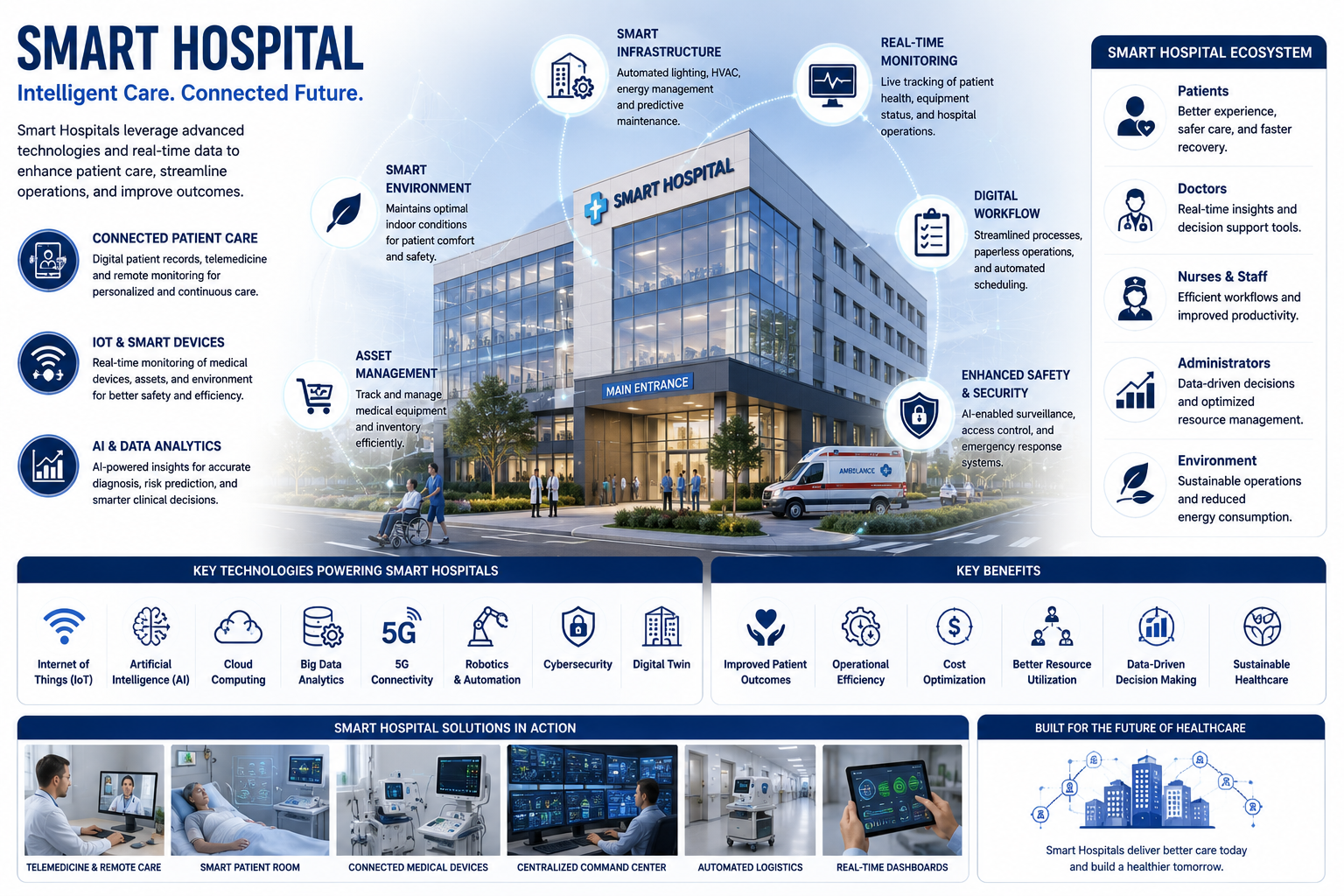
The healthcare industry is entering a new era of digital transformation, and the Smart Hospital Market Outlook 2035 reflects a future where connected healthcare ecosystems redefine patient treatment, operational efficiency, and clinical decision-making. Hospitals across the globe are increasingly integrating advanced technologies such as artificial intelligence (AI), Internet of Things (IoT), cloud computing, robotics, and real-time analytics to create smarter and more responsive healthcare environments.
The growing focus on patient-centric care, rising healthcare expenditures, and increasing demand for efficient hospital management systems are driving the expansion highlighted in the Smart Hospital Market Outlook 2035. Healthcare providers are rapidly adopting digital platforms that improve communication between departments, streamline workflows, and enhance the overall patient experience.
Rising Adoption of Connected Healthcare Technologies
One of the key trends shaping the Smart Hospital Market Outlook 2035 is the rapid implementation of connected healthcare technologies. Smart hospitals rely on interconnected devices and intelligent systems that collect, analyze, and share patient data in real time. These technologies allow healthcare professionals to monitor patients remotely, reduce medical errors, and deliver faster diagnoses.
IoT-enabled devices are becoming central to hospital infrastructure. Smart sensors, wearable monitoring devices, and connected imaging systems are helping hospitals optimize patient management while improving treatment accuracy. According to the evolving Smart Hospital Market Outlook 2035, healthcare organizations are prioritizing investments in intelligent healthcare ecosystems to support better patient outcomes and operational transparency.
Artificial Intelligence Transforming Hospital Operations
Artificial intelligence continues to play a transformative role in the Smart Hospital Market Outlook 2035. AI-powered solutions are helping hospitals automate repetitive tasks, improve clinical workflows, and enhance predictive healthcare capabilities. From AI-assisted diagnostics to virtual nursing assistants, hospitals are leveraging advanced algorithms to improve efficiency and reduce administrative burdens.
Machine learning systems can analyze large volumes of healthcare data to identify disease patterns, predict patient risks, and support personalized treatment plans. The integration of AI into hospital operations is expected to remain a major growth driver in the Smart Hospital Market Outlook 2035, particularly as healthcare providers seek scalable and cost-effective digital solutions.
Cloud Computing and Data Integration Accelerate Growth
Cloud-based healthcare platforms are becoming essential components of modern hospital infrastructure. The Smart Hospital Market Outlook 2035 highlights the increasing adoption of cloud computing technologies that enable seamless data sharing across healthcare departments and remote locations.
Cloud integration supports electronic health records (EHRs), telemedicine platforms, and advanced analytics systems. Hospitals are utilizing centralized digital platforms to improve patient coordination, optimize resource utilization, and maintain secure access to medical data. As cybersecurity technologies continue to evolve, cloud-enabled healthcare ecosystems are expected to gain stronger acceptance within the Smart Hospital Market Outlook 2035.
Download PDF Brochure @ https://www.marketsandmarkets.com/pdfdownloadNew.asp?id=29319948
Robotics and Automation Enhancing Patient Care
Robotics and automation are emerging as important contributors to the growth outlined in the Smart Hospital Market Outlook 2035. Hospitals are adopting robotic systems for surgery assistance, medicine delivery, patient transportation, and disinfection procedures. These technologies help healthcare institutions improve precision, minimize human error, and increase operational efficiency.
Automated hospital systems also support inventory management, patient scheduling, and contactless healthcare services. The increasing use of robotic process automation is anticipated to strengthen the development of intelligent healthcare facilities discussed in the Smart Hospital Market Outlook 2035.
Telemedicine and Remote Monitoring Driving Demand
The expansion of telemedicine services is another critical factor influencing the Smart Hospital Market Outlook 2035. Patients increasingly prefer virtual consultations and remote healthcare monitoring due to convenience, accessibility, and reduced treatment costs. Smart hospitals are integrating telehealth platforms with AI-driven diagnostic tools and wearable devices to provide continuous patient care.
Remote patient monitoring systems allow healthcare providers to track vital signs, medication adherence, and chronic disease management outside traditional hospital settings. As digital healthcare adoption rises worldwide, telemedicine is expected to remain a major growth segment within the Smart Hospital Market Outlook 2035.
Regional Insights and Emerging Opportunities
North America currently leads the global smart hospital industry due to strong healthcare infrastructure, high technology adoption rates, and increasing investments in digital health solutions. Europe is also witnessing significant growth as governments promote healthcare modernization initiatives.
Meanwhile, Asia-Pacific is expected to emerge as a rapidly expanding region in the Smart Hospital Market Outlook 2035. Growing urbanization, rising healthcare awareness, and expanding hospital networks in countries such as China, India, and Japan are accelerating demand for intelligent healthcare technologies.
Emerging economies are increasingly investing in digital transformation projects to improve healthcare accessibility and hospital efficiency. These developments are creating substantial opportunities for technology providers operating within the Smart Hospital Market Outlook 2035.
Future Trends Shaping the Industry
Several long-term trends are expected to influence the future direction of the Smart Hospital Market Outlook 2035. These include:
- Expansion of AI-powered predictive healthcare systems
- Increased deployment of 5G-enabled hospital networks
- Rising use of blockchain for secure medical data management
- Growth in personalized and precision medicine
- Adoption of digital twin technology in healthcare infrastructure
- Enhanced focus on cybersecurity and patient data protection
As healthcare systems become increasingly data-driven, hospitals will continue to evolve into highly connected and intelligent ecosystems.
The Smart Hospital Market Outlook 2035 presents a future shaped by technological innovation, connected healthcare ecosystems, and patient-centered digital transformation. Smart hospitals are expected to play a critical role in improving healthcare delivery through AI integration, cloud computing, robotics, telemedicine, and advanced data analytics.
With healthcare providers worldwide investing in intelligent infrastructure and digital healthcare solutions, the industry is poised for substantial growth over the coming decade. The ongoing evolution highlighted in the Smart Hospital Market Outlook 2035 demonstrates how connected technologies are reshaping patient care, operational efficiency, and the future of global healthcare systems.
Frequently Asked Questions (FAQs) – Smart Hospital Market Outlook 2035
1. What is meant by a smart hospital?
A smart hospital is a healthcare facility that uses advanced digital technologies such as artificial intelligence (AI), Internet of Things (IoT), cloud computing, robotics, and data analytics to improve patient care, hospital management, and operational efficiency.
2. What factors are driving the Smart Hospital Market Outlook 2035?
The Smart Hospital Market Outlook 2035 is driven by rising adoption of digital healthcare technologies, increasing demand for connected medical systems, growth in telemedicine services, and the need for efficient patient management solutions.
3. How does artificial intelligence impact smart hospitals?
Artificial intelligence helps smart hospitals automate administrative tasks, improve diagnostics, support predictive analytics, and enhance personalized patient treatment plans, contributing significantly to the Smart Hospital Market Outlook 2035.
4. Why is IoT important in smart hospitals?
IoT enables real-time patient monitoring, connected medical devices, smart sensors, and seamless communication between healthcare systems, improving patient safety and operational efficiency.
5. What role does cloud computing play in smart hospitals?
Cloud computing allows hospitals to securely store and share medical data, manage electronic health records (EHRs), support telemedicine platforms, and improve healthcare coordination.
6. Which region is expected to dominate the Smart Hospital Market Outlook 2035?
North America is expected to maintain a strong position due to advanced healthcare infrastructure and high digital technology adoption, while Asia-Pacific is projected to witness rapid growth during the forecast period.
7. How are robotics used in smart hospitals?
Robotics are used for surgical assistance, medicine delivery, hospital sanitation, patient transportation, and automated inventory management, helping improve efficiency and reduce human error.
8. What challenges could affect the Smart Hospital Market Outlook 2035?
Challenges include high implementation costs, cybersecurity concerns, data privacy issues, integration complexities, and limited digital infrastructure in developing regions.
