The global energy industry is undergoing a major transformation as governments, businesses, and communities seek cleaner, more reliable, and flexible power-generation solutions. Solar energy has emerged as a key technology in this transition, while solar containers are gaining attention as practical solutions for mobile electricity generation, off-grid power supply, and temporary energy infrastructure. The Solar Container Market is benefiting from increasing demand for decentralized renewable energy, rural electrification, and dependable electricity in remote and challenging environments.
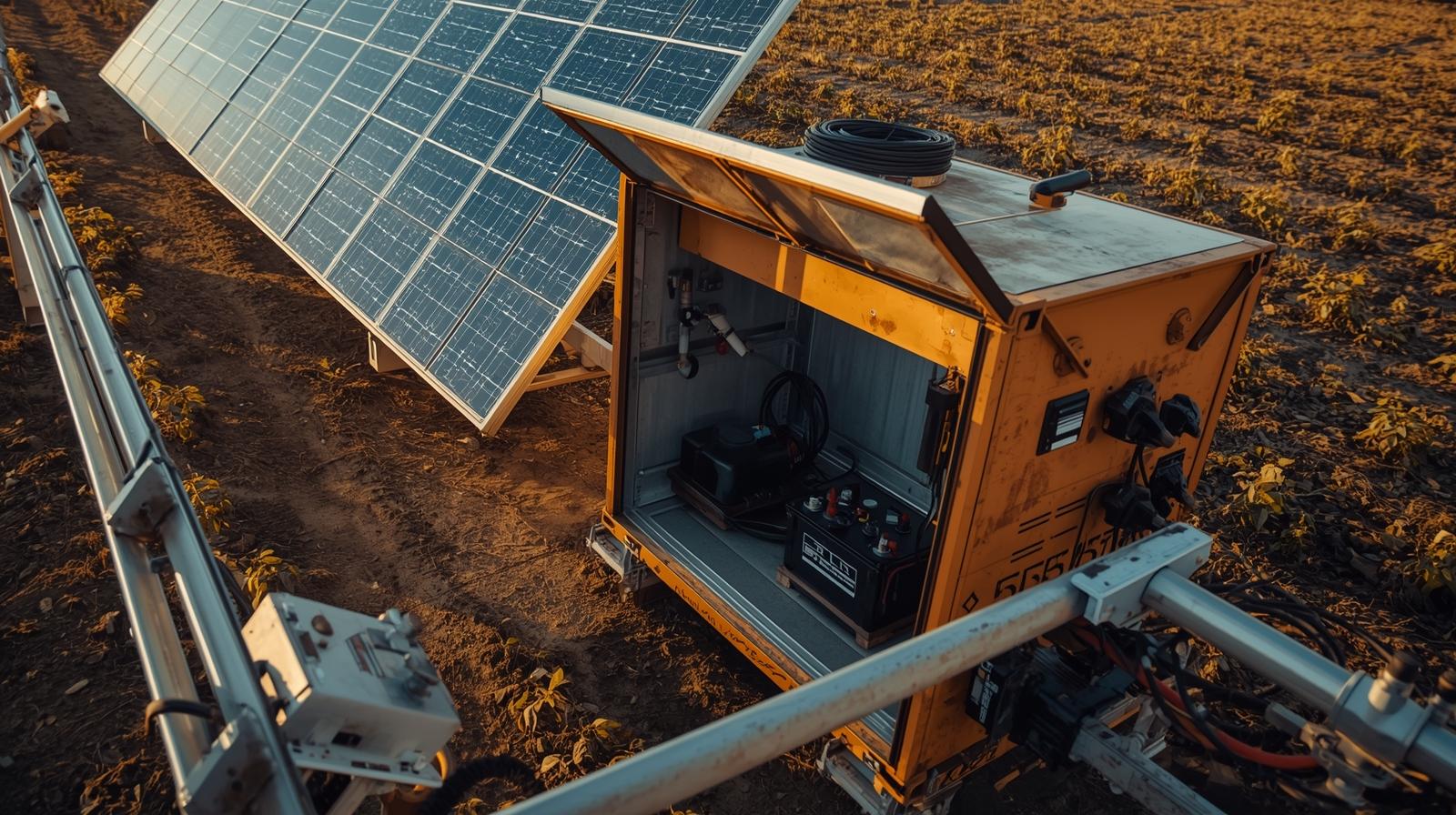
Solar containers are modular power-generation systems that integrate solar photovoltaic (PV) panels, battery storage, inverters, monitoring systems, and energy management technologies within a transportable container structure. These systems can be deployed at construction sites, mining operations, agricultural facilities, military installations, disaster-relief locations, and remote industrial facilities. Their modular design enables users to install renewable power systems without depending entirely on conventional grid infrastructure.
According to MarketsandMarkets, the global Solar Container Market was valued at USD 0.29 billion in 2025 and is projected to reach USD 0.83 billion by 2030, growing at a CAGR of 23.8% during the forecast period. Increasing adoption of off-grid and hybrid energy systems, improvements in battery storage, and growing investments in clean energy infrastructure are expected to support market growth
As energy requirements become more distributed and mobile, solar containers are evolving from basic portable solar installations into integrated energy systems capable of supporting different power requirements. Improvements in storage capacity, smart monitoring, and modular configurations are expected to create new opportunities for manufacturers and energy solution providers.
Solar Container Market Overview
Solar containers provide a combination of portability, renewable power generation, and integrated energy management. Unlike conventional solar installations that require fixed infrastructure, containerized systems can be transported to different locations and configured according to site-specific energy requirements. This flexibility makes them useful in locations where grid access is limited, unreliable, or expensive to establish.
A typical solar container includes solar panels that convert sunlight into electricity, batteries that store generated energy, and inverters that convert electrical power into a suitable form for connected equipment. Monitoring systems and energy management software help users track generation, consumption, and storage performance. Some systems can also integrate with grid connections or backup generators to provide hybrid power.
The market is segmented by type, component, power capacity, installation type, and application. Portable and fixed systems address different installation requirements, while power capacities range from below 10 kW to above 50 kW. Applications include agriculture and irrigation, remote charging stations, mining and military operations, energy companies, and other industrial or temporary power needs. <Cite refs={[“turn962839search0″,”turn962839view0”]}/>
The market’s appeal lies in its ability to provide deployable electricity infrastructure without requiring every site to build a permanent solar power plant. For businesses operating in remote locations, this can improve energy access and reduce dependence on fuel-based power generation.
Download PDF Brochure @ https://www.marketsandmarkets.com/pdfdownloadNew.asp?id=234680839
Key Growth Drivers of the Solar Container Market
Rising Demand for Renewable and Decentralized Energy
The growing shift toward renewable energy is a major driver of the Solar Container Market. Organizations are increasingly seeking ways to reduce carbon emissions, improve energy security, and diversify their electricity supply. Solar containers support these objectives by combining renewable generation with storage in a compact, deployable format.
Decentralized energy solutions are particularly valuable in regions where grid infrastructure is underdeveloped or where extending conventional electricity networks would require significant investment. Solar containers can help supply power to remote communities, temporary facilities, agricultural operations, and infrastructure projects.
Their use can also reduce reliance on diesel generators. Although solar containers may still require backup generation in certain conditions, they can lower fuel consumption when solar generation and battery storage meet a meaningful share of the site’s electricity needs. This can reduce exposure to fuel-price volatility, transportation costs, and emissions.
Growing Adoption of Off-Grid and Hybrid Power Solutions
Off-grid electricity requirements are increasing across mining, construction, defense, telecommunications, and emergency-response applications. These sectors frequently operate in locations where access to dependable grid electricity is limited or where temporary power infrastructure is required.
Solar containers offer a practical option because their integrated components can be transported and deployed with less site construction than some conventional installations. Hybrid configurations can combine solar generation, battery storage, grid electricity, and backup generators, depending on the operating environment.
For example, a construction company working at a remote site can use a solar container to supply electricity to lighting, communication systems, tools, and selected site equipment. A mining operator may use containerized solar power to supplement electricity for remote monitoring and support facilities. These applications demonstrate how portable renewable energy can serve specialized operational needs.
Advancements in Battery Storage Technology
Battery storage is becoming increasingly important because solar generation varies with weather conditions, daylight hours, and seasonal changes. Batteries enable solar containers to store surplus electricity and deliver it when generation is insufficient or demand increases.
According to MarketsandMarkets, the battery component segment is projected to grow at a CAGR of 26.9% during the 2025–2030 forecast period. Improvements in battery performance, storage integration, and energy management are helping make solar container systems more adaptable to different operating requirements.
Increasing Focus on Rural Electrification and Emergency Power
Reliable electricity is essential for healthcare, communication, water supply, and community services. In remote regions and disaster-affected areas, conventional power infrastructure may be unavailable or damaged. Solar containers can provide a deployable source of electricity for emergency facilities, temporary shelters, medical units, and communication equipment.
Their transportable design can help organizations establish power infrastructure more quickly than a permanent installation in suitable circumstances. Modular configurations also allow capacity to be adjusted according to the needs of a particular site.
As governments, humanitarian organizations, and infrastructure developers focus on resilience and energy access, containerized solar systems may become a useful option for temporary and decentralized electricity supply.
Emerging Trends Shaping the Solar Container Market
Integration of Smart Energy Management Systems
Digital technologies are transforming how solar containers generate, store, and distribute electricity. Smart energy management systems can monitor solar production, battery status, electricity demand, and system performance. When connected to suitable sensors and communication networks, these systems can provide real-time operating information and help users identify performance issues.
Artificial intelligence and advanced analytics may support forecasting of energy generation and demand, enabling better coordination between solar panels, batteries, and backup power sources. These capabilities can help reduce unnecessary fuel use, improve energy utilization, and support preventive maintenance.
Remote monitoring is especially valuable for solar containers deployed across multiple locations. Operators can review system performance without visiting each site, helping reduce maintenance effort and improve visibility into power availability.
Growth of Portable and Modular Solar Solutions
Portability is one of the most important features of containerized solar technology. Systems can be transported between project sites or deployed temporarily to meet changing power requirements. This is particularly useful for construction, disaster response, military operations, and remote industrial projects.
Solar Containers for Electric Vehicle Charging
The growth of electric mobility is creating new opportunities for mobile and decentralized charging infrastructure. Solar containers can be configured to provide electricity for charging stations, particularly at temporary sites, remote destinations, and locations where grid capacity is limited.
A containerized charging solution can combine solar panels, battery storage, charging equipment, and energy management software. The battery can help balance electricity supply and charging demand, although the system’s actual charging capacity depends on its solar output, storage size, and available backup power.
Remote charging stations are relevant to fleet operators, infrastructure developers, and organizations that need flexible charging facilities. MarketsandMarkets identifies remote charging stations as an application with growth potential, supported by electric vehicle adoption and demand for off-grid charging infrastructure
Hybrid Renewable Energy Systems
Solar containers can be integrated with other energy sources to improve reliability. Hybrid systems may combine solar PV, batteries, grid electricity, and backup generators, allowing power supply to respond to changing generation and demand conditions.
This configuration is valuable in environments where uninterrupted electricity is important but solar generation alone cannot meet all requirements. Energy management software can help determine when to charge batteries, use stored energy, or activate backup generation.
Over time, improvements in control technology and storage integration may support more efficient hybrid systems and reduce dependence on conventional fuels. The effectiveness of each system will depend on local weather, electricity demand, storage capacity, and operating costs.
Solar Container Market Segmentation Analysis
By Type: Portable and Fixed
The market includes portable and fixed solar containers. Portable systems are designed for transport and rapid deployment, making them suitable for temporary power needs, remote operations, and emergency applications. Fixed systems serve locations where containerized solar infrastructure is intended to remain in place for a longer period.
Demand for portable solutions is supported by the need for flexible electricity infrastructure across industries. Fixed installations can appeal to users seeking modular power systems for recurring or relatively stable site requirements.
By Component: Solar Panels, Batteries, Inverters, Monitoring Systems, and Energy Management Systems
Solar panels are the primary power-generation component of a solar container. Their conversion efficiency, durability, and physical configuration influence the amount of electricity the system can generate.
Batteries store electricity for use when solar generation is low or demand is high. Inverters convert generated or stored electricity into a form suitable for connected equipment. Monitoring systems track operational performance, while energy management systems coordinate generation, storage, and consumption.
Component integration is becoming an important competitive factor. Manufacturers that combine reliable hardware with intelligent controls can provide systems better suited to specific operating conditions.
By Power Capacity: Below 10 kW, 10–50 kW, and Above 50 kW
Solar containers are available across multiple power capacities. Smaller systems can serve limited loads, including basic site electricity, monitoring equipment, and selected remote applications. Medium-capacity units can support construction sites, agricultural operations, and smaller industrial facilities, while larger systems can address higher demand or be integrated into broader power networks.
MarketsandMarkets expects the 10–50 kW segment to account for 42.9% of the market in 2025. This capacity range offers a balance between portability and electricity output for several commercial and remote applications.
By Installation Type: On-Grid and Off-Grid
Off-grid solar containers are designed to operate without a continuous connection to the electricity grid. They are relevant to remote sites, rural electrification, temporary facilities, and operations where grid access is unavailable.
On-grid systems connect with existing electricity infrastructure and can complement grid power, subject to local technical and regulatory requirements. MarketsandMarkets projects the on-grid segment to register a CAGR of 28.5% during the forecast period, indicating increasing interest in integrating containerized solar solutions with established electricity networks.
By Application: Agriculture, Charging Stations, Mining, Military, and Energy Companies
Agriculture and irrigation represent an important application area because farms may require electricity for water pumping, irrigation equipment, monitoring, and other operations. Solar containers can support agricultural sites where grid access is limited or where mobile power is useful.
Remote charging stations are gaining attention alongside electric mobility and distributed charging infrastructure. Mining and military operations require dependable power in locations that may be difficult to access, while energy companies can use containerized systems for temporary facilities and specialized power applications.
Other applications include construction, telecommunications, emergency services, and rural infrastructure. The diversity of these uses provides opportunities for manufacturers to develop tailored solutions.
Competitive Landscape and Key Companies
Competition in the Solar Container Market is shaped by system reliability, portability, energy storage integration, product customization, and the ability to deliver solutions for specific operating environments. Companies are developing modular systems that combine solar panels, batteries, inverters, and control technologies to meet different power requirements.
MarketsandMarkets identifies the following companies among the key players in the market:
- Yangzhou CIMC New Energy Equipment Co., Ltd.
- Ecosun Innovations
- Faber Infrastructure GmbH
- BoxPower Inc.
- Hacon Containers
These companies participate in a market where system integration and application-specific design are important differentiators. Suppliers can strengthen their position by improving deployment speed, enhancing remote monitoring, expanding hybrid power capabilities, and supporting customers throughout the system lifecycle.
Challenges and Restraints
Despite its strong growth outlook, the Solar Container Market faces several challenges. High initial investment costs can limit adoption among smaller businesses, rural communities, and organizations with limited project funding. Costs may include solar panels, batteries, inverters, control systems, container structures, transportation, and site preparation.
Power availability is another consideration. Solar generation changes with sunlight, weather, and seasonal conditions, while batteries have finite capacity and gradually degrade over time. Systems designed for critical applications may therefore require larger storage capacity, backup generation, or a connection to the grid.
Operating environments can also affect system durability. Dust, high temperatures, humidity, corrosion, and physical vibration may increase maintenance requirements. In remote locations, access to spare parts and trained technicians can further affect operating costs.
Addressing these challenges will require improvements in system design, storage economics, manufacturing efficiency, and maintenance support.
Future Growth Opportunities
The future of the Solar Container Market will be influenced by improvements in battery technology, intelligent energy management, and demand for flexible electricity infrastructure. Manufacturers have opportunities to develop solutions tailored to electric vehicle charging, agriculture, telecommunications, disaster response, and remote industrial operations.
Integration with IoT platforms and AI-enabled analytics can improve system visibility and energy management. More efficient batteries and modular designs may help users increase system utilization and adapt capacity to changing requirements.
Business models such as leasing, energy-as-a-service, and managed power solutions could also help reduce upfront costs for customers, depending on market conditions and financing availability. Partnerships among solar technology providers, battery manufacturers, logistics companies, and energy service providers may accelerate adoption.
Conclusion
The Solar Container Market is emerging as an important part of the broader transition toward decentralized and renewable electricity. Its ability to combine solar generation, battery storage, and energy management in a transportable system makes it attractive for remote sites, agriculture, construction, mining, emergency response, and charging infrastructure.
With the market projected to grow from USD 0.29 billion in 2025 to USD 0.83 billion by 2030 at a CAGR of 23.8%, opportunities are expanding for manufacturers and energy solution providers. Portable systems, battery integration, on-grid applications, and smart energy management are expected to influence future development.
Although upfront costs, storage limitations, and environmental challenges remain, ongoing technological improvements and the need for reliable clean power are expected to support continued market expansion.
Frequently Asked Questions (FAQs)
1. What is the projected growth of the Solar Container Market?
The global Solar Container Market is projected to grow from USD 0.29 billion in 2025 to USD 0.83 billion by 2030, at a CAGR of 23.8%.
2. What are the major applications of solar containers?
Major applications include agriculture and irrigation, remote charging stations, mining, military operations, construction, rural electrification, and temporary power infrastructure.
3. What are the key trends shaping the Solar Container Market?
Key trends include smart energy management, battery storage integration, portable modular systems, hybrid renewable power, and solar-powered electric vehicle charging.
4. Which region is expected to lead the Solar Container Market?
Asia Pacific is estimated to account for 41.3% of the market in 2025, according to MarketsandMarkets.
5. What are the main challenges in the Solar Container Market?
Major challenges include high initial investment, variable solar generation, battery limitations, maintenance requirements, and durability in extreme environments.
Meta Description: Explore Solar Container Market growth, emerging trends, market drivers, battery storage innovations, and opportunities in portable renewable energy through 2030.
Challenges and Restraints
Despite its strong growth outlook, the Solar Container Market faces several challenges. High initial investment costs can limit adoption among smaller businesses, rural communities, and organizations with limited project funding. Costs may include solar panels, batteries, inverters, control systems, container structures, transportation, and site preparation.
Power availability is another consideration. Solar generation changes with sunlight, weather, and seasonal conditions, while batteries have finite capacity and gradually degrade over time. Systems designed for critical applications may therefore require larger storage capacity, backup generation, or a connection to the grid.
Operating environments can also affect system durability. Dust, high temperatures, humidity, corrosion, and physical vibration may increase maintenance requirements. In remote locations, access to spare parts and trained technicians can further affect operating costs.
Addressing these challenges will require improvements in system design, storage economics, manufacturing efficiency, and maintenance support.
Future Growth Opportunities
The future of the Solar Container Market will be influenced by improvements in battery technology, intelligent energy management, and demand for flexible electricity infrastructure. Manufacturers have opportunities to develop solutions tailored to electric vehicle charging, agriculture, telecommunications, disaster response, and remote industrial operations.
Integration with IoT platforms and AI-enabled analytics can improve system visibility and energy management. More efficient batteries and modular designs may help users increase system utilization and adapt capacity to changing requirements.
Business models such as leasing, energy-as-a-service, and managed power solutions could also help reduce upfront costs for customers, depending on market conditions and financing availability. Partnerships among solar technology providers, battery manufacturers, logistics companies, and energy service providers may accelerate adoption.
Conclusion
The Solar Container Market is emerging as an important part of the broader transition toward decentralized and renewable electricity. Its ability to combine solar generation, battery storage, and energy management in a transportable system makes it attractive for remote sites, agriculture, construction, mining, emergency response, and charging infrastructure.
With the market projected to grow from USD 0.29 billion in 2025 to USD 0.83 billion by 2030 at a CAGR of 23.8%, opportunities are expanding for manufacturers and energy solution providers. Portable systems, battery integration, on-grid applications, and smart energy management are expected to influence future development.
Although upfront costs, storage limitations, and environmental challenges remain, ongoing technological improvements and the need for reliable clean power are expected to support continued market expansion.
Frequently Asked Questions (FAQs)
1. What is the projected growth of the Solar Container Market?
The global Solar Container Market is projected to grow from USD 0.29 billion in 2025 to USD 0.83 billion by 2030, at a CAGR of 23.8%.
2. What are the major applications of solar containers?
Major applications include agriculture and irrigation, remote charging stations, mining, military operations, construction, rural electrification, and temporary power infrastructure.
3. What are the key trends shaping the Solar Container Market?
Key trends include smart energy management, battery storage integration, portable modular systems, hybrid renewable power, and solar-powered electric vehicle charging.
4. Which region is expected to lead the Solar Container Market?
Asia Pacific is estimated to account for 41.3% of the market in 2025, according to MarketsandMarkets.
5. What are the main challenges in the Solar Container Market?
Major challenges include high initial investment, variable solar generation, battery limitations, maintenance requirements, and durability in extreme environments.
About MarketsandMarkets™
MarketsandMarkets™ is a blue ocean alternative in growth consulting and program management, leveraging a man-machine offering to drive supernormal growth for progressive organizations in the B2B space. We have the widest lens on emerging technologies, making us proficient in co-creating supernormal growth for clients.
The B2B economy is witnessing the emergence of $25 trillion of new revenue streams that are substituting existing revenue streams in this decade alone. We work with clients on growth programs, helping them monetize this $25 trillion opportunity through our service lines – TAM Expansion, Go-to-Market (GTM) Strategy to Execution, Market Share Gain, Account Enablement, and Thought Leadership Marketing.
Built on the ’GIVE Growth’ principle, we work with several Forbes Global 2000 B2B companies – helping them stay relevant in a disruptive ecosystem. Our insights and strategies are molded by our industry experts, cutting-edge AI-powered Market Intelligence Cloud, and years of research. The KnowledgeStore™ (our Market Intelligence Cloud) integrates our research, facilitates an analysis of interconnections through a set of applications, helping clients look at the entire ecosystem and understand the revenue shifts happening in their industry.
To find out more, visit www.MarketsandMarkets™.com or follow us on Twitter, LinkedIn and Facebook.
Contact:
Mr. Rohan Salgarkar
MarketsandMarkets™ INC.
1615 South Congress Ave.
Suite 103
Delray Beach, FL 33445
USA : 1-888-600-6441
