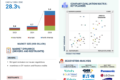
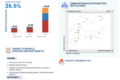
The United Kingdom in vitro diagnostics market is a sophisticated and rapidly expanding sector driven by a growing aging population and an increasing prevalence of chronic conditions such as diabetes and cardiovascular diseases. The landscape is characterized by a strategic shift toward decentralization, with the National Health Service prioritizing early disease detection in community settings like primary-care clinics, pharmacies, and home-care environments. Technological advancements in molecular diagnostics, point-of-care testing, and the integration of artificial intelligence are enhancing diagnostic accuracy while streamlining laboratory workflows to address staffing shortages. Although the market is currently dominated by major international players and faces challenges such as stringent regulatory requirements under the IVDR and high equipment costs, it is poised for steady growth as healthcare providers increasingly adopt personalized medicine and high-throughput testing solutions. Additionally, the industry is adapting to new environmental mandates, such as the NHS net-zero standards, which are influencing procurement toward more sustainable diagnostic formats.
Key Drivers, Restraints, Opportunities, and Challenges in the United Kingdom In Vitro Diagnostics Market
The United Kingdom in vitro diagnostics market is primarily driven by an aging population and a rising prevalence of chronic conditions like cardiovascular disease and diabetes, which necessitate frequent screening and long-term monitoring. Growth is further propelled by the National Health Service’s strategic shift toward early detection in community settings and the increasing adoption of point-of-care and home-based testing. However, the industry faces significant restraints from stringent, IVDR-aligned regulatory requirements and reimbursement pressures on high-cost molecular assays. Opportunities abound in the development of AI-driven diagnostics and the expansion of companion diagnostics, particularly as the NHS leverages its extensive health data to support personalized medicine. Despite these prospects, challenges remain, including critical shortages of skilled laboratory staff and the operational complexities of maintaining genomic data sovereignty and cybersecurity in a post-Brexit regulatory landscape.
Customer Segmentation, Needs, Preferences, and Buying Behavior in the United Kingdom In Vitro Diagnostics Market
The target customers for the United Kingdom in vitro diagnostics market primarily include NHS hospitals and trust laboratories, independent diagnostic laboratories, academic and research institutes, and an increasing segment of home-care and self-testing users. These customers prioritize early disease detection, accuracy, and speed, with a significant shift in preference toward decentralized point-of-care testing and primary-care pharmacist-led screening to reduce the burden on acute hospitals. Purchasing behavior is largely driven by a business-to-business “razor-blade” model, where significant investments in laboratory instruments lead to recurring demand for reagents and consumables, while the public sector’s procurement is heavily influenced by NHS clinical needs and innovative payment schemes like the Innovative Devices Access Pathway. Across all segments, there is a growing demand for data-enabled solutions and companion diagnostics that support personalized medicine for chronic conditions like diabetes, cancer, and cardiovascular diseases.
Regulatory, Technological, and Economic Factors Impacting the United Kingdom In Vitro Diagnostics Market
The United Kingdom in vitro diagnostics market is shaped by a complex interplay of regulatory, technological, and economic factors that influence entry and profitability. Regulatory compliance remains a significant hurdle, as the transition to the In Vitro Diagnostic Regulation (IVDR) and the implementation of green procurement mandates by the NHS impose higher costs and more stringent standards on manufacturers. Technologically, the market is being transformed by the integration of artificial intelligence, next-generation sequencing, and the expansion of point-of-care and home-based testing, which offer growth opportunities but necessitate substantial research and development investment and specialized digital infrastructure. Economically, while the rising prevalence of chronic conditions among an aging population sustains high demand, profitability is often challenged by high capital costs for advanced diagnostic equipment and significant reimbursement pressures on high-cost molecular assays within the NHS framework.
Current and Emerging Trends in the United Kingdom In Vitro Diagnostics Market
The United Kingdom in vitro diagnostics market is undergoing a rapid transformation characterized by the decentralization of testing and the integration of digital health technologies. The National Health Service is aggressively shifting test volumes from acute hospitals to Community Diagnostic Centres, retail pharmacies, and home-based settings, as evidenced by the Pharmacy First scheme and the goal of bringing diagnostics closer to patients. These trends are evolving quickly, with the molecular diagnostics segment projected to expand at a CAGR of nearly 10% through 2031 and the home-care segment rising at over 8% annually. Furthermore, the market is being shaped by the adoption of artificial intelligence for automated lab workflows and the expansion of whole-genome sequencing into pharmacogenomics. While traditional hospital laboratories still hold the largest revenue share, the shift toward rapid, handheld diagnostic tools and AI-driven data platforms is accelerating to address the healthcare needs of an aging population and the increasing prevalence of chronic conditions like diabetes.
Technological Innovations and Disruption Potential in the United Kingdom In Vitro Diagnostics Market
Technological innovations such as Next-Generation Sequencing (NGS), molecular diagnostics, and digital PCR are gaining significant traction and are poised to disrupt the United Kingdom in vitro diagnostics market by enabling more precise genomic testing and faster disease detection. The integration of artificial intelligence and digital connectivity through the Federated Data Platform is further transforming the industry by streamlining laboratory workflows, enhancing diagnostic accuracy, and linking laboratory data with prescribing records. Additionally, the expansion of point-of-care (POC) and home-based testing technologies, supported by initiatives like Community Diagnostic Centres and pharmacy-led screening, is decentralizing healthcare by providing rapid results and improving accessibility for chronic condition management.
Short-Term vs. Long-Term Trends in the United Kingdom In Vitro Diagnostics Market
In the United Kingdom in vitro diagnostics market, the massive surge in COVID-19 testing volumes is increasingly viewed as a short-term phenomenon that is now declining, whereas several other trends represent long-term structural shifts. The move toward decentralization, characterized by the rising adoption of point-of-care and home-based testing, is a permanent transformation driven by the National Health Service prioritizing early detection in community settings and the expansion of the Pharmacy First scheme. Similarly, the integration of artificial intelligence and digital workflow solutions into laboratory operations is a fundamental shift aimed at addressing chronic staffing shortages and improving testing efficiency. Other enduring structural changes include the growth of personalized medicine and companion diagnostics, which are fueled by the long-term demographic realities of an aging population and the increasing prevalence of chronic conditions like diabetes and cancer.