The 3D Metrology Market is gaining momentum as manufacturers increasingly prioritize precision measurement, product quality, and production efficiency. The growing adoption of automation, artificial intelligence (AI), and smart manufacturing technologies is transforming how industries measure, inspect, and validate complex components. From automotive and aerospace to semiconductor manufacturing and medical devices, 3D metrology solutions are becoming essential for maintaining accuracy and meeting stringent quality standards.
As manufacturers move toward data-driven production environments, the 3D Metrology Market presents significant opportunities for equipment manufacturers, software developers, technology providers, and industrial end users.
The global 3D metrology market was estimated to be valued at USD 11.13 billion in 2024 and is projected to reach USD 15.01 billion by 2029; it is expected to register a CAGR of 6.2% during the forecast period.
Understanding the 3D Metrology Market
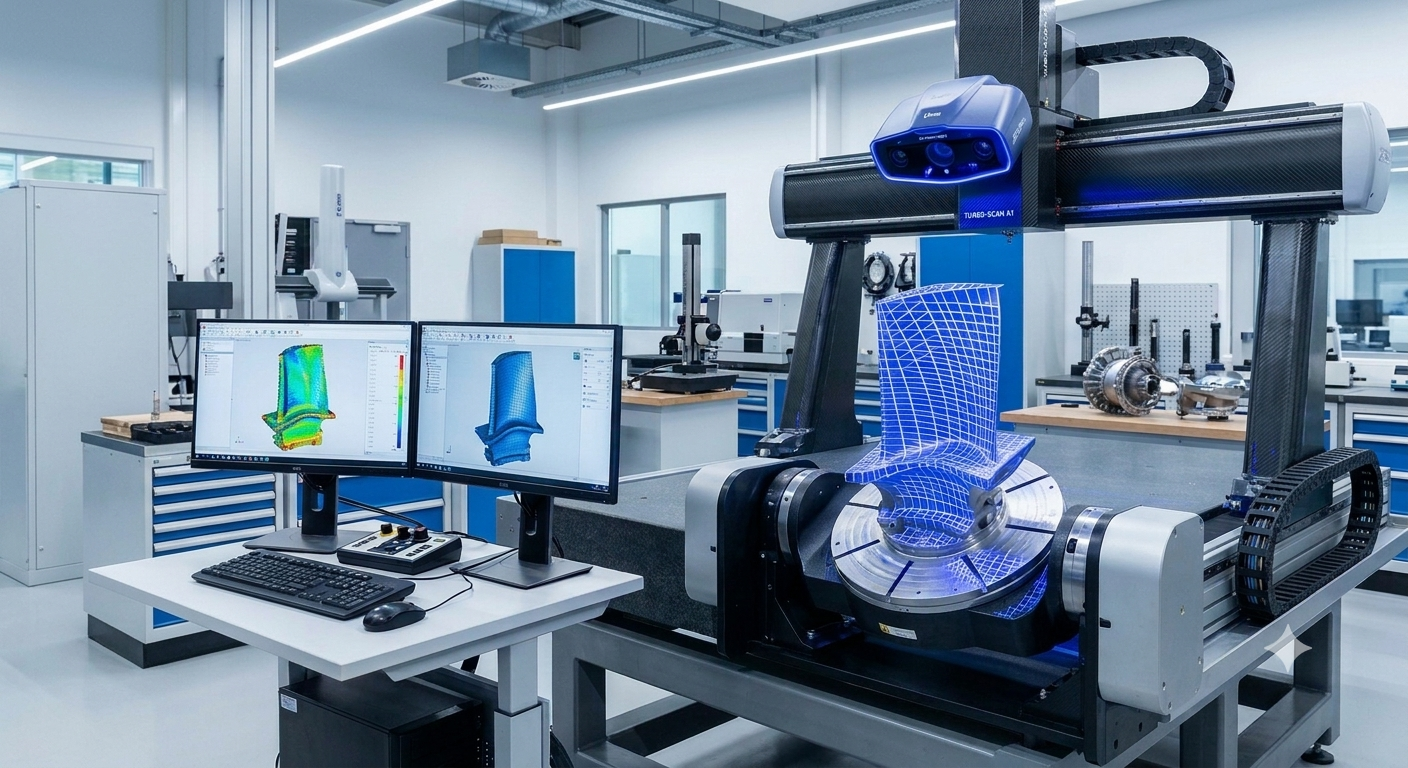
3D metrology is the science of measuring an object’s physical dimensions and geometric characteristics across three axes: X, Y, and Z. It enables manufacturers to capture accurate dimensional data, compare components against design specifications, identify defects, and improve production quality.
Modern 3D metrology systems include coordinate measuring machines (CMMs), optical digitizers and scanners (ODS), video measuring machines (VMMs), form measurement equipment, X-ray and computed tomography (CT) systems, and 3D automated optical inspection (AOI) systems.
These technologies help manufacturers inspect complex surfaces and intricate components that can be difficult to measure using conventional methods. Depending on the application, measurement can be contact-based or non-contact, allowing businesses to select systems that suit their accuracy, speed, and production requirements.
The growing complexity of manufactured products is increasing the importance of reliable measurement solutions. Electric vehicle components, advanced semiconductor packages, aircraft structures, and precision medical devices all require accurate dimensional inspection. Consequently, 3D metrology is becoming an integral part of modern quality management and industrial automation.
Key Growth Drivers Shaping the 3D Metrology Market
1. Rising Demand for Precision Manufacturing
Precision has become a major competitive advantage in modern manufacturing. Automotive, aerospace, electronics, and medical device manufacturers must ensure that components meet strict dimensional tolerances and quality requirements.
Traditional measurement techniques may struggle with complex geometries, intricate surfaces, and high-volume production requirements. 3D metrology systems address these challenges by capturing detailed dimensional information and identifying deviations from engineering specifications.
The increasing complexity of electric vehicle components, aircraft structures, semiconductor devices, and precision-engineered medical products is expected to support demand for advanced measurement technologies. Manufacturers can use these systems to reduce rework, improve consistency, and minimize the risk of defective products reaching customers.
2. Growing Adoption of Automation and Industry 4.0
Industry 4.0 is transforming manufacturing through connected equipment, robotics, real-time data collection, and intelligent production systems. Within this environment, 3D metrology helps manufacturers integrate quality inspection into production workflows rather than relying exclusively on end-of-line inspections.
Automated measurement systems can collect dimensional data during production, helping operators identify deviations earlier and adjust manufacturing processes. Integration with computer-aided design (CAD) software, robotics, and manufacturing execution systems can further improve inspection efficiency.
The shift toward automated optical inspection is also creating opportunities for manufacturers offering advanced scanning systems and integrated measurement solutions. These technologies are particularly valuable in production environments where inspection speed, repeatability, and measurement accuracy are critical.
3. Increasing Integration of Artificial Intelligence
AI and machine learning are creating new opportunities in the 3D Metrology Market by improving the interpretation of measurement data and supporting automated defect detection.
AI-powered systems can help identify patterns in inspection results, distinguish potential defects, and detect recurring production issues. When integrated with predictive analytics, measurement data can also support process optimization and preventive maintenance.
Generative AI and simulation technologies may further support product development by helping engineers analyze design variations, evaluate component performance, and optimize manufacturing processes.
These capabilities can help manufacturers move from reactive quality inspection toward more proactive, data-driven quality management. However, the benefits depend on data quality, system integration, and appropriate validation of AI-generated results.
Download PDF Brochure @ https://www.marketsandmarkets.com/pdfdownloadNew.asp?id=203080758
4. Expansion of Electric and Autonomous Vehicles
The automotive industry is an important end-user of 3D metrology solutions. Electric vehicles and autonomous driving technologies introduce demanding requirements for component accuracy, assembly quality, and system reliability.
Battery packs, electric motors, structural components, sensor housings, and precision-machined parts require detailed dimensional inspection. Coordinate measuring machines, laser scanners, and X-ray and CT equipment can help manufacturers assess component geometry and inspect internal structures.
As automotive manufacturers expand EV production and introduce more sophisticated vehicle technologies, the need for reliable measurement and inspection is likely to increase. Suppliers that develop high-throughput systems tailored to automotive production could benefit from these opportunities.
3D Metrology Market Share Insights and Competitive Landscape
The competitive landscape of the 3D Metrology Market includes established measurement equipment manufacturers, industrial technology providers, optical system specialists, and software companies. Competition is shaped by measurement accuracy, speed, ease of integration, product reliability, software capabilities, and after-sales support.
How Companies Can Strengthen Their Market Position
Companies competing in the 3D Metrology Market can strengthen their positions through several strategies:
- Product innovation: Develop faster scanners, more accurate measurement systems, and solutions capable of inspecting complex geometries.
- AI and software integration: Improve automated defect detection, data visualization, and compatibility with digital manufacturing platforms.
- Strategic partnerships: Collaborate with robotics suppliers, industrial automation companies, and software developers to deliver integrated inspection solutions.
- Regional expansion: Increase sales, service, and manufacturing capabilities in markets with expanding automotive, electronics, and semiconductor industries.
- Customer-focused services: Offer calibration, maintenance, measurement services, training, and software support to improve customer retention.
Market share should not be confused with company visibility or overall corporate revenue. The market includes several product categories and end-use industries, and the competitive position of each company varies by segment. Exact company-level market shares should therefore be based on a defined market scope and comparable revenue data.
Segment-Wise Opportunities in the 3D Metrology Market
Coordinate Measuring Machines
Coordinate measuring machines are important for accurately measuring the dimensions and geometries of manufactured components. They are widely used to inspect precision-engineered parts and verify whether products meet design specifications.
Different CMM configurations, including bridge, gantry, horizontal arm, cantilever, and articulated arm systems, address different component sizes and inspection requirements.
Opportunities are emerging in automated CMMs, high-accuracy measurement, and systems capable of inspecting medium-to-large components. Manufacturers serving automotive, aerospace, and heavy machinery customers may benefit from increasing quality requirements.
Optical Digitizers and Scanners
Optical digitizers and scanners capture three-dimensional surface data without always requiring physical contact with the measured object. This makes them useful for inspecting complex surfaces, large components, and parts with intricate geometries.
Laser scanners, structured-light scanners, and laser trackers can support reverse engineering, dimensional inspection, and production verification. Improvements in scanning speed, portability, and data processing are creating opportunities for manufacturers to develop more flexible measurement solutions.
Automated Optical Inspection Systems
Three-dimensional automated optical inspection systems are increasingly relevant to electronics manufacturing, where components and solder joints require detailed inspection.
These systems can help identify alignment problems, assembly defects, and dimensional deviations. Their integration into automated production lines supports faster inspection and reduces dependence on manual checks.
X-Ray and Computed Tomography Equipment
X-ray and CT measurement systems allow manufacturers to examine internal structures and identify defects that may not be visible on external surfaces.
They are particularly valuable for applications involving complex assemblies, castings, electronic components, and EV battery structures. As component designs become more intricate, demand for non-destructive internal inspection can create opportunities for advanced CT-based metrology solutions.
Software and Measurement Services
Software and services provide additional growth opportunities beyond equipment sales. Measurement software helps users process point clouds, compare scanned objects with CAD models, analyze deviations, and generate inspection reports.
Meanwhile, measurement services, calibration, training, and software-as-a-service offerings can help organizations access advanced metrology capabilities without investing in every component of an in-house measurement infrastructure.
Regional Outlook: Asia Pacific Offers Significant Growth Potential
Asia Pacific is a key region for the 3D Metrology Market because of its strong manufacturing base and investments in automotive, electronics, and semiconductor production.
MarketsandMarkets projects that Asia Pacific will grow at a CAGR of 8.0% from 2024 to 2029, compared with the global market’s projected CAGR of 6.2%. The region’s growth is supported by manufacturing automation, precision measurement requirements, and the adoption of Industry 4.0 technologies.
MarketsandMarkets
+1
China, Japan, and South Korea are important markets because of their established electronics, semiconductor, and automotive industries. India also presents opportunities as investments in electronics production, automotive manufacturing, and semiconductor-related infrastructure increase.
For companies seeking regional expansion, opportunities include developing local distribution networks, strengthening technical support, offering application-specific inspection solutions, and collaborating with manufacturing equipment suppliers.
North America and Europe remain important markets because of their advanced aerospace, automotive, medical technology, and industrial manufacturing ecosystems. Demand in these regions is supported by the need for high-precision inspection, product traceability, and stringent quality requirements.
Challenges Affecting Market Growth
Despite promising opportunities, the 3D Metrology Market faces several challenges.
High initial investment: Advanced CMMs, CT systems, and automated inspection equipment can require substantial capital expenditure. Smaller manufacturers may find it difficult to justify the investment without clear productivity or quality benefits.
System integration complexity: Connecting metrology equipment with CAD software, robotics, manufacturing execution systems, and enterprise platforms may require specialized engineering and software integration.
Data management: High-resolution scans and repeated measurements generate large volumes of data. Companies need suitable computing infrastructure, data storage, and analytics capabilities to manage these datasets efficiently.
Skills and training: Operating advanced measurement systems and interpreting complex results requires trained personnel. Limited technical expertise can slow adoption and reduce the value businesses gain from their equipment.
Standardization and interoperability: Differences in equipment, measurement procedures, and data formats can make it challenging to integrate solutions from multiple vendors.
Addressing these issues through modular product designs, easier-to-use software, training programs, and interoperable platforms can help suppliers expand their customer base.
Future Outlook: AI-Driven and Connected Metrology
The future of the 3D Metrology Market will increasingly depend on the convergence of precision measurement, automation, AI, and connected manufacturing systems.
AI-assisted inspection is expected to improve defect identification and help engineers analyze complex measurement data. Cloud-based platforms can support collaboration across manufacturing locations, while digital twins can use measurement data to compare actual component conditions with digital product models.
Another important direction is the movement toward in-line and in-process metrology. Rather than measuring components only after production, manufacturers can increasingly incorporate measurement systems directly into production workflows. This approach can help detect deviations earlier, reduce material waste, and improve manufacturing consistency.
The development of compact, portable, and modular systems may also make advanced metrology more accessible to smaller manufacturers. Meanwhile, semiconductor miniaturization, EV production, aerospace engineering, and medical device development are likely to sustain demand for specialized measurement technologies.
For market participants, long-term success will depend on combining measurement accuracy with ease of use, software intelligence, reliable service, and seamless integration into customers’ production environments.
The 3D Metrology Market is evolving as manufacturers seek more accurate, automated, and data-driven approaches to quality control. Growth opportunities are emerging from Industry 4.0 adoption, AI-powered inspection, electric vehicle production, semiconductor manufacturing, and the increasing complexity of industrial components.
Companies such as Hexagon AB, ZEISS Group, FARO, KEYENCE Corporation, Mitutoyo Corporation, and KLA Corporation are important participants in the competitive landscape. Their ability to innovate, expand technology capabilities, and deliver integrated measurement solutions will influence their future positioning across different market segments.
With the global market projected to reach USD 15.01 billion by 2029, the industry offers opportunities for equipment manufacturers, software providers, service companies, and industrial technology investors. Businesses that align their strategies with automation, intelligent inspection, and regional manufacturing demand can strengthen their competitive position in this evolving market.
FAQs:
1. What is the projected size of the 3D Metrology Market?
The global 3D Metrology Market was valued at USD 11.13 billion in 2024 and is projected to reach USD 15.01 billion by 2029, growing at a CAGR of 6.2%.
2. What are the major factors driving the 3D Metrology Market?
Key drivers include increasing demand for precision manufacturing, automated optical inspection, AI-powered measurement tools, Industry 4.0 adoption, and the growing complexity of automotive, aerospace, and semiconductor components.
3. Who are the key players in the 3D Metrology Market?
Major companies include Hexagon AB, ZEISS Group, FARO, KEYENCE Corporation, Mitutoyo Corporation, KLA Corporation, Nikon Corporation, and Renishaw plc.
4. Which region is expected to experience the fastest growth?
Asia Pacific is projected to register the fastest regional growth, with a CAGR of 8.0% from 2024 to 2029, supported by advanced manufacturing, semiconductor production, and industrial automation.
5. What opportunities are emerging in the 3D Metrology Market?
Major opportunities include AI-driven inspection, connected metrology systems, cloud-based measurement services, automated quality control, and advanced measurement technologies for EVs, semiconductors, aerospace, and medical devices.
MarketsandMarkets
MarketsandMarkets™ is a blue ocean alternative in growth consulting and program management, leveraging a man-machine offering to drive supernormal growth for progressive organizations in the B2B space. We have the widest lens on emerging technologies, making us proficient in co-creating supernormal growth for clients.
The B2B economy is witnessing the emergence of $25 trillion of new revenue streams that are substituting existing revenue streams in this decade alone. We work with clients on growth programs, helping them monetize this $25 trillion opportunity through our service lines – TAM Expansion, Go-to-Market (GTM) Strategy to Execution, Market Share Gain, Account Enablement, and Thought Leadership Marketing.
Built on the ’GIVE Growth’ principle, we work with several Forbes Global 2000 B2B companies – helping them stay relevant in a disruptive ecosystem. Our insights and strategies are molded by our industry experts, cutting-edge AI-powered Market Intelligence Cloud, and years of research. The KnowledgeStore™ (our Market Intelligence Cloud) integrates our research, facilitates an analysis of interconnections through a set of applications, helping clients look at the entire ecosystem and understand the revenue shifts happening in their industry.
To find out more, visit www.MarketsandMarkets™.com or follow us on Twitter, LinkedIn and Facebook.
Contact:
Mr. Rohan Salgarkar
MarketsandMarkets™ INC.
1615 South Congress Ave.
Suite 103
Delray Beach, FL 33445
USA : 1-888-600-6441