As Industry 4.0 accelerates the shift toward smart manufacturing and digital transformation, Collaborative Robots in Industry 4.0 are emerging as one of the most promising investment opportunities in the automation sector. Designed to work safely alongside human operators, these cobots offer unparalleled flexibility, enhanced productivity, and improved workplace safety—qualities that are driving rapid adoption across multiple industries. For investors, the Collaborative Robots in Industry 4.0 market represents a high-growth frontier fueled by advancements in AI, sensor technology, and increasing demand for agile, cost-effective automation solutions. Understanding the dynamics behind this market is essential for capitalizing on the future of industrial innovation.
The rapid advancement of Industry 4.0 technologies is reshaping manufacturing and industrial processes worldwide. Among the most transformative innovations are Collaborative Robots (Cobots)—intelligent machines designed to work alongside human operators safely and efficiently. Unlike traditional industrial robots, which operate in isolated environments, cobots are engineered for direct interaction with humans, revolutionizing productivity and safety in factories, warehouses, and beyond.
The Role of Collaborative Robots in Industry 4.0
Industry 4.0 focuses on the integration of cyber-physical systems, the Internet of Things (IoT), and data analytics to create smart, interconnected manufacturing ecosystems. Collaborative robots fit perfectly into this paradigm, serving as flexible, adaptive, and intelligent automation tools that enhance human capabilities rather than replace them.
Cobots can perform repetitive, precise, or physically demanding tasks while allowing human workers to focus on higher-level decision-making and problem-solving. This human-robot partnership leads to increased operational efficiency, reduced errors, and accelerated production cycles.
Download PDF Brochure @ https://www.marketsandmarkets.com/pdfdownloadNew.asp?id=194541294
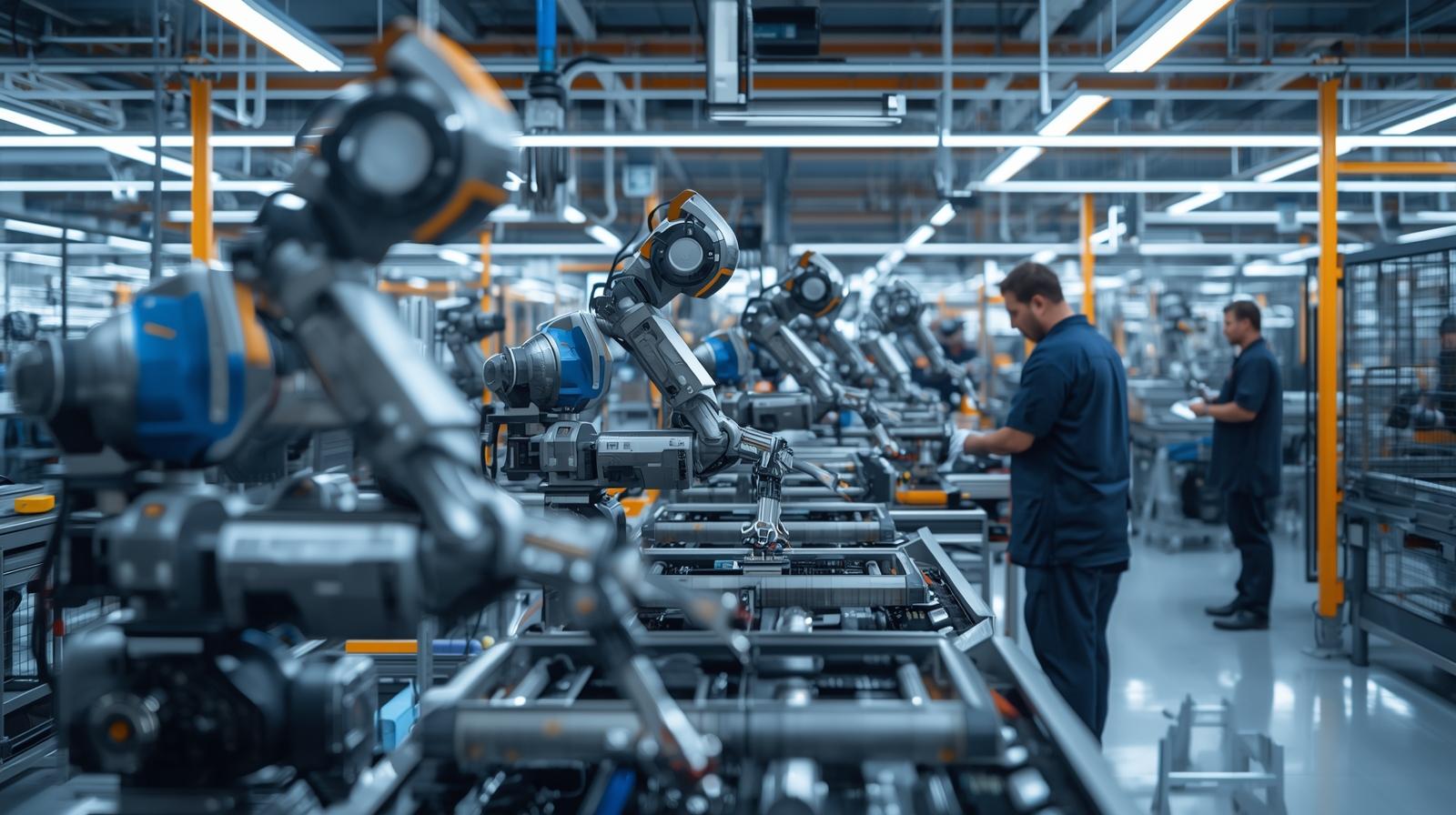
Enhancing Productivity with Flexibility and Efficiency
One of the greatest strengths of collaborative robots is their flexibility. They can be quickly programmed and reprogrammed for diverse tasks, making them ideal for small-batch production, customized manufacturing, and rapidly changing assembly lines. This adaptability aligns with Industry 4.0’s emphasis on mass customization and agile manufacturing.
Cobots also work continuously without fatigue, providing consistent quality and output. By automating mundane or hazardous tasks, they free human workers to engage in more complex activities, increasing overall productivity. Additionally, their ability to integrate with other smart factory components—like sensors, AI-driven analytics, and connected machinery—further optimizes workflows and resource utilization.
Driving Safety through Human-Robot Collaboration
Safety is paramount when humans and robots share the workspace. Collaborative robots are equipped with advanced sensors, vision systems, and force-feedback mechanisms that enable real-time detection of human presence and precise control of movements. These features prevent collisions and injuries, ensuring a safe working environment.
Unlike traditional robots, which require safety cages and physical barriers, cobots can operate side-by-side with humans, enhancing workspace ergonomics and reducing the risk of strain or repetitive injury for workers. Their intuitive interfaces and easy programming also minimize training time and reduce human error during operation.
Real-World Applications and Industry Impact
Across industries such as automotive, electronics, pharmaceuticals, and logistics, collaborative robots are making a tangible impact. In automotive manufacturing, cobots assist with assembly, welding, and quality inspection. In logistics, they help with picking, packing, and material handling, streamlining supply chain operations.
The healthcare industry also benefits from cobots in laboratory automation and drug manufacturing, ensuring precision and safety. Small and medium-sized enterprises (SMEs), traditionally limited by automation costs, are increasingly adopting cobots due to their affordability and ease of deployment.
Challenges and Future Outlook
While collaborative robots offer immense benefits, challenges remain. Integrating cobots into legacy systems, ensuring cybersecurity, and addressing workforce concerns about job displacement require careful management. However, ongoing advancements in AI, machine learning, and sensor technology promise to make cobots even smarter, safer, and more intuitive.
Looking ahead, collaborative robots will be integral to the evolution of Industry 4.0, driving innovation, sustainability, and competitiveness. Their unique ability to blend human creativity with machine precision positions them as vital tools for the factories of the future.
Collaborative robots are not just tools; they are partners that empower human workers, enhance safety, and boost productivity in the era of Industry 4.0. By embracing this synergy, industries worldwide can unlock new levels of efficiency and innovation, paving the way for smarter, safer, and more flexible manufacturing.
Investor FAQs: Collaborative Robots in Industry 4.0
Q1: Why should investors consider the collaborative robot (cobot) market?
The cobot market is rapidly expanding, driven by Industry 4.0 trends such as automation, digital transformation, and smart manufacturing. Investing in cobot technologies offers exposure to high-growth sectors like automotive, electronics, healthcare, and logistics, with strong demand for flexible and safe automation solutions.
Q2: What differentiates collaborative robots from traditional industrial robots, and why does it matter for investors?
Cobots operate alongside humans safely without extensive infrastructure, making them more versatile and cost-effective. This flexibility opens broader market opportunities, especially among small and medium enterprises (SMEs), driving faster adoption and higher market penetration.
Q3: What are the key growth drivers for the collaborative robot industry?
Major drivers include increasing demand for workplace safety, the need for flexible automation to support mass customization, labor shortages, and rising investments in smart factories and digital manufacturing technologies.
Q4: Which industries present the most promising investment opportunities for cobots?
Industries such as automotive manufacturing, electronics assembly, pharmaceuticals, logistics, and healthcare are at the forefront of cobot adoption, offering attractive entry points for investors.
Q5: How does the safety aspect of cobots influence market potential?
Safety features allow cobots to work without cages or barriers, significantly reducing implementation costs and increasing appeal. This accelerates adoption across diverse industries, expanding market size and growth potential.
