The humanoid robot market is entering a defining phase of technological acceleration, driven by rapid advancements in artificial intelligence (AI), sensor technologies, and high-precision actuation systems. Once confined to research labs and science fiction, humanoid robots are now emerging as practical solutions for industrial automation, service operations, logistics, healthcare assistance, and human-centric environments. The global humanoid robot market is expected to grow from USD 2.92 billion in 2025 to USD 15.26 billion in 2030, with a CAGR of 39.2%. The global humanoid robot market is poised for major growth due to modern research that has evolved humanoid robot technology to the point where these robots can determine actions through sensor-based data processing.
As global economies face labor shortages, rising operational costs, and increasing demand for automation, humanoid robots are gaining traction as versatile machines capable of performing tasks designed for human environments. Their ability to walk, manipulate objects, interact with humans, and adapt to dynamic surroundings positions them as a disruptive force in the robotics and automation ecosystem.
The convergence of AI, robotics engineering, and edge computing is expected to unlock new levels of autonomy and intelligence, pushing the humanoid robot industry toward strong commercial scalability over the next decade.
Market Transformation: From Robotics to Intelligent Humanoids
The evolution of humanoid robots represents a shift from traditional industrial robotics to adaptive, intelligent machines capable of human-like interaction and decision-making. Earlier robotic systems were limited to repetitive tasks in controlled environments such as automotive assembly lines. In contrast, humanoid robots are designed to operate in unstructured environments such as warehouses, hospitals, retail stores, and public service areas.
This transformation is being powered by three foundational technology pillars:
- Artificial Intelligence (AI) and machine learning algorithms
- Advanced sensor fusion systems
- High-performance actuation and motion control systems
Together, these technologies enable humanoid robots to perceive their surroundings, process real-time data, and execute complex physical actions with precision and stability.
Artificial Intelligence: The Cognitive Engine of Humanoid Robots
AI is the central intelligence layer driving the humanoid robot revolution. Modern humanoid systems leverage deep learning, reinforcement learning, and computer vision to interpret environments and make autonomous decisions.
Key AI capabilities include:
- Real-time object recognition and scene understanding
- Natural language processing for human interaction
- Motion planning and adaptive learning
- Predictive decision-making based on environmental inputs
AI enables humanoid robots to continuously improve performance through experience, making them more efficient and reliable over time. Large-scale foundation models are also being integrated into robotics platforms, allowing robots to understand complex instructions and execute multi-step tasks in dynamic environments.
As AI models become more efficient and edge-optimized, humanoid robots are expected to achieve higher levels of autonomy, reducing dependency on human supervision.
Download PDF Brochure @ https://www.marketsandmarkets.com/pdfdownloadNew.asp?id=99567653
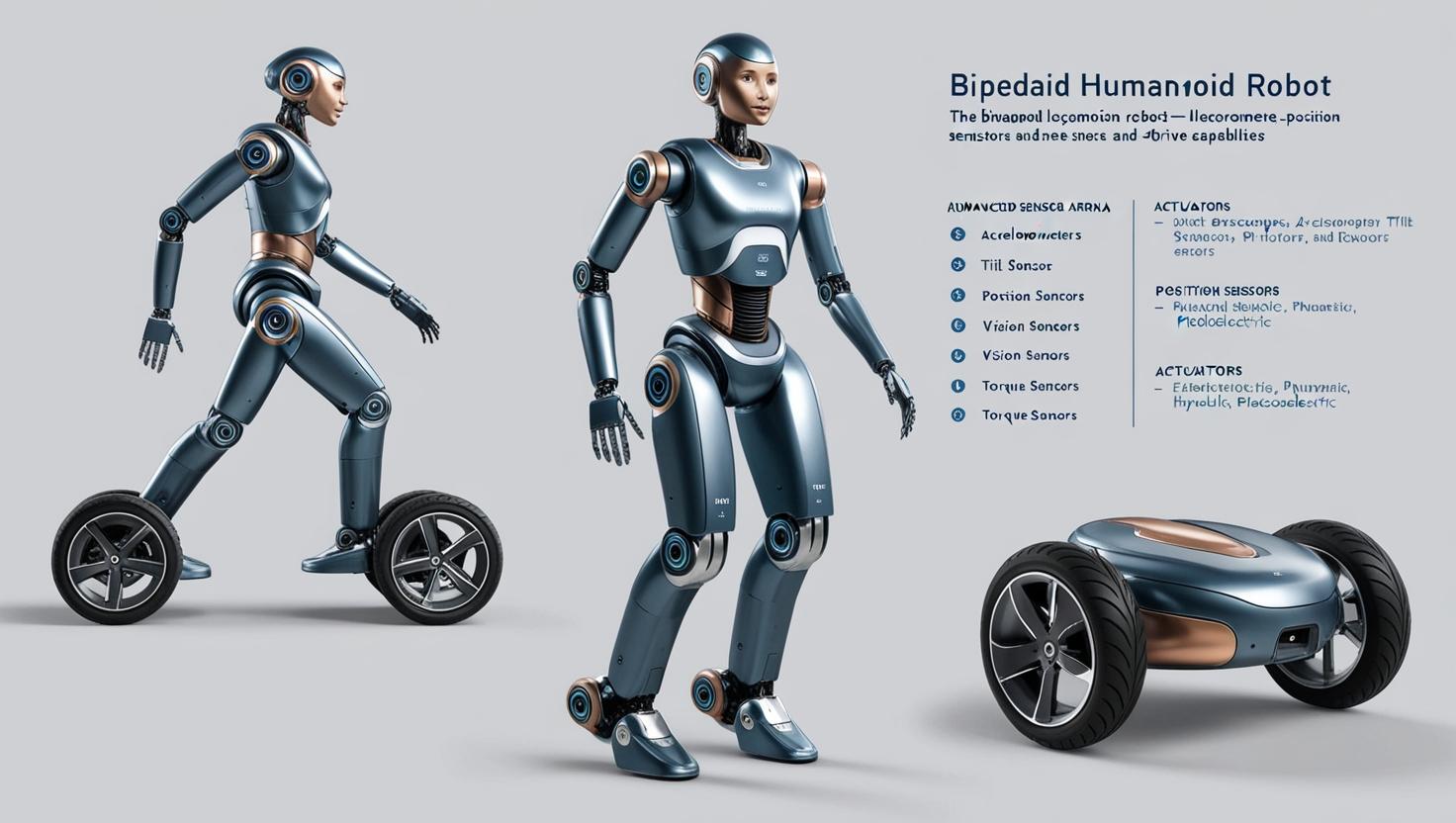
Sensor Technology: Enabling Human-Like Perception
Sensors are critical to humanoid robot functionality, providing the data required for navigation, manipulation, and interaction. Advanced sensor systems allow robots to replicate human sensory perception with increasing accuracy.
Key sensor technologies include:
- Vision sensors (cameras, LiDAR, depth sensors)
- Force and torque sensors for manipulation tasks
- Inertial measurement units (IMUs) for balance and movement control
- Tactile sensors for object handling and pressure detection
- Environmental sensors for temperature, proximity, and spatial awareness
Sensor fusion—the integration of multiple data sources—enables humanoid robots to build a comprehensive understanding of their environment. This is essential for tasks requiring precision, such as picking objects, navigating crowded spaces, or interacting safely with humans.
Improvements in sensor miniaturization, accuracy, and processing speed are significantly enhancing humanoid robot performance and reliability.
Advanced Actuation Systems: Powering Human-Like Movement
Actuation systems are the mechanical backbone of humanoid robots, enabling movement, balance, and dexterity. These systems are evolving rapidly to replicate human motion with greater fluidity and efficiency.
Modern humanoid robots utilize:
- Electric servo motors for precise joint control
- Hydraulic and pneumatic actuators for high-force applications
- Soft robotics components for safer human interaction
- High-torque compact actuators for improved mobility
One of the most critical challenges in humanoid robotics is achieving smooth, energy-efficient locomotion. Advances in actuation systems are addressing this by improving torque density, reducing weight, and enhancing motion stability.
These innovations allow humanoid robots to walk, climb stairs, lift objects, and perform complex physical tasks in real-world environments.
Expanding Application Areas Across Industries
The humanoid robot market is expanding into multiple industries where human-like capabilities provide operational advantages.
Manufacturing and Industrial Automation
Humanoid robots are increasingly being deployed in manufacturing environments for tasks such as assembly support, material handling, inspection assistance, and machine operation. Their ability to operate in existing human-designed facilities without extensive reconfiguration makes them highly attractive for manufacturers.
Logistics and Warehousing
In logistics, humanoid robots can assist in picking, sorting, packing, and inventory management. With e-commerce growth driving demand for faster fulfillment, humanoid robots offer a scalable automation solution.
Healthcare and Elderly Care
Humanoid robots are being explored for patient assistance, rehabilitation support, and elderly care. Their ability to communicate, assist with mobility, and provide companionship is particularly valuable in aging societies.
Retail and Customer Service
In retail environments, humanoid robots can perform customer interaction tasks, provide product information, and guide shoppers. Their human-like appearance enhances engagement and customer experience.
Hospitality and Public Services
Hotels, airports, and public institutions are beginning to explore humanoid robots for concierge services, information assistance, and operational support functions.
Market Growth Drivers
Several macro and technological factors are driving the expansion of the humanoid robot market:
- Global labor shortages across developed economies
- Rising adoption of AI-powered automation systems
- Advances in robotics hardware and computing power
- Decreasing costs of sensors and actuators
- Increasing investment in robotics startups and innovation hubs
- Demand for 24/7 operational efficiency in service industries
As AI and robotics technologies continue to mature, the cost-performance ratio of humanoid robots is expected to improve significantly, accelerating commercial adoption.
Challenges Facing the Humanoid Robot Industry
Despite strong growth potential, the industry faces several challenges:
- High development and production costs
- Limited battery life and energy efficiency constraints
- Complexity of real-world navigation and safety assurance
- Integration challenges with existing workflows
- Ethical and regulatory considerations around automation
Addressing these challenges will be essential for large-scale deployment and mainstream adoption of humanoid robots.
Future Outlook: Toward General-Purpose Robotics
The long-term vision of the humanoid robot industry is the development of general-purpose robots capable of performing a wide range of human tasks. Advances in AI foundation models, robotics hardware, and cloud-edge integration are steadily moving the industry closer to this goal.
Over the next decade, humanoid robots are expected to evolve from task-specific assistants to adaptable systems capable of learning new skills rapidly. This shift will redefine productivity models across industries and reshape the global labor landscape.
Companies investing in humanoid robotics today are positioning themselves at the forefront of a multi-billion-dollar transformation driven by automation, intelligence, and human-machine collaboration.
The humanoid robot market is on the verge of breakthrough growth, fueled by rapid advancements in AI, sensor technology, and actuation systems. As these technologies converge, humanoid robots are becoming increasingly capable of operating in complex, human-centric environments across multiple industries.
While challenges remain, the trajectory of innovation suggests a future where humanoid robots play an integral role in industrial operations, service delivery, and everyday human life. The next decade will likely define the transition from experimental robotics to large-scale commercial deployment, marking a new era in intelligent automation
Frequently Asked Questions (FAQs)
1. What is driving the growth of the humanoid robot market?
The humanoid robot market is growing due to advancements in AI, sensor fusion, and actuation systems, along with rising labor shortages, increasing demand for automation, and improvements in robotics hardware. Industries are also investing in humanoid robots to improve efficiency and reduce operational costs.
2. How do AI technologies enhance humanoid robots?
AI enables humanoid robots to perceive their environment, process natural language, make autonomous decisions, and continuously improve through machine learning. Technologies such as computer vision, reinforcement learning, and foundation models allow robots to perform complex tasks in dynamic environments.
3. What role do sensors play in humanoid robots?
Sensors provide humanoid robots with critical perception capabilities, including vision, touch, motion, and spatial awareness. Technologies like LiDAR, cameras, force sensors, and IMUs help robots navigate environments, manipulate objects, and interact safely with humans through sensor fusion systems.
4. In which industries are humanoid robots expected to be used?
Humanoid robots are expected to be deployed across manufacturing, logistics, healthcare, retail, hospitality, and public services. They are particularly useful in environments designed for humans, where they can perform tasks such as assistance, inspection, customer service, and material handling.
5. What are the major challenges facing humanoid robot adoption?
Key challenges include high development costs, limited battery life, safety concerns, complex real-world navigation, and integration with existing workflows. Additionally, ethical and regulatory issues surrounding automation and human replacement continue to influence adoption rates.
