The Service Robotics Market Companies landscape is evolving as robotics moves from controlled industrial environments into healthcare, logistics, hospitality, agriculture, retail, defense, domestic services, and other application areas. Improvements in artificial intelligence, machine vision, sensors, navigation, connectivity, and autonomous decision making are enabling robots to perform increasingly complex tasks. The industry includes established robotics manufacturers, specialized technology providers, software developers, and emerging robotics companies. Competition is increasingly influenced by the ability to combine hardware, software, artificial intelligence, autonomy, and application specific capabilities into reliable solutions.
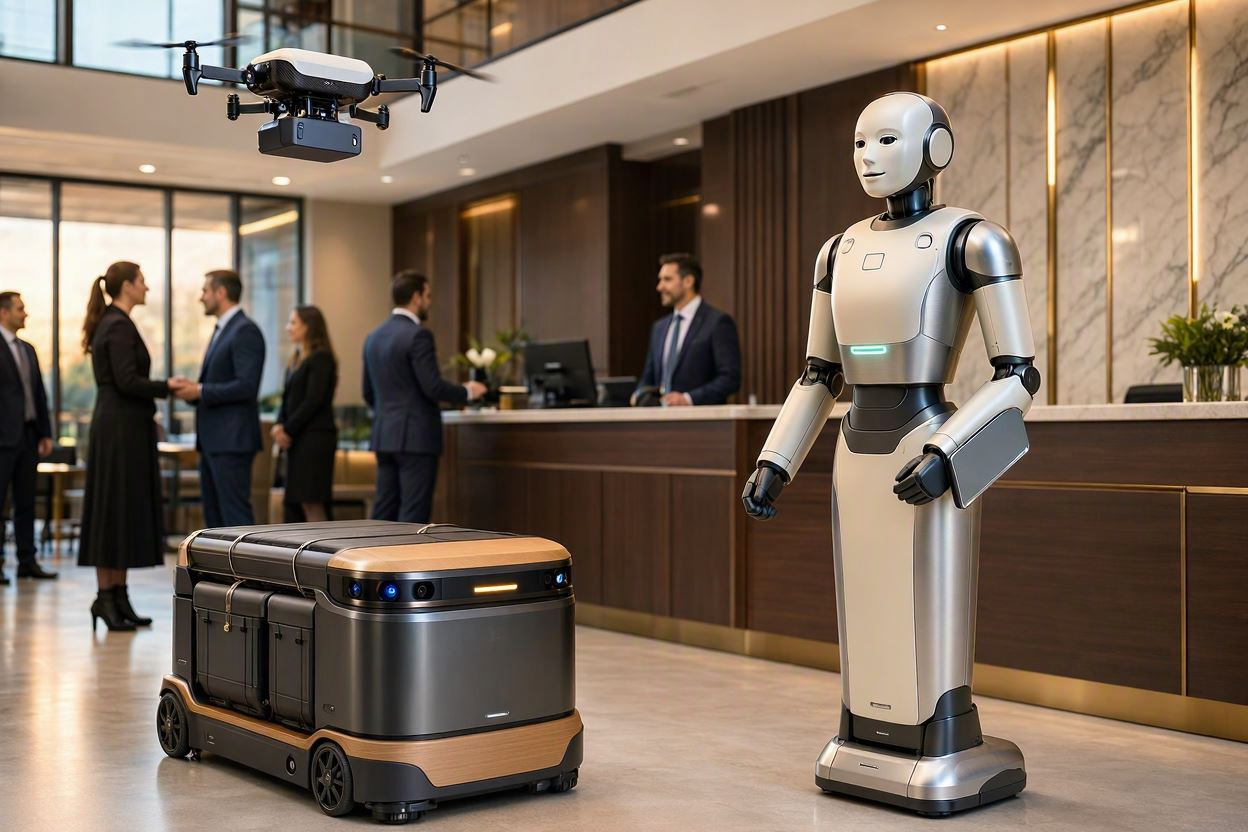
The competitive environment is also changing because service robots are being deployed in environments where flexibility and interaction with people are important. Unlike conventional automation systems designed for repetitive production processes, service robots often need to understand changing surroundings, navigate dynamic spaces, recognize objects, and respond to unpredictable situations. This has increased the importance of artificial intelligence and advanced perception technologies. The Service Robotics Market Companies landscape therefore extends beyond robot manufacturers to include organizations developing autonomy platforms, navigation systems, sensors, processors, software, cloud infrastructure, and specialized applications.
The service robotics market size is projected to reach USD 98.65 billion by 2029 from USD 47.10 billion in 2024, at a CAGR of 15.9% from 2024 to 2029.
Download PDF Brochure @ https://www.marketsandmarkets.com/pdfdownloadNew.asp?id=681
Competitive Landscape Is Expanding Across Multiple Applications
The Service Robotics Market Companies landscape covers a wide range of professional and personal applications. Healthcare robots can assist with surgery, transportation, rehabilitation, disinfection, and hospital logistics, while logistics robots can support material movement, warehouse operations, and last mile delivery. Hospitality robots are being introduced for food delivery, cleaning, customer assistance, and transportation of items within hotels and restaurants. Agricultural robots and drones are being used for monitoring, spraying, inspection, and other field activities.
The diversification of applications is creating different competitive requirements for suppliers. A hospital robot requires high reliability, safety, cybersecurity, and integration with healthcare workflows, while a delivery robot requires autonomous navigation, obstacle avoidance, connectivity, and efficient fleet management. Agricultural robots require rugged hardware and reliable operation in outdoor environments. Consequently, Service Robotics Market Companies are increasingly developing application focused solutions instead of relying on a single general purpose robotics platform.
Technology Innovation Is Reshaping Competitive Strategies
Artificial intelligence has become one of the major technologies influencing competition among Service Robotics Market Companies. Modern robots can combine cameras, lidar, radar, inertial sensors, force sensors, and other technologies to perceive their surroundings. Machine learning can help robots identify objects, interpret environments, optimize routes, and improve performance based on operational data. These capabilities are especially important in environments where robots must operate alongside people or adapt to changing conditions.
The development of physical AI is adding another dimension to competition. Physical AI connects artificial intelligence with machines that can perceive and interact with the physical world. Recent industry activity indicates increasing interest in robots that can perform more adaptive tasks rather than following only predefined instructions. This trend is encouraging companies to invest in foundation models, simulation, robot learning, computer vision, and large scale data collection.
Mergers and Acquisitions Are Increasing Technology Integration
Mergers and acquisitions are becoming an important mechanism for expanding robotics capabilities. Rather than developing every technology internally, companies can acquire businesses with established autonomy systems, specialized robots, software capabilities, intellectual property, engineering teams, or customer relationships. This can shorten development cycles and provide access to complementary technologies.
A notable example occurred in January 2026 when Serve Robotics announced an agreement to acquire Diligent Robotics. The transaction was designed to expand Serve’s autonomous robotics platform from outdoor delivery applications into indoor healthcare environments. Diligent’s Moxi platform had already been deployed in hospitals, giving Serve an entry point into healthcare robotics and indoor autonomy.
The transaction illustrates how acquisitions can support horizontal expansion across service robotics applications. Instead of focusing exclusively on one operating environment, a robotics company can use an acquisition to obtain technology and operational experience in another environment. Such transactions can also create opportunities to reuse autonomy, navigation, perception, fleet management, and artificial intelligence capabilities across multiple robot categories.
Strategic Acquisitions Focus on Artificial Intelligence
Artificial intelligence is becoming an increasingly important target for technology acquisitions within robotics. Companies are looking for expertise in perception, world models, simulation, reinforcement learning, imitation learning, and autonomous decision making. These capabilities can improve robot performance while reducing the amount of manually programmed behavior required for individual tasks.
Meta’s acquisition of Assured Robot Intelligence in 2026 provides an example of the increasing connection between artificial intelligence and robotics. The acquired startup was developing foundation models for humanoid robots, while its team joined Meta’s AI organization. The transaction demonstrates how technology companies can use acquisitions to strengthen capabilities related to robotic intelligence and physical AI.
Hardware and Software Integration Defines Competition
The Service Robotics Market Companies landscape is increasingly shaped by full system integration. Robots require mechanical structures, actuators, sensors, cameras, processors, batteries, communication systems, control software, navigation technology, and application software. Companies that can integrate these components effectively can address performance, reliability, maintenance, and deployment requirements more efficiently.
Software is particularly important because the same physical robot can deliver different capabilities depending on its operating system, navigation stack, artificial intelligence models, cloud connectivity, and application software. This has encouraged companies to develop platforms that can manage fleets of robots rather than individual machines. Fleet management allows operators to monitor robot performance, assign tasks, analyze operating data, and manage maintenance remotely.
Robotics as a Service Changes the Competitive Model
Robotics as a Service is influencing how customers evaluate robotic solutions. Instead of purchasing robots as capital equipment, organizations can increasingly access robotic capabilities through service based models. This can reduce upfront investment and allow organizations to evaluate robotics before making larger deployments.
The service model also creates recurring revenue opportunities for suppliers. Providers can generate revenue through equipment usage, software subscriptions, maintenance, fleet management, analytics, and support services. For customers, the model can make robotics more accessible because costs may be aligned with usage or operational requirements. The expansion of this model is therefore adding another competitive dimension for Service Robotics Market Companies.
Healthcare Remains an Important Application Area
Healthcare is one of the most technically demanding environments for service robots because robots must operate around patients, clinicians, visitors, and sensitive medical information. Applications include surgical assistance, hospital logistics, medication transportation, rehabilitation, elderly care, cleaning, and patient support.
The healthcare robotics segment is also encouraging acquisitions because companies can benefit from specialized technology and established hospital relationships. The Serve Robotics and Diligent Robotics transaction demonstrates this strategy, with Diligent’s hospital focused Moxi platform providing a pathway into healthcare applications. According to Serve Robotics, Moxi had completed more than 1.25 million deliveries across hospital deployments before the acquisition announcement.
Logistics Automation Is Driving New Competition
Logistics represents another major application area for service robotics. Warehouses, distribution centers, retail facilities, and delivery networks increasingly require systems that can move goods efficiently while reducing repetitive manual activities. Autonomous mobile robots can transport materials between workstations, storage areas, and picking locations.
Competition in logistics robotics is increasingly focused on navigation accuracy, fleet coordination, integration with warehouse management systems, battery efficiency, and deployment flexibility. Companies are also exploring robots capable of handling more complex physical tasks. As e commerce and automated fulfillment requirements develop, Service Robotics Market Companies are expected to compete through integrated robotics platforms rather than standalone machines.
Hospitality Robotics Creates Specialized Opportunities
Hospitality environments provide another growing application for service robots. Restaurants, hotels, and commercial facilities can use robots for food delivery, room service, cleaning, transportation of supplies, and customer interaction. These environments require robots to operate around people while maintaining predictable service quality.
The competitive landscape in hospitality robotics is influenced by ease of deployment and the ability to integrate robots into existing workflows. Robots must navigate elevators, corridors, dining areas, kitchens, and other dynamic environments. Companies that combine autonomous navigation with simple interfaces and fleet monitoring can address these operational requirements more effectively.
Agriculture and Field Robotics Expand the Addressable Applications
Agriculture is creating opportunities for robots and autonomous aerial systems because farms often involve repetitive tasks across large areas. Service robots can support crop monitoring, precision spraying, harvesting assistance, weed detection, and field inspection. Drones can provide aerial imagery and enable targeted agricultural operations.
Field robotics presents different technical requirements compared with indoor robotics. Machines must withstand dust, moisture, uneven terrain, changing weather, and long operating periods. Sensors and navigation systems must remain reliable despite environmental variations. These requirements encourage Service Robotics Market Companies to develop specialized hardware and software for agricultural conditions.
Regional Competition Reflects Different Adoption Patterns
Regional dynamics are also influencing competition. Asia Pacific has strong robotics capabilities and includes major technology and manufacturing economies such as China, Japan, and South Korea, alongside developing markets where automation adoption is increasing. Japan and South Korea have established robotics ecosystems, while China has significant manufacturing capabilities and growing domestic demand for automation.
North America has strong activity across healthcare robotics, logistics, delivery systems, artificial intelligence, and autonomous machines. Europe also has established robotics research capabilities and companies serving industrial, healthcare, logistics, maritime, and professional service applications. These regional differences create opportunities for companies with technologies that can be adapted to local regulations, infrastructure, labor conditions, and customer requirements.
Competitive Differentiation Is Moving Beyond Robot Hardware
The Service Robotics Market Companies landscape is becoming less dependent on physical robot design alone. Hardware remains essential, but software intelligence, autonomy, data management, cybersecurity, cloud connectivity, and application integration are increasingly important differentiators.
A robot with advanced hardware can still face deployment limitations if its navigation software is unreliable or its integration with existing enterprise systems is difficult. Conversely, strong software can allow robotics providers to improve the capabilities of installed machines through updates. This is encouraging a shift toward software enabled robotics platforms that can evolve after deployment.
Startups Are Increasing Competitive Pressure
Startups are contributing significantly to innovation in service robotics. Smaller companies can focus on highly specialized problems such as autonomous delivery, robotic manipulation, healthcare assistance, agricultural automation, inspection, or robot learning. Their specialized approach can help them develop solutions for specific customer needs without maintaining the broad product portfolios of larger organizations.
Investment activity is also supporting the development of new robotics companies. Recent reporting indicates strong funding activity around physical AI and robotics startups, while experienced researchers from major technology organizations are launching new ventures focused on robotics intelligence and autonomous systems.
Key Factors Shaping Competitive Positioning
The competitive positioning of Service Robotics Market Companies depends on several factors that determine whether robotic solutions can move successfully from demonstrations to commercial deployments. Customers increasingly evaluate not only the robot itself but also the complete operating ecosystem.
Key competitive considerations include:
- Autonomous navigation and perception performance across dynamic environments
- Integration with enterprise software, cloud platforms, and existing workflows
- Hardware reliability, battery performance, safety, cybersecurity, and maintenance support
- Ability to scale deployments through fleet management and software updates
These factors are particularly relevant as organizations move from pilot projects to larger robotic fleets. Scalability requires dependable hardware, repeatable deployment processes, trained service teams, and software capable of managing multiple machines simultaneously.
Challenges Affecting the Competitive Landscape
Despite technological progress, robotics companies continue to face challenges related to reliability, safety, interoperability, data privacy, cybersecurity, and deployment costs. Robots operating in public or sensitive environments can collect substantial amounts of visual, location, and operational information. Appropriate data management and regulatory compliance are therefore becoming increasingly important.
Technical limitations can also restrict adoption. Robots may struggle with unexpected objects, changing environments, connectivity disruptions, battery constraints, or complex human interactions. The MarketsandMarkets reference page identifies technical issues, data privacy, regulatory concerns, and the need for improved endurance and capabilities among important factors influencing the service robotics industry.
Future Competitive Direction
The next stage of competition is likely to center on robots that combine physical capabilities with increasingly sophisticated artificial intelligence. Instead of building separate systems for every narrow task, companies are exploring platforms capable of learning multiple tasks and adapting to different environments. This could increase the value of general purpose autonomy software and reusable AI models.
At the same time, specialized robots will remain important because many applications require purpose built hardware and strict operational requirements. Healthcare, agriculture, maritime operations, logistics, cleaning, and professional services each have different environmental and safety needs. Therefore, the competitive landscape is likely to contain both broad robotics platforms and highly specialized application providers.
Conclusion
The Service Robotics Market Companies landscape is undergoing structural change as artificial intelligence, autonomous navigation, sensors, cloud computing, and robotics platforms converge. Companies are competing through hardware innovation, software intelligence, application expertise, strategic partnerships, and acquisitions. Recent transactions demonstrate that companies are using M&A to enter new application areas and obtain specialized robotics and artificial intelligence capabilities.
Competition is also expanding beyond traditional robot manufacturers. Software developers, AI companies, component suppliers, system integrators, and specialized robotics startups are becoming important participants in the ecosystem. As service robots become more capable and deployment models mature, successful commercialization will depend on reliability, safety, interoperability, scalability, and measurable operational value. The resulting competitive environment will continue to evolve as robotics becomes increasingly integrated into everyday commercial and professional activities.
FAQs
What are Service Robotics Market Companies?
Service Robotics Market Companies include organizations developing robots, autonomous platforms, robotics software, sensors, navigation technologies, artificial intelligence systems, and application specific robotic solutions for professional and personal environments.
What is driving competition among Service Robotics Market Companies?
Competition is being driven by advances in artificial intelligence, autonomous navigation, machine vision, sensors, cloud connectivity, robotics as a service, and growing demand for automation across healthcare, logistics, hospitality, agriculture, and other industries.
Why are mergers and acquisitions important in service robotics?
Mergers and acquisitions allow companies to obtain specialized robotics technology, artificial intelligence expertise, engineering talent, intellectual property, customer relationships, and established products more quickly than developing all capabilities internally.
What was a notable service robotics acquisition in 2026?
Serve Robotics announced an agreement in January 2026 to acquire Diligent Robotics, expanding its autonomous robotics capabilities from delivery into healthcare and indoor environments.
How is artificial intelligence changing service robotics?
Artificial intelligence enables robots to improve perception, object recognition, navigation, decision making, learning, and interaction with people. New physical AI approaches are also connecting AI models with robots that operate directly in physical environments.
Which applications use service robots?
Service robots are used across healthcare, logistics, hospitality, agriculture, retail, cleaning, domestic assistance, construction, maritime operations, defense, inspection, and other professional and personal applications.
What role does Robotics as a Service play?
Robotics as a Service can reduce upfront investment by allowing organizations to access robotic capabilities through service based commercial models. It can also create recurring revenue opportunities through software, maintenance, fleet management, and support.
What are the major challenges facing service robotics?
Important challenges include technical reliability, safety, data privacy, cybersecurity, regulatory requirements, interoperability, battery limitations, and the difficulty of operating robots in unpredictable environments.