The infrared imaging industry is evolving as demand increases for thermal detection, noncontact inspection, advanced surveillance, industrial monitoring, and reliable sensing in challenging environments. Infrared imaging systems are increasingly being integrated into defense platforms, industrial equipment, security infrastructure, automotive systems, healthcare devices, and energy applications. Technology improvements in detectors, cameras, imaging modules, optics, and analytics are creating new opportunities across both specialized and commercial applications. The competitive environment includes established imaging manufacturers, defense technology providers, sensor specialists, and companies developing compact thermal solutions. Infrared Imaging Market Companies are therefore focusing on product differentiation, application expansion, strategic partnerships, and technology development.
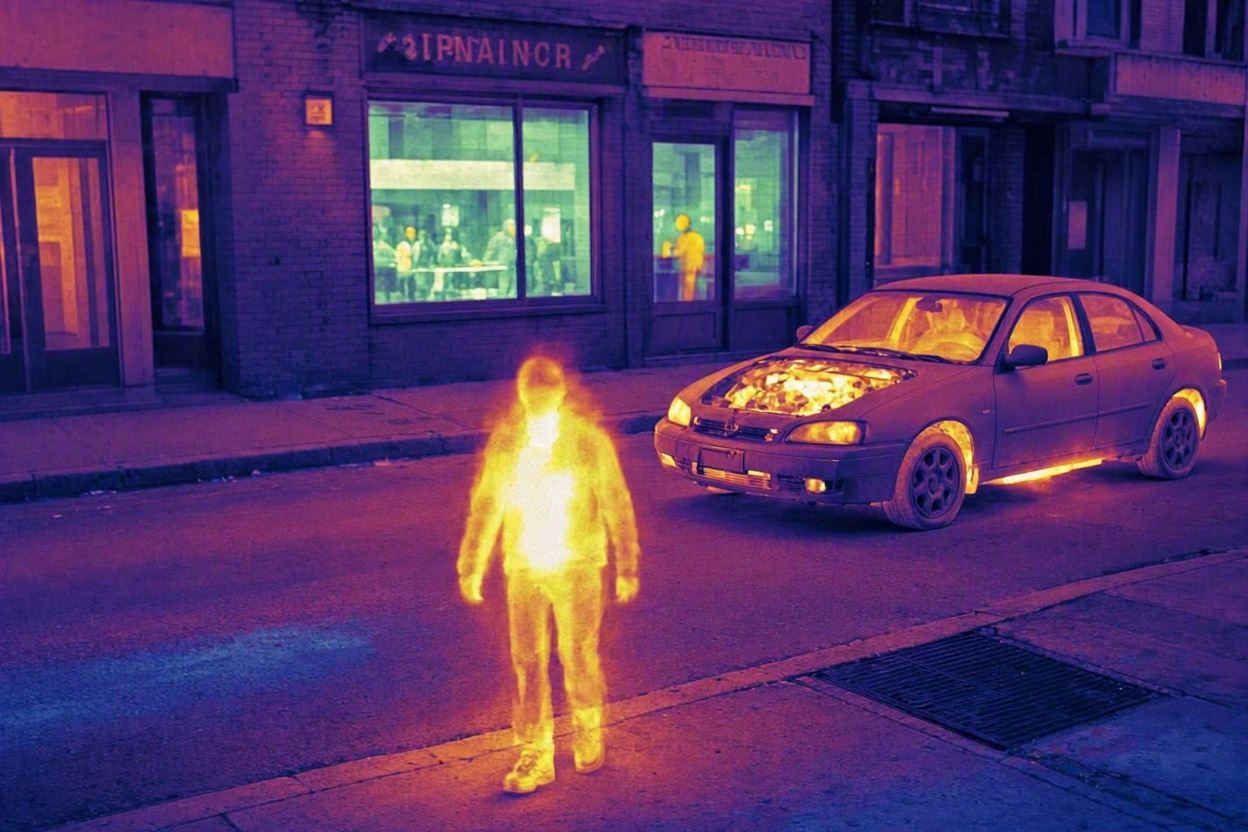
According to Marketsandmarkets, the global infrared imaging market size is projected to grow from USD 9.13 billion in 2026 to USD 12.79 billion by 2032, growing at a CAGR of 5.8% from 2026 to 2032.
Download PDF Brochure @ https://www.marketsandmarkets.com/pdfdownloadNew.asp?id=593
Competitive Landscape Is Driven by Technology Differentiation
The competitive landscape is shaped by differences in detector performance, image resolution, thermal sensitivity, wavelength coverage, system size, reliability, software integration, and application expertise. Companies serving defense and aerospace customers typically emphasize ruggedized systems, advanced detection, long range observation, and integration with larger electro optical platforms. Industrial suppliers place greater emphasis on measurement accuracy, portability, connectivity, inspection capabilities, and ease of use. Security focused providers increasingly combine thermal imaging with visible cameras, video analytics, intelligent detection, and network connectivity. These different requirements allow Infrared Imaging Market Companies to compete across specialized application categories rather than relying on a single product strategy.
The technology landscape includes reflective imaging and thermal imaging solutions, with products available across near infrared, short wave infrared, mid wave infrared, and long wave infrared wavelengths. Cooled and uncooled technologies also serve different operating requirements. Cooled systems can support demanding applications requiring high sensitivity and advanced detection performance, while uncooled systems can offer compact designs and simplified deployment. Improvements in microbolometers, focal plane arrays, optics, image processing, and sensor packaging are increasing the usability of infrared imaging systems. As these technologies become more accessible, Infrared Imaging Market Companies are expanding their portfolios to address applications ranging from professional inspection to advanced surveillance.
Leading Companies Expand Their Technology Portfolios
The company environment includes global technology providers with capabilities across thermal cameras, infrared sensors, detectors, imaging modules, surveillance platforms, and electro optical systems. Teledyne FLIR, Hikvision, Fluke, Leonardo DRS, Axis Communications, RTX, L3Harris Technologies, Exosens, Opgal, and LYNRED are among the companies identified in the supplied industry source. Each organization approaches the infrared imaging opportunity from a different technological and application perspective. Some focus strongly on thermal cameras and professional inspection, while others concentrate on defense sensing, surveillance, infrared detectors, or specialized imaging components.
Product breadth is becoming increasingly important because customers often require complete imaging solutions rather than standalone sensors. A supplier capable of combining detectors, optics, cameras, processing software, analytics, and system integration can address a wider range of requirements. This trend is particularly relevant in defense, security, industrial automation, and intelligent infrastructure. Infrared Imaging Market Companies are consequently investing in capabilities that allow them to participate at multiple points in the technology value chain. Portfolio expansion also helps companies address different price levels and application requirements without depending entirely on one product category.
Mergers and Acquisitions Strengthen Technology Capabilities
Mergers and acquisitions have become an important strategic mechanism within the broader infrared technology ecosystem. Acquisitions can provide access to detector technologies, optical manufacturing capabilities, specialized engineering expertise, established customer relationships, and complementary product portfolios. The strategy is especially relevant when companies want to shorten technology development cycles or enter adjacent application areas. Instead of developing every capability internally, an organization can acquire a specialized business and integrate its technology with existing products. This approach can strengthen competitiveness across imaging hardware, infrared components, optics, analytics, and system integration.
Recent industry activity illustrates how acquisitions can expand infrared capabilities. LightPath Technologies reported that it acquired G5 Infrared in February 2025, adding long range cooled infrared camera capabilities and optical coating services. The company also reported the acquisition of AML in January 2026, expanding its infrared materials and infrared glass manufacturing capabilities. These developments demonstrate how acquisitions can connect materials, optics, coatings, cameras, and imaging technologies within a broader product ecosystem. Such transactions can be strategically relevant to Infrared Imaging Market Companies seeking greater control over critical components and manufacturing capabilities.
Another notable transaction involved Anduril Industries acquiring American Infrared Solutions in October 2024, according to industry reporting. The acquisition was positioned around strengthening internal infrared imaging and sensor manufacturing capabilities for defense and autonomous applications. Acquisitions of this nature demonstrate the growing importance of vertically integrated sensing capabilities. For companies serving autonomous platforms, defense systems, surveillance equipment, and unmanned technologies, greater control over imaging hardware can support product customization and system integration.
Product Innovation Is Reshaping Competitive Positioning
Innovation remains central to competition because customers increasingly demand smaller, lighter, more accurate, and more intelligent infrared imaging systems. Improvements in uncooled detector architecture are enabling compact thermal cameras suitable for portable devices, unmanned platforms, security equipment, and industrial inspection. At the same time, cooled detector technologies continue to support applications where sensitivity and long range detection are critical. Advances in sensor resolution and image processing are helping manufacturers improve image clarity while maintaining practical system dimensions.
Artificial intelligence is also changing the role of infrared cameras. Instead of simply capturing thermal images, modern systems can increasingly support object detection, classification, anomaly identification, temperature monitoring, and automated alerts. Combining thermal imagery with visible imagery can improve situational awareness in security and surveillance applications. In industrial environments, analytics can identify unusual temperature patterns that may indicate equipment problems before a failure occurs. These capabilities are creating opportunities for Infrared Imaging Market Companies to differentiate products through software and analytics as well as hardware.
Key areas of competitive differentiation include:
- Higher image resolution and improved thermal sensitivity
- Compact camera modules and lower system power requirements
- AI supported detection and image analytics
- Multispectral imaging and thermal visible image fusion
- Integration with networked security and industrial platforms
These developments indicate that competition is gradually extending beyond the infrared detector itself. Customers increasingly evaluate complete system performance, software functionality, integration capabilities, reliability, service support, and total deployment requirements. Infrared Imaging Market Companies that combine hardware expertise with software and analytics capabilities can address more complex customer requirements.
Defense and Aerospace Remain Important Application Areas
Defense and aerospace applications require advanced sensing capabilities for surveillance, reconnaissance, targeting, navigation, threat detection, and situational awareness. Infrared imaging is valuable because thermal information can remain useful under low light conditions and can complement visible spectrum systems. Systems may be integrated into aircraft, ground vehicles, unmanned platforms, weapon systems, surveillance equipment, and other specialized platforms. Requirements in this sector often include rugged construction, low size and weight, high sensitivity, reliable operation, and compatibility with existing electro optical systems.
The defense application environment also encourages continuous development because military platforms increasingly require improved sensing performance without significant increases in system size. Uncooled infrared modules are becoming attractive for applications where compact size and lower power consumption are important. Cooled systems remain relevant where advanced detection performance is required. Infrared Imaging Market Companies serving defense customers therefore compete through detector technology, optics, stabilization, image processing, ruggedization, and system integration.
Industrial Inspection Creates Broader Commercial Demand
Industrial inspection is another important area for infrared imaging because thermal information can reveal conditions that may not be visible through conventional cameras. Electrical inspection, mechanical equipment monitoring, building diagnostics, manufacturing process monitoring, and predictive maintenance can benefit from noncontact temperature measurement and thermal visualization. Infrared cameras allow technicians to inspect equipment while it is operating, reducing the need for direct physical contact during many inspection tasks.
The growing focus on operational efficiency is also supporting adoption. Companies can use thermal information to identify overheating components, insulation problems, abnormal machinery behavior, and potential maintenance issues. Portable thermal cameras are particularly useful for technicians who need rapid inspection capabilities at different locations. Infrared Imaging Market Companies are responding by developing products that combine thermal imaging with measurement tools, connectivity, mobile interfaces, and analytics. This makes infrared imaging more accessible beyond highly specialized technical environments.
Security and Surveillance Drive Intelligent Imaging
Security and surveillance applications are increasingly integrating thermal cameras with networked video systems and intelligent analytics. Thermal imaging can support monitoring in darkness, difficult weather conditions, and areas where visible cameras may have limitations. The technology can be used for perimeter protection, infrastructure monitoring, fire detection, industrial security, transportation facilities, and public safety applications.
The integration of thermal and visible imaging is becoming particularly important. A visible camera can provide contextual information, while a thermal camera can identify heat signatures and objects under low visibility conditions. Advanced analytics can process information from both sources and generate automated alerts. This shift toward intelligent surveillance is encouraging Infrared Imaging Market Companies to develop cameras that work as part of larger security platforms rather than as standalone devices.
Automotive Applications Create New Technology Requirements
Automotive applications are creating additional opportunities for infrared sensing and imaging technologies. Thermal sensing can support driver assistance, pedestrian detection, night vision, cabin monitoring, and other safety related functions. As vehicles incorporate more electronic sensing systems, infrared technologies can complement radar, visible cameras, lidar, and other sensors.
Automotive customers typically require high reliability, compact packaging, controlled costs, and consistent performance under different environmental conditions. These requirements create a different competitive environment from traditional defense applications. Infrared Imaging Market Companies entering automotive applications must adapt their technologies to automotive qualification requirements and high volume manufacturing conditions. Partnerships between sensor manufacturers, imaging specialists, automotive suppliers, and vehicle manufacturers can therefore become strategically important.
Healthcare and Energy Applications Support Diversification
Healthcare represents another application area where infrared imaging can provide noncontact thermal information. Thermal imaging can support research, monitoring, screening related applications, and specialized diagnostic workflows where temperature distribution is relevant. Although requirements vary significantly by medical use case, improvements in sensor sensitivity and image processing can support more detailed thermal analysis.
Energy and utilities also use infrared imaging for equipment inspection and maintenance. Thermal cameras can help identify abnormal heat patterns in electrical infrastructure, mechanical systems, energy facilities, and industrial equipment. The ability to inspect operating equipment without direct contact is particularly useful in environments where safety and uptime are priorities. These applications give Infrared Imaging Market Companies opportunities to diversify beyond traditional defense and surveillance customers.
Strategic Partnerships Expand Market Access
Partnerships can provide another route for companies seeking to expand their presence across applications and geographic markets. Technology companies may work with system integrators, original equipment manufacturers, software developers, defense contractors, security providers, or industrial equipment manufacturers. These relationships can help infrared imaging technologies become part of larger systems.
Partnership strategies are especially useful when customers require integrated solutions rather than individual components. An infrared camera manufacturer may provide imaging hardware while another organization contributes analytics, software, vehicle integration, or industrial automation expertise. This ecosystem approach can create additional opportunities for Infrared Imaging Market Companies while reducing the need for each participant to develop every capability internally.
Regional Competition Continues to Evolve
Competition varies by region because customer requirements, industrial capabilities, defense priorities, manufacturing ecosystems, and regulatory conditions differ. North America has a strong presence of defense technology providers, industrial technology companies, and specialized imaging manufacturers. Europe has established capabilities in infrared detectors, optics, defense electronics, and industrial sensing. Asia Pacific has a growing manufacturing base and increasing adoption of thermal imaging across security, industrial, automotive, and consumer applications.
Regional manufacturing capabilities are also influencing product costs and supply chain strategies. The availability of detector fabrication, optics manufacturing, packaging, electronics production, and camera assembly can affect competitiveness. Infrared Imaging Market Companies are therefore evaluating both technology capabilities and supply chain resilience when developing global strategies.
Competitive Landscape Is Moving Toward Integrated Solutions
The infrared imaging competitive landscape is increasingly defined by integrated technology ecosystems. Hardware performance remains important, but customers are also evaluating analytics, connectivity, interoperability, software, cybersecurity, service support, and system integration. Companies that can provide a complete solution can address more complex deployments and establish deeper relationships with customers.
At the same time, specialized companies continue to play an important role because infrared imaging involves highly technical components and demanding engineering requirements. Detector specialists, optics manufacturers, thermal camera developers, and software providers can each contribute specialized expertise. This creates opportunities for partnerships, acquisitions, and technology licensing across the value chain. Infrared Imaging Market Companies are therefore competing through a combination of internal innovation and external capability development.
Future Competitive Priorities
The next phase of competition is expected to focus on improving image quality while reducing system size, power consumption, and deployment complexity. AI supported analytics, multispectral sensing, compact infrared modules, advanced optics, and improved detector architectures are likely to remain important areas of technology development. Customers will increasingly expect infrared systems to integrate seamlessly with existing digital infrastructure and automated workflows.
Strategic acquisitions will continue to provide a mechanism for strengthening technology portfolios, particularly where specialized detector, optics, materials, software, or camera capabilities are difficult to develop internally. Companies are also likely to pursue partnerships that connect infrared imaging with robotics, autonomous systems, industrial automation, intelligent transportation, and advanced security platforms. For Infrared Imaging Market Companies, long term competitiveness will depend on combining technical innovation with application knowledge, manufacturing capabilities, customer support, and system integration.
Conclusion
The infrared imaging industry is developing from a specialized sensing field into a broader technology ecosystem supporting defense, security, industrial inspection, automotive systems, healthcare, energy, and intelligent infrastructure. Competitive differentiation increasingly depends on detector performance, camera design, image processing, AI analytics, software integration, and application specific engineering. Mergers and acquisitions are helping organizations add complementary technologies and strengthen control over important parts of the value chain.
The competitive environment is also becoming more diverse as established imaging companies, defense technology providers, component specialists, and emerging innovators address different application requirements. As customers seek smaller, smarter, connected, and more capable imaging systems, Infrared Imaging Market Companies will continue to focus on technology development, portfolio expansion, strategic partnerships, and targeted acquisitions. These factors will remain central to how companies build competitive capabilities and respond to changing requirements across the global infrared imaging ecosystem.
FAQs
What are the major areas of competition in infrared imaging?
Major competitive areas include detector performance, thermal sensitivity, image resolution, wavelength coverage, camera size, power consumption, analytics, connectivity, ruggedness, and system integration. Companies also differentiate through application expertise, service support, and portfolio breadth.
Why are mergers and acquisitions important in infrared imaging?
Mergers and acquisitions can provide access to specialized detector technologies, optics, materials, cameras, software, engineering capabilities, and established customer relationships. They can also help companies expand into adjacent applications and strengthen their technology value chain.
How is AI changing infrared imaging?
AI can help infrared imaging systems detect objects, identify anomalies, classify targets, monitor temperature patterns, and generate automated alerts. Combining AI with thermal and visible imagery can improve automated analysis across security and industrial applications.
What is the role of uncooled infrared technology?
Uncooled infrared technology is widely used where compact size, lower power consumption, simplified operation, and practical deployment are important. It is relevant to portable thermal cameras, security systems, industrial inspection, unmanned platforms, and several commercial applications.
Which industries use infrared imaging?
Infrared imaging is used across defense and aerospace, security and surveillance, industrial manufacturing, automotive, healthcare, energy and utilities, building inspection, equipment maintenance, and specialized research applications.
What factors influence the competitive landscape?
The competitive landscape is influenced by technology performance, product reliability, manufacturing capabilities, application expertise, software integration, pricing, customer support, supply chain capabilities, strategic partnerships, and acquisition activity.
How are companies expanding their infrared imaging portfolios?
Companies are expanding portfolios through internal research and development, product launches, strategic partnerships, acquisitions, technology integration, and expansion into adjacent applications. Many are combining sensors, optics, cameras, analytics, and software to create integrated solutions.
Why is thermal imaging important for industrial inspection?
Thermal imaging enables noncontact visualization of temperature differences in operating equipment. It can help identify abnormal heat patterns associated with electrical, mechanical, building, and industrial equipment conditions, supporting maintenance and inspection activities.
What role does infrared imaging play in security?
Infrared imaging can provide useful visibility in low light and challenging conditions. Thermal cameras can be combined with visible cameras and intelligent analytics to support perimeter monitoring, fire detection, infrastructure protection, and automated security alerts.
What will shape competition among infrared imaging companies?
Technology innovation, AI integration, compact sensor development, advanced optics, multispectral capabilities, system integration, manufacturing efficiency, partnerships, and strategic acquisitions are likely to remain important competitive factors. Companies with strong capabilities across multiple parts of the imaging ecosystem can address increasingly complex customer requirements.