The Fingerprint Sensor Market Analysis highlights how biometric authentication is becoming an increasingly important component of digital security, connected devices, and identity verification. As consumers and organizations move away from traditional passwords and PINs, fingerprint-based authentication is gaining traction because it combines convenience, speed, and security. Fingerprint sensors are now widely integrated into smartphones, laptops, tablets, wearable devices, payment cards, access control systems, and other connected products.
According to MarketsandMarkets, the global fingerprint sensor market is projected to grow from USD 5.01 billion in 2026 to USD 6.98 billion by 2032, registering a CAGR of 5.7% during 2026–2032. The market was valued at USD 4.71 billion in 2025. Increasing cybersecurity concerns, digital payment adoption, connected devices, and advancements in fingerprint sensing technologies are supporting this growth.
The Fingerprint Sensor Market Analysis also indicates that innovation is shifting the industry beyond conventional biometric authentication. Capacitive, optical, thermal, and ultrasonic technologies are evolving to deliver higher accuracy, faster response times, improved spoof resistance, and better integration with modern device designs. At the same time, artificial intelligence (AI), machine learning, 3D sensing, and IoT connectivity are creating new opportunities for fingerprint-based identity verification across consumer, commercial, financial, healthcare, government, and automotive applications.
Fingerprint Sensor Market Analysis: Rising Demand for Secure Biometric Authentication
One of the primary factors driving the Fingerprint Sensor Market Analysis is the growing reliance on biometric authentication for security. Password-based authentication continues to face challenges associated with weak passwords, credential theft, phishing, and unauthorized access. Fingerprint authentication provides a more convenient alternative by using an individual’s unique biometric characteristics for identity verification.
Smartphones remain an important application for fingerprint sensors, but adoption is expanding across laptops, tablets, wearables, access control systems, payment cards, and enterprise devices. Fingerprint authentication enables users to unlock devices, authorize transactions, access applications, and verify identities without repeatedly entering passwords or PINs.
Growing cybersecurity threats and concerns surrounding identity theft are further encouraging businesses and consumers to adopt biometric solutions. Governments and enterprises are also investing in digital identity programs and secure access management systems, strengthening the role of fingerprint sensors in trusted digital interactions.
This trend is particularly important as digital services become increasingly interconnected. Financial institutions, technology companies, retailers, healthcare organizations, and government agencies require authentication systems capable of protecting sensitive information while maintaining a seamless user experience. Fingerprint sensors address both requirements, supporting continued market expansion.
Download PDF Brochure @ https://www.marketsandmarkets.com/pdfdownloadNew.asp?id=169519533
AI and Advanced Algorithms Transform Fingerprint Authentication
AI is becoming an important technology enabler in the Fingerprint Sensor Market Analysis. Modern fingerprint authentication systems increasingly combine advanced sensing hardware with sophisticated algorithms to improve recognition accuracy and authentication performance.
AI and machine learning can help fingerprint systems analyze biometric patterns, distinguish genuine fingerprints from spoof attempts, and improve recognition under challenging conditions. These capabilities are particularly valuable as fingerprint sensors move into more demanding applications where security and reliability are critical.
AI-enabled biometric systems can also contribute to adaptive authentication. Instead of relying exclusively on a single static fingerprint pattern, intelligent systems can analyze multiple signals and contextual factors to improve confidence during authentication. This creates opportunities for stronger security across enterprise devices, financial services, smart access systems, and connected products.
The convergence of AI and fingerprint technology is therefore creating a transition from basic fingerprint recognition toward intelligent biometric authentication. As algorithms become more sophisticated, manufacturers can improve sensor performance while reducing false acceptance and false rejection rates.
Fingerprint Sensor Market Analysis by Technology
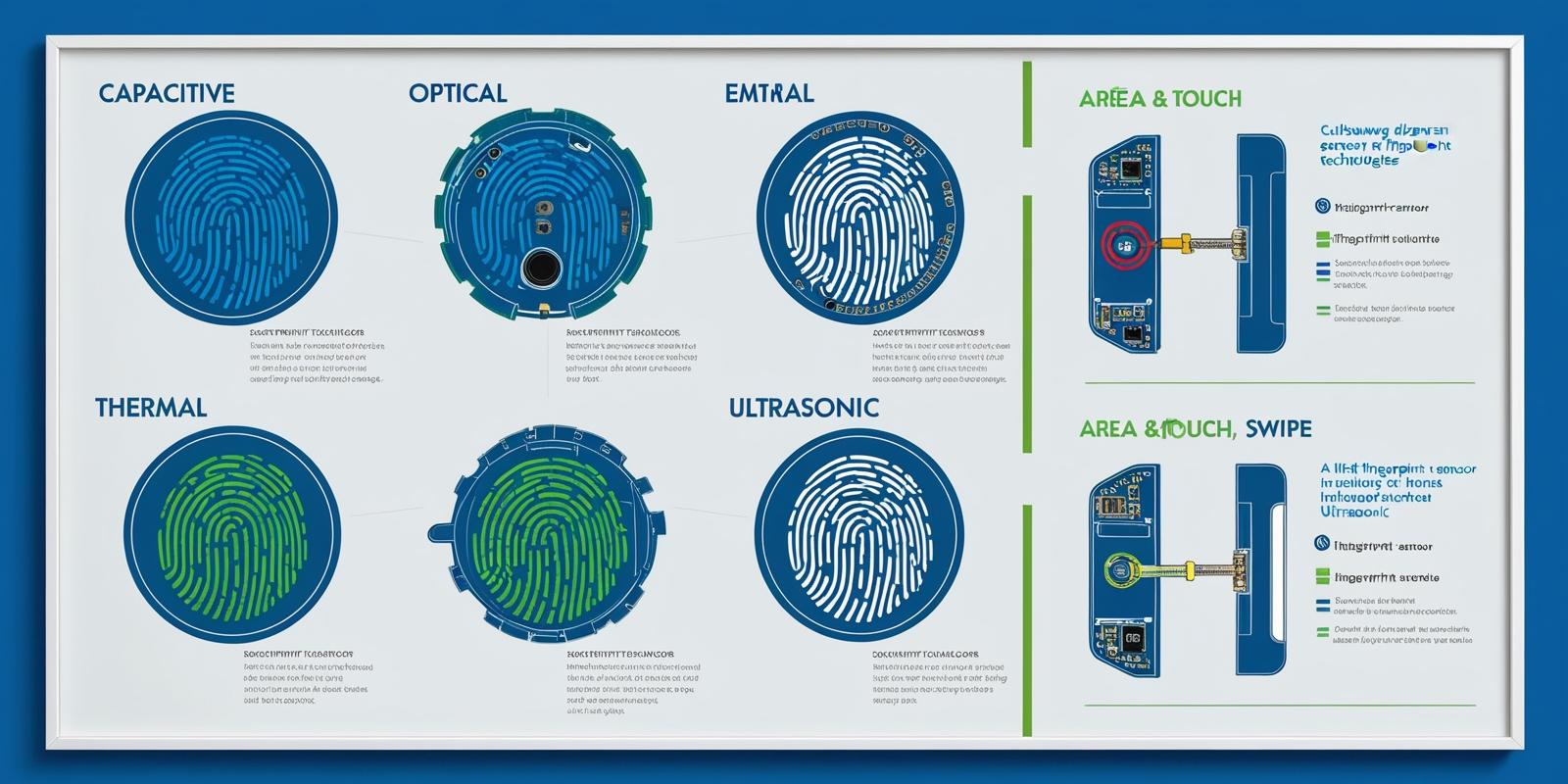
Technology is one of the most important dimensions of the Fingerprint Sensor Market Analysis. The market includes capacitive, optical, thermal, and ultrasonic fingerprint sensing technologies. Each technology addresses different requirements related to accuracy, cost, power consumption, integration, and application environment.
Capacitive Fingerprint Sensors
Capacitive technology is projected to hold the largest market share. Capacitive fingerprint sensors detect differences in electrical characteristics created by fingerprint ridges and valleys. Their high accuracy, fast response, low power consumption, and cost-effectiveness have supported extensive deployment in smartphones, laptops, and access control devices.
The established manufacturing ecosystem for capacitive sensors also supports their use in high-volume consumer electronics applications. Continued improvements in sensor design and biometric algorithms are expected to maintain the technology’s importance throughout the forecast period.
Optical Fingerprint Sensors
Optical fingerprint sensors use imaging techniques to capture fingerprint patterns. Their ability to support in-display fingerprint authentication has increased their relevance in smartphones and other modern electronic devices.
Advancements in optical sensing are improving image quality, recognition accuracy, and integration flexibility. As device manufacturers seek larger displays and thinner form factors, optical solutions can provide additional design flexibility.
Ultrasonic Fingerprint Sensors
Ultrasonic technology represents one of the fastest-growing areas of the market. According to MarketsandMarkets, the ultrasonic segment is projected to register the highest CAGR of 11.9% during 2026–2032.
Ultrasonic sensors use sound waves to capture fingerprint characteristics and can offer advantages in terms of authentication accuracy and integration. Their ability to support advanced in-display biometric authentication makes them particularly attractive for premium smartphones and next-generation mobile devices.
Area & Touch Sensors Continue to Lead
The Fingerprint Sensor Market Analysis by type shows that area & touch sensors are expected to dominate the market. MarketsandMarkets estimates that this segment will account for approximately 97.0% of the market in 2026.
Area and touch sensors are widely deployed across smartphones, laptops, tablets, access control systems, and other consumer electronic devices. Their combination of reliability, accuracy, cost-effectiveness, and relatively straightforward integration makes them suitable for high-volume biometric authentication applications.
As demand for convenient device security continues to increase, area and touch sensors are expected to remain an important foundation of the fingerprint sensor ecosystem.
2D Sensors Maintain Market Leadership While 3D Creates New Opportunities
By sensor technology, the 2D segment is expected to account for the largest market share, representing approximately 93.1% of the market in 2026.
2D fingerprint sensing has benefited from widespread deployment across consumer electronics and security applications. The technology offers established manufacturing capabilities, relatively lower costs, and easier integration compared with some advanced alternatives.
At the same time, 3D fingerprint technology represents an important area of innovation. Advances in 3D sensing can enable more detailed biometric information and potentially strengthen authentication and anti-spoofing capabilities. MarketsandMarkets identifies rapid advances in 3D fingerprint technology as an important opportunity for the industry.
The future competitive landscape will therefore involve both continued optimization of established 2D technologies and development of advanced 3D biometric solutions.
Consumer Electronics Remains a Major Application
Consumer electronics represents the leading end-use application in the Fingerprint Sensor Market Analysis. Fingerprint sensors are increasingly embedded into smartphones, tablets, laptops, wearables, and connected devices to provide secure and convenient access.
The growth of premium smartphones and increasingly sophisticated connected devices is encouraging manufacturers to improve biometric functionality. In-display fingerprint authentication is particularly important because it allows manufacturers to maintain large display areas while retaining biometric security.
Beyond smartphones, laptops and tablets are incorporating fingerprint authentication to support password-free access and protect sensitive information. Wearable devices can also use biometric authentication to secure personal data and connected services.
The combination of security, convenience, and user experience makes fingerprint sensing an attractive feature for consumer electronics manufacturers. MarketsandMarkets expects the consumer electronics segment to account for the largest share of the market.
Digital Payments Create New Growth Opportunities
The rapid expansion of digital payments, mobile banking, e-commerce, and contactless transactions is another important factor highlighted in the Fingerprint Sensor Market Analysis.
Financial transactions require strong authentication to reduce fraud and unauthorized access. Fingerprint authentication provides a convenient mechanism for verifying users without requiring them to remember additional passwords or PINs.
Biometric smart cards represent an emerging opportunity, particularly across banking, financial services, and insurance. Fingerprint-enabled payment cards can authenticate users directly and potentially reduce dependence on PIN-based verification.
The increasing focus on secure and seamless financial experiences is expected to support the adoption of fingerprint sensors in payment cards and other financial authentication solutions. MarketsandMarkets identifies the emergence of biometric smart cards for BFSI applications as a significant opportunity.
IoT and Smart Devices Expand the Addressable Market
The integration of IoT technologies with biometric authentication is another important trend shaping the Fingerprint Sensor Market Analysis. Connected devices increasingly require mechanisms that can identify authorized users and prevent unauthorized access.
Fingerprint sensors can be integrated into smart home devices, enterprise equipment, connected industrial systems, and other IoT products. This creates opportunities for manufacturers to use biometrics not only for smartphones and computers but also for broader connected ecosystems.
Smart homes, for example, can use fingerprint authentication for secure entry systems, connected locks, personal device access, and user-specific automation. In enterprise environments, biometric authentication can support access control and identity management.
The convergence of IoT and biometrics is expected to create additional applications and revenue opportunities for fingerprint sensor manufacturers.
Government, Law Enforcement, Healthcare, and Commercial Applications
Although consumer electronics represents the largest end-use application, the Fingerprint Sensor Market Analysis shows significant opportunities across government, law enforcement, banking and finance, healthcare, smart homes, commercial applications, military, defense, and aerospace.
Government agencies use biometric authentication for identity verification, citizen services, border management, and secure access. Law enforcement agencies can deploy fingerprint technologies for identification and authentication purposes.
In healthcare environments, biometric authentication can help protect patient information and restrict access to sensitive systems. Hospitals and healthcare facilities can use fingerprint-based access control to secure restricted areas and digital records.
Commercial organizations are also adopting biometric technologies for employee authentication, access management, attendance systems, and secure facility access. MarketsandMarkets projects the commercial segment to register the highest CAGR among end-use applications during the forecast period.
Asia Pacific Leads Fingerprint Sensor Market Growth
Geographically, Asia Pacific is expected to be the fastest-growing region in the Fingerprint Sensor Market Analysis, with a projected CAGR of 6.7% from 2026 to 2032.
The region benefits from strong smartphone penetration, expanding digital payment ecosystems, increasing adoption of biometric authentication, and a major consumer electronics manufacturing base. China, India, Japan, and South Korea are particularly important markets for fingerprint sensor technologies.
The presence of major semiconductor and sensor suppliers further strengthens the regional ecosystem. Government-led digital identity initiatives and increasing cybersecurity awareness are also supporting demand for secure authentication solutions.
India and other emerging economies in Asia Pacific are expected to offer significant opportunities as digital financial services, mobile payments, connected devices, and digital identity systems continue to expand.
Security and Privacy Remain Key Challenges
Despite strong growth prospects, the Fingerprint Sensor Market Analysis also identifies several challenges. One of the most important concerns involves the security and privacy of biometric data.
Unlike passwords, biometric characteristics cannot simply be changed if compromised. Unauthorized access to biometric information can therefore create serious privacy and security concerns. Manufacturers and solution providers must invest in secure storage, encryption, anti-spoofing technologies, and privacy-focused architectures.
Another challenge is sensor performance under difficult operating conditions. Wet, dirty, or damaged fingers can reduce recognition accuracy and authentication reliability. Environmental conditions and differences among users can also affect performance.
Substitute biometric technologies, including facial and iris recognition, also create competitive pressure. Fingerprint sensor manufacturers must therefore continue improving accuracy, speed, reliability, and user experience to maintain their position within the broader biometrics market.
Competitive Landscape and Key Companies
The competitive environment described in the Fingerprint Sensor Market Analysis includes established technology companies, specialized biometric providers, and emerging innovators.
Key players identified by MarketsandMarkets include Shenzhen Goodix Technology Co., Ltd., Fingerprint Cards AB, Synaptics Incorporated, Egis Technology Inc., Qualcomm Technologies, Apple Inc., CrucialTec, NEXT Biometrics, Novatek Microelectronics, and Qtechnology.
Competition is increasingly focused on sensor accuracy, miniaturization, low power consumption, anti-spoofing capabilities, in-display integration, and advanced biometric algorithms. Companies are also exploring strategic collaborations and technology partnerships to expand their presence across smartphones, access control, payment authentication, digital identity, and connected devices.
Recent developments illustrate the industry’s focus on next-generation authentication. NEXT Biometrics announced a strategic shift toward Anywhere-on-Display fingerprint authentication in July 2026. Fingerprint Cards AB and Precise Biometrics also announced a proposed merger in March 2026, combining fingerprint sensing capabilities with biometric software and identity-management technologies.
Future Outlook for Fingerprint Sensor Market Analysis
The future outlook for the Fingerprint Sensor Market Analysis remains positive as organizations increasingly prioritize secure, convenient, and reliable identity verification. The market is projected to reach USD 6.98 billion by 2032, growing at a CAGR of 5.7% from 2026 to 2032.
Future market development will be shaped by the convergence of AI, advanced biometric algorithms, ultrasonic sensing, optical technologies, 3D fingerprint recognition, IoT, digital payments, and connected devices.
The next generation of fingerprint sensors will increasingly focus on invisible and seamless authentication. In-display and anywhere-on-display technologies can help manufacturers integrate biometric capabilities into new device designs without compromising screen size or usability.
AI will further enhance biometric performance by improving pattern recognition, anti-spoofing, and adaptive authentication. Meanwhile, biometric smart cards, connected devices, digital identity systems, and commercial access control will expand the application landscape beyond traditional smartphones and laptops.
Overall, the Fingerprint Sensor Market Analysis points toward a market where biometric authentication becomes increasingly embedded in everyday digital interactions. As cybersecurity threats increase and consumers demand faster and more convenient authentication, fingerprint sensors will remain an important technology for securing devices, transactions, identities, and connected environments.
Frequently Asked Questions (FAQs)
1. What is the projected growth of the Fingerprint Sensor Market?
The Fingerprint Sensor Market is projected to grow from USD 5.01 billion in 2026 to USD 6.98 billion by 2032, registering a CAGR of 5.7% during 2026–2032, according to MarketsandMarkets.
2. What are the key factors driving the Fingerprint Sensor Market?
The key factors driving the Fingerprint Sensor Market include increasing demand for secure biometric authentication, rising cybersecurity concerns, growing adoption of smartphones and connected devices, digital payment expansion, and advancements in AI-powered biometric technologies.
3. Which technology is expected to grow fastest in the Fingerprint Sensor Market?
Ultrasonic fingerprint sensors are expected to register the highest growth, with a projected CAGR of 11.9% from 2026 to 2032, driven by their adoption in advanced in-display biometric authentication applications.
4. Which application dominates the Fingerprint Sensor Market?
Consumer electronics is expected to account for the largest share of the Fingerprint Sensor Market. The widespread integration of fingerprint sensors into smartphones, laptops, tablets, wearables, and other connected devices continues to support demand.
5. Which region is expected to grow fastest in the Fingerprint Sensor Market?
Asia Pacific is expected to be the fastest-growing region in the Fingerprint Sensor Market, with a projected CAGR of 6.7% from 2026 to 2032, supported by smartphone adoption, digital payments, biometric identification, and the region’s strong consumer electronics manufacturing ecosystem.
About MarketsandMarkets™
MarketsandMarkets™ is a blue ocean alternative in growth consulting and program management, leveraging a man-machine offering to drive supernormal growth for progressive organizations in the B2B space. We have the widest lens on emerging technologies, making us proficient in co-creating supernormal growth for clients.
The B2B economy is witnessing the emergence of $25 trillion of new revenue streams that are substituting existing revenue streams in this decade alone. We work with clients on growth programs, helping them monetize this $25 trillion opportunity through our service lines – TAM Expansion, Go-to-Market (GTM) Strategy to Execution, Market Share Gain, Account Enablement, and Thought Leadership Marketing.
Built on the ’GIVE Growth’ principle, we work with several Forbes Global 2000 B2B companies – helping them stay relevant in a disruptive ecosystem. Our insights and strategies are molded by our industry experts, cutting-edge AI-powered Market Intelligence Cloud, and years of research. The KnowledgeStore™ (our Market Intelligence Cloud) integrates our research, facilitates an analysis of interconnections through a set of applications, helping clients look at the entire ecosystem and understand the revenue shifts happening in their industry.
To find out more, visit www.MarketsandMarkets™.com or follow us on Twitter, LinkedIn and Facebook.
Contact:
Mr. Rohan Salgarkar
MarketsandMarkets™ INC.
1615 South Congress Ave.
Suite 103
Delray Beach, FL 33445
USA : 1-888-600-6441
