The rapid expansion of digital services, cloud computing, connected devices, and data-intensive applications is increasing the need for stronger cryptographic security. Organizations across financial services, telecommunications, government, healthcare, manufacturing, energy, and other industries are investing in technologies that can protect encryption keys, digital identities, transactions, and sensitive information. Against this backdrop, Hardware Security Modules Market Growth is accelerating as enterprises prioritize secure key management, regulatory compliance, and digital trust.
According to MarketsandMarkets, the global Hardware Security Modules (HSM) market is projected to grow from USD 2.04 billion in 2026 to USD 4.80 billion by 2032, registering a CAGR of 15.3% from 2026 to 2032. The market was valued at USD 1.74 billion in 2025. Increasing data breaches and cyberattacks, cloud adoption, stringent data security regulations, digital payments, and the growth of IoT and 5G networks are among the major factors supporting market expansion.
HSMs are specialized security devices designed to safeguard cryptographic keys and execute secure encryption operations. As enterprises move toward cloud-native architectures, AI infrastructure, distributed computing, and connected ecosystems, HSMs are becoming an important component of modern cybersecurity strategies.
Hardware Security Modules Market Growth Accelerates with Rising Cybersecurity Threats
One of the strongest contributors to Hardware Security Modules Market Growth is the increasing frequency and sophistication of cyberattacks. Ransomware, phishing, credential theft, advanced persistent threats, and other attacks are forcing organizations to strengthen protection around critical data and cryptographic assets.
HSMs provide a hardware-based environment for generating, storing, and managing cryptographic keys. This enables organizations to protect sensitive information while supporting secure authentication, digital signatures, encryption, and transaction processing.
As businesses increasingly depend on digital platforms, the consequences of compromised encryption keys can be significant. Financial transactions, customer identities, intellectual property, healthcare information, and government data all require strong protection. Consequently, organizations are moving toward dedicated cryptographic infrastructure to strengthen confidentiality, integrity, and authentication.
The growing emphasis on cryptographic governance and secure key lifecycle management is therefore expected to remain an important contributor to Hardware Security Modules Market Growth during the forecast period.
Cloud Security Becomes a Major Growth Engine
Cloud computing is fundamentally changing how organizations deploy cybersecurity infrastructure. Enterprises are increasingly adopting hybrid and multi-cloud environments, creating demand for security technologies that can protect workloads and cryptographic keys across distributed infrastructures.
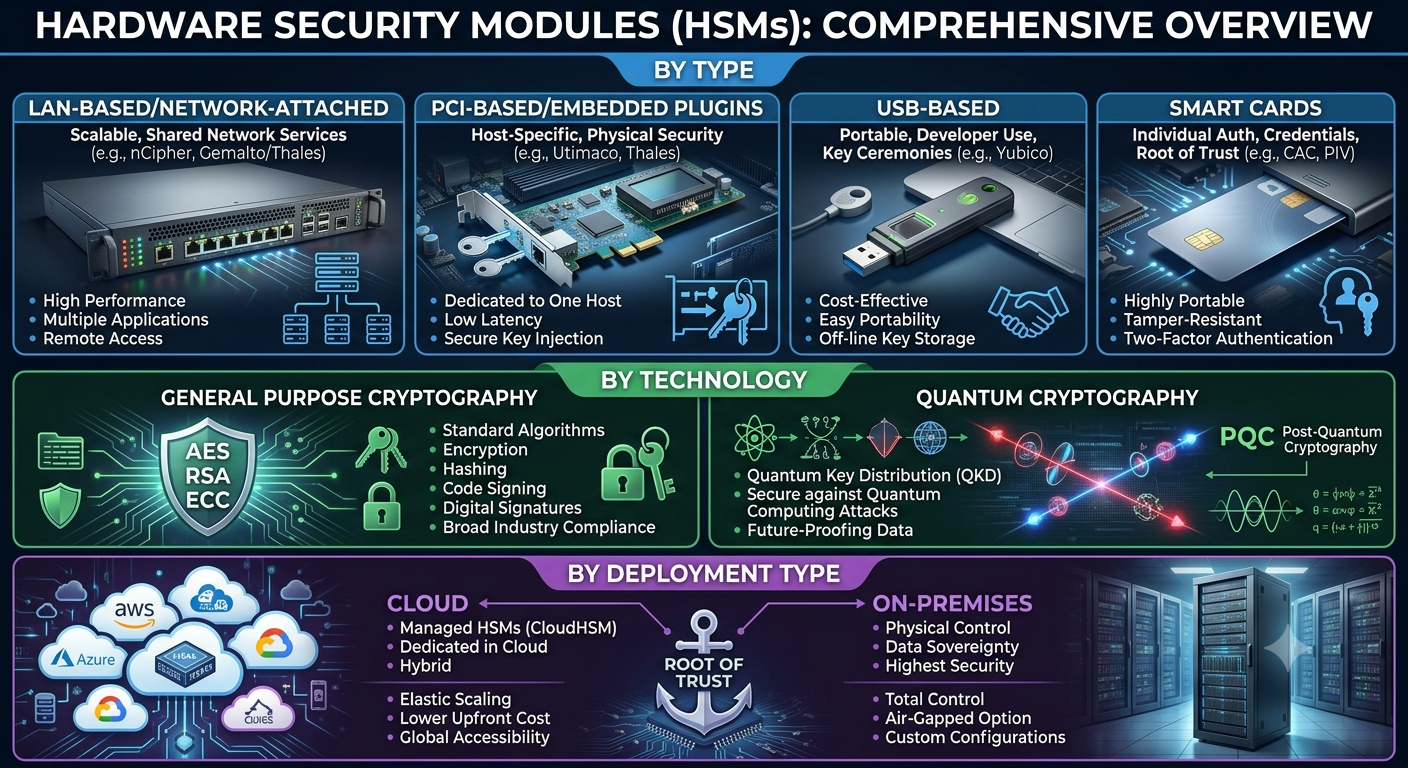
Cloud-based HSMs provide scalable cryptographic capabilities without requiring organizations to deploy and maintain dedicated hardware infrastructure. MarketsandMarkets expects the cloud-based deployment segment to register the highest growth rate during the forecast period, supported by cloud migration, multi-cloud strategies, and growing demand for security-as-a-service models.
This transition is an important element of Hardware Security Modules Market Growth because cloud-based HSM services allow organizations to integrate encryption and key management into modern applications more efficiently.
Cloud HSMs can support applications such as digital payments, certificate management, authentication, database encryption, code signing, and public key infrastructure. As organizations expand their cloud footprints, the need to maintain consistent cryptographic controls across environments is expected to increase.
Download PDF Brochure @ https://www.marketsandmarkets.com/pdfdownloadNew.asp?id=162277475
AI Infrastructure Creates New Security Requirements
The rise of artificial intelligence is creating another important dimension for Hardware Security Modules Market Growth. AI workloads require substantial computing infrastructure and increasingly operate across distributed environments, data centers, cloud platforms, and edge locations.
The rising deployment of AI infrastructure and distributed computing platforms as an important market development.
AI systems process large quantities of potentially sensitive information, making data confidentiality and identity management increasingly important. HSMs can support secure key management and cryptographic operations across AI infrastructure, helping organizations protect sensitive datasets, applications, credentials, and communications.
As enterprises deploy AI models across hybrid and multi-cloud environments, cybersecurity teams need mechanisms that can provide trusted cryptographic services without creating unnecessary complexity. This is likely to encourage greater integration between HSMs, cloud security platforms, identity management systems, and enterprise AI infrastructure.
The convergence of AI and cybersecurity therefore represents an emerging opportunity for Hardware Security Modules Market Growth, particularly as organizations increase investment in secure AI infrastructure.
Digital Transformation Expands the HSM Opportunity
Digital transformation is pushing businesses to replace traditional processes with connected applications, cloud platforms, digital identities, automated workflows, and real-time data services. This transformation increases the number of digital interactions that require authentication, encryption, and secure key management.
Industries such as banking, healthcare, telecommunications, retail, transportation, and government are increasingly dependent on digital services. As these ecosystems expand, organizations need security architectures that can establish trust between users, applications, devices, and systems.
HSMs support this requirement by providing secure cryptographic operations for authentication, encryption, digital signatures, and credential management. MarketsandMarkets identifies expanding digital identity ecosystems, encrypted communications, and secure key lifecycle management as important factors accelerating HSM adoption.
Consequently, Hardware Security Modules Market Growth is increasingly connected with broader digital transformation initiatives rather than being limited to traditional cybersecurity deployments.
Quantum Cryptography Emerges as a Strategic Technology
The development of quantum computing is encouraging organizations to reconsider long-term encryption strategies. Quantum computing has the potential to challenge some existing cryptographic algorithms, creating demand for quantum-resistant security technologies.
MarketsandMarkets identifies quantum cryptography as a technology segment expected to record the highest CAGR during the forecast period. The report also highlights the growing adoption of post-quantum cryptography and crypto-agility initiatives.
This trend is important for Hardware Security Modules Market Growth because organizations are increasingly looking for security architectures capable of adapting to evolving cryptographic requirements.
HSM vendors are therefore developing solutions that incorporate support for emerging cryptographic algorithms, quantum-resistant approaches, and flexible key management. The ability to transition between cryptographic standards without disrupting critical applications will become increasingly important as organizations prepare for future security requirements.
Digital Payments Strengthen Market Demand
The continued growth of digital payments is another major contributor to Hardware Security Modules Market Growth. Banking institutions, payment processors, fintech companies, and digital commerce platforms process enormous volumes of sensitive financial information.
HSMs help secure payment environments by protecting cryptographic keys and supporting secure transaction processing, authentication, encryption, and digital signatures. MarketsandMarkets identifies payment processing as an important application and expects it to capture a majority of market share in 2032.
As contactless payments, mobile banking, digital wallets, and online commerce continue to expand, financial institutions require highly secure infrastructures capable of protecting transactions at scale.
The BFSI sector already represents a significant portion of the market. According to MarketsandMarkets, BFSI accounted for 37.8% of the Hardware Security Modules Market in 2025, highlighting the importance of financial services to overall market demand.
IoT and 5G Expand the Need for Secure Device Identity
The proliferation of connected devices is creating additional opportunities for HSM providers. IoT ecosystems connect sensors, machines, vehicles, industrial equipment, smart infrastructure, and consumer devices to digital platforms.
Each connected device can represent a potential security entry point. Device authentication, encryption, secure communication, and credential management are therefore becoming increasingly important.
The expansion of 5G networks further increases the scale and complexity of connected environments. HSMs can support secure identity management and cryptographic operations for connected systems, helping organizations establish trusted communications between devices and backend platforms.
MarketsandMarkets identifies the growth of IoT and 5G networks as a key driver, while the proliferation of connected devices and IoT technologies in smart cities represents an important market opportunity.
On-Premises and Cloud Deployments Address Different Security Needs
The HSM market is segmented into on-premises and cloud-based deployment models. While cloud-based HSMs are expected to grow at the highest rate, on-premises solutions continue to serve organizations requiring direct control over cryptographic infrastructure.
MarketsandMarkets estimates that the on-premises segment will register a 11.7% CAGR during the forecast period.
Large organizations operating highly regulated environments may continue to deploy dedicated HSM infrastructure because of security, compliance, performance, or operational requirements. At the same time, cloud-based solutions provide flexibility and scalability for organizations pursuing cloud-first strategies.
The coexistence of these deployment models is expected to support diversified Hardware Security Modules Market Growth as organizations select architectures according to their security requirements, regulatory environment, application workloads, and IT infrastructure.
LAN-Based HSMs Maintain a Strong Market Position
By type, the market includes LAN-based/network-attached, PCI-based/embedded plugins, USB-based/portable, and smart cards. MarketsandMarkets expects the LAN-based/network-attached segment to account for the largest market share in 2032.
Network-attached HSMs are particularly suitable for enterprise environments where multiple applications and systems need access to centralized cryptographic resources. They can support scalable key management while reducing the need to deploy individual security modules across every application environment.
As organizations consolidate cybersecurity infrastructure and seek centralized cryptographic governance, network-based HSM architectures are expected to remain important to market development.
Europe Emerges as a High-Growth Region
Regional cybersecurity requirements, regulatory frameworks, digital transformation initiatives, and demand for secure digital identities are influencing HSM adoption across global markets.
MarketsandMarkets expects Europe to register a CAGR of 15.3% from 2026 to 2032, making it one of the fastest-growing regional markets.
The region’s emphasis on data protection, digital trust, cybersecurity, and regulatory compliance is supporting demand for secure cryptographic infrastructure. Organizations across BFSI, government, healthcare, telecommunications, and other regulated sectors are increasingly investing in technologies that can protect sensitive data and digital identities.
North America and Asia Pacific also represent important opportunities as cloud computing, digital payments, IoT, AI infrastructure, and enterprise cybersecurity investments continue to expand.
Key Challenges Affecting Hardware Security Modules Market Growth
Despite strong demand, the HSM industry faces several challenges. One of the primary restraints is the high ownership cost associated with HSMs. Hardware procurement, deployment, integration, maintenance, specialized personnel, and compliance requirements can increase total costs, particularly for smaller organizations.
Another challenge involves the shortage of skilled cybersecurity and cryptography professionals. Effective HSM deployment requires specialized knowledge of encryption, key management, certificates, security policies, and compliance frameworks.
Integration can also become complex across hybrid and multi-cloud environments. Organizations must identify sensitive data, understand how cryptographic keys are used, and establish consistent security policies across distributed applications.
Addressing these challenges will be critical for expanding HSM adoption among SMEs and organizations with limited cybersecurity resources.
Competitive Landscape and Innovation
The competitive landscape includes established cybersecurity and technology companies such as Thales, Utimaco Management Services, IBM, Entrust Corporation, Eviden, Futurex, STMicroelectronics, Microchip Technology, Infineon Technologies, and Yubico.
These companies are investing in product innovation, cloud integration, cryptographic performance, post-quantum security, digital identity protection, and deployment flexibility.
The evolution toward cloud-native HSMs and post-quantum cryptography is particularly significant. MarketsandMarkets notes that vendors are shifting from traditional LAN-based, PCIe-based, and portable HSM offerings toward cloud-native and post-quantum cryptography-enabled solutions.
This technology transition is expected to create new competitive opportunities while encouraging organizations to modernize their cryptographic infrastructure.
Future Outlook for Hardware Security Modules Market Growth
The future of Hardware Security Modules Market Growth will be shaped by the convergence of cybersecurity, cloud computing, AI infrastructure, digital transformation, IoT, 5G, digital payments, and quantum-safe security.
The market’s projected expansion from USD 2.04 billion in 2026 to USD 4.80 billion by 2032 demonstrates the growing strategic importance of HSMs in the global digital economy.
Cloud-based cryptographic services are likely to gain momentum as enterprises adopt hybrid and multi-cloud environments. At the same time, quantum cryptography and post-quantum cryptography will become increasingly important as organizations prepare for future cybersecurity threats.
AI infrastructure and distributed computing will also create new security requirements, while IoT and smart infrastructure will expand the need for trusted device identities and secure machine-to-machine communications.
Overall, Hardware Security Modules Market Growth is moving beyond traditional encryption and payment security toward a broader role in digital trust. Vendors that combine strong cryptographic capabilities with cloud scalability, quantum readiness, flexible deployment, and seamless integration will be well positioned to capture emerging opportunities across the evolving cybersecurity landscape
Frequently Asked Questions
1. What is the projected growth of the Hardware Security Modules Market?
The Hardware Security Modules Market is projected to grow from USD 2.04 billion in 2026 to USD 4.80 billion by 2032, registering a CAGR of 15.3% during the forecast period.
2. What are the key factors driving Hardware Security Modules Market Growth?
Key factors driving Hardware Security Modules Market Growth include rising cybersecurity threats, increasing cloud adoption, digital transformation, growth of digital payments, IoT and 5G expansion, stringent data protection regulations, and the increasing need for secure cryptographic key management.
3. How is AI influencing the Hardware Security Modules Market?
AI is creating new demand for secure cryptographic infrastructure as organizations deploy AI workloads across cloud, data center, and distributed environments. HSMs help protect encryption keys, digital identities, sensitive datasets, and communications associated with AI infrastructure.
4. Which deployment segment is expected to grow fastest in the Hardware Security Modules Market?
The cloud-based deployment segment is expected to register the highest growth rate, supported by increasing cloud migration, hybrid and multi-cloud adoption, and demand for scalable cryptographic security services.
5. Which region is expected to witness significant Hardware Security Modules Market Growth?
Europe is expected to register strong growth in the Hardware Security Modules Market, driven by increasing cybersecurity requirements, regulatory compliance, data protection initiatives, digital transformation, and growing demand for secure digital identities.
About MarketsandMarkets™
MarketsandMarkets™ is a blue ocean alternative in growth consulting and program management, leveraging a man-machine offering to drive supernormal growth for progressive organizations in the B2B space. We have the widest lens on emerging technologies, making us proficient in co-creating supernormal growth for clients.
The B2B economy is witnessing the emergence of $25 trillion of new revenue streams that are substituting existing revenue streams in this decade alone. We work with clients on growth programs, helping them monetize this $25 trillion opportunity through our service lines – TAM Expansion, Go-to-Market (GTM) Strategy to Execution, Market Share Gain, Account Enablement, and Thought Leadership Marketing.
Built on the ’GIVE Growth’ principle, we work with several Forbes Global 2000 B2B companies – helping them stay relevant in a disruptive ecosystem. Our insights and strategies are molded by our industry experts, cutting-edge AI-powered Market Intelligence Cloud, and years of research. The KnowledgeStore™ (our Market Intelligence Cloud) integrates our research, facilitates an analysis of interconnections through a set of applications, helping clients look at the entire ecosystem and understand the revenue shifts happening in their industry.
To find out more, visit www.MarketsandMarkets™.com or follow us on Twitter, LinkedIn and Facebook.
Contact:
Mr. Rohan Salgarkar
MarketsandMarkets™ INC.
1615 South Congress Ave.
Suite 103
Delray Beach, FL 33445
USA : 1-888-600-6441
