The global mining industry is undergoing a major transformation as mining companies increasingly adopt automation, artificial intelligence (AI), robotics, and digital technologies to improve operational efficiency, enhance worker safety, and optimize resource utilization. Traditional mining operations often involve complex processes, hazardous working environments, high labor requirements, and significant operational expenses. Mining automation market growth is emerging as a critical solution to address these challenges by reducing human intervention and enabling intelligent, data-driven mining operations.
Mining automation involves the use of advanced equipment, software, communication systems, and autonomous technologies to automate activities such as drilling, excavation, loading, hauling, transportation, ventilation, and maintenance. Autonomous mining trucks, automated drilling rigs, underground loaders, smart ventilation systems, and fleet management platforms are transforming the way mining companies manage their operations.
According to MarketsandMarkets, the global mining automation market is projected to grow from USD 3.96 billion in 2025 to USD 5.93 billion by 2030, registering a compound annual growth rate (CAGR) of 8.4% during the forecast period. The growing focus on improving workplace safety, reducing operating expenditure, and increasing mining productivity is driving the adoption of automation technologies across surface and underground mining operations.
Top 10 Takeaways
- The global mining automation market is projected to reach USD 5.93 billion by 2030.
- The market is expected to grow at a CAGR of 8.4% during 2025–2030.
- Increasing demand for worker safety and operational efficiency is driving automation adoption.
- AI and robotics are transforming drilling, excavation, loading, and transportation activities.
- Autonomous mining trucks and drilling rigs are improving productivity and equipment utilization.
- Underground mining held the largest market share in 2024 and is expected to register the highest CAGR.
- Equipment accounted for a significant share of the market in 2024.
- Smart connected mining and digital transformation are creating new growth opportunities.
- Asia Pacific is projected to be the fastest-growing regional market.
- Caterpillar, Komatsu, Sandvik, Epiroc, and Hitachi Construction Machinery are among the key market players.
Growing Focus on Worker Safety Driving Mining Automation Adoption
Worker safety is one of the most significant factors driving the mining automation market. Mining operations involve several occupational hazards, including equipment accidents, underground collapses, exposure to harmful gases, extreme temperatures, and difficult working conditions.
Automation technologies help reduce workers’ exposure to hazardous environments by enabling remote operations and autonomous equipment deployment. Autonomous mining trucks, robotic drilling systems, and remotely operated loaders allow mining companies to perform critical activities with limited human presence in dangerous areas.
For instance, autonomous haulage systems can transport extracted materials across mining sites using advanced sensors, navigation technologies, and intelligent control systems. Similarly, remote-controlled drilling equipment enables operators to perform drilling activities from safer locations.
Mining companies are also implementing automated ventilation systems to monitor underground air quality, regulate airflow, and maintain safer working conditions. These technologies help improve workplace safety while supporting continuous mining operations.
As mining companies prioritize employee safety and regulatory compliance, demand for advanced automation solutions is expected to increase.
Download PDF Brochure @ https://www.marketsandmarkets.com/pdfdownloadNew.asp?id=257609431
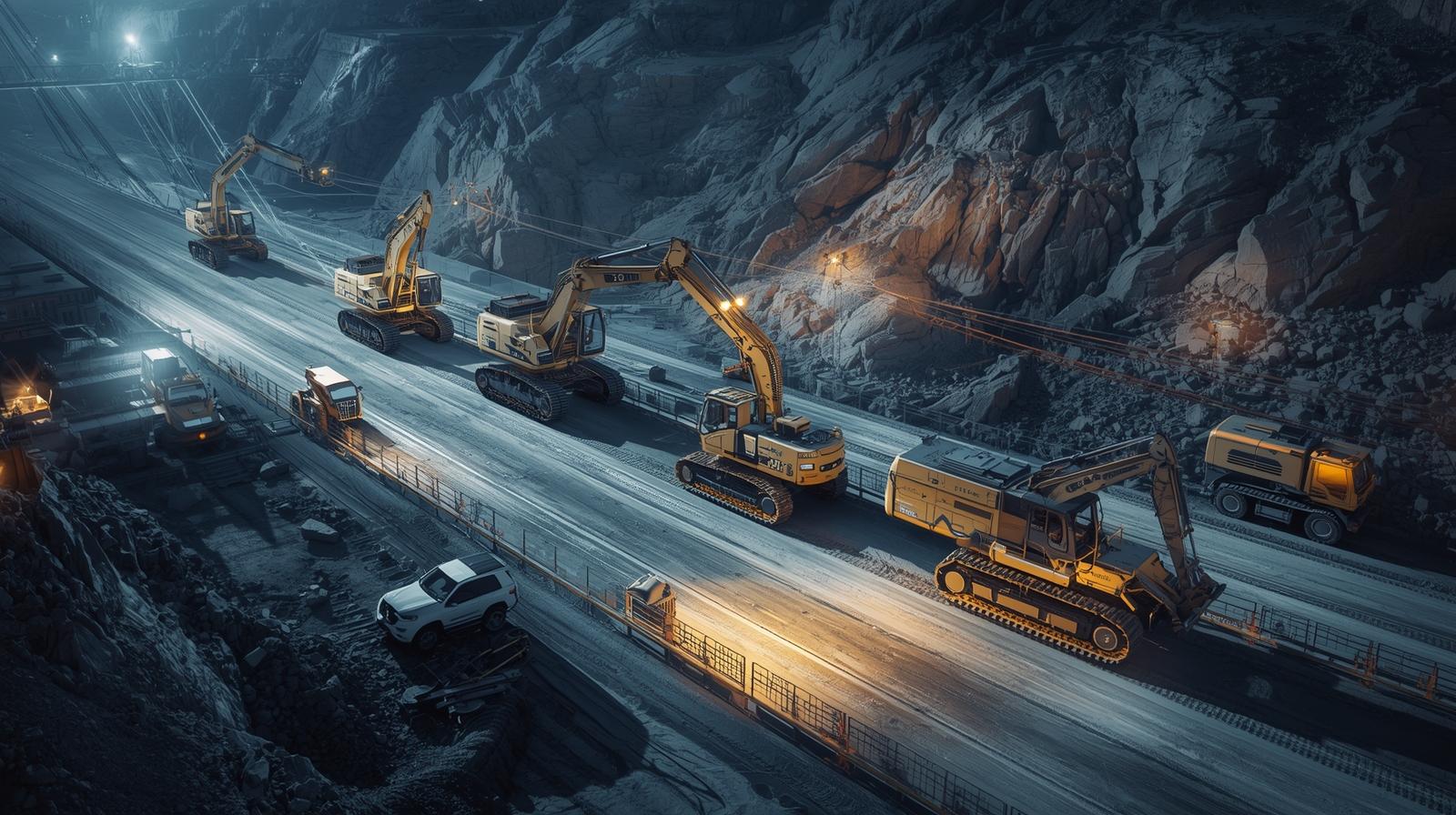
AI and Robotics Transforming Mining Operations
Artificial intelligence and robotics are playing an increasingly important role in modern mining operations. AI-powered systems enable mining companies to analyze large volumes of operational data, optimize equipment performance, and improve decision-making.
AI-driven mining automation solutions can monitor equipment conditions, identify operational abnormalities, predict maintenance requirements, and optimize production schedules. These capabilities help reduce unexpected equipment failures and improve asset utilization.
Robotics is also transforming mining activities by enabling automated drilling, material handling, inspection, and excavation. Robotic systems equipped with cameras, sensors, and intelligent navigation technologies can operate in challenging environments while minimizing the need for direct human intervention.
The integration of AI and robotics is particularly important for underground mining, where limited visibility, restricted spaces, and hazardous conditions create significant operational challenges.
Furthermore, machine learning algorithms can analyze historical mining data to improve drilling accuracy, optimize material transportation, and support predictive maintenance.
The combination of AI, robotics, and autonomous equipment is expected to accelerate the transition toward intelligent and connected mining operations.
Autonomous Mining Equipment Creating New Growth Opportunities
Autonomous equipment represents a major technology area within the mining automation market. Mining companies are increasingly investing in automated machinery to improve productivity, reduce labor dependency, and optimize equipment utilization.
Key equipment categories include:
Autonomous Hauling and Mining Trucks: Autonomous mining trucks use advanced sensors, GPS, navigation systems, and onboard computing technologies to transport minerals and materials across mining sites. These vehicles support continuous operations, improve fleet utilization, and reduce human exposure to hazardous transportation activities.
Autonomous Drilling Rigs: Automated drilling rigs improve drilling accuracy, consistency, and operational efficiency. These systems can execute predefined drilling patterns and support remote monitoring, reducing manual intervention and improving productivity.
Underground LHD Loaders: Load-Haul-Dump (LHD) loaders are widely used in underground mining to load, transport, and unload extracted materials. Automation enables these machines to operate remotely or autonomously in confined underground environments.
Tunneling Equipment: Automated tunneling equipment supports excavation, tunnel development, and infrastructure construction. Advanced control systems help improve precision and reduce operational risks.
Smart Ventilation Systems: Smart ventilation systems use sensors, automation, and intelligent control technologies to regulate airflow and monitor environmental conditions in underground mines. These solutions help improve energy efficiency and worker safety.
The increasing deployment of autonomous mining equipment is expected to create significant opportunities for equipment manufacturers and automation technology providers.
Underground Mining Emerging as a Key Growth Segment
Mining automation is increasingly important across both surface and underground mining operations. According to MarketsandMarkets, the underground mining segment held the largest market share in 2024 and is expected to register the highest CAGR during the forecast period.
Underground mining involves complex operating environments where workers face risks associated with limited ventilation, restricted visibility, equipment movement, and geological instability. Automation technologies help address these challenges by enabling remote equipment operation, automated material transportation, and real-time environmental monitoring.
Autonomous drilling systems, underground loaders, and automated hauling solutions are improving operational efficiency while reducing the requirement for workers to enter hazardous mining areas.
The growing demand for metals and minerals located in deeper deposits is also increasing the need for advanced underground mining technologies.
Meanwhile, surface mining continues to adopt autonomous trucks, automated drilling equipment, and fleet management platforms to improve large-scale extraction and transportation activities.
As mining companies focus on productivity, safety, and operational optimization, automation adoption across both mining techniques is expected to expand.
Software and Communication Systems Enabling Smart Mining
Software and communication systems are essential components of modern mining automation infrastructure. These technologies connect mining equipment, sensors, control platforms, and operational management systems to enable centralized monitoring and intelligent decision-making.
Mining software solutions include remote monitoring software, asset management systems, fleet management platforms, workforce safety applications, and data management solutions.
Remote monitoring software enables operators to track equipment performance and mining activities from centralized control centers. Asset management software helps monitor equipment health, schedule maintenance, and reduce unplanned downtime.
Advanced communication systems provide connectivity between autonomous equipment, sensors, control centers, and mining infrastructure. Reliable communication networks are particularly important for underground mining, where uninterrupted data transmission supports equipment coordination and remote operations.
The integration of AI, IoT, cloud computing, and advanced analytics is further strengthening mining software capabilities. These technologies allow mining companies to collect and analyze operational information, optimize equipment utilization, and improve overall productivity.
As smart connected mining becomes more widespread, demand for integrated software and communication solutions is expected to increase.
Digital Transformation and Smart Connected Mining Accelerating Market Growth
Digital transformation is creating significant opportunities for the mining automation industry. Mining companies are increasingly adopting connected technologies to improve operational visibility, streamline workflows, and reduce production costs.
Smart connected mining combines automation, information technology, operational technology, IoT sensors, cloud platforms, and advanced analytics to create integrated mining environments.
Digital twins are emerging as an important technology for mining operations. They create virtual representations of physical equipment, processes, and infrastructure, allowing operators to monitor performance, simulate operational scenarios, and identify potential inefficiencies.
Predictive maintenance is another important application of digital mining technologies. By analyzing equipment performance data, mining companies can identify potential failures before they occur and schedule maintenance activities more effectively.
Real-time fleet management systems also help operators coordinate autonomous trucks, drilling rigs, and loaders to optimize material transportation and equipment utilization.
These developments are supporting the transition from traditional mining operations toward connected, intelligent, and automated mining ecosystems.
Asia Pacific Expected to Be the Fastest-Growing Regional Market
Asia Pacific is projected to be the fastest-growing regional market for mining automation during the forecast period. The region’s extensive mineral reserves, expanding mining activities, industrial development, and increasing investments in advanced mining technologies are supporting market growth.
China, India, and Australia are important mining markets in the region. Increasing demand for metals, minerals, and raw materials used in infrastructure, electronics, electric vehicles, and renewable energy technologies is encouraging mining companies to improve extraction capabilities.
China continues to invest in intelligent mining infrastructure and autonomous equipment to improve productivity and operational safety.
India is also witnessing increasing opportunities for mining automation as mining companies focus on modernizing operations, improving equipment efficiency, and adopting digital technologies.
Australia has a well-established mining industry and is actively adopting autonomous haulage systems, automated drilling solutions, and remote operation technologies across large mining sites.
The growing emphasis on smart mining, workforce safety, and operational cost optimization is expected to create strong opportunities for automation providers across Asia Pacific.
Key Challenges in the Mining Automation Market
Despite significant growth opportunities, the mining automation market faces several challenges that may influence technology adoption.
High Initial Investment: Implementing autonomous mining equipment, communication networks, software platforms, and integrated control systems requires substantial capital investment. Smaller mining operators may face difficulties adopting these technologies due to budget limitations.
Interoperability Issues: Mining sites often operate equipment and software from multiple manufacturers. Integrating different systems into a unified automation environment can create technical challenges and increase implementation complexity.
Workforce Skill Gaps: Automated mining operations require specialized expertise in robotics, software, data analytics, equipment maintenance, and digital technologies. The shortage of skilled professionals can slow technology adoption.
Automation-Induced Workforce Disruptions: Increasing automation may change traditional mining job requirements and reduce demand for certain manual activities. Mining companies must invest in employee training and reskilling programs to support workforce transitions.
Environmental Concerns: Mining activities can contribute to environmental degradation, resource depletion, and greenhouse gas emissions. Automation providers and mining operators must focus on energy-efficient equipment and sustainable mining practices.
Addressing these challenges through workforce development, technology partnerships, interoperable systems, and cost-effective solutions will be important for the long-term growth of the market.
Competitive Landscape and Key Market Players
The mining automation market includes established mining equipment manufacturers, industrial automation companies, and technology providers developing advanced autonomous solutions.
Key players operating in the market include:
- Caterpillar (US): Provides autonomous hauling systems, mining trucks, and integrated fleet management technologies.
- Komatsu (Japan): Offers autonomous haulage systems and advanced mining equipment designed to improve operational productivity.
- Sandvik AB (Sweden): Develops automated underground mining equipment, drilling solutions, and digital mining technologies.
- Epiroc AB (Sweden): Provides automated drilling rigs, underground loaders, and digital solutions for mining operations.
- Hitachi Construction Machinery Co., Ltd. (Japan): Offers mining equipment, fleet management solutions, and connected technologies.
These companies are focusing on product innovation, strategic collaborations, digital platforms, and autonomous equipment development to strengthen their market positions.
The growing demand for connected mining operations is also encouraging partnerships between mining equipment manufacturers, software providers, and technology companies.
Future Outlook of the Mining Automation Market
The future of the mining automation market will be shaped by the increasing integration of AI, robotics, autonomous equipment, and connected technologies. Mining companies will continue investing in automation solutions to improve productivity, reduce operational expenses, enhance workplace safety, and optimize resource utilization.
Autonomous haulage systems, automated drilling rigs, underground LHD loaders, and smart ventilation technologies will remain important components of next-generation mining infrastructure.
AI-powered analytics, IoT-enabled monitoring, digital twins, and predictive maintenance will further improve equipment performance and operational visibility. Meanwhile, advances in communication technologies will support better coordination between autonomous machines and centralized control systems.
Asia Pacific is expected to offer substantial growth opportunities due to expanding mining activities and increasing investments in intelligent mining infrastructure.
With the global mining automation market projected to reach USD 5.93 billion by 2030, automation technologies will play an increasingly important role in transforming traditional mining operations into safer, more productive, and digitally connected environments.
Frequently Asked Questions (FAQs)
Q1. What is the projected size of the mining automation market by 2030?
The global mining automation market is projected to reach USD 5.93 billion by 2030, increasing from USD 3.96 billion in 2025.
Q2. What is the expected CAGR of the mining automation market?
The mining automation market is expected to grow at a CAGR of 8.4% from 2025 to 2030.
Q3. Which segment dominates the mining automation market?
The underground mining segment held the largest market share in 2024, while the equipment segment accounted for a significant share of the market.
Q4. Which region is expected to experience the fastest growth in the mining automation market?
Asia Pacific is projected to be the fastest-growing regional market, supported by increasing mining activities and investments in smart mining technologies.
Q5. Who are the key players in the mining automation market?
The major players include Caterpillar, Komatsu, Sandvik AB, Epiroc AB, and Hitachi Construction Machinery Co., Ltd.
About MarketsandMarkets™
MarketsandMarkets™ has been recognized as one of America’s Best Management Consulting Firms by Forbes, as per their recent report.
MarketsandMarkets™ is a blue ocean alternative in growth consulting and program management, leveraging a man-machine offering to drive supernormal growth for progressive organizations in the B2B space. With the widest lens on emerging technologies, we are proficient in co-creating supernormal growth for clients across the globe.
Today, 80% of Fortune 2000 companies rely on MarketsandMarkets, and 90 of the top 100 companies in each sector trust us to accelerate their revenue growth. With a global clientele of over 13,000 organizations, we help businesses thrive in a disruptive ecosystem.
The B2B economy is witnessing the emergence of $25 trillion in new revenue streams that are replacing existing ones within this decade. We work with clients on growth programs, helping them monetize this $25 trillion opportunity through our service lines – TAM Expansion, Go-to-Market (GTM) Strategy to Execution, Market Share Gain, Account Enablement, and Thought Leadership Marketing.
Built on the ‘GIVE Growth’ principle, we collaborate with several Forbes Global 2000 B2B companies to keep them future-ready. Our insights and strategies are powered by industry experts, cutting-edge AI, and our Market Intelligence Cloud, KnowledgeStore™, which integrates research and provides ecosystem-wide visibility into revenue shifts.
To find out more, visit www.MarketsandMarkets™.com or follow us on Twitter , LinkedIn and Facebook .
Contact:
Mr. Rohan Salgarkar
MarketsandMarkets™ INC.
630 Dundee Road
Suite 430
Northbrook, IL 60062
USA : 1-888-600-6441