The renewable energy industry is undergoing a significant transformation as governments, utilities, and energy companies accelerate investments in solar, wind, and hydropower projects. As renewable energy capacity expands, managing distributed power generation assets, maintaining grid stability, and ensuring operational efficiency have become critical priorities. Supervisory Control and Data Acquisition (SCADA) systems are emerging as essential technologies for addressing these requirements through real-time monitoring, automated control, and data-driven energy management.
SCADA systems enable renewable energy operators to collect, process, and analyze operational data from power generation facilities. These systems help monitor equipment performance, identify operational abnormalities, optimize electricity generation, and improve the reliability of renewable energy infrastructure. The integration of Artificial Intelligence (AI), Internet of Things (IoT), cloud computing, and advanced analytics is further strengthening SCADA capabilities.
According to MarketsandMarkets, the SCADA in renewable energy market is projected to grow from USD 1.96 billion in 2025 to USD 3.56 billion by 2030, registering a compound annual growth rate (CAGR) of 12.7% during the forecast period. Increasing renewable energy installations, grid modernization initiatives, and rising demand for real-time monitoring and control are among the major factors supporting market expansion.
Top 10 Takeaways
- The SCADA in renewable energy market is projected to reach USD 3.56 billion by 2030.
- The market is expected to grow at a CAGR of 12.7% from 2025 to 2030.
- Increasing solar, wind, and hydropower installations are driving SCADA adoption.
- Real-time monitoring and automated control are improving renewable energy operations.
- AI and IoT integration are enabling predictive maintenance and intelligent energy management.
- The software segment accounted for approximately 40.0% of the market in 2024.
- Solar energy is expected to hold the largest market share at 62.6% in 2025.
- Asia Pacific is projected to be the fastest-growing regional market, with a CAGR of 13.9%.
- Cloud-based SCADA and floating solar projects are creating new growth opportunities.
- Cybersecurity, high deployment costs, and system integration remain important market challenges
Rising Renewable Energy Installations Driving SCADA Adoption
The rapid expansion of renewable energy infrastructure is one of the primary factors driving the SCADA in renewable energy market. Solar farms, offshore and onshore wind installations, and hydropower facilities require advanced monitoring and control systems to maintain consistent electricity generation and operational performance.
Unlike conventional power generation facilities, renewable energy installations are often distributed across geographically diverse locations. Solar farms and wind turbines may operate in remote areas where continuous manual supervision is difficult and expensive. SCADA systems address these challenges by providing centralized monitoring and remote operational control.
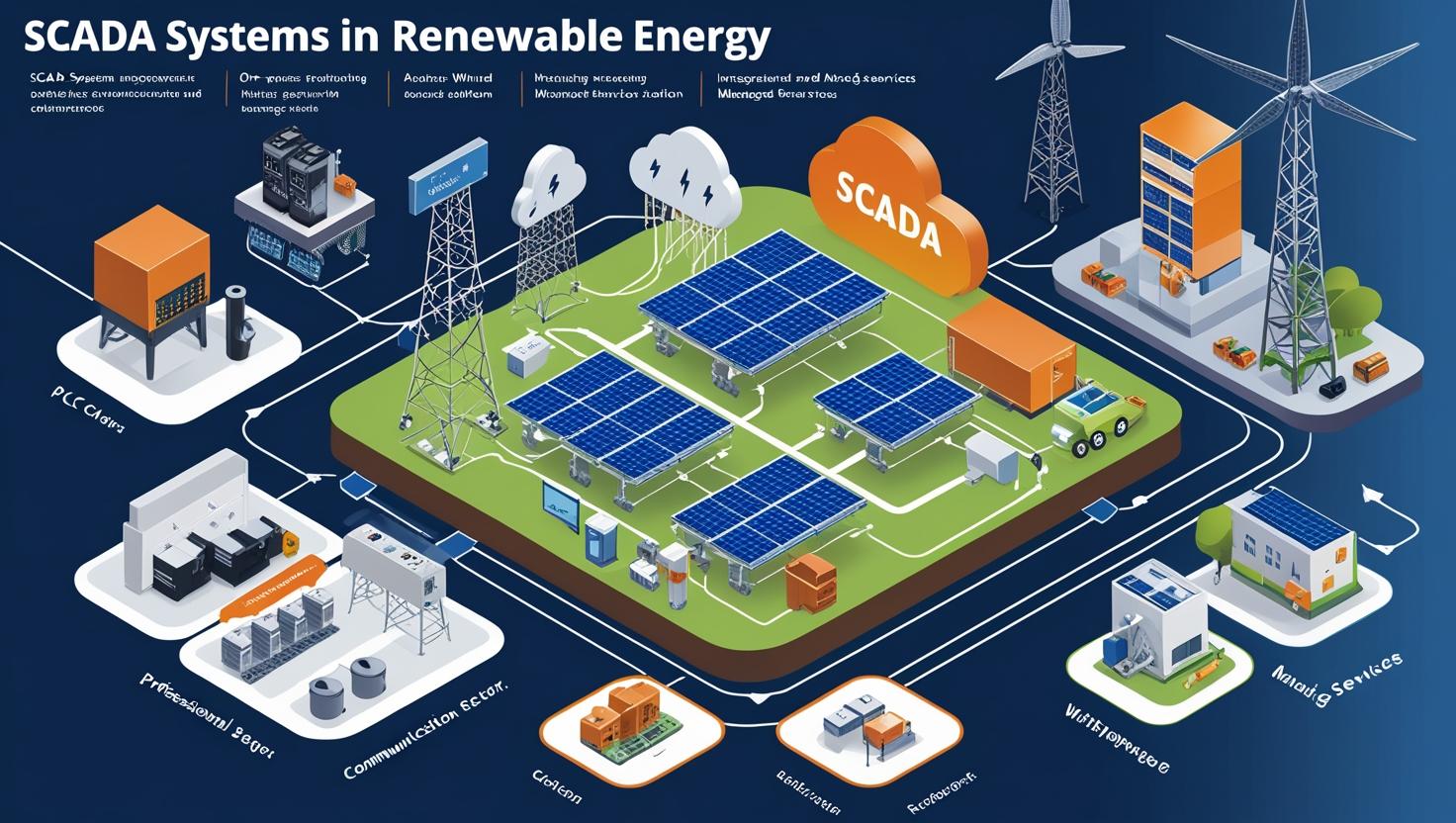
For solar power plants, SCADA platforms monitor parameters such as voltage, current, temperature, inverter performance, and power output. In wind energy facilities, these systems monitor turbine operations, rotor speed, vibration, wind conditions, and other performance indicators. Hydropower facilities use SCADA technologies to manage turbines, generators, water levels, and electrical equipment.
As renewable energy developers continue expanding generation capacity, demand for reliable SCADA hardware, software, and services is expected to increase.
Download PDF Brochure @ https://www.marketsandmarkets.com/pdfdownloadNew.asp?id=18400746
Growing Demand for Real-Time Monitoring and Control
Real-time monitoring is becoming increasingly important for renewable energy operators seeking to maximize energy output and minimize operational disruptions. SCADA systems collect information from sensors, controllers, remote terminal units, and other connected devices to provide a comprehensive view of plant operations.
These capabilities enable operators to identify equipment failures, detect abnormal operating conditions, and respond to technical issues more quickly. Real-time visibility also supports better coordination between renewable power generation facilities and electricity grids.
For instance, solar power operators can monitor fluctuations in electricity production caused by changing weather conditions. Wind farm operators can evaluate turbine performance and identify maintenance requirements before equipment failures occur.
Automated control capabilities further improve operational efficiency by allowing operators to adjust equipment settings, manage generation processes, and respond to changing operating conditions remotely.
As renewable energy infrastructure becomes more complex, real-time monitoring and control will remain important factors supporting SCADA adoption.
AI and IoT Integration Transforming Renewable Energy Management
The integration of AI and IoT technologies is creating new opportunities for the SCADA in renewable energy market. Traditional SCADA platforms primarily focus on data acquisition, monitoring, and supervisory control. Modern solutions increasingly incorporate advanced analytics and intelligent automation to support predictive and optimized operations.
IoT-enabled sensors collect operational information from renewable energy assets, including turbines, solar panels, inverters, transformers, and electrical equipment. This information is transmitted to SCADA platforms, where operators can monitor equipment conditions and evaluate system performance.
AI-powered analytics can process historical and real-time operational data to identify patterns, predict equipment failures, and recommend maintenance activities. Predictive maintenance helps renewable energy operators reduce unexpected downtime, improve asset utilization, and extend equipment life cycles.
AI can also support energy forecasting by analyzing weather conditions, historical generation patterns, and operational parameters. These capabilities help operators make informed decisions about electricity generation and grid integration.
The combination of SCADA, AI, and IoT is expected to support the development of more intelligent, connected, and efficient renewable energy infrastructure.
Cloud-Based SCADA Systems Creating New Growth Opportunities
Cloud computing is emerging as an important technology trend in the SCADA in renewable energy market. Renewable energy companies increasingly require scalable monitoring solutions that can manage multiple facilities and geographically distributed assets.
Cloud-based SCADA platforms enable operators to access operational information through centralized dashboards and remote monitoring interfaces. These systems can reduce dependence on extensive on-site computing infrastructure while supporting data accessibility across multiple locations.
Cloud deployment also provides opportunities to integrate advanced analytics, predictive maintenance applications, and enterprise energy management platforms.
For renewable energy developers operating large portfolios of solar and wind installations, cloud-based SCADA solutions can improve operational visibility and simplify asset management.
However, successful implementation requires reliable communication infrastructure, effective data management, and robust cybersecurity measures to protect critical energy operations.
SCADA in Solar Energy: A Major Growth Segment
Solar energy is expected to remain a major application area for SCADA technologies. According to MarketsandMarkets, the solar segment is projected to account for the largest share of the SCADA in renewable energy market, representing 62.6% in 2025.
The growing deployment of utility-scale solar parks and distributed solar installations is increasing the need for advanced monitoring and control solutions. Solar power plants contain numerous interconnected components, including photovoltaic panels, inverters, transformers, tracking systems, and electrical distribution equipment.
SCADA platforms enable centralized monitoring of these components and help operators evaluate electricity generation performance. They also support fault detection, inverter monitoring, environmental monitoring, and predictive maintenance.
Floating solar installations are creating additional opportunities for SCADA providers. These projects require specialized monitoring capabilities to manage electricity generation, environmental conditions, water levels, and equipment performance.
As solar energy capacity continues to expand, demand for advanced SCADA platforms is expected to increase across utility-scale and distributed generation projects.
Software Segment Leading the Market
By component, the SCADA in renewable energy market is categorized into hardware, software, and services. The software segment held approximately 40.0% of the market share in 2024, according to MarketsandMarkets.
SCADA software provides the operational intelligence required to monitor, analyze, visualize, and control renewable energy assets. It integrates information collected from field devices and presents it through centralized dashboards, enabling operators to make informed operational decisions.
Modern SCADA software increasingly incorporates advanced visualization, data analytics, predictive maintenance, and remote access capabilities. These functionalities are particularly important for renewable energy companies managing multiple power generation facilities.
The growing adoption of cloud-based platforms and AI-enabled analytics is further increasing the importance of software solutions. As renewable energy operators prioritize automation and operational optimization, demand for advanced SCADA software is expected to remain strong.
Asia Pacific Emerging as the Fastest-Growing Regional Market
Asia Pacific is expected to register the highest CAGR of 13.9% in the SCADA in renewable energy market during the forecast period.
Countries such as China, India, Japan, and South Korea are investing in renewable energy generation, smart grid infrastructure, and digital energy management technologies. Increasing solar and wind installations, hydropower modernization, and government-supported clean energy initiatives are creating favorable conditions for SCADA adoption.
India’s expanding renewable energy infrastructure is also creating opportunities for SCADA providers. Solar parks, wind energy projects, and grid modernization initiatives require advanced automation and monitoring systems to improve electricity generation and distribution efficiency.
China continues to invest in large-scale renewable energy installations and advanced power infrastructure. Japan and South Korea are also strengthening their renewable energy ecosystems through technological innovation and digital transformation.
The increasing deployment of distributed renewable energy assets across the region is expected to support demand for centralized monitoring, remote operations, and intelligent energy management solutions.
Key Challenges in the SCADA in Renewable Energy Market
Despite strong growth opportunities, the market faces several challenges that may influence adoption.
High Initial Investment Costs: SCADA deployment requires investment in hardware, software, communication infrastructure, integration, and maintenance. These costs can create financial challenges for smaller renewable energy operators and project developers.
Cybersecurity Threats: Increasing connectivity between renewable energy assets and digital control platforms exposes critical infrastructure to cybersecurity risks. Malware, ransomware, unauthorized access, and other cyber threats can disrupt operations and compromise sensitive information.
System Integration Complexity: Renewable energy facilities often use equipment from different manufacturers and operate across diverse communication networks. Integrating SCADA platforms with existing infrastructure requires customization and technical expertise.
Communication and Data Latency: Reliable real-time monitoring depends on efficient communication networks. Remote renewable energy installations may experience connectivity limitations that affect data transmission and operational responsiveness.
Addressing these challenges through secure architectures, interoperable systems, and scalable deployment models will be essential for long-term market development.
Competitive Landscape and Key Market Players
The SCADA in renewable energy market includes established industrial automation companies and specialized technology providers developing hardware, software, and integrated monitoring solutions.
Key companies operating in the market include:
- Rockwell Automation (US)
- ABB (Switzerland)
- Schneider Electric (France)
- Emerson (US)
- Siemens (Germany)
These companies are focusing on automation technologies, digital platforms, grid integration, remote monitoring, and advanced analytics to strengthen their market positions.
ABB provides automation and digital energy solutions for renewable power facilities, while Siemens offers technologies supporting power generation monitoring and grid management. Schneider Electric focuses on industrial automation and energy management, whereas Rockwell Automation and Emerson provide control and monitoring technologies for industrial and energy applications.
As renewable energy installations become increasingly connected and automated, competition among technology providers is expected to focus on system interoperability, cybersecurity, AI integration, cloud deployment, and operational efficiency.
Future Outlook of the SCADA in Renewable Energy Market
The future of the SCADA in renewable energy market will be shaped by the increasing digitalization of power generation infrastructure. Growing investments in solar, wind, and hydropower projects will create demand for advanced monitoring and control technologies that can manage complex renewable energy operations.
AI-powered predictive maintenance, IoT-enabled monitoring, cloud-based SCADA platforms, and intelligent grid management will become increasingly important in improving renewable energy performance.
The expansion of floating solar projects and distributed energy resources will also create new opportunities for technology providers. Furthermore, smart grid development will increase the need for advanced communication, automation, and control systems to integrate variable renewable energy sources into electricity networks.
With the market projected to reach USD 3.56 billion by 2030 at a CAGR of 12.7% during 2025–2030, SCADA technologies are positioned to play an increasingly important role in improving renewable energy reliability, operational efficiency, and grid stability.
FAQ
Frequently Asked Questions (FAQs)
Q1. What is the projected size of the SCADA in renewable energy market by 2030?
The market is projected to reach USD 3.56 billion by 2030, growing from USD 1.96 billion in 2025.
Q2. What is the CAGR of the SCADA in renewable energy market?
The market is expected to grow at a CAGR of 12.7% during 2025–2030.
Q3. Which segment is expected to dominate the SCADA in renewable energy market?
The solar segment is expected to hold the largest market share, accounting for 62.6% in 2025.
Q4. Which region is expected to experience the fastest market growth?
Asia Pacific is projected to be the fastest-growing region, registering a CAGR of 13.9% during the forecast period.
Q5. Who are the key players in the SCADA in renewable energy market?
Major companies include Rockwell Automation, ABB, Schneider Electric, Emerson, and Siemens.
About MarketsandMarkets™
MarketsandMarkets™ has been recognized as one of America’s Best Management Consulting Firms by Forbes, as per their recent report.
MarketsandMarkets™ is a blue ocean alternative in growth consulting and program management, leveraging a man-machine offering to drive supernormal growth for progressive organizations in the B2B space. With the widest lens on emerging technologies, we are proficient in co-creating supernormal growth for clients across the globe.
Today, 80% of Fortune 2000 companies rely on MarketsandMarkets, and 90 of the top 100 companies in each sector trust us to accelerate their revenue growth. With a global clientele of over 13,000 organizations, we help businesses thrive in a disruptive ecosystem.
The B2B economy is witnessing the emergence of $25 trillion in new revenue streams that are replacing existing ones within this decade. We work with clients on growth programs, helping them monetize this $25 trillion opportunity through our service lines – TAM Expansion, Go-to-Market (GTM) Strategy to Execution, Market Share Gain, Account Enablement, and Thought Leadership Marketing.
Built on the ‘GIVE Growth’ principle, we collaborate with several Forbes Global 2000 B2B companies to keep them future-ready. Our insights and strategies are powered by industry experts, cutting-edge AI, and our Market Intelligence Cloud, KnowledgeStore™, which integrates research and provides ecosystem-wide visibility into revenue shifts.
To find out more, visit www.MarketsandMarkets™.com or follow us on Twitter , LinkedIn and Facebook .
Contact:
Mr. Rohan Salgarkar
MarketsandMarkets™ INC.
630 Dundee Road
Suite 430
Northbrook, IL 60062
USA : 1-888-600-6441
